
How To Fix A Floor Lamp Base?
A through-hole base that's even slightly wider than the pole will have your lamp wobbling from day one — and the fix is much harder after the fact than getting the fit right upfront.
 Eugen
EugenEugen Nikolajev
Creator of LED Lighting Info
Hi, I am Eugen. I was always one of those kids who had all sorts of weird lighting gadgets for every occasion.
Now, I want to share my knowledge and experience about lighting with you on LED Lighting Info.
Read my editorial standards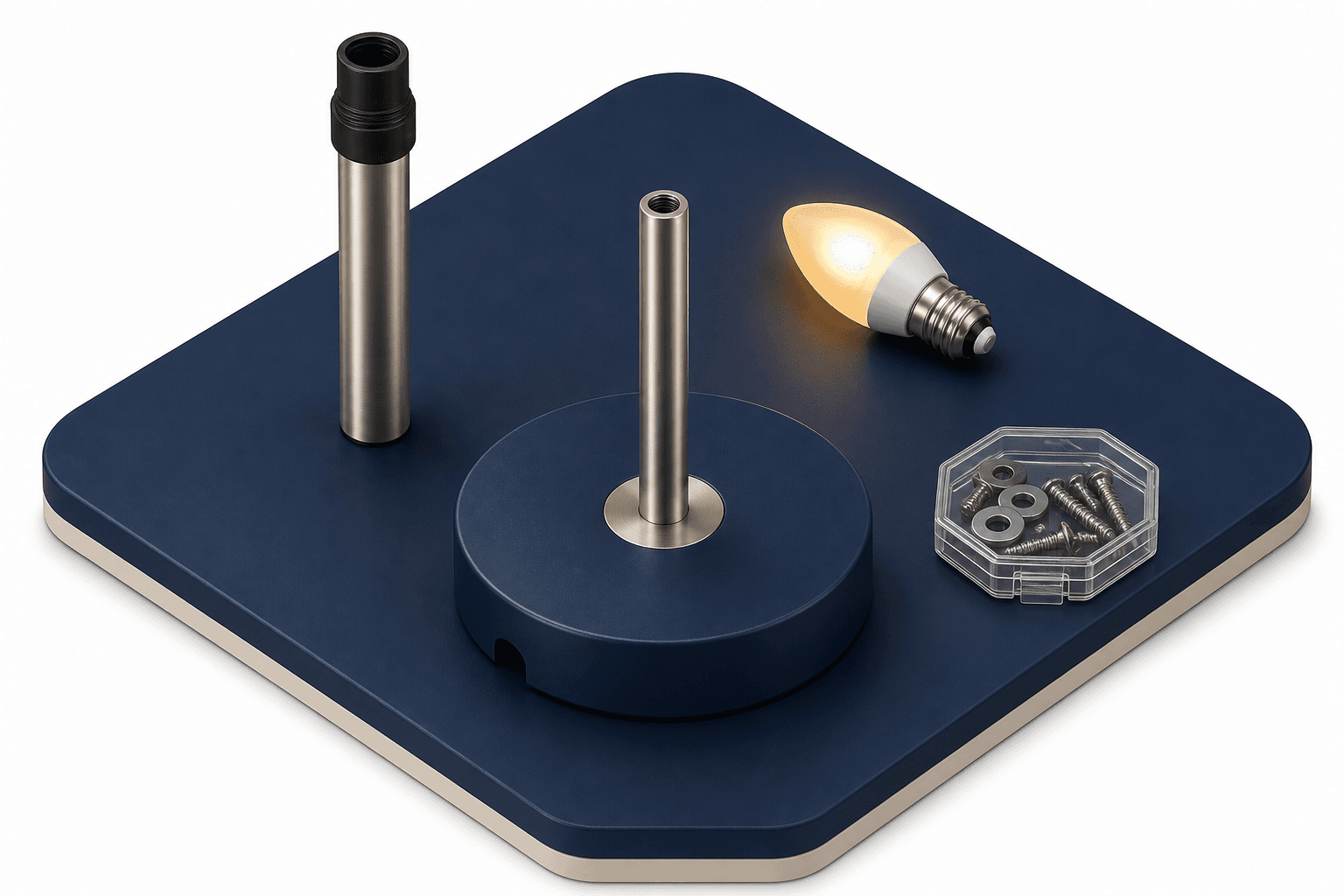
Key Takeaways
You can replace a floor lamp base by unscrewing the pole, most poles either thread directly into the base or pass through it and are secured by a nut on the underside.
For upright lamps, prioritize a wide base for stability. For arc or overhanging lamps, prioritize weight by choosing a solid metal base, or filling a contained hollow base with sand.
When a floor lamp base cracks or wears out, replacing the whole unit feels wasteful — especially when you love the design. The good news is that in most cases the base is a separate part you can swap out yourself, provided you can match the new base to the lamp's pole.
In this guide, I'll cover:
- How to replace a floor lamp base
- Choosing the right replacement base
- How to fix a wobbly floor lamp
How To Replace A Floor Lamp Base
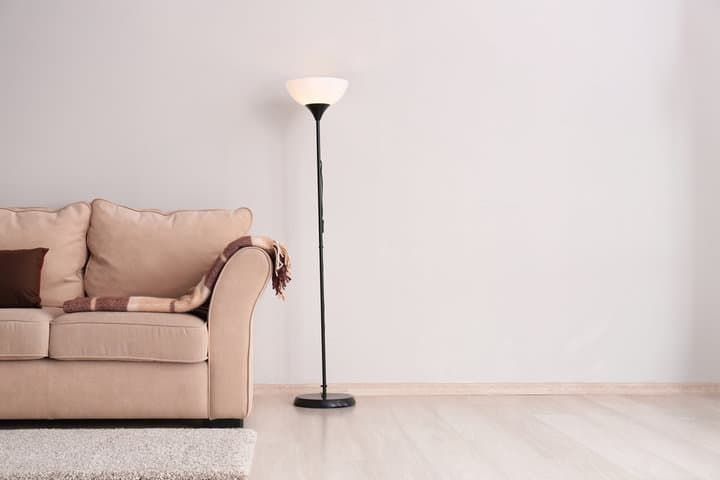
Replacing a floor lamp base is usually straightforward, provided the base is a separate component. On thicker, vase-like lamps where the base is integrated into the body of the lamp, the entire unit is essentially one piece — and once that piece breaks, replacement is the only option. But on a typical floor lamp with a distinct base, pole, and shade, the base is its own part.
The pole usually connects to the base in one of two ways:
- The base has a threaded raised stem, and the pole screws directly onto it.
- A threaded rod passes through the base and is held in place by a nut on the underside.
Lamp poles use Iron Pipe (IP) sized threads — most commonly 1/8 IP (about 3/8" outer diameter) or 1/4 IP (about 1/2") — which makes matching replacement hardware predictable once you know which standard your lamp uses.
Before you start: electrical safety
The power cord runs from the plug, up through the inside of the pole, and into the socket at the top of the lamp. Don't try to lift the base off without first easing slack down through the pole — yanking the base away can pull on the cord and damage the wiring inside. If the cord shows any sign of fraying, melting, or exposed conductor, stop and consult a qualified electrician before going further.
Dismantling the lamp
- Unplug the lamp from the wall.
- Remove the lampshade and bulb.
- Carefully turn the lamp upside down on a soft surface.
- Inspect the underside for fasteners — a visible nut, screws, or a removable access panel covering the joint.
- If you find a nut on the threaded rod, hold the pole steady and use a wrench to loosen it counter-clockwise.
- If there's an access panel, remove the screws and lift it off to expose the fastener inside.
- If the underside is sealed with no visible fastener, turn the lamp upright again, grip the pole firmly near the base, and twist it counter-clockwise — it should unscrew from the threaded stem.
- Keep unscrewing or unbolting until the pole lifts away from the base, easing the cord through as you go.
How To Select The Right Replacement Base
Replacement bases aren't widely stocked as standalone parts. Amazon carries a few, but Etsy tends to have a much better selection of compatible and decorative options. If you're open to second-hand, Facebook Marketplace and Gumtree are good places to find a broken lamp whose base will fit your pole. And if you're handy with tools, building your own base from wood or metal is entirely doable.
Check pole-to-base compatibility
If your pole is threaded into the base, you'll want a replacement with a matching threaded stem. If the pole passes through the base and is bolted underneath, you'll want a replacement with a clean through-hole sized to the pole's outer diameter.
To check fit, measure the outer diameter of the pole at the point where it meets the base. Use calipers for an accurate reading, or a ruler if that's what you have. Standard threaded lamp poles are usually around 1/2 inch (12–13 mm), but always measure rather than assume — sizes vary by manufacturer. A through-hole that's wider than the pole will let the lamp wobble; you can sometimes recover from this with a neatly applied sealant or a sleeve, but a tight fit from the start is far better.
What if the base is glued?
Some decorative bases — particularly resin, ceramic, and designer pieces — are bonded with adhesive rather than fastened with a nut or thread. If you can't find any fastener and the pole won't twist loose, the joint is probably glued. A heat gun can soften some adhesives, and acetone or isopropyl alcohol may break down others, but neither is guaranteed and both risk damaging the finish. In some cases a bonded base means the lamp isn't economically repairable, and a full replacement is the more sensible call.
Width vs. weight: matching the base to the lamp
With fully vertical lamps, width matters most for stability. If the weight is centered above the base, the base just needs to be wide enough that the lamp's center of gravity stays above its footprint. That said, a very light base can still tip from accidental knocks or on uneven flooring, so don't go ultra-light just because the lamp is upright.
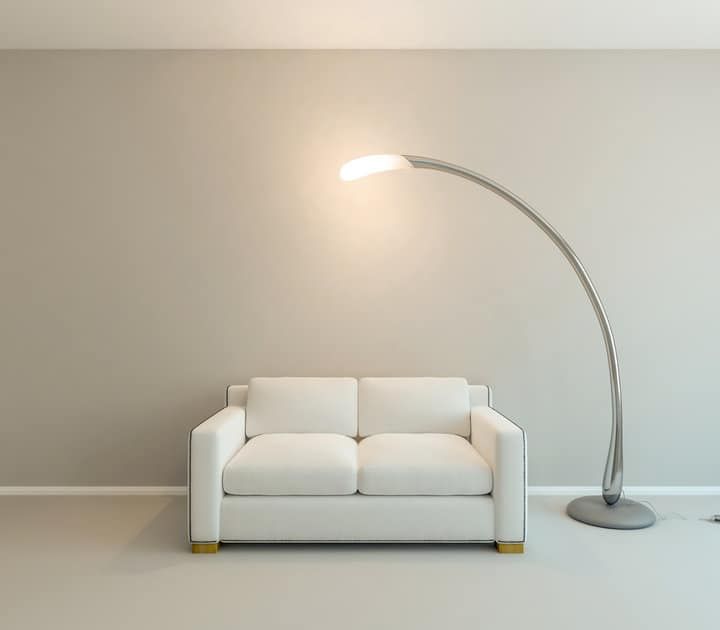
If you have an arc or overhanging lamp, weight becomes the dominant factor — and the further the lamp arcs out from the pole, the disproportionately heavier the base needs to be. Doubling the horizontal reach roughly quadruples the tipping torque, so a long-reach arc lamp needs a much heavier counterweight than a short-reach one.
A common designer rule of thumb is about 1 lb of base weight per 6 inches of lamp height, with extra weight added to account for horizontal reach.
A solid metal base is the simplest way to get there. Alternatively, you can find a hollow base and add weight yourself.
For contained bases, hollow with an opening you can fill and then seal, sand is the easiest material to work with: it conforms to the cavity and needs no curing. If you want to use concrete for added weight, the base needs an enclosed cavity (accessed via a removable plate or cap), or you'll have to build a temporary mold. Wet concrete won't cure properly in an open-top base — it slumps and won't set into a usable shape without a form.
How To Fix A Wobbly Floor Lamp
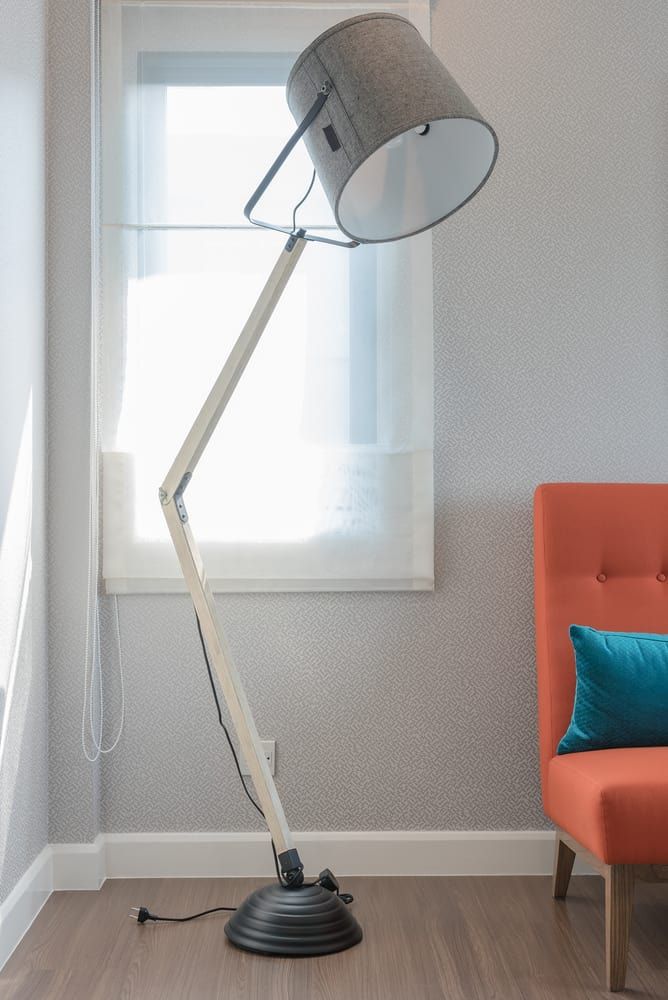
A wobbly floor lamp is more than an annoyance — left alone, it can topple, smash a bulb, and break the shade. There are two primary causes:
- The lamp's structure is loose.
- The lamp is sitting on an uneven surface.
To diagnose which one you're dealing with, move the lamp to a known-flat surface — a hard floor, not carpet — then hold the base steady and shake the pole gently. If the lamp still wobbles, the structure is loose. If it stands rock-solid on the hard floor, the original floor was the problem.
Cause 1: Loose structure
Work from the base upward, tightening each joint as you go.
- Unplug the lamp and remove the bulb and shade.
- Twist the pole clockwise at the base to retighten the main threaded joint.
- If the lamp is built from several tubing sections, tighten each joint working from the bottom up, again rotating clockwise.
- Flip the lamp over and check the underside for a loose nut, backed-off fastener, or loose feet. Tighten anything that has worked loose.
- If the threads themselves are worn and won't grip, a few wraps of plumber's PTFE tape around the male threads can restore a snug fit until you can source a replacement nipple or rod.
Cause 2: Uneven surface
If everything tightens up but the lamp still rocks in its original spot, the floor — usually carpet, rugs, or uneven tile — is to blame. Place a flat, wide board under the lamp base to bridge the unevenness and create a level footing. A 12"×12" piece of plywood works well, as does a purpose-made wooden lamp display board. If you'd rather not have a visible board, adjustable furniture leveling feet — which screw or stick to the underside of the base — are a cheap, purpose-built alternative.
Quick Reference
| Lamp Type | Priority | Recommendation |
|---|---|---|
| Vertical / upright | Width | Use a wide, flat base; avoid ultra-light materials |
| Arc / overhanging | Weight | Solid metal base, or hollow base filled with sand |
| Wobbly on carpet | Levelness | Plywood board or furniture leveling feet under base |
| Loose pole connection | Tightness | Twist clockwise from bottom up; PTFE tape on worn threads |