
How To Dispose of LED Light Bulbs? + Recycling Points
Low-intensity red LEDs can contain up to eight times California's allowable lead levels — which makes how you handle a broken one worth knowing before it happens.
 Eugen
EugenEugen Nikolajev
Creator of LED Lighting Info
Hi, I am Eugen. I was always one of those kids who had all sorts of weird lighting gadgets for every occasion.
Now, I want to share my knowledge and experience about lighting with you on LED Lighting Info.
Read my editorial standards
Key Takeaways
Most US households can put dead LEDs in the regular trash, but recycling is strongly preferred. In the EU, the UK, and several US states (including California, Vermont, Maine, Minnesota, and Washington), recycling is legally required. Many big-box hardware stores accept LEDs at no charge.
Following the 2023 federal phase-out of most incandescent bulbs in the US, LEDs are effectively the default lighting choice — and the recycling questions that come with them are about to apply to a lot more households.
But when an LED finally burns out, do you know what to do with it?
In this guide, I'll cover:
- Whether LEDs can be recycled and what's actually inside them
- How to dispose of LED bulbs, tubes, and strip lights — including broken ones
- Where to find drop-off locations near you
- Whether LEDs can legally go in the regular trash
- What to do with old, working LEDs you no longer need
Can You Recycle LED Bulbs?
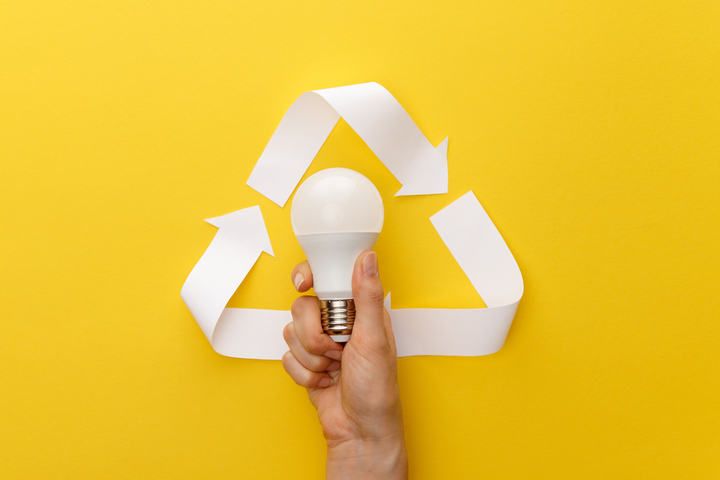
LED lights are recyclable, and recycling is the better choice. The metals inside old LEDs can be recovered and reused in new electronics.
Like other small electronics, LEDs contain small amounts of toxic metals — including lead, arsenic, copper, and nickel — alongside finite, valuable materials like silver, gold, gallium, and indium that are worth recovering rather than burying in landfill.
A single broken household LED is unlikely to cause acute harm, but the UC Irvine researchers who flagged these metals recommended sweeping up broken bulbs while wearing gloves and a mask, especially for colored (red and yellow) LEDs, which had the highest lead and arsenic content. Low-intensity red LEDs in their study contained up to eight times California's allowable lead levels.
LEDs still make up a small share of the lamp waste stream. As of Eucolight's 2018 European data, LEDs accounted for less than 2% of collected lamp waste across 18 European countries — largely because LEDs last so long that bulbs sold over the past decade are still in service. As that first wave reaches end-of-life, recycling capacity is going to matter more.
How To Recycle LED Bulbs Correctly
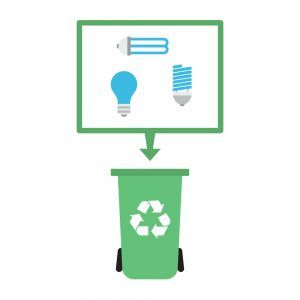
For an intact bulb that hasn't shattered:
- Switch off the power and remove the bulb from the fixture
- Place it in a safe container so it doesn't shatter en route
- Drop it in the bulb-recycling bin at your collection point
If the bulb has shattered, take a few extra precautions:
- Wear gloves while removing the base from the fixture
- Place the main body in a safe container for transport
- Sweep up glass fragments using stiff paper or a brush — avoid a vacuum, which can spread fine particles
- Wear a mask if a colored (red or yellow) LED has broken — these have the highest lead and arsenic content
- Tiny fragments can go in the trash; large shards should be recycled with the bulb
How To Dispose of LED Tube Lights
LED tubes can be recycled at the same drop-offs as standard bulbs. Many of those locations also accept fluorescent tubes — but fluorescent tubes contain mercury vapor (typically 1–5 mg per linear tube) and have to be kept intact during transport so the mercury isn't released. LED tubes have no mercury, but they're physically more fragile, so handle them carefully on the way to the drop-off.
How To Dispose of LED Strip Lights
The strip itself goes to the same recycling points as standard LED bulbs. The power supply (driver) is detachable and counts as small electronics: in the US, drop it at any e-waste collection point — Best Buy, Staples, and most municipal e-waste collection events accept them. In the EU and UK, the driver is unambiguously WEEE and is covered by retailer take-back at the point of purchase.
What To Do With a Broken CFL or Fluorescent Tube
Compact fluorescents and fluorescent tubes are a separate problem: when they break, they release mercury vapor. The EPA recommends:
- Leave the room and ventilate it for at least 5–10 minutes before cleanup
- Turn off central HVAC so the vapor isn't redistributed through the house
- Use stiff paper or cardboard to scoop up fragments — never a vacuum
- Seal debris in a glass jar or sealed plastic bag
- Take the sealed container to a hazardous waste drop-off, not the curb
Where To Recycle LED Bulbs
For US readers, two free locator tools cover most of the country:
- Earth911 — searchable database for light bulbs and small electronics by ZIP code
- Call2Recycle — primarily batteries, but covers many electronics drop-off points that also take bulbs
Beyond the locator tools, big-box hardware stores are the most reliable in-person option. Most accept both LEDs and CFLs at no charge:
| Store | Accepts LEDs | Accepts CFLs | In-store drop-off |
|---|---|---|---|
| IKEA | Yes | Yes | Yes |
| Home Depot | Yes | Yes | Yes |
| Lowe's | Yes | Yes | Yes |
| Batteries Plus | Yes | Yes | Yes |
Each store's recycling page has the most current details:
- IKEA's recycling policy — note that IKEA's bulb take-back varies by country; check your local IKEA's customer service page if you're not in Belgium
- Home Depot's recycling policy
- Lowe's guide to recycling
- Batteries Plus' recycling policy
It's also worth checking the manufacturer. Some major brands (Philips/Signify, for example) have run mail-in or partner take-back programs in certain regions. Search the manufacturer's site for "recycling" or "take-back" before assuming there's no option.
In the UK, Recycle Now finds the nearest drop-off for any kind of bulb (incandescent, halogen, fluorescent, and LED). Most EU countries have equivalent national tools — search for "WEEE drop-off" or check with the retailer where you bought the bulb, since they're typically required to accept used ones back.
Can LED Bulbs Be Thrown in the Trash?
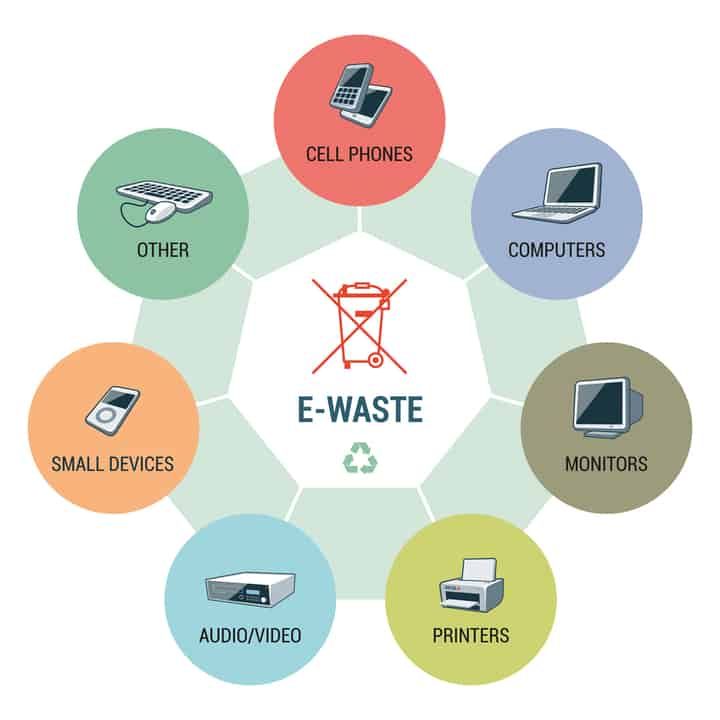
In most US states, LEDs can legally go in regular household trash. They aren't federally classified as hazardous waste under EPA's universal waste rule, and unlike CFLs they don't contain mercury. Recycling is still the better environmental choice — those metals are worth recovering — but it isn't legally required everywhere.
Important exceptions:
- EU and UK — the WEEE Directive classifies LED lamps as electronic waste. They must be separately collected and cannot legally be put in unsorted household waste in any of the 27 EU member states or the UK.
- California, Vermont, Maine, Minnesota, and Washington — LEDs are regulated as universal waste. In California specifically, it is illegal for both households and businesses to put LED bulbs in the trash.
- CFLs and fluorescent tubes (everywhere) — these contain mercury and must always be recycled, never thrown in household trash.
If you're disposing of bulbs in bulk for a business, check local hazardous waste regulations. Even small businesses may need to comply with universal waste rules under RCRA in the US, and the rules are stricter than for households.
What To Do With Old, Working LED Bulbs
If you have working LEDs you no longer need — say, after a fixture swap or a move — there are better options than recycling:
- Keep them as backup bulbs in a dry, cool location
- Offer them to friends or neighbors who haven't fully upgraded from incandescent or halogen yet
- List them on Freecycle, a Buy Nothing group, or a local marketplace
- Donate them to a charity, thrift store, or Habitat for Humanity ReStore
With LEDs having such a long lifespan, a working bulb you've taken out of service still has years of useful life left. Don't throw it away just because it's not currently in use.
For more on what's actually inside the bulbs you're recycling, read about what materials make up an LED bulb.
FAQ
Can I put LED bulbs in regular household trash?
In most US states, yes — LEDs aren't federally classified as hazardous waste and don't contain mercury. But recycling is the better environmental choice, and there are exceptions: in the EU, UK, California, Vermont, Maine, Minnesota, and Washington, LEDs must legally be recycled as electronic waste rather than thrown in the trash.
Are LED bulbs considered hazardous waste?
Not at the US federal level. EPA does not list LEDs in its universal waste rule (40 CFR 273.9), and most consumer LEDs pass the TCLP toxicity test. However, several US states regulate them as universal waste, and the EU's WEEE Directive treats them as electronic waste in all 27 member states. A 2011 UC Irvine study did find low-intensity red LEDs contained up to 8x California's allowable lead levels, so colored LEDs are the most concerning category.
What's the easiest way to find an LED recycling drop-off near me?
In the US, search Earth911.com by ZIP code — it's the most comprehensive database for bulbs and small electronics. Big-box hardware stores (Home Depot, Lowe's, IKEA, Batteries Plus) also accept LEDs at no charge. In the UK, Recycle Now has a similar locator. Most EU countries require retailers to take back bulbs at the point of purchase under WEEE rules.
Are LEDs dangerous if they break?
A single broken household LED is unlikely to cause acute harm, but the UC Irvine researchers who flagged the metals inside LEDs recommended sweeping up broken bulbs while wearing gloves and a mask — especially for colored (red and yellow) LEDs, which contained the highest lead and arsenic levels. Avoid vacuuming the fragments, and don't handle them with bare hands.
Do I need to recycle the power supply with my LED strip lights?
The power supply (driver) is detachable and counts as small electronics, so it goes to a different drop-off than the strip itself. In the US, Best Buy, Staples, and most municipal e-waste collection events accept them. In the EU and UK, the driver is covered by WEEE take-back at the point of purchase.