
How I Write
Last updated: May 25, 2026
My Philosophy
I started LED Lighting Info for a simple reason: most lighting advice online is bad. Not always wrong, exactly — just vague, padded out for search engines, quietly sponsored, or written by someone who clearly didn't care whether you understood it. I got tired of digging through it, so I started writing the version I wished existed.
I'm not an electrician, and I won't pretend to be. I'm a Software Engineer by trade and someone who got genuinely interested in how lighting works and became obsessive about getting the details right. What I offer isn't trade credentials; it's careful research, honest sourcing, and a refusal to publish something I'm not sure about.
A few things I hold myself to:
1. Honesty over polish. If a spec doesn't exist, I don't invent one. If sources disagree, I tell you. If something is my opinion rather than fact, I say so. I'd rather write "I'm not certain" than make something up to sound authoritative.
2. Open about how this is made. AI helps me research, write, and create visuals — and I'm upfront about that rather than hiding it. What doesn't change is that a real person directs it, checks it, and takes responsibility for every word.
3. Corrections in the open. I get things wrong sometimes. When I do, I fix them, log them, and don't pretend the original was never there. The people who email me to point out mistakes are doing me a favour, and I treat them that way.
4. Useful before impressive. Everything here exists to help you make a better decision — to save energy, save money, and light your space well. If a calculator or a quiz does that better than another article, I build the calculator.
That's the whole idea. Clear, honest, carefully made lighting information — and a real person standing behind it.
My Editorial Process
Every guide on this site goes through the same process before it's published.
1. Deep Research
Every guide starts with research, not writing. I dig into the topic properly, how the technology actually works, where people get confused, and what questions a reader genuinely needs answered before I put a word down.
Built From Real Questions
The site's tools feed back into the writing. Anonymous questions from the AI chat and quizzes show me what readers genuinely struggle with — so over time, the guides get shaped by real problems, not just what I assumed people wanted to know.
2. Authoritative Sources
I pull from multiple sources and lean on authoritative ones wherever possible — manufacturer specifications, industry standards, and established technical references rather than recycled blog posts. Where sources disagree, I say so instead of picking the convenient answer.
3. Editorial Review
Once it's written, I review the whole thing for clarity and accuracy — checking that it actually answers the question it set out to, that the explanation holds up, and that there's no jargon doing the job a plain sentence should.
4. Double-Pass Fact-Check
Finally, every guide is fact-checked twice. AI does a first pass to flag inconsistencies and claims worth a second look. Then I do the human pass — verifying those claims against primary sources and making the final call. Nothing goes live until it's cleared both.
How I Use AI
There's no denying that AI now touches almost every part of our digital lives, and I'm not going to pretend it doesn't touch this website. During the research and writing phase, I use AI to help me work faster. But I take full responsibility for everything published here.
I'm the one directing it, iterating on it, and fact-checking every claim that ends up on the page. I think being upfront about this matters.
Plenty of sites use AI and stay quiet about it. I'd rather just tell you exactly where and how it's used.
AI and Content
AI helps me draft, structure, and speed up the heavy lifting of writing. It does not get the final word. Every fact is checked against real sources before publication, and the editorial process exists specifically to catch anything it gets wrong. The direction, the judgment, and the responsibility are mine.
AI and Visuals
A lot of the imagery on this site is AI-generated — explainer diagrams, illustrations, article images, and other graphics.
For tricky lighting concepts like beam angles or colour temperature, a good visual often does more than a paragraph of text. I use AI to create these where they genuinely help, and to keep the site looking consistent
AI and Fact-Checking
AI also does the first pass of fact-checking, flagging inconsistencies and claims worth a closer look. But it's only the first pass — I verify everything against primary sources myself before anything goes live. AI flags; I confirm.
Supporting Tools
Where it genuinely helps, I build tools rather than just write more words.
Some topics are easier to understand than to read about. So instead of leaving everything as static text, I create things you can actually use.
Calculators that do the math for you, an AI chat that lets you ask questions about a guide in your own words, and quizzes that help you troubleshoot a problem or test what you've picked up.
The goal is to turn passive reading into something interactive — to help you get to an answer, or to a deeper understanding, faster than a wall of text ever could.
How I Source Data
The data on this site comes from sources you could check yourself.
For technical standards and safety guidance, I use official, authoritative sources — government statistics, published codes like the NEC, and similar legislative references where the guidance is clear and documented. For product specifics, I use the manufacturer or retailer specifications.
And where a specification doesn't exist, I don't invent one. If a number isn't available or isn't reliable, I'd rather leave a gap and say so than fill it with a guess. A missing spec is just a missing spec — it never becomes a made-up one.
Proprietary Data Collection
Some of the most useful information on this site comes from readers themselves — not from anything you have to do, but from how the site's tools get used.
When you use the AI chat, your questions may be collected anonymously (this is disclosed right beneath the chat box). I use that to see what people are actually asking — which gaps in my guides keep coming up, which explanations aren't landing — and then I improve the content to answer those real questions. It makes the writing more targeted than anything I'd come up with on my own.
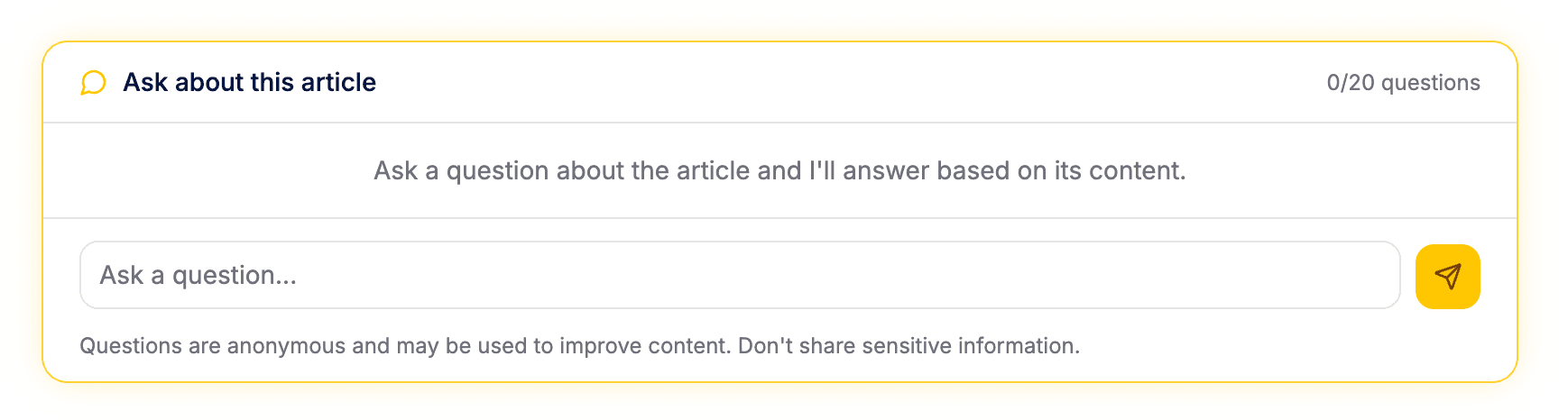
The quizzes work the same way. Anonymous quiz data helps me understand the common problems people run into, so I can write guides that address them directly — and occasionally publish an interesting statistic that comes out of it.
One thing I deliberately don't collect: the photos you upload to the Bulb Finder. They're used to identify your bulb in the moment and nothing more — no image is stored or kept as a reference.
Because that identification step runs through a third party, keeping images would mean making a promise about their systems I can't honestly guarantee — so I don't keep them at all.
How I Handle Updates and Corrections
LED technology moves, standards get revised, and products come and go.
A guide isn't something I write once and forget. I revisit content as things change, and when a guide is updated I'd rather it quietly stay accurate than sit there slowly going out of date.
Corrections are part of the same idea. If something here is wrong, I want it fixed, and fixed openly, not silently edited away.
When a guide gets a correction or a substantial change, something added or removed, it's recorded in a changelog beneath the article, so you can see exactly how that content has evolved over the years.
The two sections below are the honest version of how that works in practice.
When Readers Ask Me
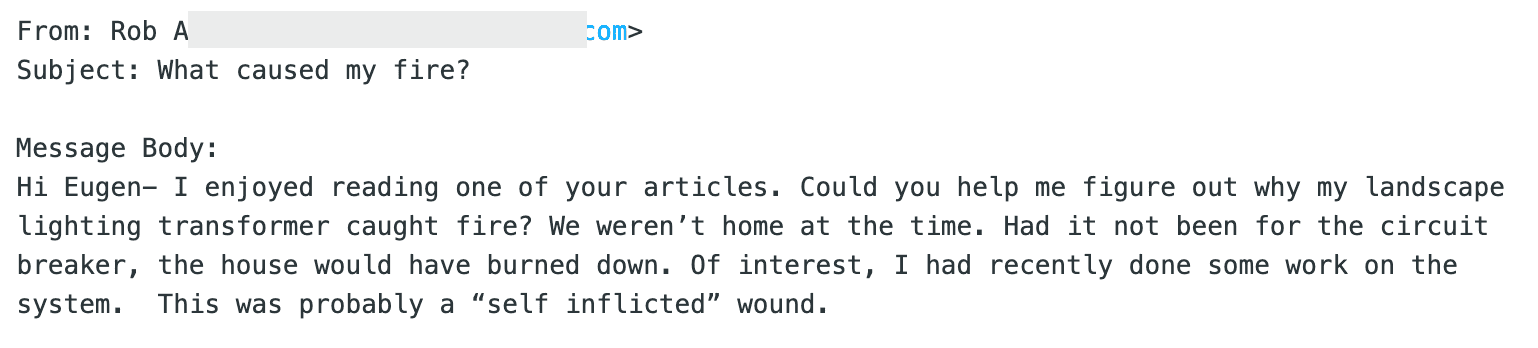
Over the years, a lot of people have emailed me with questions — sometimes about a specific guide, sometimes about a problem they're trying to solve in their own home. I answer what I can, and I genuinely enjoy it; it's one of the better parts of running this site.
It also feeds the writing. When the same question keeps landing in my inbox, that's a strong signal it deserves a proper guide of its own — so I write one. A good chunk of the content here exists because a reader asked first.
When I Get Things Wrong
I'll be straight about this: sometimes things slip through. I research carefully and fact-check everything, but I'm one person, and mistakes happen.
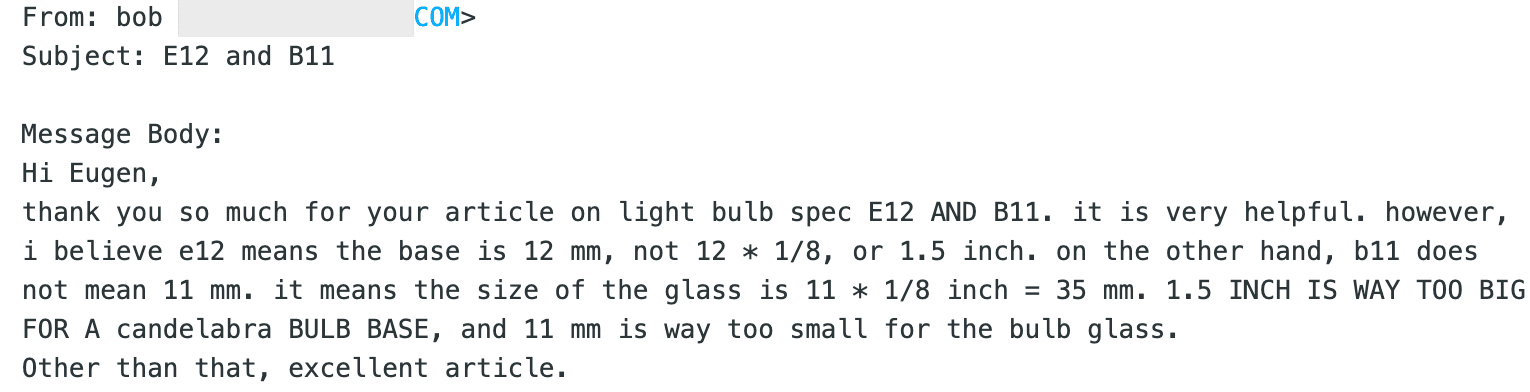
What I can promise is that I'll fix them. If you spot something on this site that's wrong — a number, a claim, an explanation that doesn't hold up.
Just email me and tell me. I'd genuinely rather know. I'll look into it, correct it if you're right, and I won't pretend the original was never there.
The email below is a real example. A reader wrote in to point out that I'd got a bulb base-size detail wrong — and he was right. That's exactly how this is supposed to work.
Thanks for reading
I hope you enjoy your time on LED Lighting Info and find it genuinely useful.
If you ever have a question, or spot something that needs correcting, I'd love to hear from you, just reach out at [email protected].
Cheers,
Eugen