
Ballast
A device that regulates current for fluorescent and HID lamps. When upgrading to LED tubes, you may need to bypass the ballast depending on the tube type.
A ballast is the box wired between the electrical supply and a fluorescent tube. Fluorescent tubes can't regulate their own current — without a ballast, the gas discharge would draw increasing current until the tube destroyed itself. The ballast limits and stabilizes the current to keep the tube running safely.
Older magnetic ballasts (the heavy ones that hum) are less efficient and can cause visible flicker at 60Hz. Modern electronic ballasts are lighter, silent, and operate at high frequency (20-60 kHz), eliminating visible flicker. Both types eventually fail, and a failing ballast is usually the reason a fluorescent tube flickers, strobes, or won't start.
When upgrading to LED tubes, the ballast question is critical. Type A LED tubes work with the existing ballast — easiest to install but the ballast still draws power and will eventually fail. Type B tubes require removing (bypassing) the ballast and wiring mains voltage directly to the socket — more work upfront but no ballast to maintain. Type C tubes replace the ballast with a dedicated LED driver, offering the best performance but the highest installation cost.
Specifications
| Type A LED tube | Works with existing ballast |
| Type B LED tube | Ballast bypassed (direct wire) |
| Type C LED tube | Uses external LED driver |
Related Terms
- T8 Tube
A tubular lamp 1 inch (26mm) in diameter, the standard size for commercial fluorescent lighting. LED T8 tubes are direct replacements.
- LED Driver
A power supply that regulates current to LEDs, preventing flickering and enabling dimming. Every LED has one — either built into the bulb or as an external unit.
Mentioned in
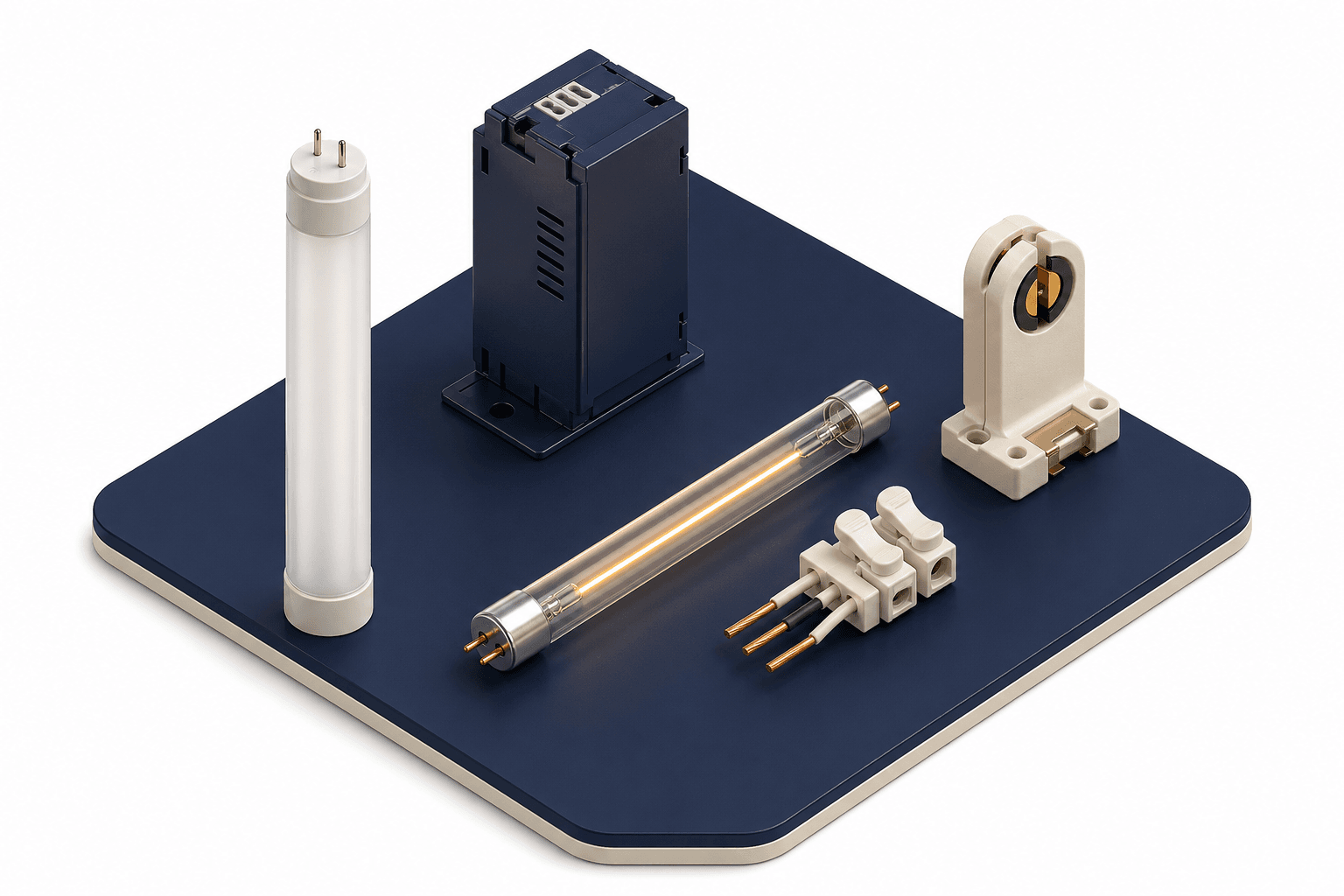
Do LED Lights Need A Ballast? + How To Bypass
Plug-and-play LED tubes aren't a universal swap — dropping a Type A onto a magnetic ballast can damage its electronics, because Type A is designed for electronic ballasts only.
Does A Blown Light Bulb Use Electricity?
A blown CFL can keep pulling around half its rated wattage — because the ballast stays live, still trying to strike a dead tube. That's also why a failed CFL can smolder.
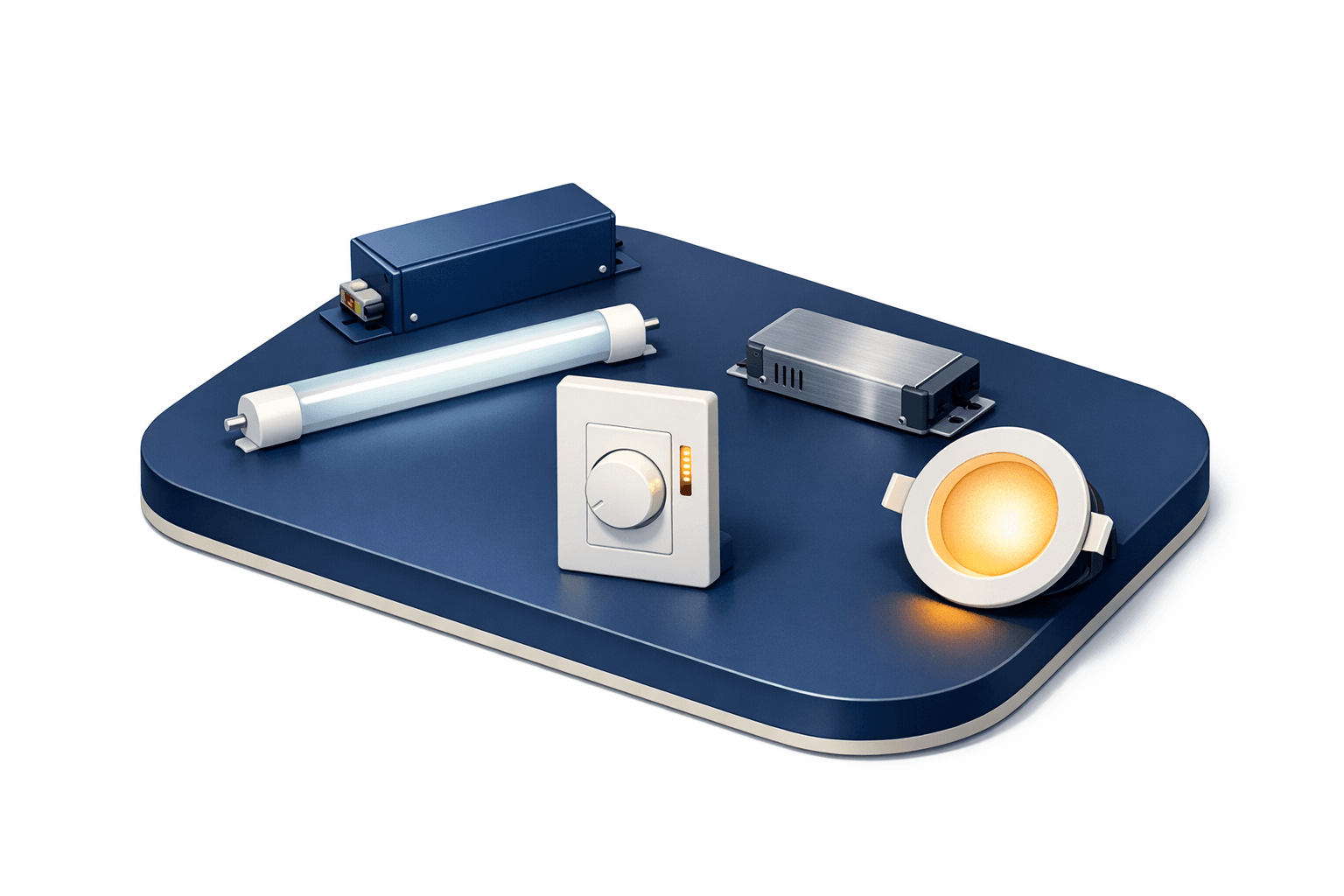
Can You Put A Dimmer Switch On Fluorescent Lights?
Your fluorescent lamp cuts out while the dimmer dial still has a quarter of its travel left — that's the dead zone, and it's not a wiring fault. It's the ballast hitting its minimum load threshold before the slider bottoms out.