Flicker
Rapid, repeated changes in light output. Can be visible (strobe effect) or invisible but still cause headaches. Usually caused by incompatible dimmers or poor LED drivers.
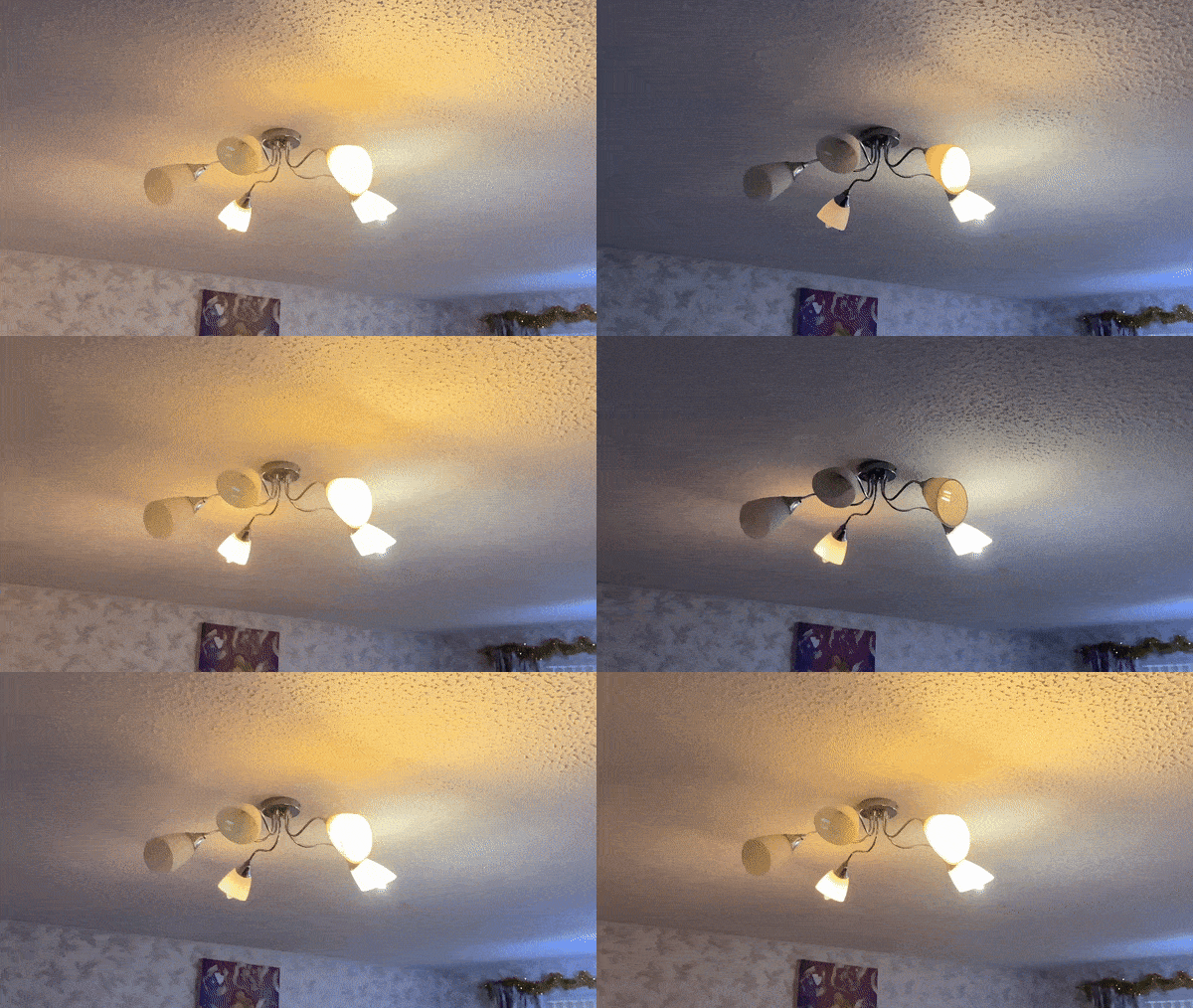
Flicker is the rapid on-off cycling of light that can happen hundreds or thousands of times per second. Visible flicker (below about 80Hz) is obviously annoying — your lights appear to strobe or pulse. But invisible flicker (80-200Hz) is arguably worse because you can't see it, yet it can still cause headaches, eye strain, and fatigue over extended exposure.
The most common cause of LED flicker is dimmer incompatibility. Old leading-edge dimmers designed for 60W incandescent loads chop the power waveform in a way that LED drivers can't handle smoothly. The LED driver tries to compensate, fails, and the light pulses. The fix is usually a trailing-edge dimmer designed for LED loads.
Other causes include poor-quality LED drivers that don't adequately smooth the AC-to-DC conversion, loose wiring connections that create intermittent contact, and voltage fluctuations from heavy appliances on the same circuit. If your LEDs flicker only when the washing machine runs, it's a voltage issue, not a bulb issue.
Related Terms
- LED Driver
A power supply that regulates current to LEDs, preventing flickering and enabling dimming. Every LED has one — either built into the bulb or as an external unit.
- Trailing Edge Dimmer
A dimmer type that cuts the trailing end of each AC wave cycle. Smooth, quiet, and compatible with most LED bulbs — the recommended type for LED dimming.
- PWM Dimming
A dimming method that rapidly switches LEDs on and off thousands of times per second. The ratio of on-time to off-time controls perceived brightness.
- TRIAC Dimmer
The most common phase-cut dimmer circuit, found in most residential dimmers. Works by chopping the AC waveform. Some TRIAC dimmers work with LEDs, many don't.