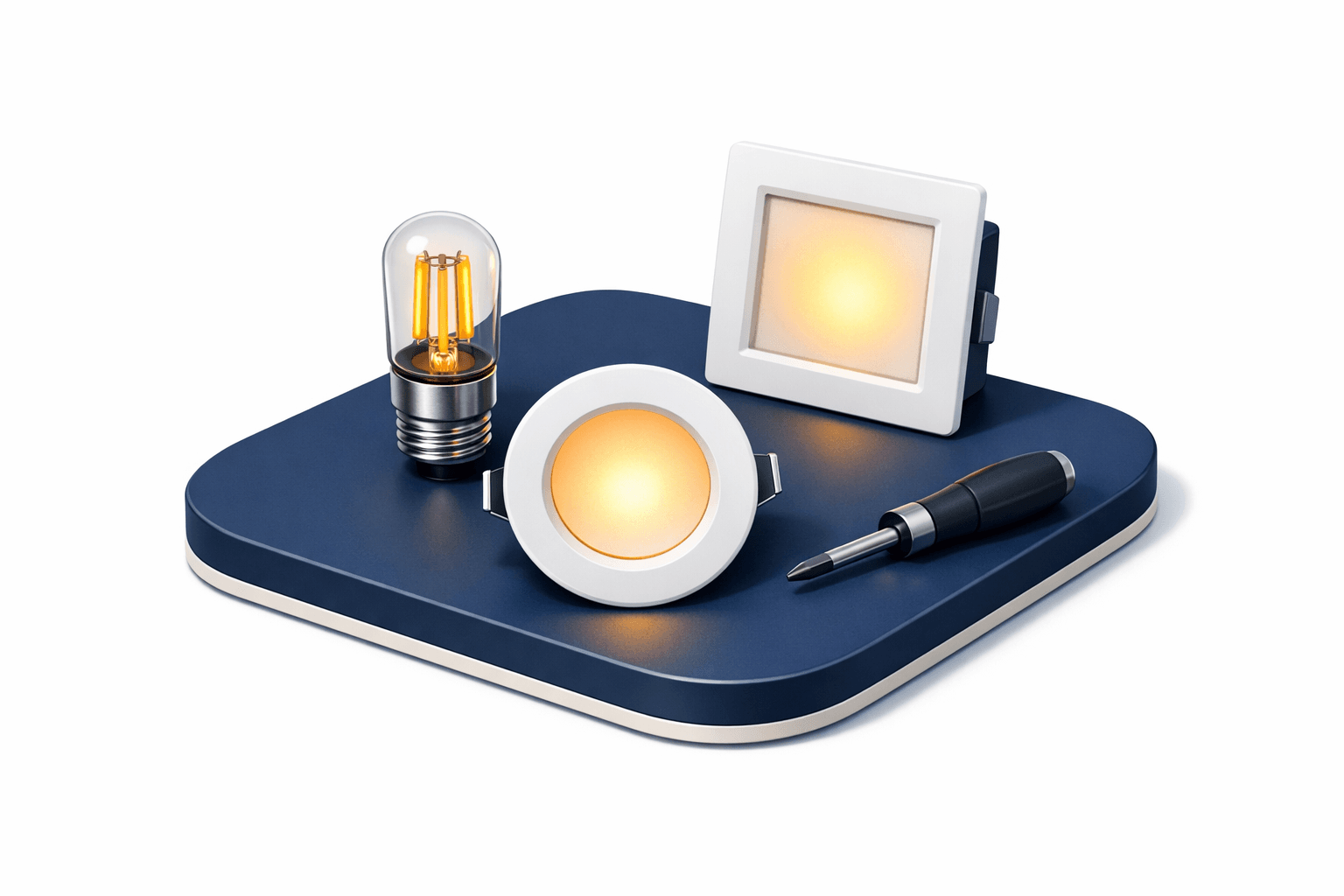
Integrated LED
A fixture with LED chips built directly into the housing — no replaceable bulb. Generally more efficient and slimmer, but the entire fixture must be replaced when LEDs fail.
Integrated LED fixtures have the LED chips soldered directly onto the fixture's circuit board — there's no bulb to unscrew and replace. This allows for slimmer, more efficient designs because the manufacturer can optimize the optics, thermal management, and driver specifically for those LEDs.
The upside is significant: integrated fixtures are typically thinner (great for low-profile recessed lights), produce more even light (no bulb shape to work around), and waste less light (optics are designed for the exact LED layout). Many modern architectural fixtures are only available as integrated.
The downside is obvious — when the LEDs eventually dim or the driver fails, you replace the entire fixture instead of a $5 bulb. At current LED lifespan ratings (50,000+ hours for quality fixtures), this could be 15-20 years, by which point you'd likely want to update the fixture anyway. But cheap integrated fixtures with poor thermal design might only last 3-5 years, turning a $30 fixture into disposable lighting.
Related Terms
- LED Lifespan (L70)
The number of hours until an LED degrades to 70% of its original brightness (L70). Typical LED bulbs are rated 25,000-50,000 hours.
- Recessed Lighting
Light fixtures installed flush into the ceiling, creating a clean, unobtrusive look. Also called can lights or downlights. Available as integrated LED or with replaceable bulbs.
- Heat Sink
A component (usually aluminum) that absorbs and dissipates heat from LED chips. Critical for lifespan — LEDs don't burn out, they overheat.