
How To Hang String Lights On Apartment Balcony?
That indoor extension cord running to your balcony lights is one of the most common fire hazards in a rental — outdoor use needs a jacket stamped SJTW or SJEOOW, not whatever's closest to the door.
 Eugen
EugenEugen Nikolajev
Creator of LED Lighting Info
Hi, I am Eugen. I was always one of those kids who had all sorts of weird lighting gadgets for every occasion.
Now, I want to share my knowledge and experience about lighting with you on LED Lighting Info.
Read my editorial standards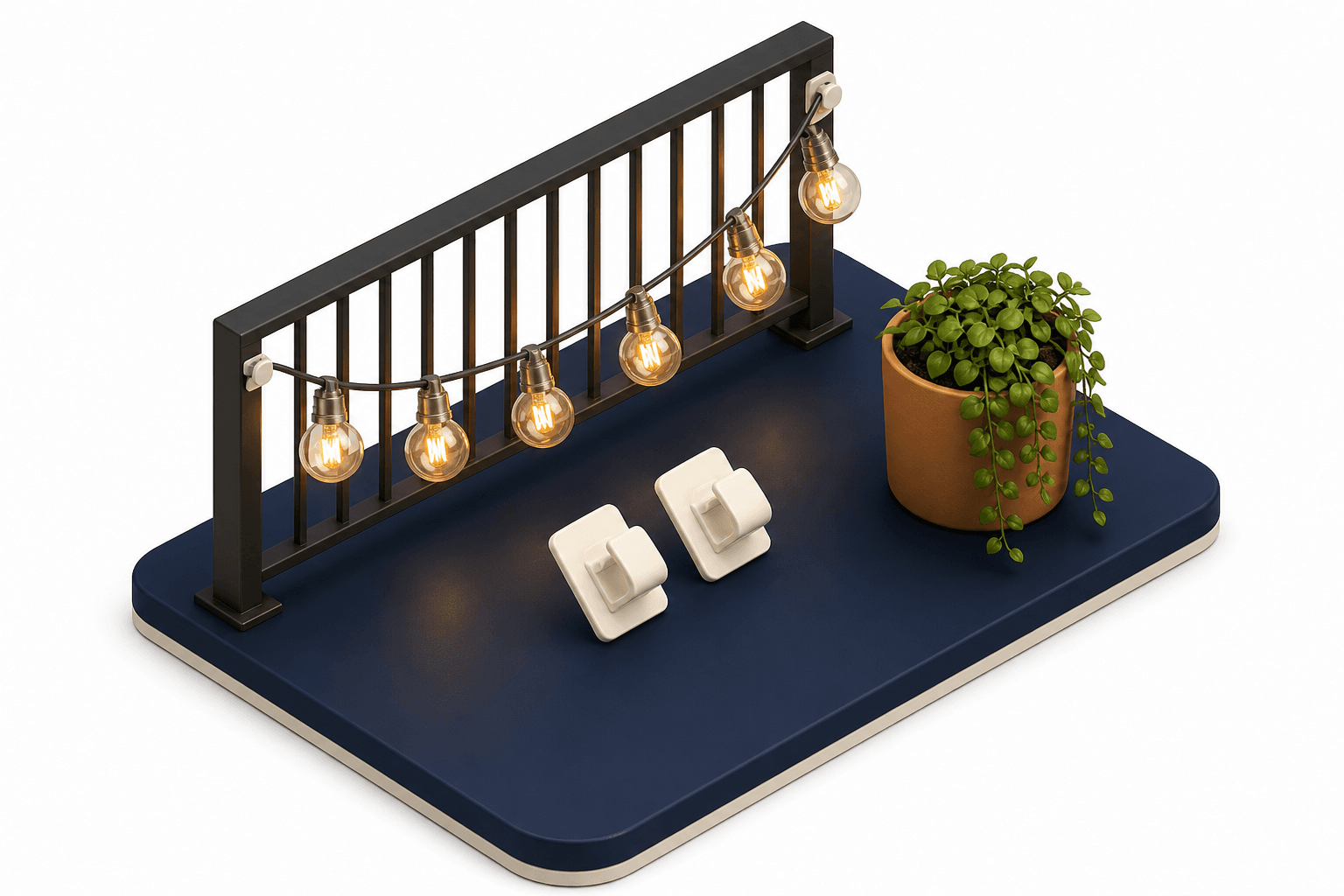
Key Takeaways
You can use string lights on a balcony. You could use adhesive-backed hooks, cable, or zip ties or wrap them around your balcony railing to hang them. To avoid trailing cables, you could choose battery-powered lights or solar lights.
An apartment balcony is a great place to unwind on warmer evenings — but it gets dark quickly once the sun sets, and leaving the door open to borrow indoor light just invites bugs, drafts, and the wrong mood.
To make it easy when setting up your balcony lighting, I’ve put together this guide covering:
- How to hang your string lights on your balcony without drilling
- The best way to wrap lights around a railing
- How to power your lights without an outdoor outlet
‼️ Before you buy: check your lease for restrictions on drilling or attaching anything to walls and railings, decide where your power will come from, and confirm the lights themselves are rated for outdoor use (look for IP44 or higher on the box).
How To Hang Balcony String Lights Without Drilling?
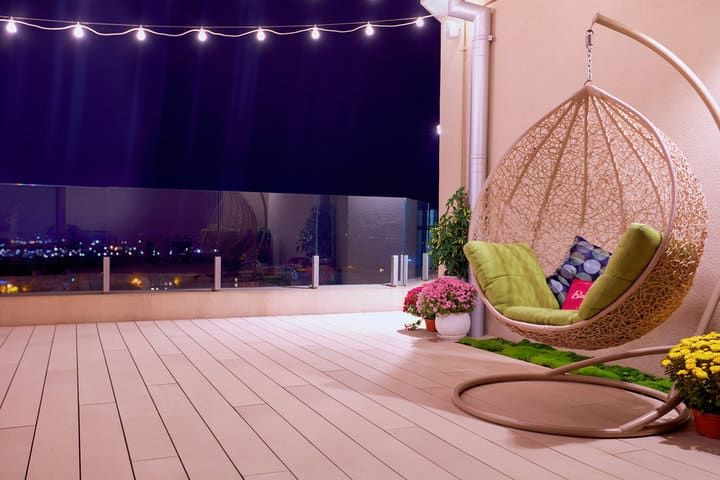
Most renters can’t drill into walls or railings without risking their security deposit, so the best balcony solutions are removable. The right method depends on the surface you’re attaching to and what else you have on the balcony to anchor against.
Adhesive-backed hooks
Outdoor adhesive-backed hooks (Command and similar) are the most common starting point. They use a strong adhesive pad that grips flat surfaces, and the thicker outdoor pads can hold on to lightly textured surfaces too — just step up to a bigger hook so the pad has more area to fill in any gaps.
- Water-resistant and UV-resistant — rated for rain, snow, and temperatures from -20°F to 125°F
- No marks, holes, or residue when removed correctly
- Thicker outdoor pads grip lightly textured surfaces
- No tools or drilling required
- Not waterproof — they handle weather but aren’t rated for submersion or pooling water
- Surface must be clean, dry, and above 50°F when you apply them
- Bare brick, stucco, and rough concrete often won’t hold
- Pulling the removal tab the wrong way will snap the strip and damage paint
To remove them, pull the removal tab slowly and stretch it straight down along the wall at least 12 inches until the strip releases — never pull it toward you, or it may snap and leave residue or damage the surface.
Other no-drill options
- Zip ties or cable ties — useful anywhere you have something a tie can wrap around, like railing posts, conduit, or planter brackets. Black UV-rated ties hold up far longer outdoors than the cheap white ones.
- Wrap fixed objects — large planters, poles, and small trees all make solid anchors. Higher anchor points throw light across more of the balcony.
- Outdoor tape — weatherproof gaffer or Gorilla tape can hold a light strand to a flat surface short-term, but tape isn’t rated to support electrical fixtures long-term and will eventually fail under sun and rain.
Wrapping Lights Around A Balcony Railing
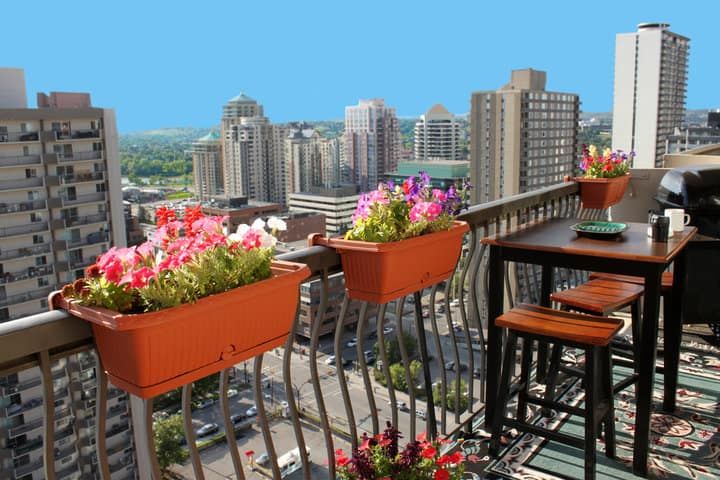
If your balcony has an open railing — pickets, slats, or any vertical gaps — you already have the perfect anchor for string lights. Wrapping is one of the easiest installation methods and tends to look the most polished.
Don’t just loop the lights loosely. The first stiff breeze will blow them out of place, and the spacing won’t stay even. Secure them at regular intervals with hooks, zip ties, or carabiners.
A good rule of thumb: anchor every 18 to 24 inches on a sheltered balcony, and tighten that to every 12 inches if your balcony catches wind from multiple directions or sits more than a few floors up. Heavier strands with bigger bulbs need closer spacing than fairy lights.
If you rent, skip drilling even into a wood railing — most leases treat railing modifications the same as wall damage. Adhesive hooks, zip ties, and carabiners will hold the lights without making any permanent change.
How To Light Up Balcony With No Outlet
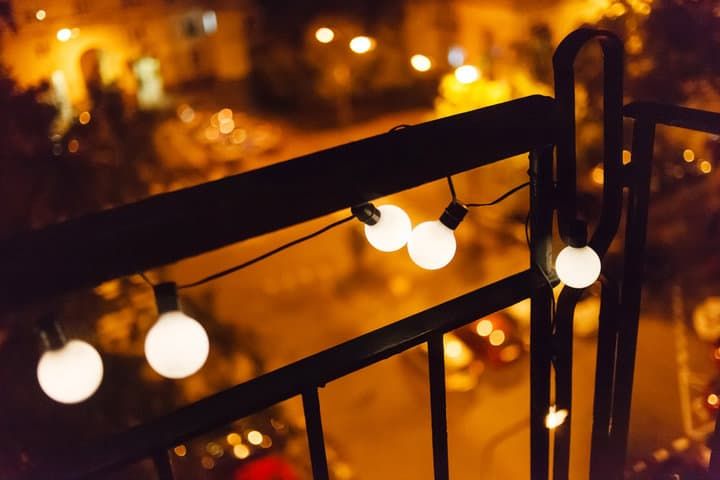
Most balconies don’t have an outlet, so the power source often determines which lights make sense to buy. Sort this out before you order anything.
Plug-in lights with an extension cord
If you’re running a cord from inside the apartment, use an outdoor-rated, UL-listed extension cord — even on a covered balcony, even just for the evening. Look for SJTW or SJEOOW printed on the jacket. These have moisture-, UV-, and abrasion-resistant insulation that ordinary indoor cords lack, plus the grounded three-wire construction outdoor use requires.
Bring the cord indoors when not in use, and never run it through a doorway that pinches the cable — a crushed jacket is one of the most common ways an extension cord becomes a fire hazard.
An outdoor-rated smart plug or timer is worth adding to a plug-in setup. It will switch the lights on at dusk and off automatically, so you’re not getting up to flip a switch every night.
No-cord alternatives
- Solar string lights — best if your balcony gets at least 6 hours of direct sun. Mount the panel where the railing, neighbouring buildings, and tall planters won’t shade it.
- Rechargeable string lights — pull the lights down and bring them indoors to charge between uses.
- USB-powered lights with a USB battery pack — leave the lights in place and only bring the battery pack inside to recharge.
- Battery-powered string lights — disposable or rechargeable AAs you swap out as needed. Simplest option, but you’ll be replacing batteries often if the lights run nightly.
Final Words
A few things to keep in mind as you put it all together:
- Hang without drilling using outdoor adhesive hooks, zip ties, or by wrapping fixed objects you already have on the balcony.
- On railings, anchor the strand every 12 to 24 inches so wind can’t dislodge it or bunch it up.
- Plan the power source before you buy lights. If you’re going plug-in, use a UL-listed outdoor extension cord (SJTW or SJEOOW) — never an indoor cord.
- Confirm the lights themselves are rated for outdoor use (IP44 or higher) and check your lease before attaching anything permanent.