
How To Measure Table Lamp Height?
Lamp retailers list overall height; shade-sizing math needs base height — and the two figures aren't interchangeable. Use the wrong one and the 58–64" eye-level rule stops working.
 Eugen
EugenEugen Nikolajev
Creator of LED Lighting Info
Hi, I am Eugen. I was always one of those kids who had all sorts of weird lighting gadgets for every occasion.
Now, I want to share my knowledge and experience about lighting with you on LED Lighting Info.
Read my editorial standards
Key Takeaways
Table lamps have two standard measurements: overall height (base to the top of the finial, including the shade) and base height (base to the socket, where the bulb seats). Retail listings almost always quote overall height. The widely cited 58–64" rule, that the top of the lamp should land at seated eye level — uses overall height too.
Choosing the right size table lamp is essential. Get it wrong and you'll either stare straight into the bulb when seated, or end up with a room that's unevenly lit.
The confusion usually starts with measurement. Lamp manufacturers use two different height figures, and most sizing rules only work if you know which one is being referenced.
In this guide I'll cover:
- How to measure a table lamp correctly (and which measurement matters when)
- The 58–64" eye-level rule and how to apply it
- The right proportion between base and shade
- How to size a lamp for an end table
- Shade diameter relative to the table surface
How To Measure A Table Lamp
There are two measurements you'll encounter, and they're not interchangeable:
- Overall height (OH): from the bottom of the base to the very top of the finial — the full installed height with the shade in place. This is what retailers like Wayfair and Lightology list as the lamp's height.
- Base height: from the bottom of the base to where the socket begins (the bulb seat). This figure matters when you're choosing or swapping a shade and harp on a lamp that doesn't ship with them.
When applying the 58–64" combined rule, always use overall height — base + shade + finial — not the base-only figure. Use base height only for shade-sizing math.
The 58–64" Eye-Level Rule
The classic design guideline says the top of an installed table lamp should sit 58–64 inches from the floor. That range matches the average seated eye level on a sofa, dining chair, or bed.
Keep the lamp inside that band and the shade hides the bulb from your sightline — no glare, no uncomfortable hotspot, and good light spill across the room. Go higher and you'll see straight up under the shade. Go lower and you'll see down over the top of it, with dark patches higher in the room.
The math is simple: subtract your table height from 58–64" to get the right overall lamp height.
- 26" end table → 32–38" lamp
- 28" end table → 30–36" lamp
- 30" end table → 28–34" lamp
Table Lamp Sizes Chart
Table lamps fall into three broad categories. All figures below are overall heights (base to top of shade or finial), matching how retailers list them.
| Lamp Style | Typical Overall Height | Best Placement | Typical Table Height |
|---|---|---|---|
| Mini Table Lamp | 10 to 18 inches | Nightstands, narrow consoles, shelving | 30 to 36 inches |
| Standard Table Lamp | 24 to 34 inches | Living room end tables, larger nightstands | 24 to 30 inches |
| Buffet / Pharmacy Lamp | 30 to 36 inches | Dining sideboards, buffet tables, entry consoles | 32 to 36 inches |
It's worth understanding the differences between table lamps and buffet lamps before you buy, since the two are easy to confuse on a product page.
Base vs. Shade: Table Lamp Height Proportions
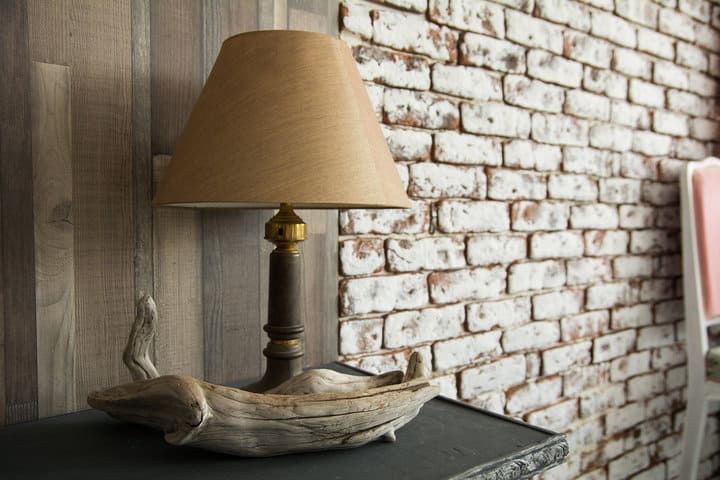
There's one proportion to remember, and it can be expressed two equivalent ways:
- The shade should be roughly two-thirds the height of the base, or
- about one-third of the overall lamp height (base + shade).
For diameter, the shade's bottom edge should be roughly twice the width of the base, or about the same as the base height.
Worked Example
Say you have a lamp with a 26-inch base and pick a 13-inch shade. The shade doesn't sit on top of the base — it slides down over the harp, with the bulb roughly halfway up the shade interior.
| Measurement | Value |
|---|---|
| Base height | 26 in |
| Shade height | 13 in |
| Shade overlap with base (bulb sits mid-shade) | 6.5 in |
| Visible base below shade | 19.5 in |
| Overall installed height | 32.5 in |
The visible proportion ends up close to 2:1 base-to-shade, which looks right. The lesson: account for how far the shade drops over the harp before you commit to a shade height. A few inches in either direction is fine — these are guides, not rules.
What Size Table Lamp For An End Table?
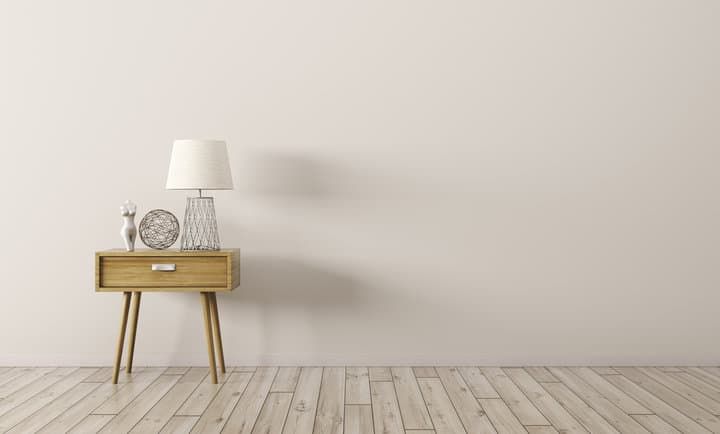
Most end tables run 24–30 inches tall. Subtracting from the 58–64" target gives an overall lamp height in the 28–36" range — comfortably within what retailers label as standard table lamps. For a typical 26–28" end table, aim for a 30–36" overall lamp height.
Low Sofas And Non-Standard Seating
The 58–64" target exists because that's seated eye level for most adults on a standard-height sofa. If you have a deep, low-slung sofa, your seated eye level is lower too — so the principle still applies; just shift the target down (say, 54–60") and size the lamp to match. The rule isn't being broken, it's being recalibrated for your seat height.
Keep other lighting in the room at similar heights. A 32" table lamp next to a 70" floor lamp will read as unbalanced, especially after dark.
Shade Diameter And Table Width
Height isn't the only thing to check. The shade's widest point should sit comfortably within the table surface — never overhang the edge. On a narrow console or a small nightstand, this is often the binding constraint.
Quick check: the shade's bottom diameter should be at least a couple of inches narrower than the table on every side. If a lamp meets the height rule but its shade hangs over the table edge, drop down a size — visually, the lamp will look like it's about to topple.
Final Words
Measure overall height for sizing decisions, base height for shade math, and aim to land the top of the installed lamp at seated eye level — roughly 58–64 inches from the floor. With those three habits, lamp shopping stops being guesswork.