
Can I Take LED Lights On A Plane Carry-On?
Spare lithium batteries and power banks must go in carry-on — never checked bags — no matter how small they are. That rule catches even experienced travelers off guard at the security lane.
 Eugen
EugenEugen Nikolajev
Creator of LED Lighting Info
Hi, I am Eugen. I was always one of those kids who had all sorts of weird lighting gadgets for every occasion.
Now, I want to share my knowledge and experience about lighting with you on LED Lighting Info.
Read my editorial standards
Key Takeaways
Yes, in most cases you can bring LED lights onto a plane in your carry-on. Battery-operated lights are usually permitted, but battery type and size determine the rules, and lithium batteries come with strict limits you need to know before you reach security.
In this guide, I’ll explain:
- Whether flashlights and UV lights are allowed on a plane
- Whether an LED ring light is allowed on the plane
- If battery-powered lights can be carried in hand luggage
- Where to check what you are allowed to take with you
Can I Take A Flashlight On A Plane?
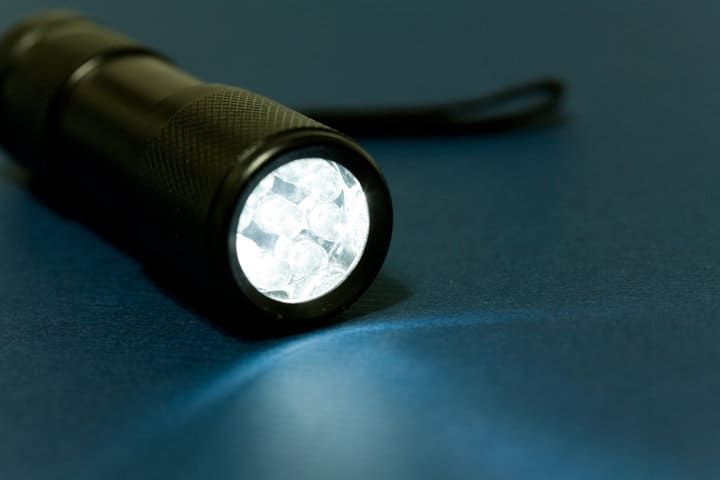
There are plenty of reasons you might want a flashlight on a plane, and the good news is that you usually can.
According to the TSA — which governs security at US airports, including for outbound international flights — flashlights are accepted in both checked bags and carry-on luggage. Inbound international flights are screened by the host country’s security agency before departure, with US Customs and Border Protection handling entry on arrival.
However, that’s all the detail the TSA flashlights page gives — and the official stance is that “the final decision rests with the TSA officer,” so they can confiscate a flashlight if they feel it carries any risk.
Reasons a flashlight may not be permitted include:
- Larger or heavier flashlights that an officer could view as a potential bludgeoning weapon (some travelers use a ~7-inch rule of thumb, though TSA does not publish a specific length)
- If it’s part of a multitool that includes a blade
- Tactical flashlights with sharp strike bezels or other edged features
If your flashlight could be deemed dangerous, it may not be allowed, but a simple LED flashlight will usually be fine.
What about UV flashlights and UV nail lamps that operate as flashlights? UV lights fall under the same flashlight rules and should be fine, but if you’re unsure it’s worth calling the airline to confirm.
One thing to note — if you plan on bringing a UV nail lamp because you’re a nail technician, your nail polishes may not be allowed in carry-on. It often makes sense to pack the polishes in checked baggage. And if the lamp is powered by a built-in lithium battery, the rules in the next section apply.
Can I Bring An LED Ring Light On A Plane?
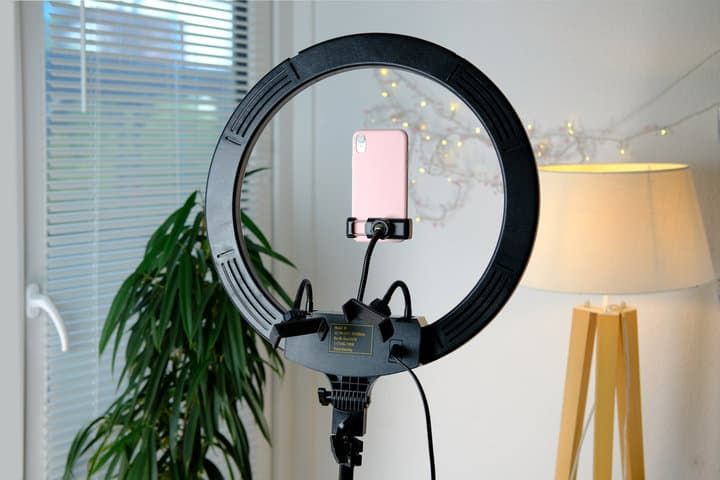
Many vloggers, streamers, and TikTok creators travel with LED ring lights, and the good news is that they’re generally permitted on a plane. Most consumer ring lights either run on AC, take AA batteries, or use a small built-in lithium-ion battery well under the 100 Wh threshold — all of which are within standard carry-on rules covered below.
If for any reason your lights are not permitted, the security team may offer to ship them home for you while you travel onwards — but expect a hefty shipping fee for the privilege.
Are Battery-Powered LED Lights Allowed In Your Carry-On?
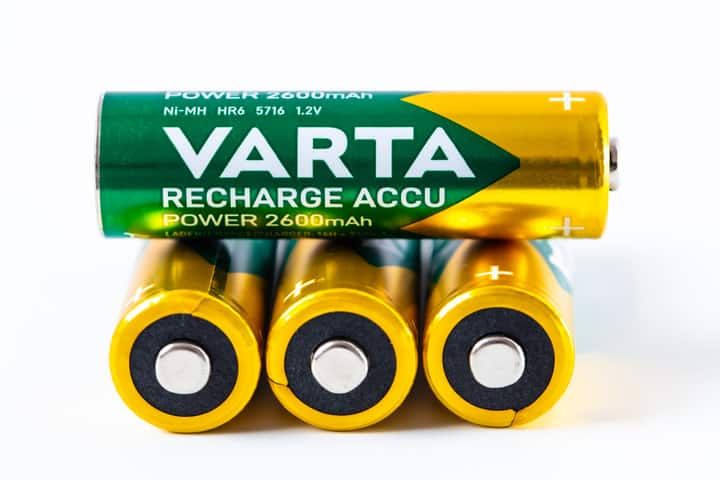
Most LED lights are allowed in hand luggage, but battery-powered ones come with extra rules. The key is to identify which type of battery powers your light, because the limits are very different.
There are two main categories: alkaline (the everyday AA and AAA cells, sometimes called “dry” batteries) and lithium. Alkaline cells power most string lights with a battery box and many simple flashlights. The TSA allows them in both carry-on and checked baggage with no special restrictions.
Lithium batteries are different. They’re what you’ll find in built-in rechargeable LED panels, ring lights, headlamps, and USB power banks — and they’re subject to specific FAA rules because of their fire risk. There are two sub-types: lithium-ion (rechargeable, rated in watt-hours) and lithium-metal (typically non-rechargeable coin cells like CR2032, rated by lithium content in grams).
Here’s how the FAA rules break down for both types:
| Battery | Capacity | Carry-On | Checked Bag | Notes |
|---|---|---|---|---|
| Lithium-ion (installed in device) | Up to 100 Wh | Yes | Yes | FAA recommends carrying in the cabin when possible |
| Lithium-ion (spare / power bank) | Up to 100 Wh | Yes | No | No FAA numeric limit for personal use; airlines may cap |
| Lithium-ion (spare) | 100–160 Wh | Yes (max 2 spares) | No | Airline approval required |
| Lithium-metal (installed or spare) | Up to 2 g lithium content | Yes | Spares: no | Most coin cells fall here |
| Lithium-metal (spare) | 2–8 g lithium content | Yes (max 2 spares) | No | Airline approval required |
| Any lithium battery | Above 160 Wh / above 8 g | No | No | Forbidden on passenger aircraft |
To put the numbers in context: 100 Wh is roughly the capacity of a standard laptop battery, and most consumer ring lights, headlamps, and small LED panels sit well below that. A typical CR2032 watch battery contains less than 0.1 g of lithium, so it’s comfortably inside the 2 g lithium-metal limit.
⚠️ Spare lithium batteries and power banks are forbidden in checked baggage. If your carry-on is gate-checked, you must remove them and keep them with you in the cabin.
“Spare” means any lithium battery not installed in a device — power banks, loose camera batteries, vape cells, replacement 18650s, and so on. Terminals must also be protected against short circuits, either with tape over the contacts, the original retail packaging, or an individual battery case.
Why are lithium batteries treated this way? They’re generally safe, but a damaged or defective cell can go into thermal runaway and ignite. In the cabin, crew can spot smoke and use halon extinguishers or a thermal containment bag right away — in the cargo hold, a fire could grow unnoticed before the suppression system catches it.
One more practical tip: plug-in LED strip lights or decorative string lights with a chunky transformer/adapter can look unusual on the X-ray and occasionally trigger a bag check. Pack them somewhere accessible so an officer can inspect quickly without unpacking the rest of your carry-on.
Where To Check What You Can Bring Onboard
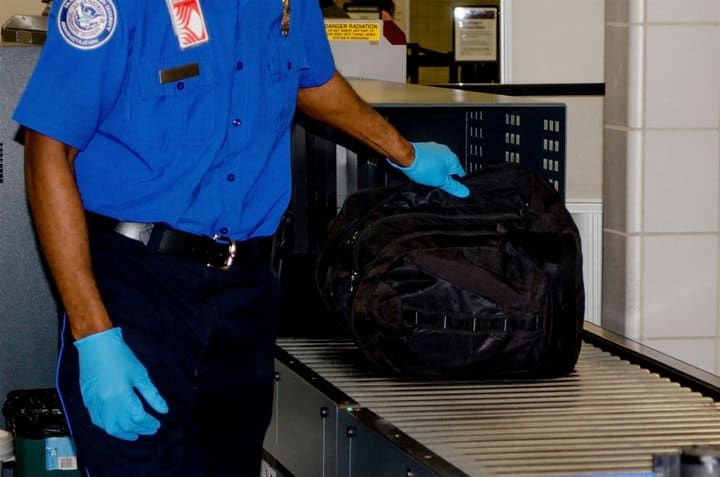
When in doubt, check the security agency for your country and the airline you’re flying. The official sources to bookmark:
- USA — TSA’s What Can I Bring? tool lets you search any item by name. The FAA PackSafe lithium battery page is the authoritative source for the watt-hour and gram limits.
- UK — the Civil Aviation Authority (CAA) publishes a hand-luggage and dangerous-goods guide for passengers.
- EU — EASA passenger guidelines mirror the IATA framework used across most European carriers.
- International flights — the IATA Dangerous Goods Regulations are the global baseline that most airlines follow. Individual carriers can be stricter, so check your specific airline’s dangerous goods policy in addition to your country’s rules.
If you’re a professional traveling with serious gear — a large LED panel kit with 100–160 Wh batteries, for example — you’ll typically need written approval from the airline before you fly. Contact the carrier’s dangerous goods desk, describe the equipment and battery specs, and request the approval in writing. Carry that confirmation (and a manufacturer spec sheet showing the watt-hour rating) in your hand luggage in case you’re asked at the gate.
These rules are current at the time of writing and don’t change often, but it’s worth a fresh check with TSA, the FAA, or your airline before any trip — particularly for international travel.
Summary: What You Can And Can’t Bring
The short version, for anyone skimming to the end:
- LED flashlights, ring lights, and panels: generally fine in carry-on. Tactical or oversized flashlights can be refused at the officer’s discretion.
- AA / AAA (alkaline) batteries: no special restrictions, carry-on or checked.
- Lithium batteries installed in a device (≤100 Wh): carry-on or checked, no airline approval needed; carry-on is preferred.
- Spare lithium batteries and power banks: carry-on only, never in checked bags. Protect the terminals.
- 100–160 Wh / 2–8 g lithium-metal: carry-on with airline approval, max two spares per passenger.
- Above 160 Wh or above 8 g lithium: forbidden on passenger aircraft.
Pack lithium batteries in your hand luggage, keep proof of any airline approvals on you, and check the TSA’s What Can I Bring? tool or your airline’s dangerous goods page if anything in your kit is unusual. Do that and your LED gear will reach your destination with you.