Does LED Light Kill Germs?
UV-C has been sterilizing hospital wards since the 1930s, but the wavelength that destroys SARS-CoV-2 in seconds is the same one that burns human tissue without you feeling a thing.
 Eugen
EugenEugen Nikolajev
Creator of LED Lighting Info
Hi, I am Eugen. I was always one of those kids who had all sorts of weird lighting gadgets for every occasion.
Now, I want to share my knowledge and experience about lighting with you on LED Lighting Info.
Read my editorial standards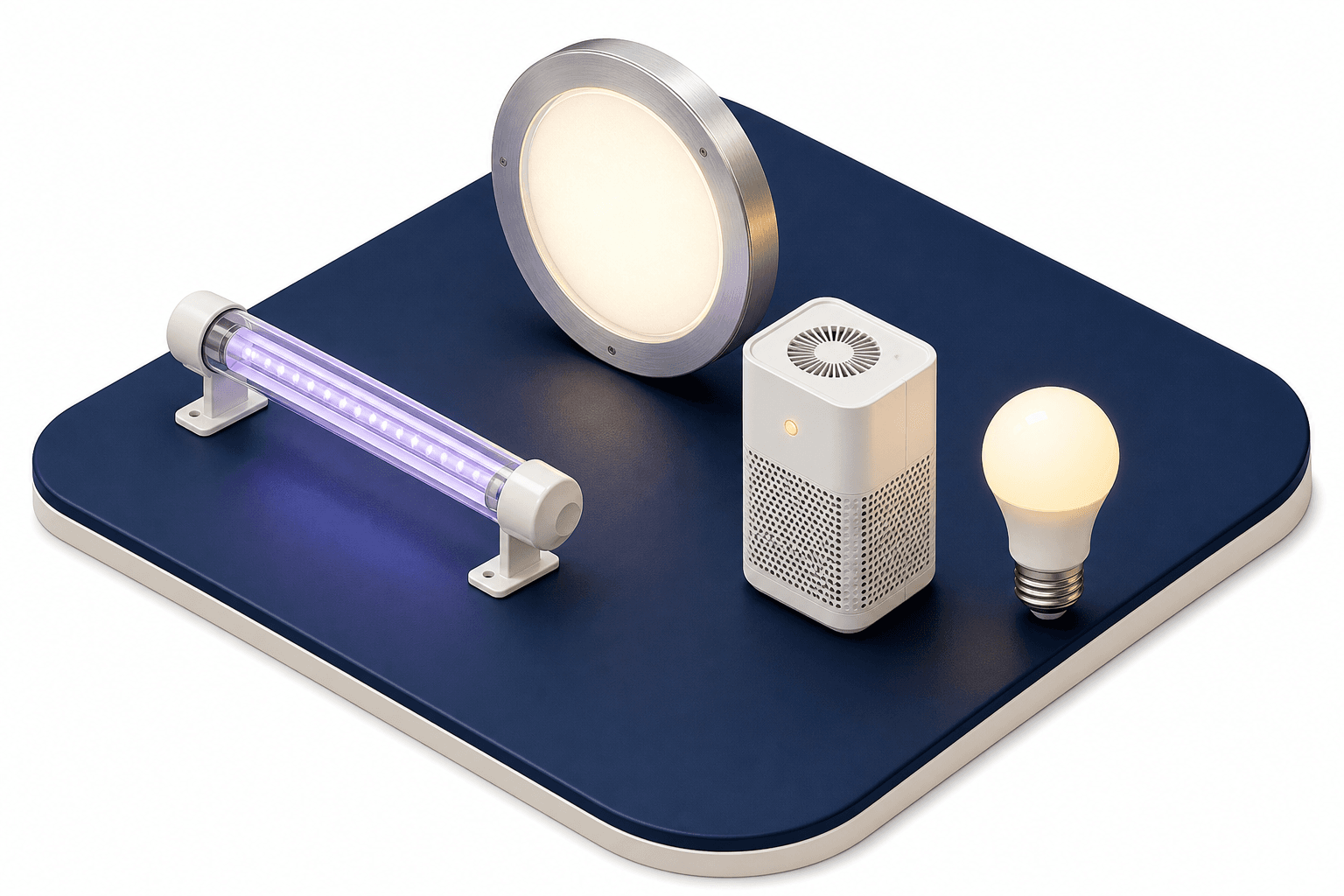
Key Takeaways
Standard household LEDs do not kill germs. Purpose-built germicidal LEDs operating at UV-C (255–280 nm) or violet-blue (around 405 nm) wavelengths can effectively sanitize surfaces, air, and water, neutralizing bacteria, mold, and in many cases viruses.
UV-C light has been used for hospital and water disinfection since the 1930s, but can modern LED technology do the same job? In short, yes: purpose-built germicidal LEDs can sterilize surfaces, air, and water. The catch is that this only happens at specific wavelengths, and the same energy that destroys microbes can also damage human tissue.
What LED Light Kills Bacteria?
Shining certain colored LED lights on surfaces can kill germs, bacteria, and other pathogens. Different wavelengths target microbes through different mechanisms — some by exciting molecules inside bacterial cells, others by directly damaging DNA.
White: Antimicrobial white LEDs blend conventional phosphor-converted white with a violet (~405 nm) emitter. The violet component photoexcites natural porphyrins inside bacterial and fungal cells, producing reactive oxygen species that kill them. They're effective against bacteria, mold, and fungi, and — unlike UV — safe for continuous use around people, plants, and pets. That's why hospitals run them in occupied rooms throughout the day.
Blue: Intensified blue light (roughly 405–470 nm) uses the same porphyrin/reactive-oxygen mechanism at higher intensity. It has been shown to kill E. coli, Listeria, and MRSA bacteria. Like antimicrobial white, it works on illuminated surfaces only, acts more slowly than UV-C, and is considered safe for human exposure at typical room intensities.
Violet: Violet/violet-blue light around 405 nm inactivates a broad range of bacteria (including MRSA), molds, and some lipid-enveloped viruses by exciting endogenous porphyrins to produce reactive oxygen species. Unlike UV, 405 nm is considered safe for occupied rooms, which is why hospitals are deploying it for continuous surface disinfection. It's slower than UV-C, but it doesn't require evacuating the space.
LED lights also come as UV (ultraviolet) emitters. UV-LEDs are increasingly used as a replacement for traditional mercury-vapor UV lamps, particularly in germicidal applications (UVGI) across air, surface, and water purification.
Compared with mercury sources, UV-C LEDs contain no mercury, consume less energy, switch on instantly, and have a much smaller form factor. UV-C LEDs used in commercial disinfection (typically 255–280 nm) also do not produce ozone — unlike some mercury-vapor lamps that emit at 185 nm.
Traditional UV light is harmful to human eyes and skin. When places like hospitals are sanitized with conventional UV-C, the area has to be vacated first. Acute overexposure to UV-C from mercury-vapor lamps can cause severe sunburn and eye damage, and in extreme cases, contribute to skin cancer.
Various UV Wavelengths
UV occupies the slice of the electromagnetic spectrum between visible light and X-rays. The UV range is conventionally divided into UV-A, UV-B, and UV-C:
- UV-A: Called near-UV or black light, UV-A has a wavelength in the range from 315 nm to 400 nm.
- UV-B: This is the medium wave light and has a wavelength in the range from 280 nm to 315 nm.
- UV-C: This segment of UV is known as short wave UV light and has a wavelength in the range from 200 nm to 280 nm.
In disinfection products, UV-C is the workhorse. Wavelengths around 260–265 nm, where DNA most strongly absorbs UV, are the most effective for killing germs, viruses, and bacteria. Legacy low-pressure mercury lamps emit at 254 nm — just below the theoretical peak measured by Frederick Gates back in 1929 — while modern UV-C LEDs are typically produced in the 265–285 nm range.
Here's how it works:
UV-C photons damage the nucleic acids of microorganisms — both DNA and RNA — by inducing cross-links between adjacent pyrimidine bases. The cell can no longer replicate and is rendered biologically inactive. This same photodamage process happens naturally with the small fraction of solar UV that reaches the Earth's surface.
UV-C LEDs used in disinfection (typically 255–280 nm) do not produce ozone. Ozone is only generated by shorter wavelengths in roughly the 160–240 nm range — notably the 185 nm line emitted by some mercury-vapor lamps. This is why germicidal lamps are often labelled "ozone-free": their quartz envelopes are doped to block 185 nm while still transmitting 254 nm.
What About Far-UVC?
A newer category of germicidal light operates at around 222 nm, known as Far-UVC. Unlike conventional UV-C, Far-UVC cannot penetrate the outer dead-cell layer of human skin or the tear film of the eye — so in principle it can be used in occupied rooms without the same exposure risks. Studies have shown it can inactivate airborne bacteria and viruses, including coronaviruses, making it a promising option for offices, schools, classrooms, and transit spaces.
Far-UVC is still maturing as a commercial technology. Long-term safety studies are ongoing, and current products typically use krypton-chloride excimer lamps rather than true LEDs, although 222 nm LEDs are in active development. For consumers, Far-UVC fixtures designed for occupied spaces should carry IEC 62471 photobiological safety classification.
Does UV Light Kill Viruses?
Yes, UV-C light can inactivate a broad range of viruses, including influenza viruses and coronaviruses such as SARS-CoV-2.
The International Ultraviolet Association (IUVA) confirmed during the COVID-19 pandemic that UV-C is effective against the virus that causes COVID-19 when used at validated doses, and Far-UVC at 222 nm has also been shown to inactivate it.
The critical caveat: the same wavelengths that destroy viruses also damage human tissue. UV-C should never be used directly on skin or eyes.
To understand why UV-C works on both bacteria and viruses — and why it has to be aimed at surfaces, air, or water rather than people — it helps to compare the two:
| Property | Bacteria | Viruses |
|---|---|---|
| Size | 0.5–5 micrometers | 20–300 nanometers — small enough to pass through cloth or standard surgical masks |
| Living status | Single-celled living organisms that grow and reproduce on their own | Obligate intracellular parasites — cannot replicate without hijacking a host cell |
| Where they survive | On surfaces, in soil, food, water, and the body | Cannot replicate outside a host, but many remain infectious on surfaces for hours to days |
| Treatment in humans | Antibiotics | Antivirals or vaccines — antibiotics have no effect |
| Common examples | Pneumonia, tuberculosis, food poisoning, MRSA | COVID-19, influenza, polio, measles, HIV/AIDS |
| UV-C mechanism | DNA damage prevents reproduction | DNA/RNA damage prevents replication in a host cell |
Generally speaking, UV-C kills almost everything: bacteria, fungi, viruses, and mold spores. The catch is dose. How quickly UV-C inactivates a pathogen depends on the lamp's irradiance, the exposure time, the distance from the source, and the species being targeted. Common bacteria can be inactivated within seconds at close range from a typical consumer UV-C lamp, while harder organisms like mold spores may require minutes.
The International Ultraviolet Association (IUVA) has informed the public that there are no protocols permitting UV light to be used directly on the human body at the wavelengths and exposures proven to efficiently kill viruses. The conditions known to inactivate pathogens are the same conditions that cause severe sunburn and eye damage in humans.
Can UV LED Light Kill Bacteria In Water?
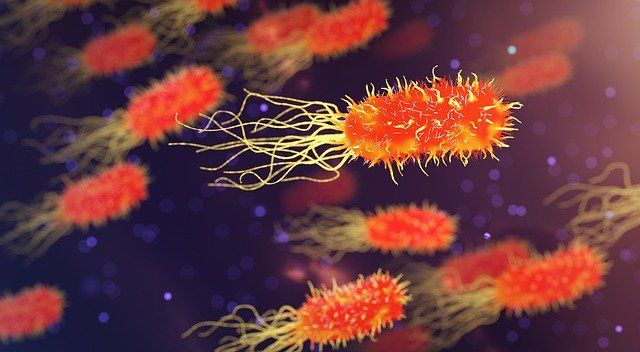
Industrial UV-C LED reactors — from manufacturers such as AquiSense — pipe drinking water past banks of UV-C LEDs emitting in the 265–285 nm range. The UV-C damages the DNA of any bacteria, viruses, or protozoa suspended in the water as it flows through, with no chemicals added.
Smaller UV-C LED chips are also built into reusable drinking water bottles. The lamp zaps the water for around 60 seconds, and according to manufacturer testing, can neutralize up to 99.999% of bacteria and viruses. That five-log reduction figure typically comes from in-house testing rather than independent certification — for whole-house or plumbed-in systems, look for NSF/ANSI 55 Class A certification, which validates a ≥40 mJ/cm² dose against bacteria, viruses, and protozoa like Cryptosporidium and Giardia.
UV-C leaves no residue or chemical taste in the water, and many users report the water actually tastes better than from chemically treated supplies.
Other UV-C Water Applications
Aquarium sterilizers use a submerged UV-C bulb in a flow chamber to keep a fish tank free of pathogens, algae spores, and parasites. The principle is the same as in a drinking-water reactor: UV-C is absorbed by microorganisms suspended in the water as it pumps past the lamp, and the water itself is unaffected.
In every water application, how quickly the germs are killed depends on dose — a product of lamp irradiance, exposure time, and distance. A low-intensity lamp running for a long contact time can deliver the same kill rate as a high-intensity lamp running briefly. The effective dose also drops off sharply as the distance from the lamp increases, which is why reactors are designed with thin annular flow paths to keep all water close to the source.
Safety Warnings
UV-C is a genuine hazard. The same energy that destroys microorganisms damages exposed human tissue, and unlike sunlight, you cannot feel UV-C while it is burning you — symptoms appear hours later. A few non-negotiable rules:
- Never point a UV-C wand or lamp at skin, eyes, pets, or houseplants.
- Operate room sanitizers only when the space is empty. Follow the manufacturer's cool-down or ventilation time before re-entering.
- When working around a running UV-C source, wear UV-rated eye protection and cover exposed skin.
- For consumer products, check for IEC 62471 photobiological safety classification.
- For water-treatment products, look for NSF/ANSI 55 (Class A or Class B) certification — these standards independently validate efficacy claims rather than relying on in-house manufacturer testing.
- Treat UV-C marketing claims like "99.999% kill rate" with healthy skepticism unless they reference an independent test standard and a specific organism.
Final Words
LED-based disinfection is real and increasingly practical — but it isn't a replacement for the basics. There is no substitute for washing your hands with soap and water for at least 20 seconds, and standard surface cleaning still matters for most household needs.
Where germicidal LEDs do shine is in specific jobs the alternatives can't handle well: continuous violet-blue surface disinfection in occupied hospital rooms, point-of-use UV-C water purification, and emerging Far-UVC for occupied spaces. My rule of thumb is to look for certified products, follow the exposure guidelines, and treat any UV-C source with the same caution you would a power tool — the energy that kills the microbes will not distinguish between them and you.