
Minimum Load
The lowest wattage a dimmer switch needs to function properly. Many older dimmers require 40-60W minimum — a single 9W LED bulb won't meet that threshold, causing flickering or failure to dim.
Every dimmer switch has a minimum load specification — the lowest total wattage of connected bulbs it needs to operate correctly. For dimmers designed in the incandescent era, this is typically 25-60W. A single 60W incandescent bulb met that requirement easily. A single 9W LED does not.
When the connected LED load falls below the dimmer's minimum, strange things happen. The dimmer can't reliably detect the load, so it might flicker, buzz, refuse to turn on, randomly shut off, or only work in a narrow brightness range. Adding more LED bulbs to the same dimmer circuit can fix this — three 9W bulbs (27W total) might satisfy a 25W minimum where one wouldn't.
Modern LED-rated dimmers have minimum loads as low as 5-10W, specifically to handle single LED bulbs. If you're replacing incandescent bulbs with LEDs one fixture at a time and experiencing issues, check your dimmer's minimum load spec. It's printed on the dimmer or available in the spec sheet — and it's the single most common cause of "my new LED doesn't work with my dimmer."
Related Terms
- Dimming Range
The brightness span a dimmer can achieve — typically expressed as a percentage (e.g., 5%-100%). A wider range means dimming to a lower level without flickering or shutting off.
- Trailing Edge Dimmer
A dimmer type that cuts the trailing end of each AC wave cycle. Smooth, quiet, and compatible with most LED bulbs — the recommended type for LED dimming.
- Flicker
Rapid, repeated changes in light output. Can be visible (strobe effect) or invisible but still cause headaches. Usually caused by incompatible dimmers or poor LED drivers.
Mentioned in
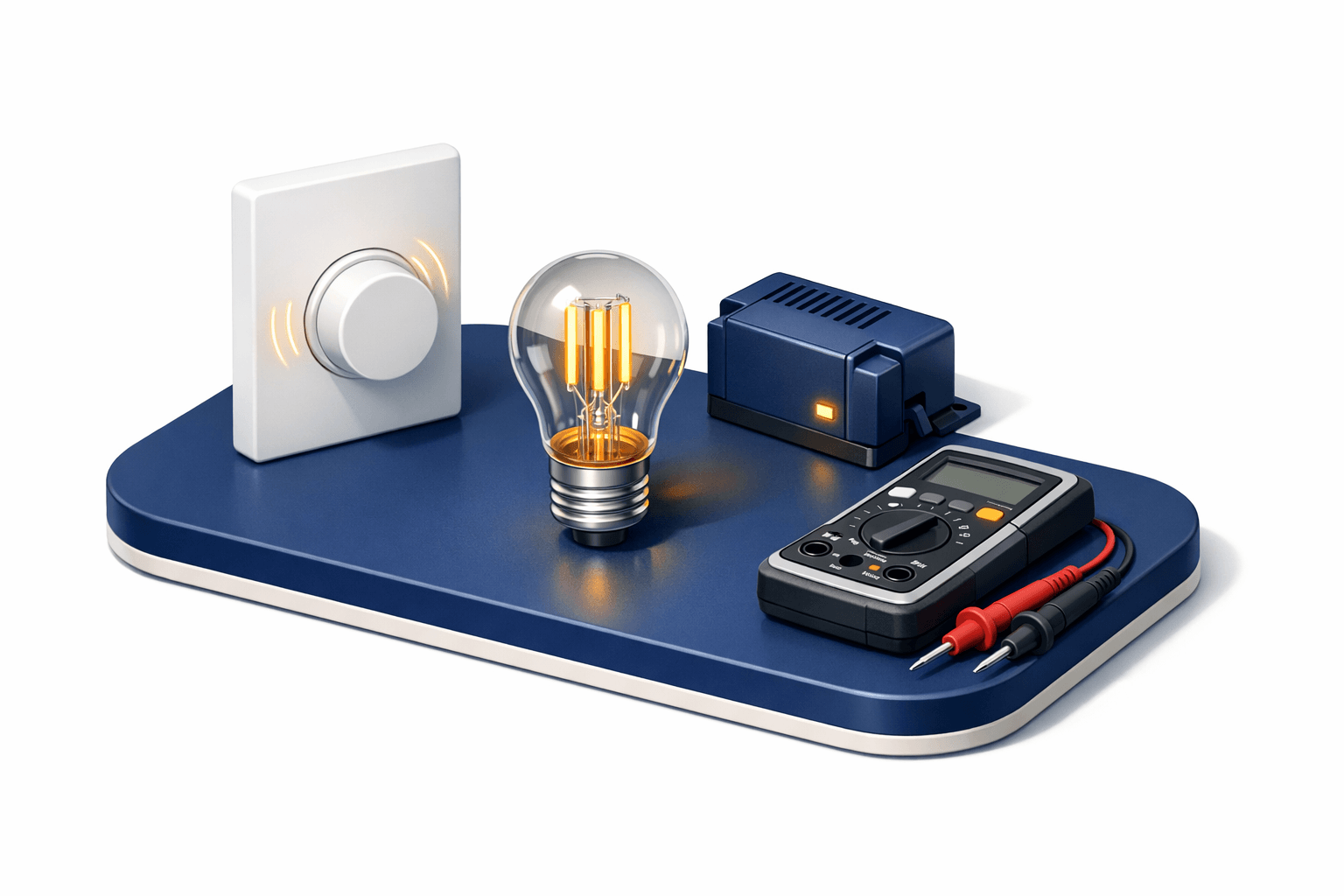
Why Is LED Light Buzzing When Dimmed? 4 Causes + Fix
A single 9W LED can buzz on a perfectly good dimmer just by falling below its 25–40W minimum load — the bulb isn't broken, the math is off.
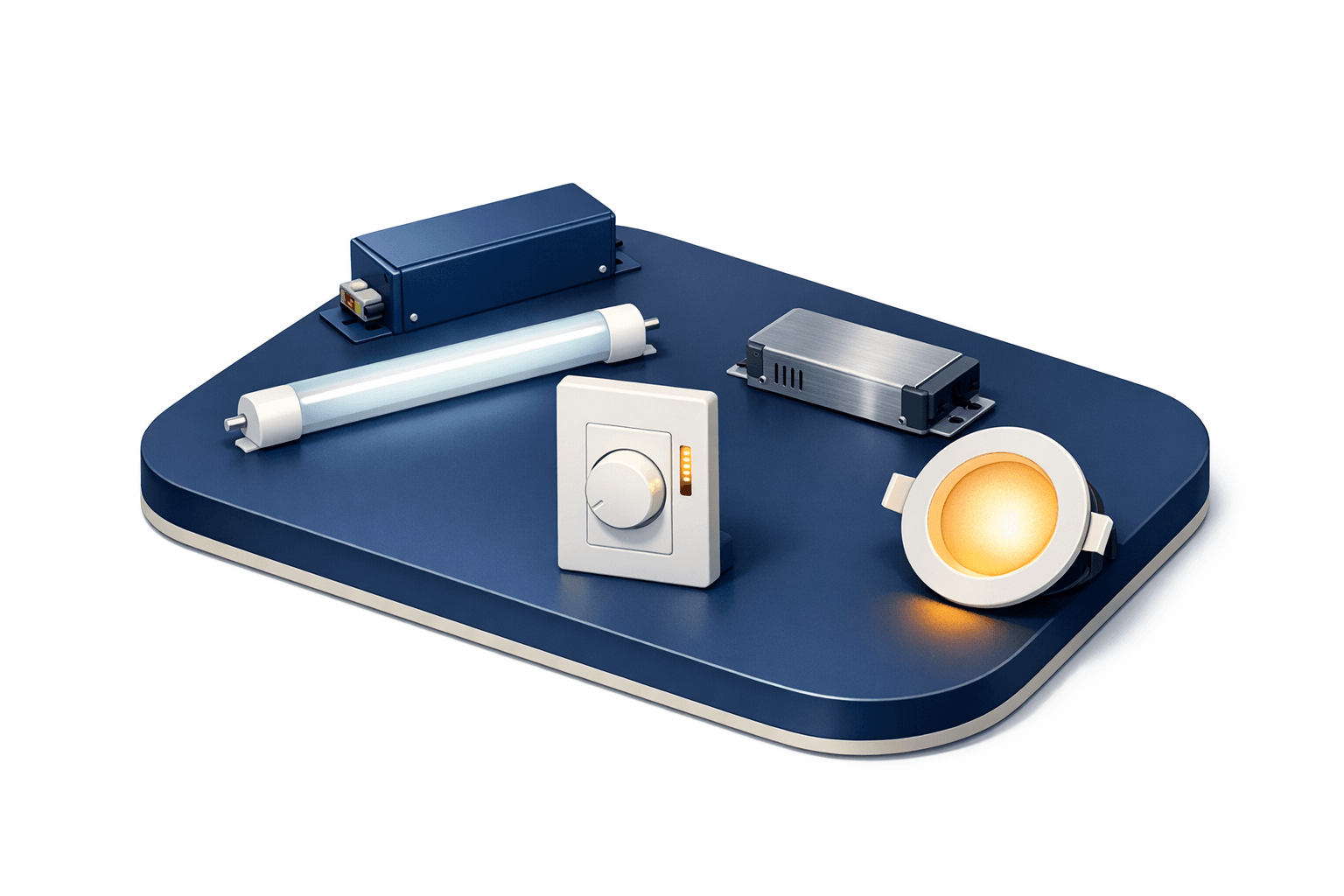
Can You Put A Dimmer Switch On Fluorescent Lights?
Your fluorescent lamp cuts out while the dimmer dial still has a quarter of its travel left — that's the dead zone, and it's not a wiring fault. It's the ballast hitting its minimum load threshold before the slider bottoms out.
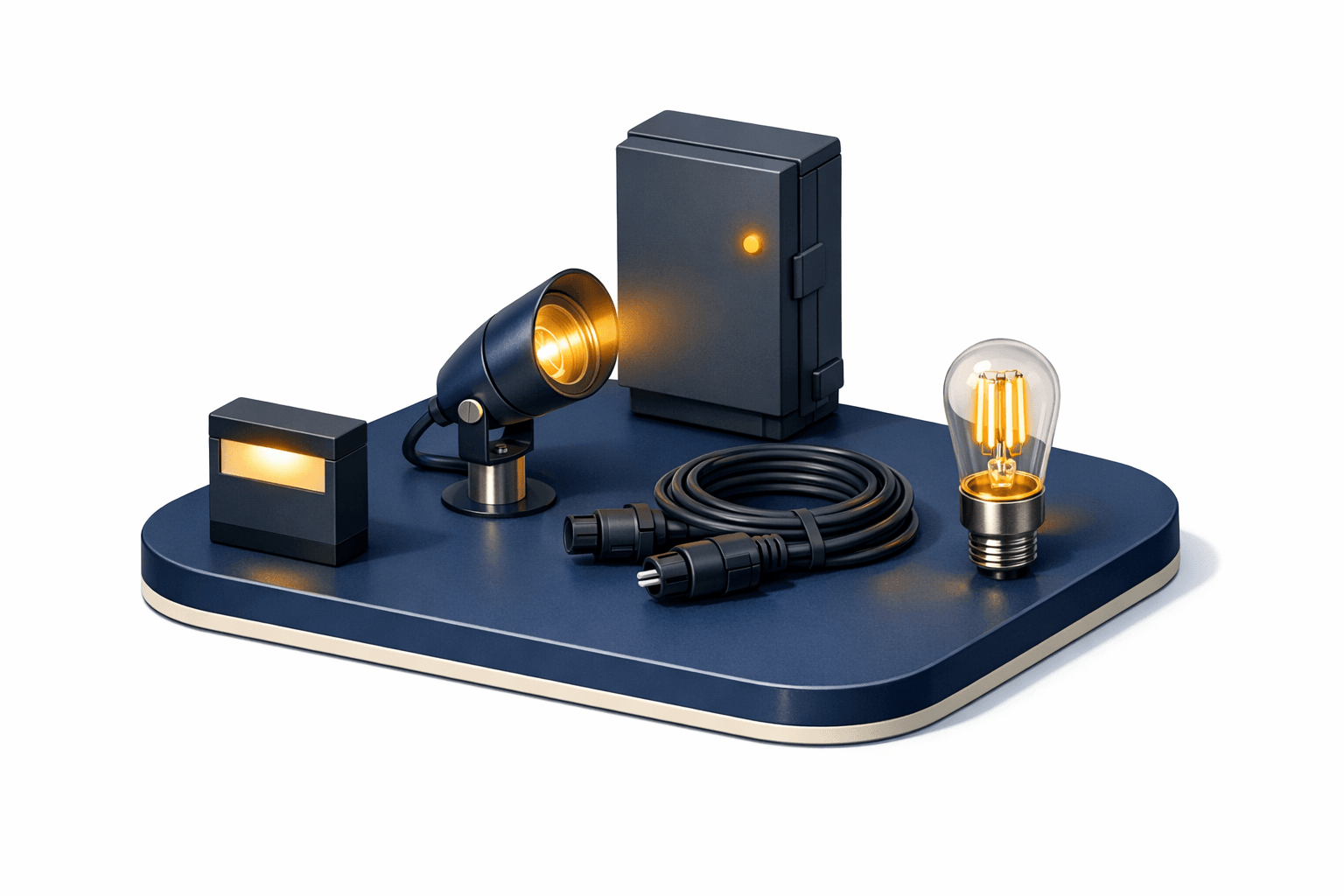
What Causes Landscape Lights To Flicker?
Older magnetic transformers need a minimum wattage load to regulate properly — swap in all-LED fixtures and your system can flicker simply by drawing too little power. It's one of several causes that only appear once halogens are out of the picture.