
What Causes Landscape Lights To Flicker?
Older magnetic transformers need a minimum wattage load to regulate properly — swap in all-LED fixtures and your system can flicker simply by drawing too little power. It's one of several causes that only appear once halogens are out of the picture.
 Eugen
EugenEugen Nikolajev
Creator of LED Lighting Info
Hi, I am Eugen. I was always one of those kids who had all sorts of weird lighting gadgets for every occasion.
Now, I want to share my knowledge and experience about lighting with you on LED Lighting Info.
Read my editorial standards
Key Takeaways
Flickering landscape lights are usually caused by one of a handful of issues: a loose bulb or corroded socket, a transformer that's overloaded or failing, dirt and moisture in a wire connection, voltage drop along a long run, or an LED driver that doesn't play nicely with the transformer.
Here's how to narrow it down. The table below summarises the most common causes and what each one looks like in the yard. Below it, I walk through each cause and how to fix it.
| Cause | Symptom Pattern | Difficulty to Fix | Tools Needed |
|---|---|---|---|
| Loose bulb or corroded socket | One fixture flickers | Easy | Contact cleaner / abrasive pad |
| Overloaded transformer | All fixtures flicker or dim | Easy | None |
| Dirty or corroded wire connection | Some fixtures flicker | Easy | Wire stripper, silicone-filled connectors |
| Voltage drop | Fixtures at end of run dim or flicker | Hard | Multimeter |
| LED driver / minimum-load mismatch | Random flicker, often at startup | Medium | Multimeter |
| Photocell or timer glitch | Flicker only at dusk or dawn | Easy | None |
| Failing transformer | All fixtures flicker, dim, or fail | Easy | Multimeter |
What Causes Low Voltage Landscape Lights To Flicker?
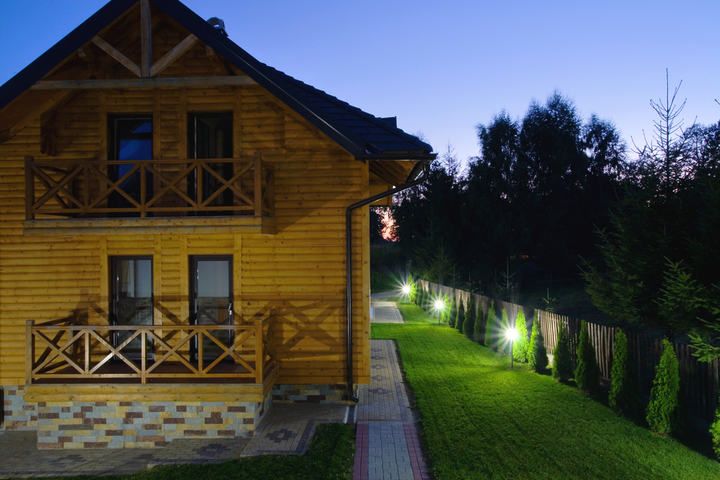
When the lights start flickering, let's work from the easiest checks first — no point digging up cables to chase a problem that turns out to be a loose bulb.
A Loose Bulb Or Corroded Socket
If only one fixture is flickering, this is almost always the cause. Outdoor sockets cycle through heat, cold, and moisture, which loosens bulbs and corrodes the contact points inside the socket.
Switch the power off, pull the bulb, and check that the socket contacts are clean and springy. A bit of contact cleaner or a careful wipe with a fine abrasive pad usually does the job. Reseat the bulb firmly and the flicker is often gone.
Overloaded Transformer
If every fixture is flickering, the next check is the transformer. Every landscape lighting setup needs a transformer, which steps the voltage down from line voltage to a low-voltage output for outdoor lighting — typically a 12V tap, with most modern multi-tap transformers also offering 13V, 14V, and 15V taps so you can compensate for voltage drop on longer runs.
Each transformer has a maximum wattage rating. Entry-level residential units typically start around 75W to 150W. Mid-range residential transformers are commonly 300W or 600W, and professional and commercial multi-tap transformers go up to 900W, 1200W, or larger multi-zone configurations.
You shouldn't load a circuit to more than 80% of the transformer's rating. That headroom matters because LED drivers pull a brief inrush current at startup, line voltage fluctuates throughout the day, and a transformer running closer to its limit runs hotter and wears out faster. A 300W transformer should be carrying no more than 240W of fixtures.
If you didn't do the math at install, add up the wattage of every fixture on the transformer. If the total is over 80% of the transformer's rating, that's the problem.
Dirty Or Corroded Connections
Once the transformer is ruled out, the next culprit is the wire connections. The main wires themselves rarely fail unless they've been physically damaged. The weak spots are the splices where each fixture taps in.
If the original installer used cheap pierce-point or push-pin connectors and the system has aged a few seasons, water and dirt have likely worked their way in. Buried connectors and connectors lying directly on the soil are especially prone to this.
The fix — silicone-filled wire nuts or proper direct-burial connectors — I cover further down.
Voltage Drop
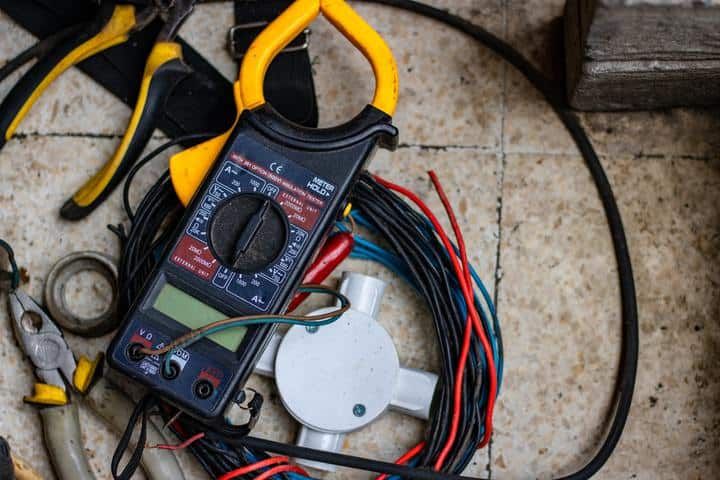
If the fixtures at the far end of a run flicker or look noticeably dimmer than the ones near the transformer, it's voltage drop. Wires have resistance, and that resistance bleeds voltage off as current travels along the run. Use wire that's too thin or runs that are too long, and the last fixtures don't get enough voltage to run reliably.
For most residential landscape lighting, the rule of thumb is to use the right wire gauge from the start: 12 AWG cable for runs over 100 feet, and 14 or 16 AWG for shorter runs and lower wattage. If you're not sure what gauge was buried at install, dig up a small section to check the print on the jacket — the AWG is usually marked.
Once you know the gauge, you can use the wire's constant to check whether the drop is acceptable. The constants below are for copper wire, which is what almost all landscape lighting cable uses:
| Wire Gauge | Constant |
|---|---|
| 18/2 | 1380 |
| 16/2 | 2200 |
| 14/2 | 3500 |
| 12/2 | 7500 |
| 10/2 | 11920 |
| 8/2 | 18960 |
The voltage drop formula is three steps:
- Step 1: Total wattage on the run × distance in feet = X
- Step 2: X ÷ wire constant = Y
- Step 3: Y × 2 = voltage drop (in volts)
On a 12V system, you generally want the drop under 1.2V (about 10%), and the voltage measured at the farthest fixture should ideally stay above 10.8V — with 10.5V as the absolute floor before fixtures start to dim or flicker.
LED Driver And Minimum-Load Issues
This is one that didn't exist back when everything outdoors was halogen. LED fixtures have built-in drivers, and a poorly matched or low-quality driver can flicker even when the supply voltage is fine. If the flicker is random and only affects LED fixtures, swapping a single suspect fixture for a known-good one is usually the quickest diagnostic.
A second LED-specific gotcha is minimum load. Many older magnetic transformers — designed back when halogen was standard — need a minimum total wattage on the secondary side to regulate properly. An all-LED setup with a small total wattage can fall below that threshold and flicker, even though everything is wired correctly. Modern LED-rated transformers usually have no minimum load, so swapping the transformer for one explicitly rated for LED is the fix.
Photocell Or Timer Glitches
If the flickering only happens around dusk or dawn — and the lights run cleanly the rest of the night — the problem is almost certainly the transformer's photocell or timer, not the wiring. The photocell sits right on the threshold between "dark enough to switch on" and "still bright enough to switch off," and a dirty or aging sensor can hover in that grey zone for several minutes, switching the transformer on and off rapidly.
Wiping the photocell clean fixes it surprisingly often. If it's stuck or aged out, a replacement photocell is cheap and easy to swap.
A Failing Transformer
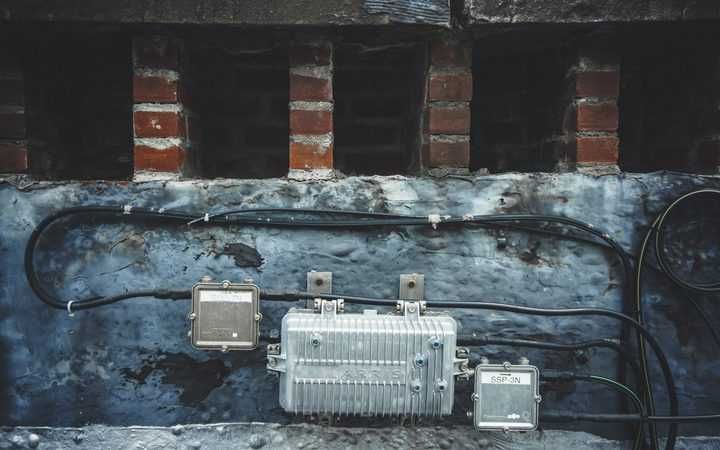
A transformer that's overloaded is one thing — a transformer that's worn out is another. After years of outdoor service, water ingress, heat cycles, and rusted internals can leave it putting out unstable voltage even when the load is well within spec.
Open the housing and look for rust, scorch marks, bulged components, or anything that looks like it's overheated. If the visual inspection is clean, grab a multimeter and check both sides:
- Input should read 120V AC (in North America).
- Output should read close to the rated tap — 12V AC on the 12V tap, 14V AC on the 14V tap, and so on, within roughly ±10%.
If the no-load output measures more than about 10% below the rated voltage (below ~10.8V on a 12V tap), the transformer is failing and should be replaced.
How To Fix Flickering Landscape Lighting

How you fix it depends on what's causing it. Always switch off the power before opening the transformer or working on connections.
Reduce The Load Or Upgrade The Transformer
If the transformer is overloaded, you've got two options: reduce the load or increase the capacity.
Removing a couple of fixtures is the simpler path, but it's a downgrade. If you've planned to expand the system later, the better move is to swap in a transformer rated for higher wattage. Every fixture stays in place and you've got headroom for additions.
Clean And Replace Bad Connections
For dirty connections, redo them properly. Cut the bad section out, strip back to clean copper, and re-splice with a silicone-filled wire nut or a proper direct-burial connector. Silicone-filled connectors give the best long-term seal and don't degrade the way pierce-point connectors do.
Don't reuse the old connector — once water has gotten in once, it'll keep getting in.
Address Voltage Drop
If voltage drop is the issue, you've got two real fixes — neither of them quick.
The thorough fix is to dig up the wire and replace it with a heavier gauge. A lot of work, but it solves the problem permanently.
The smarter fix is usually to rewire from a long daisy-chain into a hub layout (also called a "T" layout). Instead of one wire snaking from fixture to fixture, you run several shorter spurs from the transformer — or from a central junction — each feeding a smaller group of fixtures. The professional version of this is the equalised hub method, where every fixture has an equal-length lead running back to a central hub, so every fixture sees the same voltage.
One thing worth clearing up: low-voltage landscape lights are essentially never wired in true series — current doesn't flow through one fixture into the next. Standard daisy-chain wiring is electrically already parallel; the fixtures just tap in sequentially along a shared run. The distinction that matters for voltage drop is daisy-chain vs hub, not series vs parallel.
Splitting the load this way means less current flows through any single conductor, so the drop on each branch is smaller. You can also raise the transformer tap from 12V to 13V or 14V to compensate for the remaining drop — exactly what those higher taps exist for.
Replace A Failing Transformer
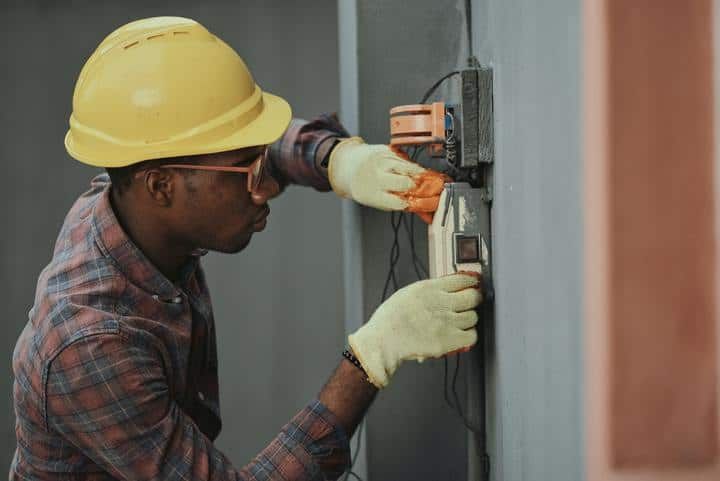
Once a transformer has failed, replace it. Water or heat damage makes it unsafe, and a repair isn't worth the time.
It's a straightforward swap: kill the power, disconnect the input and output wires, unscrew the housing from its mount, and wire the new one in the same way. A new transformer should give you years of trouble-free service.
Also read: How To Set Landscape Lighting Timer?
Final Words
Flickering landscape lights look intimidating, but the cause almost always comes down to a loose bulb, a tired transformer, or a wire splice that's let some moisture in. Work from the easiest checks first — bulbs, then transformer, then connections — and only get into voltage-drop math if the simpler causes don't pan out.
FAQ
Why is only one of my landscape lights flickering?
When a single fixture flickers and the rest are fine, it's almost always a loose bulb or corroded socket contact in that one fixture. Outdoor sockets cycle through heat, cold, and moisture, which loosens bulbs and oxidises the contact points. Switch off the power, pull the bulb, clean the socket contacts, and reseat the bulb firmly.
Can I run LED and halogen fixtures on the same transformer?
You can, but it's worth checking the transformer is rated for LED. Older magnetic transformers designed for halogen sometimes need a minimum load to regulate properly, and the LED portion of the run can flicker if the total wattage is too low. Modern LED-rated electronic transformers handle mixed and very low loads cleanly.
What wire gauge should I use for landscape lighting?
For most residential setups, 12 AWG cable is the right choice for runs over 100 feet, and 14 or 16 AWG is fine for shorter runs and lower wattage. Heavier gauge means lower resistance and less voltage drop, so when in doubt, go thicker — especially if you might extend the run later.
What output voltage should a 12V landscape transformer measure?
The 12V tap should read close to 12V AC at the terminals with no load, and the no-load reading should sit within roughly ±10% of the rated tap voltage. If it measures below about 10.8V, the transformer is likely failing. Multi-tap transformers also offer 13V, 14V, and 15V taps, which read correspondingly higher.
Does a hub layout eliminate voltage drop?
No. Voltage drop happens on any conductor carrying current. A hub or 'T' layout reduces it by splitting the total load across multiple shorter runs, so each branch carries less current over a shorter distance. The equalised hub method (equal-length leads to every fixture from a central hub) is the closest you can get to delivering identical voltage to every fixture.