
Neutral Wire
The return path for electrical current in a circuit (usually the white wire in US wiring). Many smart switches require a neutral wire — older homes often don't have one in the switch box.
In a standard US electrical circuit, the hot wire (black) delivers power and the neutral wire (white) provides the return path. At the switch box, the neutral completes the circuit and provides a reference voltage. Most smart switches need this neutral wire to power their internal electronics — the Wi-Fi radio, processor, and LED indicator that stay active even when the light is off.
The problem is that many homes built before the 1980s don't have a neutral wire in the switch box. Electricians used to run only the hot wire and the switched wire (called a switch loop), which is enough for a simple mechanical switch but not enough for smart electronics.
If you open your switch box and find only two wires (plus ground), you have three options: run a new neutral wire from the breaker panel (expensive), use a smart switch that doesn't require a neutral (Lutron Caseta, some Inovelli models), or use smart bulbs instead of a smart switch. The no-neutral options have improved significantly and now work reliably with most LED loads.
Specifications
| Color (US) | White |
| Required by | Most smart switches, some dimmers |
| Missing? | Look for 'no neutral required' switches |
Related Terms
- Three-Way Switch
A wiring configuration that controls one light from two different switch locations — common for hallways, staircases, and rooms with multiple entrances.
Mentioned in
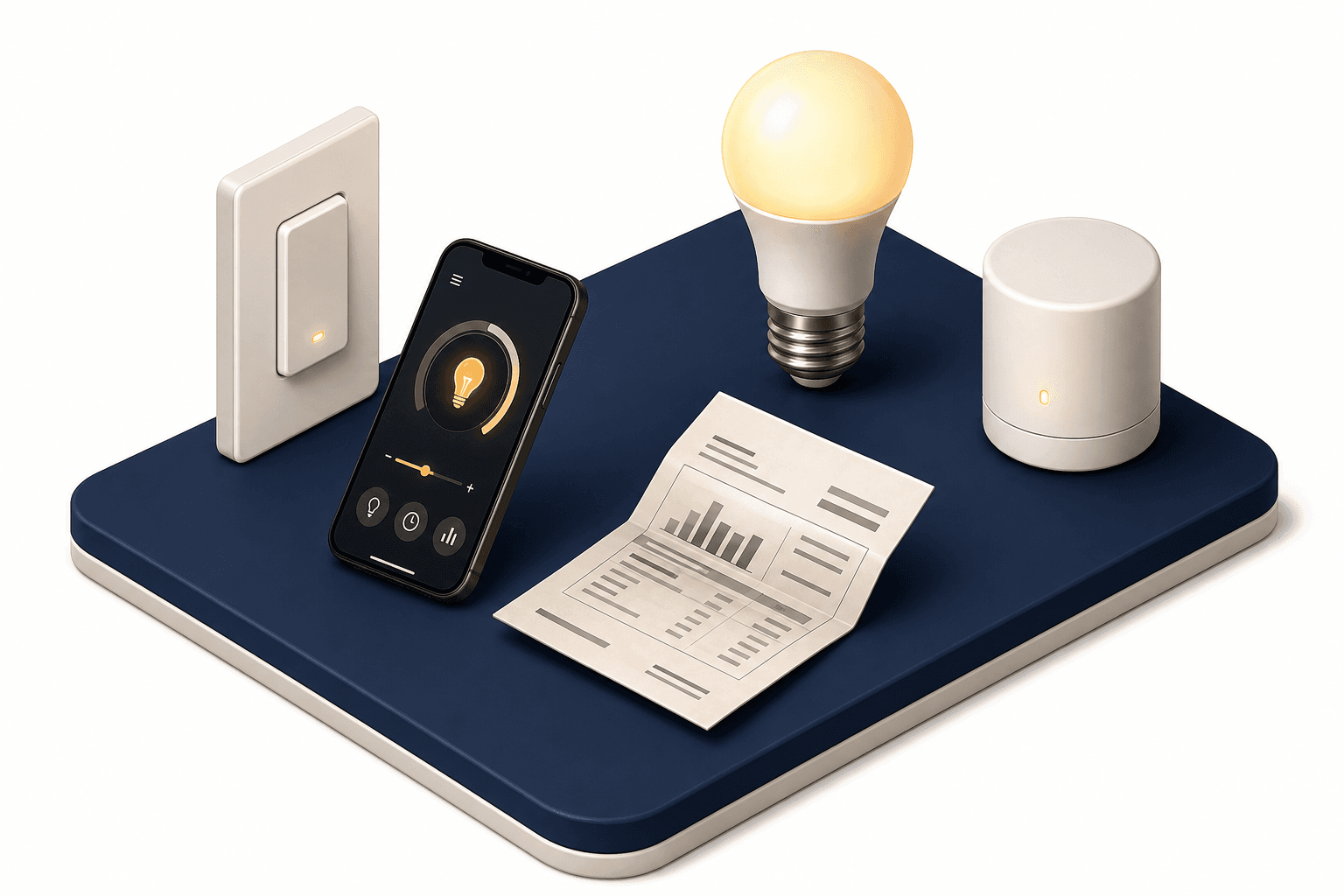
Do Smart Light Switches Save Money?
A single smart switch at $25–$50 can make five or six bulbs "smart" for less than the cost of one smart bulb each — but only if your switch box has a neutral wire.
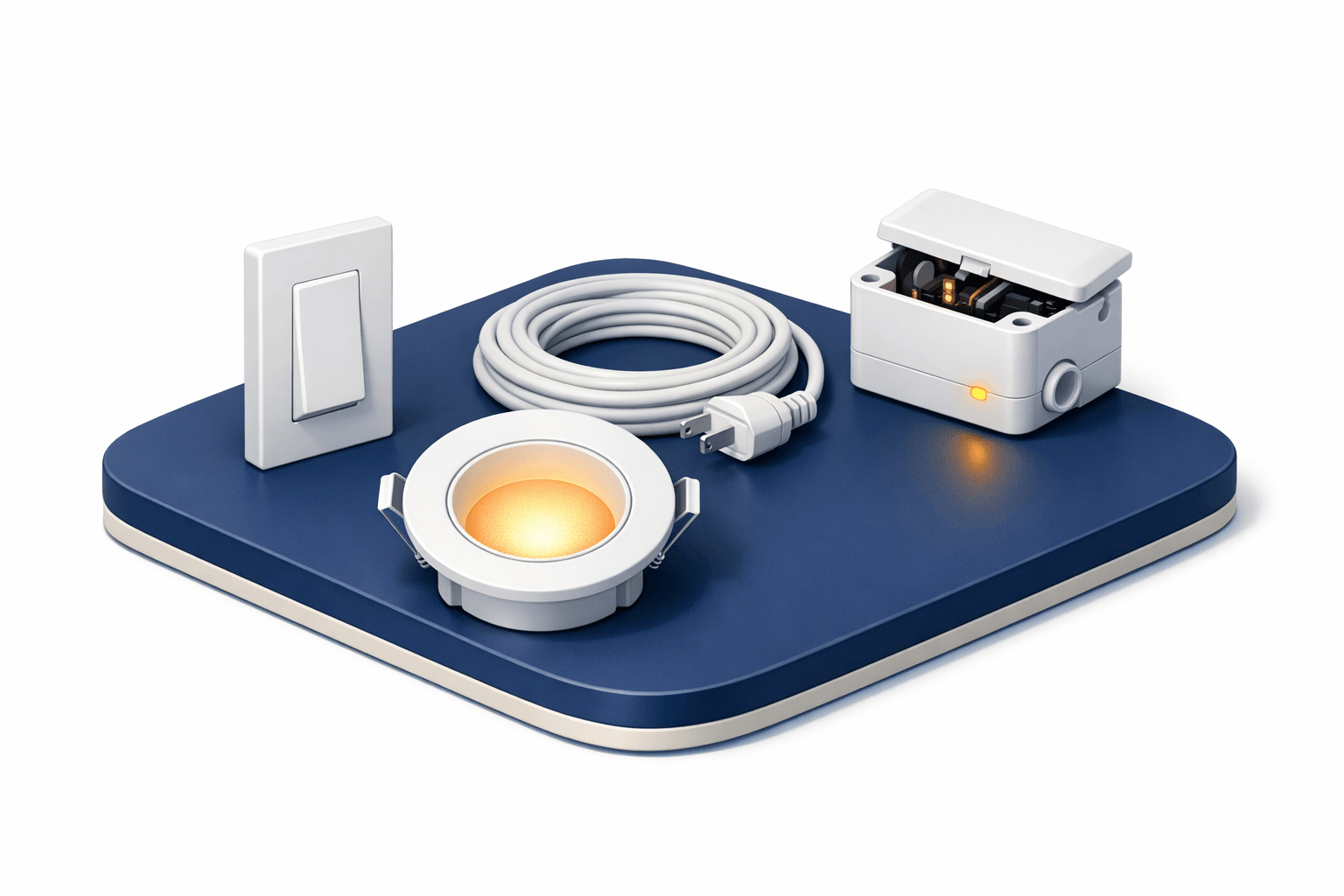
How To Wire Downlights To A Switch: Simple Diagram
A downlight wired with live and neutral swapped will still turn on and off — but the fitting stays at mains potential every time the switch reads off. That silent reversal is why a switched circuit can still kill you.
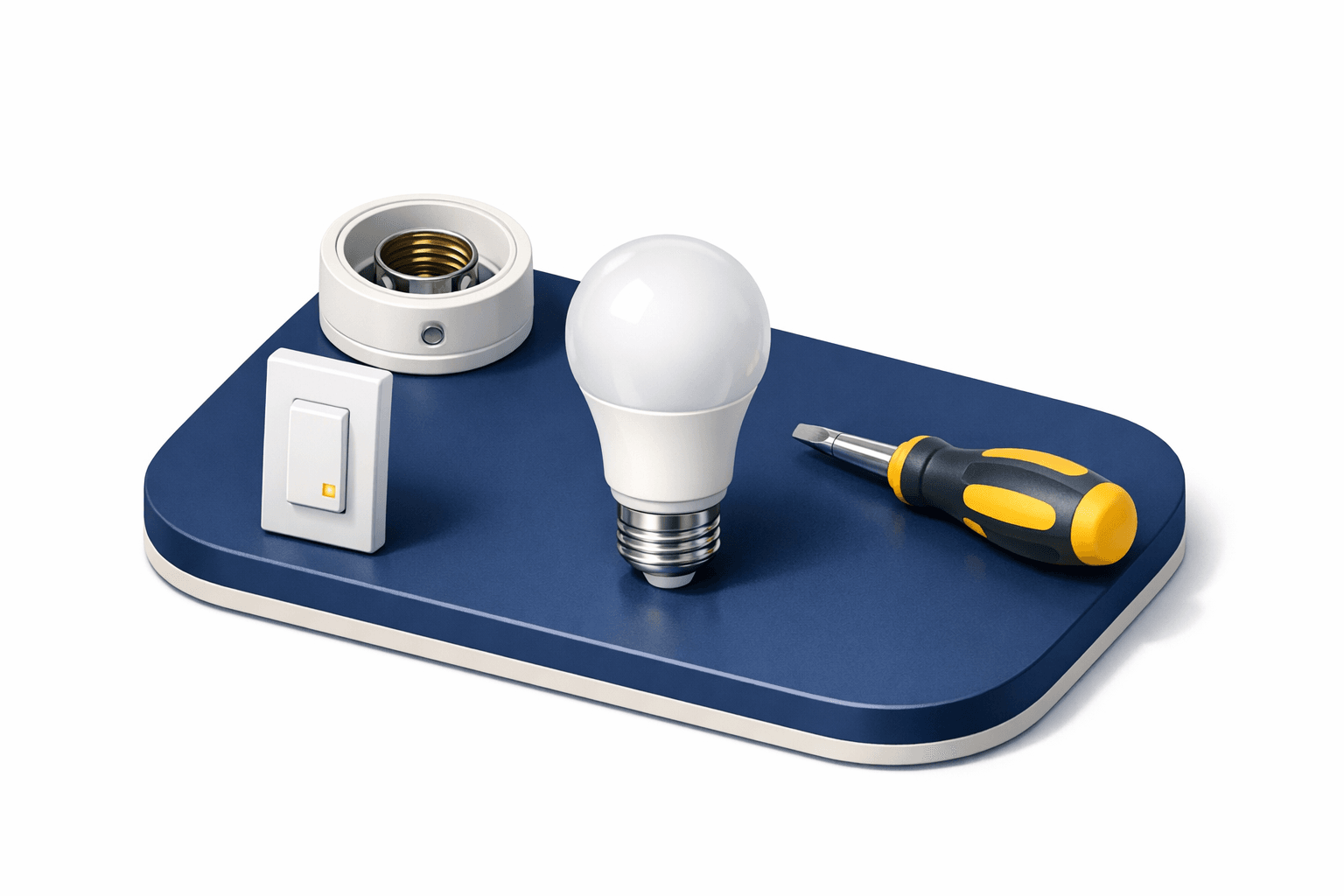
Can You Change A Light Bulb With The Power On?
A wall switch wired to the neutral instead of the hot leaves the socket live even when it reads "off." The breaker is the only control that actually makes it safe.