
Can You Change A Light Bulb With The Power On?
A wall switch wired to the neutral instead of the hot leaves the socket live even when it reads "off." The breaker is the only control that actually makes it safe.
 Eugen
EugenEugen Nikolajev
Creator of LED Lighting Info
Hi, I am Eugen. I was always one of those kids who had all sorts of weird lighting gadgets for every occasion.
Now, I want to share my knowledge and experience about lighting with you on LED Lighting Info.
Read my editorial standards
Key Takeaways
Changing a light bulb while the power is still on is dangerous. The bulb can shatter, you can burn your fingers on hot glass, and if a wire is frayed or the socket is wired backwards you can take a serious shock from the holder.
You have a dead bulb in the socket and you can't remember whether the switch is off — and you're wondering whether it really matters.
💡This article references both 120 V (North American) and 230–240 V (UK and Australian) residential systems. Always follow your local electrical code, and call a licensed electrician for anything beyond swapping a bulb.
What Happens If You Don't Turn The Power Off When Changing A Bulb?
It always makes sense to turn off the power before changing a light bulb. But what if your bulb has blown out and you can't remember whether the switch is off? Two things can hurt you: heat and electricity.
Heat varies a lot by bulb type
Incandescent filaments reach about 2,500 °C, and the bulb's outer glass surface typically runs anywhere from roughly 90 °C to 130 °C depending on wattage — easily hot enough to cause an instant burn. Halogen capsules run hotter still. LEDs are far cooler at the bulb surface (typically 50–85 °C at the heat sink), but they are not cold and they will still burn you on a hot summer day or after hours on. Compact fluorescents (CFLs) sit somewhere in the middle.
Once the breaker is off, give the bulb a few minutes to cool. A towel offers some protection but won't stop a hot incandescent or halogen from cracking under thermal shock if your hands are cool and damp.
CFLs deserve extra care
CFL glass is thin and can crack from thermal shock if a hot bulb meets cool, damp hands — and a broken CFL releases a small amount of mercury vapor (each bulb contains up to about 5 mg). The plastic base ballast can also fail, occasionally with smoke or scorching, especially in recessed cans, dimmers, or enclosed fixtures. Always switch off power and let the bulb cool before changing one, and follow your local guidance for cleaning up a broken CFL.
The wall switch isn't enough
Switching the wall switch off doesn't always remove power from the socket. If the switch is wired incorrectly — for example, switching the neutral instead of the hot — the hot conductor is still energised at the holder. If your hand comes in contact with a live contact, you'll get a shock. The only reliable way to be safe is to turn off the circuit breaker for that circuit at the panel.
What About Smart Bulbs And Smart Switches?
Smart fixtures complicate the picture. Many smart dimmers and smart switches need a small "keep-alive" current to power their wireless radio even when the load is "off," which means the holder may not be fully de-energised when the app or wall control says the light is off. A few smart bulbs (and dim-to-warm or low-load LEDs) can also flicker or glow faintly because of leakage current through the switch electronics.
Treat smart switches the same way as a regular switch: don't trust the off state. Kill the breaker before you put your hand near the holder.
Can You Change A Light Fixture With The Power On?
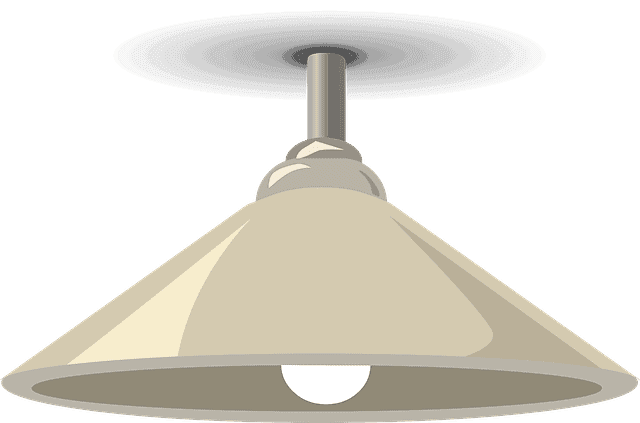
Technically, yes — but it's a serious risk even with the wall switch off. Once you start handling wiring inside the fixture, the hot conductor going to the fixture might be dead but the neutral can still be at a dangerous potential.
Even with the switch off, a neutral wire shouldn't be assumed safe. Under fault conditions — most seriously a "lost neutral" on the service — the neutral can float to a dangerous voltage relative to ground. That's one reason fixtures should always be changed with the breaker off, not just the switch.
And don't confuse the two whites and greens. The neutral (white wire) and the ground wire (bare or green) are separate conductors with different jobs — only bonded together at the main service panel. The neutral is a normal current-carrying conductor; the ground only carries current during a fault. Don't treat them as interchangeable.
Disconnecting a live neutral can cause voltage fluctuations that damage plugged-in appliances, or result in a direct shock to the person performing the work. If there are un-switched live connections in the box, the switch is on the wrong leg, or the circuit is being "backfed" by another circuit, the situation gets more dangerous still. Find the breaker or fuse and turn it off before you touch anything.
How To Verify A Circuit Is Dead With A Multimeter
After you flip the breaker, prove the circuit is dead with a digital multimeter (DMM). Never use the resistance (ohms) setting on a live circuit — ohms is for de-energised components only and can damage the meter or, with leads in the wrong jack, cause an arc flash.
- Set the dial to AC voltage (V with a wavy line, V~).
- Plug the black lead into the COM jack and the red lead into the V jack — never the amps jack.
- Test the meter on a known live outlet first to confirm it works (around 120 V in North America, 230–240 V in the UK and Australia).
- At the fixture, touch one probe to the hot conductor and the other to neutral, then to ground, then between neutral and ground. All three readings should be 0 V.
- Re-test the meter on the known live outlet to confirm it didn't fail mid-test.
If you can't identify the right breaker, turn off the main breaker for the whole house. Replacing a ceiling fixture or a wall sconce follows the same rule: power proven dead, then work.
What Are The Hazards Of Screwing In A Light Bulb In A Live Socket?
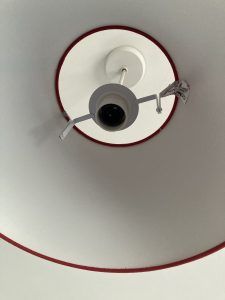
- Burns from a hot bulb. Incandescent and halogen bulbs in a live socket heat almost immediately and stay hot long after they're switched off. LEDs and CFLs are cooler but can still burn you.
- Shock from frayed wires on an ungrounded metal lamp. If a metal-bodied lamp isn't grounded and the internal wires are frayed, the hot conductor can touch the body — and you can be shocked just by touching the lamp.
- Glass-and-shell separation. A failing bulb's glass envelope can separate from the metal shell, producing a bang and a small splatter of molten metal.
- Reverse-wired socket. If a screw-base (Edison) socket is wired backwards, the outer shell becomes the hot side instead of the centre tab. Touching the shell — especially while standing on a wet concrete floor barefoot — can deliver a serious shock.
- A stuck bayonet bulb that shatters. If the bayonet-base contacts have corroded and the bulb is stuck in the socket, pressing harder to free it can shatter the glass and expose you to the bare filament supports — a short across them can burn your hand.
- Loose wires inside the holder. If the holder's wires are loose they can touch the metal of the lampholder, energising it. Standing on a ladder or a damp floor at the moment that happens makes the shock far worse.
- Twisted-out socket wires. Sometimes the socket wiring rotates with the bulb as you unscrew it and shorts inside the canopy. Even a tiny spark can start a fire if there's flammable material near the fixture.
- Conductive ladder. Don't use aluminium or other metal ladders for electrical work — metal conducts electricity. Use a fiberglass ladder, which is the OSHA-recommended non-conductive option and stays non-conductive even when slightly damp. Wood is sometimes recommended but absorbs moisture and contaminants over time, so it's no longer the standard.
- Older lampholders with degraded insulation. In some older lampholders the insulating paper or sleeve between the inner contact and the outer brass shell can deteriorate and short, producing a bang and molten metal at the bulb base. If you see scorching or crumbling insulation inside a holder, replace the fixture rather than the bulb.
What To Do If You Get An Electric Shock
- If someone else is being shocked and is still in contact with the source, do not touch them. Cut power at the breaker first, or use something dry and non-conductive (a wooden broom handle) to push the source away.
- Call emergency services immediately for any shock that caused loss of consciousness, burns, muscle pain, irregular heartbeat, breathing difficulty, or that came from a high-voltage source. Mains shocks can cause cardiac problems hours later, even when the person feels fine.
- For a minor jolt with no symptoms, sit down, rest, and monitor yourself. If anything unusual develops, get checked out.
- Don't try to finish the job. Stop, fix the underlying cause (a tripped breaker, a damaged fixture, a wiring fault), and call a licensed electrician if you're unsure.
Quick Reference Safety Checklist
- Turn the wall switch OFF.
- Turn off the circuit breaker for that circuit at the panel.
- Verify zero voltage with a multimeter set to AC volts (V~) — hot to neutral, hot to ground, neutral to ground.
- Wait for the bulb to cool — a few minutes for LEDs and CFLs, longer for incandescents and halogens.
- Use a fiberglass ladder if working overhead — never an aluminium one.
- If wiring inside the fixture is involved and you're not confident, call a licensed electrician.
Final Words
Killing the breaker takes about ten extra seconds and removes almost every realistic way that swapping a bulb can hurt you. Whether you're testing a bulb, replacing one, or working on the socket itself, treat the wall switch as a convenience — and the breaker as the safety device that actually protects you.