Smart Hub
A central device that bridges smart home protocols (Zigbee, Z-Wave) to your home network. Required for some smart lights, optional for Wi-Fi bulbs.
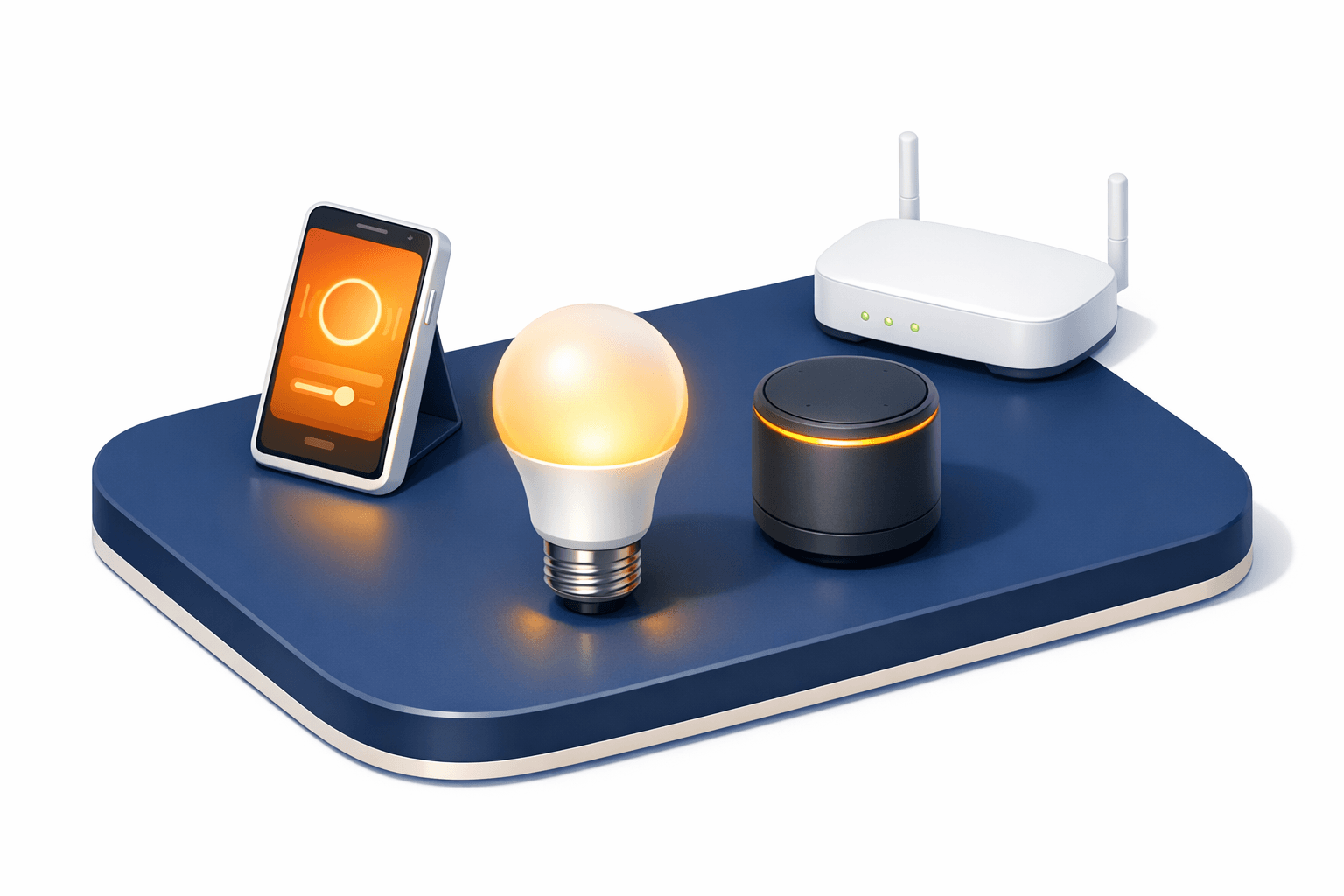
A smart hub is the translator between your smart home devices and your network. Zigbee bulbs speak Zigbee, Z-Wave sensors speak Z-Wave, and your phone speaks Wi-Fi — the hub sits in the middle, converting between all of these so everything can communicate.
The most common lighting hub is the Philips Hue Bridge, which connects up to 50 Zigbee lights and accessories. Samsung SmartThings supports both Zigbee and Z-Wave. Hubitat offers similar multi-protocol support with fully local processing — no cloud dependency.
The hub vs hubless debate comes down to scale and reliability. Wi-Fi bulbs need no hub but each one connects directly to your router — 30 Wi-Fi bulbs means 30 devices competing for router bandwidth. Zigbee bulbs through a hub appear as a single device to your router, keeping your network clean. Hubs also enable local control — your lights work even when the internet is down. For a few bulbs, hubless Wi-Fi is fine. For a whole house, a hub-based system is more reliable.
Specifications
| Examples | Philips Hue Bridge, SmartThings Hub, Hubitat |
| Not needed for | Wi-Fi bulbs, some Thread/Matter devices |
| Advantage | Local control, faster response, no cloud dependency |
Related Terms
- Zigbee
A low-power wireless mesh protocol for smart home devices. Requires a hub but is more reliable and scalable than Wi-Fi — each device extends the network for others.
- Z-Wave
A smart home mesh protocol operating on sub-1GHz frequencies, avoiding Wi-Fi interference. Requires a hub and supports up to 232 devices per network.
- Matter
A unified smart home standard backed by Apple, Google, Amazon, and Samsung. Devices certified for Matter work across all major ecosystems — ending the 'which app?' problem.
- Thread
A modern IP-based mesh networking protocol for smart home devices. Low-power like Zigbee but uses internet protocol natively — a foundation for Matter.