SMD (Surface Mount Device)
A type of LED chip soldered directly onto a circuit board. Common in strip lights — the number (2835, 5050) indicates the chip dimensions in tenths of millimeters.
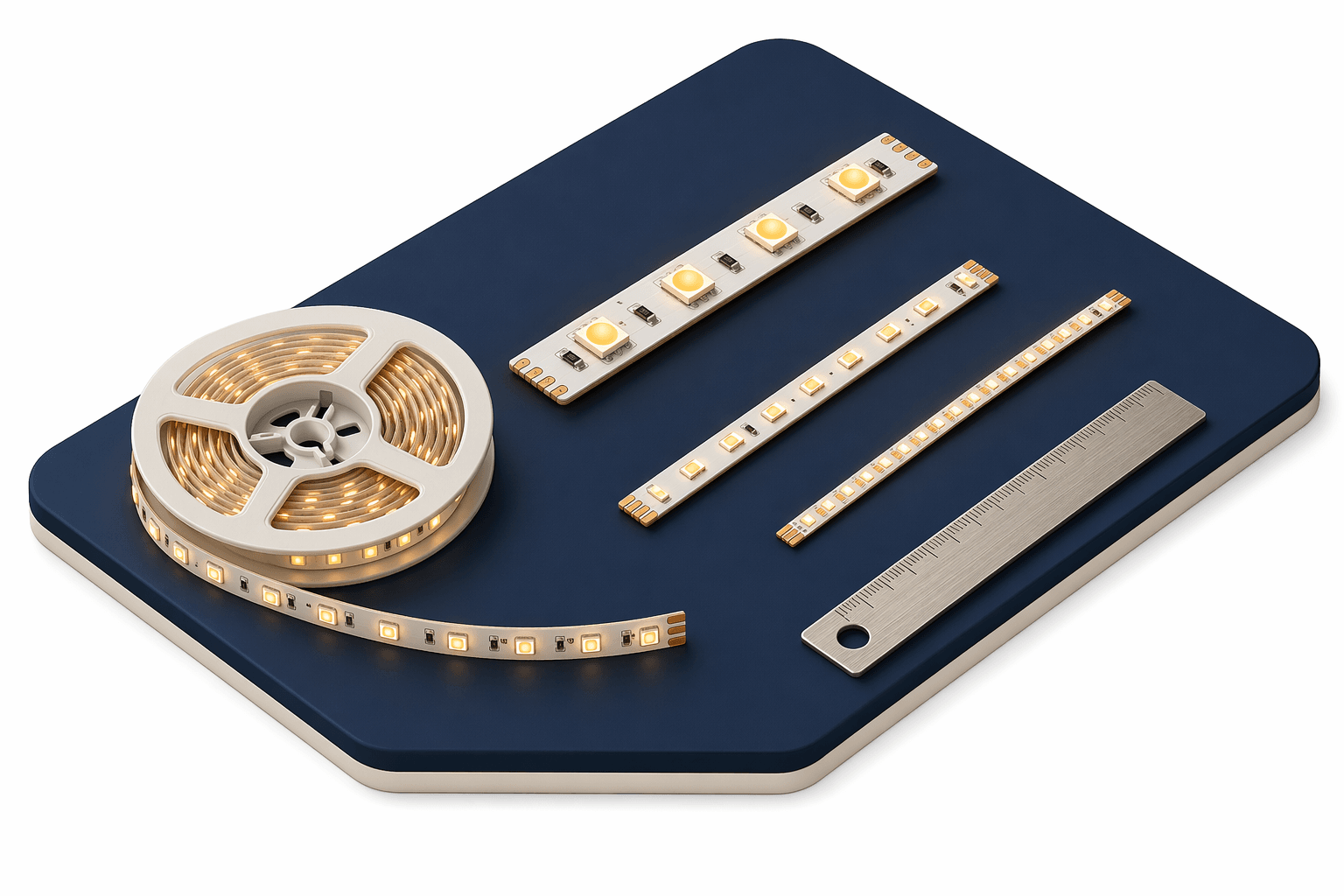
SMD LEDs are the tiny rectangular chips you see on LED strip lights, bulbs, and panel lights. Each chip is soldered directly to the surface of a printed circuit board — hence "surface mount device." The numbers you see in product listings refer to the chip's physical dimensions: SMD 2835 is 2.8mm × 3.5mm, SMD 5050 is 5.0mm × 5.0mm.
The chip type determines what the strip can do. SMD 2835 is the current workhorse for white strip lighting — efficient, bright, and compact. SMD 5050 is larger and contains three individual LED dies in one package, making it the standard for RGB color-changing strips. The older SMD 3528 is less efficient and dimmer, but still found in budget strips.
When comparing strips, don't just look at the chip type — density matters equally. A strip with 120 SMD 2835 chips per meter will produce a smoother, brighter light than one with 30 per meter, even though both use the same chip. The combination of chip type and density determines the overall light output, power consumption, and visual quality.
Specifications
| SMD 3528 | 3.5 × 2.8mm — older, lower output |
| SMD 2835 | 2.8 × 3.5mm — efficient, bright white |
| SMD 5050 | 5.0 × 5.0mm — RGB capable, brighter |
Related Terms
- COB (Chip on Board)
A dense array of LED chips bonded directly to a substrate, producing a seamless, dot-free light output. Used in high-end strip lights and downlights.
- LED Density
The number of LED chips per meter on a strip light. Higher density produces smoother, more even light with fewer visible dots. Common values: 30, 60, 120, or 144 LEDs/m.
- Addressable LEDs
LED strips where each LED (or small group) can be controlled independently for color and brightness — enabling rainbow effects, animations, and music sync.