Task Lighting
Focused, brighter light directed at a specific work area — like a desk lamp, under-cabinet kitchen light, or reading light. The second layer of good lighting design.
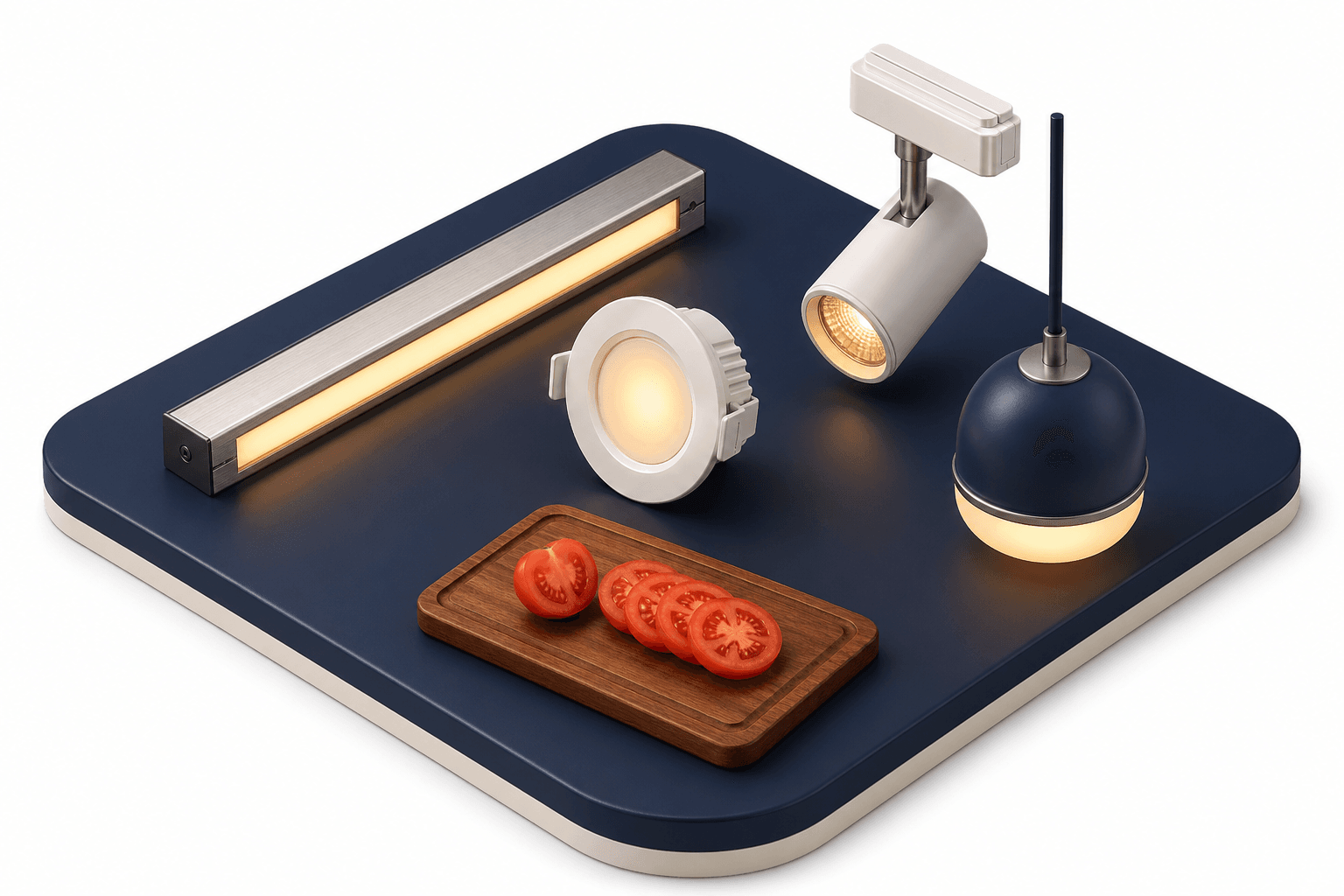
Task lighting is concentrated light aimed exactly where you need it for a specific activity: reading, cooking, sewing, applying makeup, or working at a desk. It's brighter than ambient lighting in its target area but doesn't need to illuminate the whole room.
The classic examples are desk lamps, under-cabinet kitchen strips, vanity bars in bathrooms, and pendant lights over kitchen islands. What makes these "task" lights isn't the fixture type — it's the intent. A pendant can be ambient or task depending on whether it's lighting a whole room or focused over a work surface.
Color temperature and CRI matter more for task lighting than ambient. You want 3500-5000K for clarity and alertness, and CRI 90+ for color accuracy. This is especially true for kitchen task lighting (you need to see food accurately), bathroom vanity lighting (skin tones and makeup), and craft/hobby areas (precise color matching).
Related Terms
- Ambient Lighting
The primary, overall illumination in a room — the base layer that provides uniform light for general visibility. Usually from ceiling fixtures, recessed lights, or large floor lamps.
- Accent Lighting
Decorative, directional light used to highlight artwork, architectural features, or plants. The third layer of lighting design — adds drama and visual interest.
- Lux
A measure of illuminance — how many lumens hit one square meter of surface. Used to specify lighting levels for rooms and workspaces.
- Color Temperature
A measure of light appearance in Kelvin (K) — lower values are warm/yellow, higher values are cool/blue-white. Ranges from candlelight at 2200K to daylight at 6500K.