
What Is A Black Light And What It’s Used For?
Blood doesn't glow under a black light — it actually absorbs UV and appears darker, which is why forensic teams reach for chemical reagents instead. The fluorescence everyone pictures is real, just not where crime dramas suggest.
 Eugen
EugenEugen Nikolajev
Creator of LED Lighting Info
Hi, I am Eugen. I was always one of those kids who had all sorts of weird lighting gadgets for every occasion.
Now, I want to share my knowledge and experience about lighting with you on LED Lighting Info.
Read my editorial standards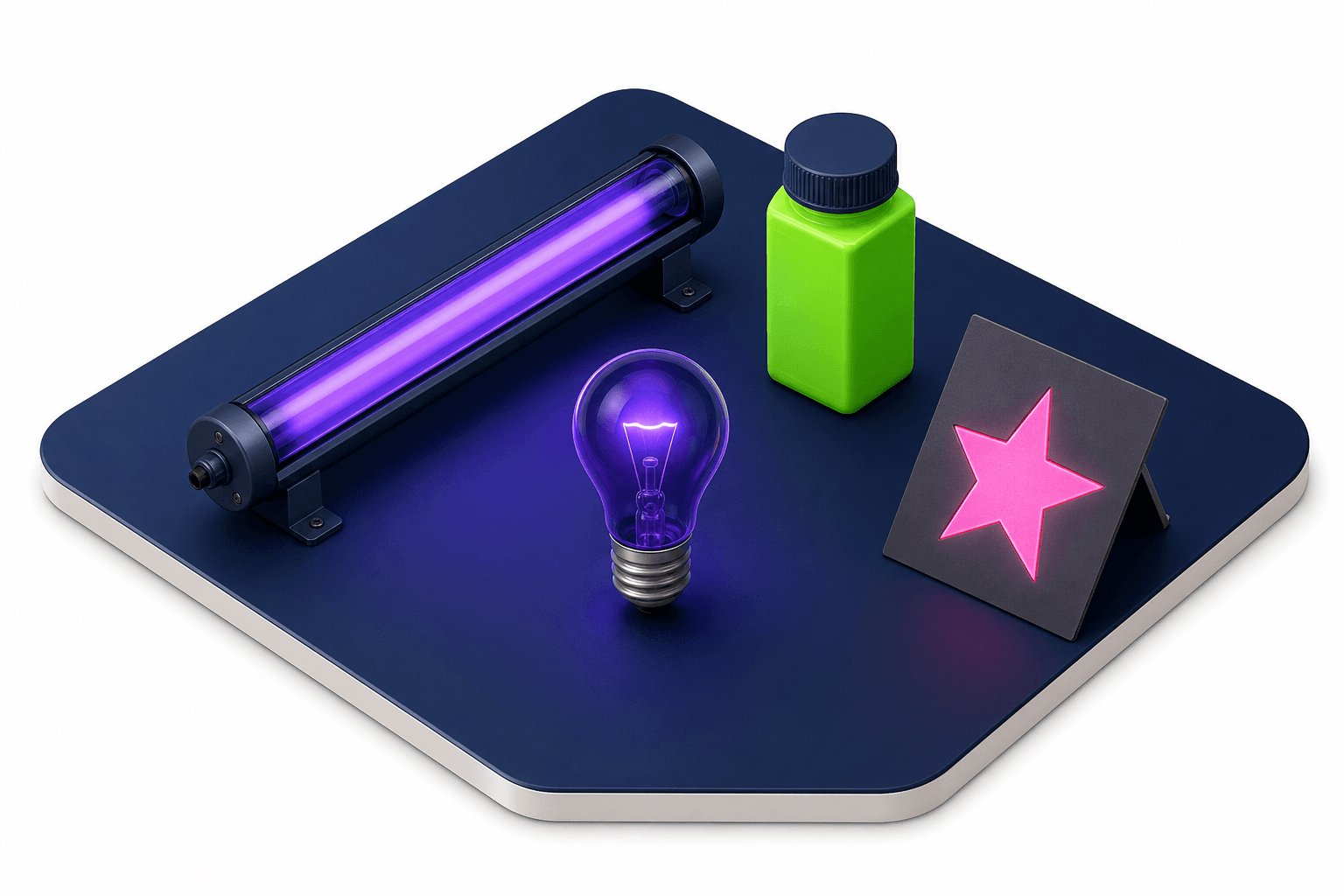
Key Takeaways
A black light emits ultraviolet light just beyond the violet end of the visible spectrum, shorter in wavelength and higher in frequency than light we can see. When it hits certain fluorescent molecules in paints, bodily fluids, and other materials, those molecules absorb the invisible UV energy and re-emit it as visible light. That's the glow.
Ever been in a nightclub or an indoor mini golf center and wondered how they get that glowy effect from fluorescent paint in dark rooms? That's black light at work — a type of ultraviolet light that's mostly invisible to the naked eye but makes certain materials light up like neon.
And to answer the question most people ask first: yes, standard consumer black lights are safe at normal exposure levels. You'll get more UV exposure walking outdoors on a sunny day than from a black light at a party. The details on safety, what black light is actually used for, and how to pick the right one are all below.
What Is Black Light?
To understand black light, it helps to remember that "light" energy isn't just the light we can perceive. The visible part is a thin slice of a much broader spectrum of electromagnetic radiation.
That spectrum ranges from low-frequency, long-wavelength energy like radio waves at one end, all the way up to high-frequency, short-wavelength energy like X-rays and gamma rays at the other. In order of increasing frequency: radio → microwave → infrared → visible → ultraviolet → X-ray → gamma.
Visible light sits in the middle of that spectrum, with a wavelength roughly between 380 and 700 nanometers (some standards extend it to 780 nm at the red end). Just beyond the red end — longer wavelengths — is infrared light. Just beyond the violet end — shorter wavelengths — is ultraviolet light. Black light lives at the edge of that ultraviolet range.
It's called black light simply because it's light you can't see. Specifically, black light refers to UVA, the band just below visible light, defined by international standards (ISO 21348, ICNIRP) as 315–400 nm. Most consumer black light lamps peak at either 365 nm or 395 nm — more on that distinction further down.
When you switch on a black light flashlight or tube, you'll see a faint purple glow. That's the small portion of light right at the bottom edge of visible perception — most of what's actually being emitted is invisible UVA.
Is Black Light A Health Hazard?
Any time words like "radiation" or "ultraviolet" come up, it's reasonable to ask whether it's safe. The short answer for black light is yes — standard consumer black lights are generally considered safe to use.
Black light is at the long-wavelength, low-energy end of the UV range — classified as UVA. UVA in high concentrations has been linked to skin aging, but the intensity from a typical consumer black light bulb is well below what you'd get just standing outside on a sunny day.
That said, don't stare directly into a black light. Even if the UV exposure is low, the visible purple portion is bright at close range and can strain your eyes. If you're in a venue with black lights, avoid looking right into the bulbs, and try not to spend hours at very close range to a powerful UVA fixture.
A few hours in a nightclub or at a black light bowling alley is fine — the combined output is too diffuse to be harmful over short visits.
Is UV Light The Same As Black Light?
Black light is a type of UV light — but not all UV light is black light. "UV" is a broad umbrella term that covers three sub-bands, each with very different effects on the body and different practical uses. Here's how they break down:
Black light sits in the UVA band — the longest-wavelength, lowest-energy form of UV. The germicidal and skin-burning UV most people associate with the term "UV" is actually UVB and UVC.
Tanning beds are a useful example of how these bands overlap. Standard commercial tanning beds emit roughly 95% UVA and 5% UVB — the same UVA band black lights use, just at much higher intensity. UVA drives the tanning response, while UVB (which causes sunburn) is largely filtered out. This is why a regular black light won't tan your skin at typical exposure levels, even though it emits the same type of UV.
UVC is a different beast entirely. It's used for sterilizing water, surfaces, and medical equipment because it disrupts the DNA of microorganisms — and for the same reason, it's dangerous to skin and eyes and should only be used in enclosed or shielded systems. We aren't normally exposed to UVC because the ozone layer absorbs it before it reaches the ground.
In short: black light is UVA, the safest band of the UV spectrum at consumer intensities. When buying a black light, look for a UVA wavelength between 315 and 400 nm — typically marketed as 365 nm or 395 nm.
What Is Black Light Used For?
Black lights have a lot of different uses — some practical, some purely for fun. Let's start with the practical applications.
Forensics
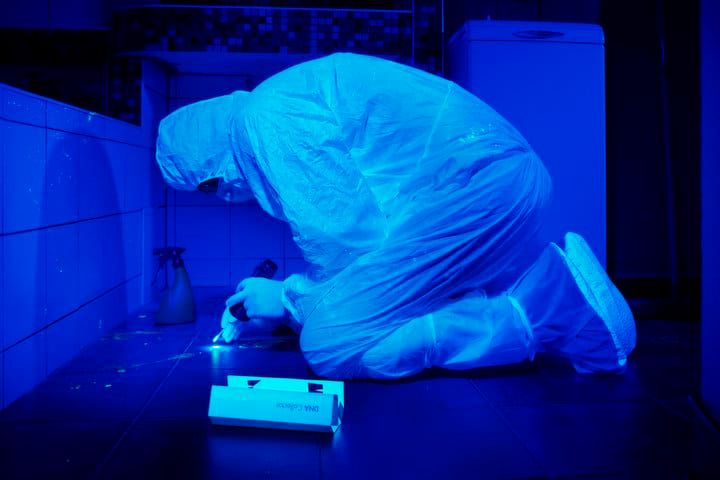
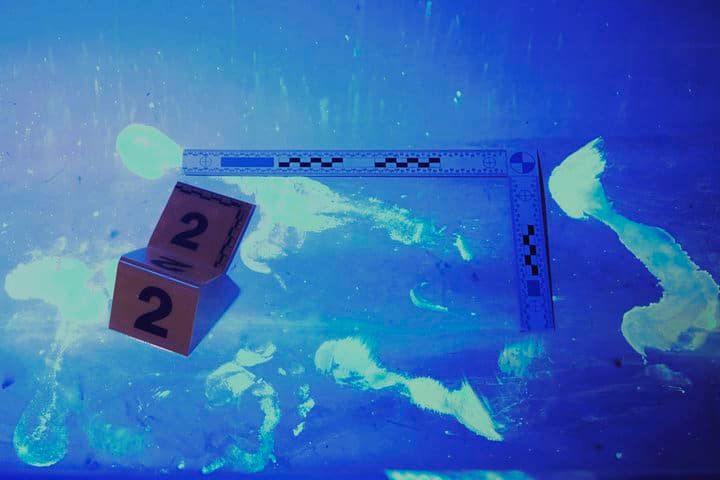
Forensic investigators use black lights to spot biological residues invisible under normal light.
Bodily fluids like urine and semen fluoresce under black light, making them easy to spot during a search. Blood is the famous exception — contrary to popular belief, blood doesn't visibly glow under a standard black light. It actually tends to absorb UV and appear darker. To detect blood, forensic teams use chemical reagents like luminol, fluorescein, or Bluestar, which react with hemoglobin to produce a chemiluminescent glow.
Crime scenes are large and complex, and items considered evidence may have been wiped down but still carry residue. A quick scan with a black light can quickly reveal areas worth swabbing for lab analysis.
Cleaning
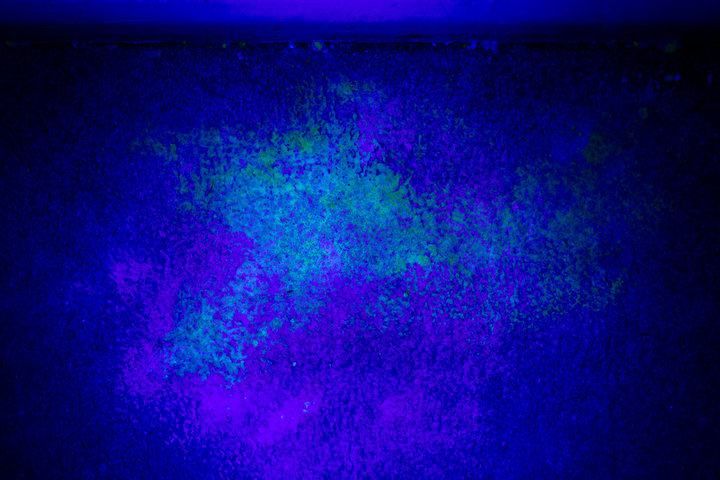
Black lights make it easy to find invisible stains — especially pet urine, hidden grime, and hotel-room "oversights."
A black light flashlight (Amazon) is a small investment that pays off fast for pet owners. Cats are usually fastidious about the litter tray, but old, anxious, or unwell cats sometimes spray elsewhere. Cat urine soaks into fabric and is invisible to the eye but stays pungent for weeks — a UV scan immediately reveals every offending spot so you can deep-clean it.
Frequent travelers sometimes use the same trick to check whether a hotel room has actually been cleaned. The results are often unsettling.
Counterfeit Checking
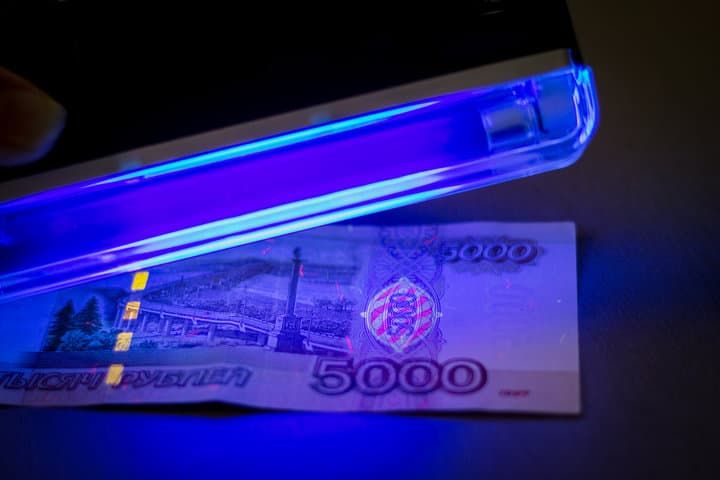
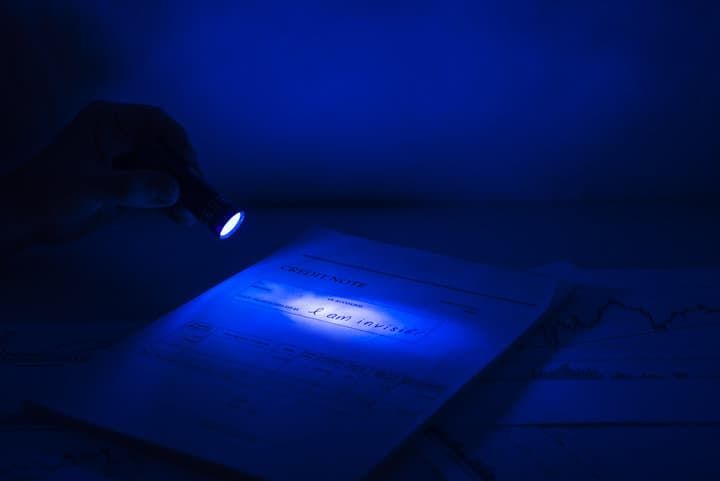
Modern banknotes contain hidden UV-reactive elements that only show under black light, making them a quick anti-counterfeit check.
When a cashier inspects a high-value bill under a small purple light at the counter, that's a black light revealing fluorescent threads, patches, or printed marks built into the note. The patterns are difficult to reproduce on a regular printer, so they're a fast, reliable filter against fakes.
If you run a cash-heavy business, a basic black light verifier is a cheap insurance policy against accepting counterfeit notes.
Medical
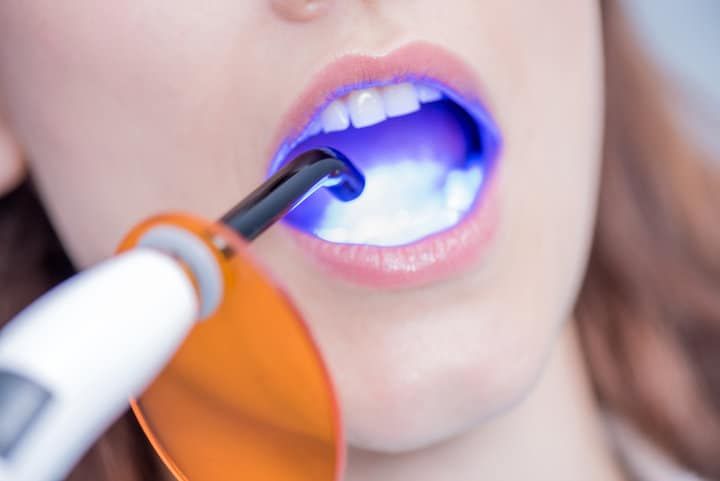
Dermatologists use a specialized black light — a Wood's lamp — to diagnose skin and scalp conditions.
Different fungi, bacteria, and pigment disorders fluoresce in distinctive colors under UVA. A Wood's lamp can help differentiate conditions like vitiligo, tinea (ringworm), porphyria, and certain forms of acne-related bacteria, narrowing down a diagnosis so the right treatment can be prescribed. The germicidal disinfection most people associate with hospitals uses UVC, not black light.
Mechanical
Automotive technicians use black lights to trace fluid leaks that are invisible under normal light.
Many automotive fluids fluoresce naturally, and dye kits with UV-reactive tracers are sold specifically for leak detection. Add the dye to the system, run the engine, then scan with a black light — the leak point glows brightly, saving hours of disassembly.
Discreet Entry Stamps
Bars, theme parks, and festivals use UV-reactive ink for hand stamps that are invisible until checked under a black light.
It's a win for everyone: paying guests don't walk around with an unsightly mark on their hand, and the venue gets a fast, hard-to-fake re-entry check at the door.
Cool Things You Can Use Black Light For
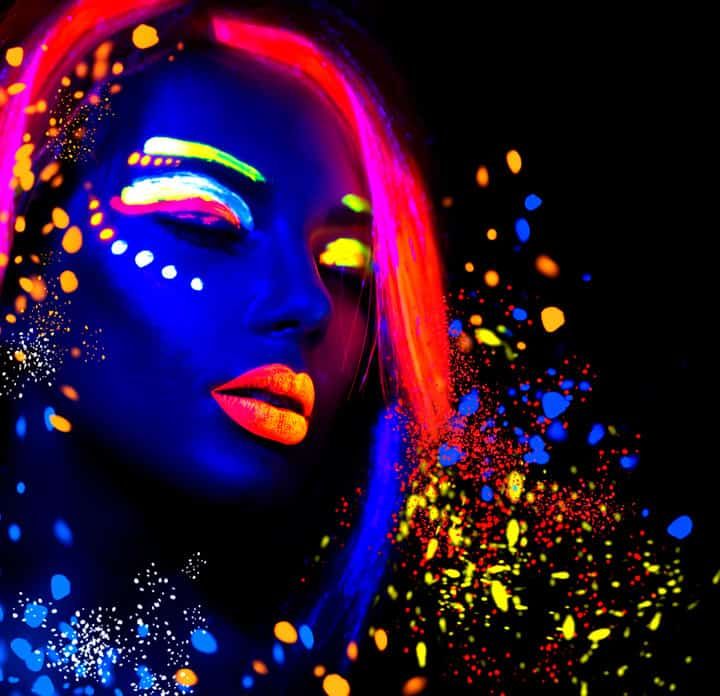
Beyond the practical applications, black light is a centerpiece of plenty of entertainment and creative setups.
Decoration
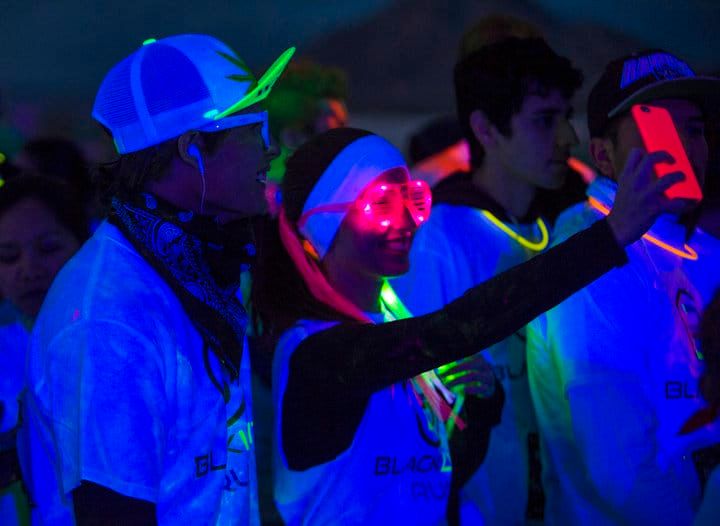
Many entertainment venues — nightclubs, indoor mini golf courses, escape rooms, bowling alleys — use fluorescent paints under black light to create a glowing neon environment. The trick on a mini golf course is to make sure the hole itself is also painted; otherwise putting becomes a guessing game.
If you're at a black light venue, order a drink with tonic water and watch it glow bright blue. That's because tonic water contains quinine, a naturally fluorescent compound that absorbs UV and re-emits it as visible blue light. It's safe to drink — the same chemistry, milder version, that's behind every glowing wall in the room.
Clothing
Search online for "black light clothing" and you'll find t-shirts, dresses, and accessories specifically designed to glow under UV. For a budget option, just wear white — most white cotton fabrics include optical brighteners in the laundry detergent residue, which is exactly why bright whites glow under black light.
Cosmetics
Fluorescent makeup and face paints round out the look. Designs that are subtle in normal light come to life under UV, which is why they show up at festivals, theme parties, and stage performances.
Why Things Glow Under Black Light
The substances that light up under a black light are called fluorophores — molecules that absorb invisible UV energy and re-emit it almost instantly as visible light. This effect is called fluorescence, and it stops the moment the UV source is switched off.
Phosphorescence is a different effect with a similar name. Phosphors absorb light and then continue to glow for seconds, minutes, or even hours after the light source is removed — that's what makes "glow-in-the-dark" stickers, watch dials, and toys work. So the two effects are easy to confuse but actually distinct:
- Fluorescence: glows only while the UV source is active. Examples: fluorescent paint, tonic water, urine, semen, highlighter ink, bright white laundry.
- Phosphorescence: continues glowing after the light is turned off. Examples: glow-in-the-dark stars on a kid's ceiling, certain watch dials, emergency exit signs.
This distinction matters if you're shopping. A glow-in-the-dark product won't light up under your black light any brighter than it would under any other lamp — it just stores the energy and releases it later. To get the dramatic neon effect at a black light party, you want fluorescent paint, ink, or fabric, not phosphorescent material.
Laundry detergents are a sneaky source of fluorescence. They contain optical brighteners — stilbene-based fluorophores that absorb UV around 340–370 nm and emit blue light at 420–470 nm. This makes white fabric look "whiter than white" in sunlight, and it's why your clean white t-shirt glows electric-blue under a black light.
Can LEDs Emit Black Light?
Yes — but only LEDs specifically designed for the job. A normal RGB LED strip can't produce true UVA no matter what color you set it to. You need a dedicated UV LED with a peak wavelength in the 315–400 nm range.
It's easy to find purpose-built UV LED light bars or UV LED strip lights. They're more energy-efficient than fluorescent or incandescent black light bulbs and dramatically longer-lived: expect a UV fluorescent tube to last around 8,000–12,000 hours, and a comparable UV LED to push 25,000 hours or more.
365 nm vs. 395 nm: Which to Buy?
This is the most important practical decision when buying a UV LED black light, and it's where most cheap products get a bad reputation.
My rule of thumb: if you want a black light for finding cat urine, checking hotel cleanliness, inspecting banknotes, or anything where you need to see the fluorescence clearly, spend the extra money on a 365 nm light. If you just want a glowy effect for a party, 395 nm is fine and far cheaper.
Final Thoughts
Black lights are niche, but the niche is wider than most people realize. They're not lights you'd use to illuminate a room, but they earn their keep for cleaning, leak detection, counterfeit checks, and parties — and they're cheap enough that a small flashlight is worth keeping in a drawer.
If I were picking one black light for general home use, I'd buy a 365 nm UV LED flashlight rather than a 395 nm one. The fluorescence is much cleaner, and you'll actually see what you came to find. Keep exposure short, don't stare into the bulb, and you've got a tool that's safe enough for the family and useful enough to keep around.
| Type | Wavelength | Skin Effect | Common Use |
|---|---|---|---|
| UVA (Black Light) | 315–400 nm | Aging at high doses | Clubs, forensics, counterfeit detection, tanning beds |
| UVB | 280–315 nm | Sunburn, tanning, skin cancer risk | Medical phototherapy, partial tanning bed output |
| UVC | 100–280 nm | Severe skin and eye damage | Germicidal sterilization, water purification |
| Wavelength | Visible Purple Glow | Fluorescence Quality | Best For | Price |
|---|---|---|---|---|
| 365 nm | Faint — mostly invisible UV | Excellent — bright, clean fluorescence with little visible-light contamination | Forensics, pet stain detection, counterfeit checks, mineral inspection | Higher |
| 395 nm | Strong visible purple | Decent for decoration, but visible light washes out subtle fluorescence | Parties, decoration, casual use | Lower |