
Does LED Tube Light Require Choke?
LED tubes need no choke at all — the driver handles current regulation with completely different technology. Knowing which of the three retrofit types matches your fixture is what actually determines whether the swap works.
 Eugen
EugenEugen Nikolajev
Creator of LED Lighting Info
Hi, I am Eugen. I was always one of those kids who had all sorts of weird lighting gadgets for every occasion.
Now, I want to share my knowledge and experience about lighting with you on LED Lighting Info.
Read my editorial standards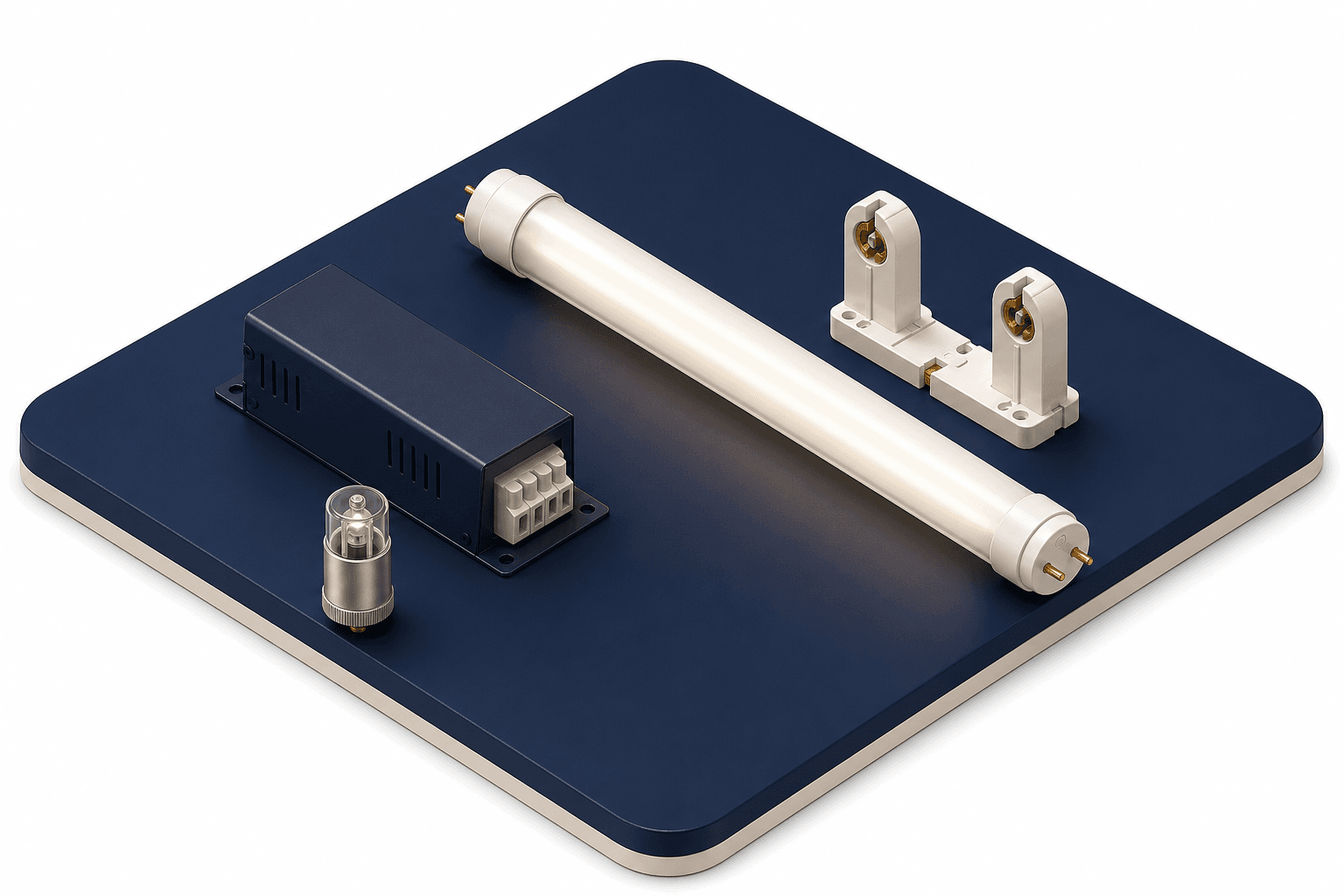
Key Takeaways
LED tube lights don't need a choke. They use an LED driver instead, a small power supply that rectifies higher-voltage AC into the low-voltage DC the diodes need, regulates the output current, and shields the LEDs from voltage spikes.
If you've ever wondered why you can't just drop an LED tube into an old fluorescent fixture and call it done — the answer starts with a choke.
Fluorescent tubes work by passing current through a sealed gas tube, which excites mercury vapor and triggers UV light that makes the phosphor coating glow. Getting that initial reaction going takes a sharp current spike, supplied by a choke (the inductor coil inside the ballast). Once the tube is lit, the same coil throttles the current back to a safe level.
What Does the Choke Do in a Fluorescent Tube?
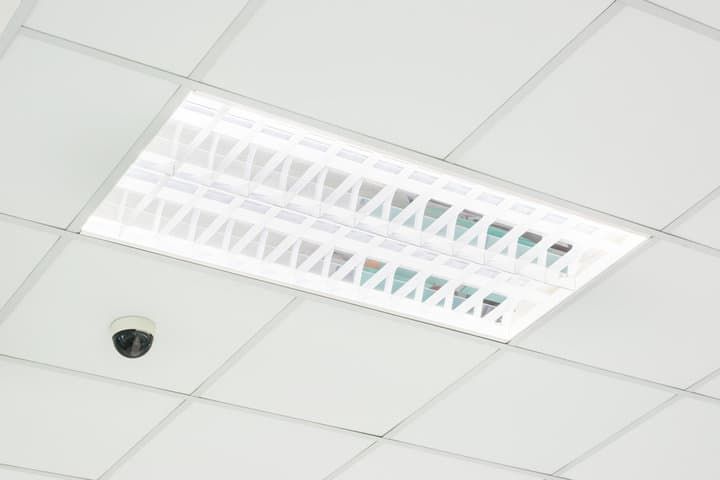
A choke does two jobs in a fluorescent tube, and both are about controlling current.
First, it helps strike the arc when the lamp is switched on. In a traditional preheat fixture, a small starter (a thermal switch) momentarily completes the circuit through the choke. When the starter opens a moment later, the rapid interruption of current through the inductor produces a high-voltage spike — that's the kick that ionizes the mercury vapor and lights the tube.
Second, once the gas is ionized, the choke limits the current. Ionized gas has negative resistance, which means unchecked current would keep climbing until the tube burned out. The choke's inductive reactance restricts AC flow and holds the current at a safe operating level for as long as the lamp is on.
This works because of inductance. A choke is a coil of wire wound around an iron core. When AC passes through the coil, it generates a magnetic field that resists rapid changes in current — exactly the property the lamp needs to stay stable.
Choke vs. Ballast: Are They the Same Thing?
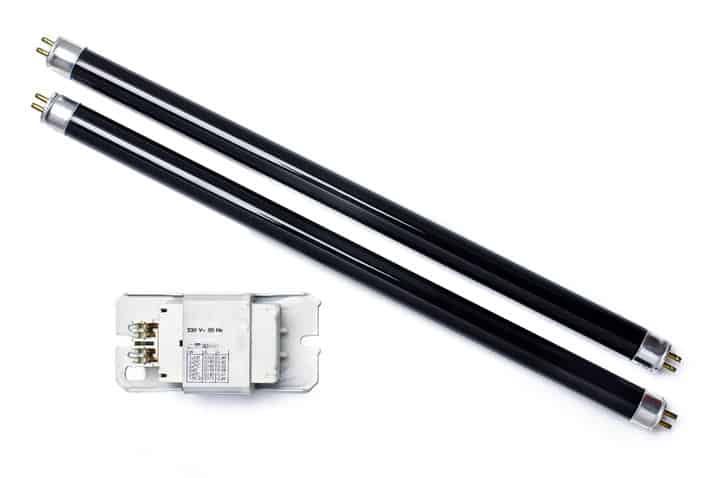
In casual conversation, people use "choke" and "ballast" interchangeably — and it usually doesn't matter. Strictly speaking, though, they're not the same.
A choke is a specific component: the inductor coil that limits current. A ballast is the broader assembly that makes the lamp work. In a magnetic ballast, that assembly typically includes a choke plus a starter and capacitor. In a modern electronic ballast, the assembly may have no traditional choke at all — just solid-state circuitry that drives the lamp at high frequency.
So a choke is one component inside a magnetic ballast, not a synonym for ballast.
Magnetic vs. Electronic Ballasts
Older fluorescent fixtures use magnetic ballasts, which run at line frequency (around 60 Hz) and rely on a copper-wound choke to limit current. They're heavy, hum or buzz audibly, run warm, and need a separate starter.
Electronic ballasts, common in modern fixtures, use solid-state circuitry to switch the lamp at around 20,000 Hz. They're lighter, quieter, more efficient, run cooler, and don't need a separate starter.
To tell them apart on an existing fixture: weigh the ballast (electronic units are noticeably lighter), listen for hum (magnetic ballasts buzz, electronic ones are silent), and check the label printed on the ballast itself — manufacturers state the type clearly. This matters for retrofits, because some LED tubes are designed for one ballast type and not the other.
Do LED Tube Lights Need a Choke?
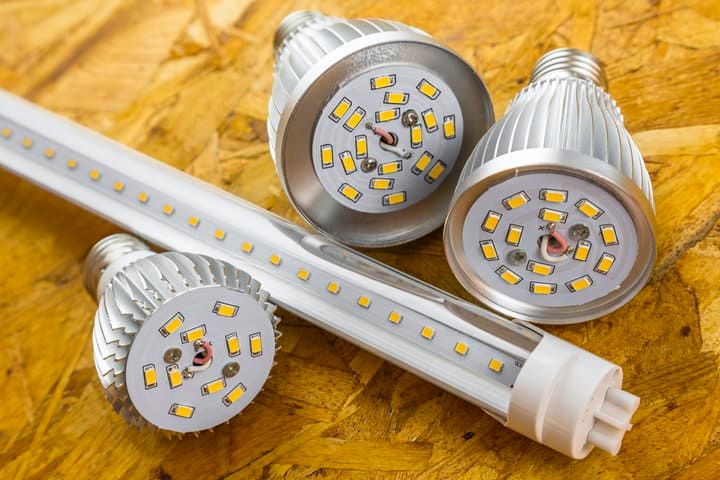
LED tubes don't need a choke. The diodes don't require a starting spike, and they aren't subject to the negative-resistance runaway that fluorescent gas is. What LEDs need is a steady supply of low-voltage DC with tightly regulated current — and that's what the LED driver provides.
The driver does several things in sequence:
- Rectifies the incoming AC by passing it through a diode bridge, producing pulsating DC.
- Smooths the ripple with a capacitor filter, evening out the voltage.
- Regulates the voltage and controls the current to match what the diodes need.
- Protects the LEDs from voltage spikes and fluctuations.
Most LED tube drivers are constant-current types — they hold output current steady while voltage varies, which suits how diodes behave. (Constant-voltage drivers exist for other LED applications like strip lights, but tube lights typically use constant-current designs.)
Quality LED tubes are commonly rated for 30,000–50,000 hours, which is roughly double the rated life of a typical fluorescent tube (most T8s come in at 20,000–30,000 hours). Real-world numbers depend heavily on driver quality and operating temperature.
When a driver fails, the symptoms are usually obvious: flickering, the tube struggling or failing to start, dim or uneven output, and sometimes audible buzzing. A failing driver doesn't usually take the diodes with it — replace the driver (or the whole tube, if the driver is internal) and the fixture is back in service.
LED Tube Retrofit Options
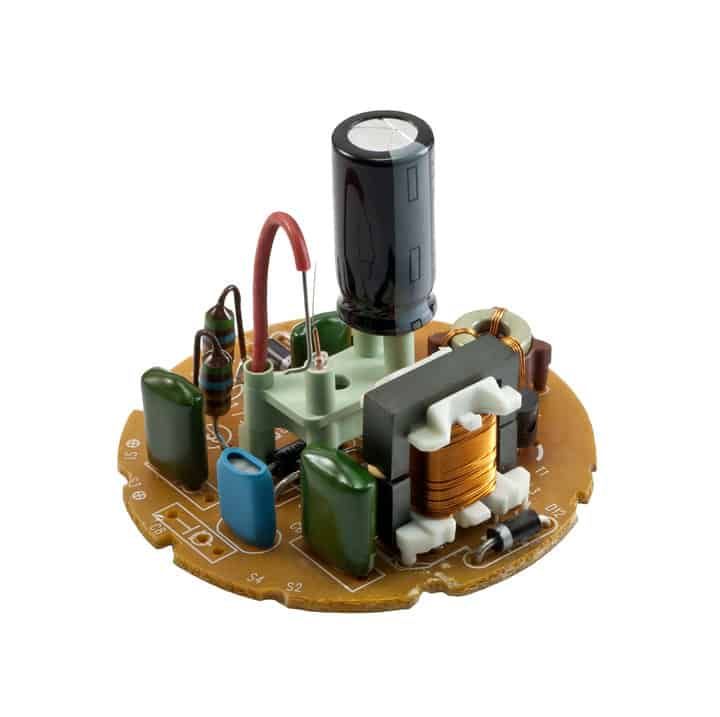
LED tubes are sold in a few "types" defined by how they handle the driver and the existing fluorescent ballast. Picking the wrong type for a fixture means either poor performance or extra rewiring.
- Type A — also called plug-and-play. Has an internal driver and is designed to work with the existing fluorescent ballast. Swap the tube and you're done. Easiest install, but reliability depends on the existing ballast continuing to work and being LED-compatible.
- Type B — ballast-bypass or direct-wire. Also has an internal driver, but the existing ballast is removed or rewired around so line voltage feeds the tube sockets directly. More work up front, but no ballast in the circuit means one less failure point.
- Type C — uses an external driver mounted in or near the fixture. Best long-term efficiency and reliability, but the most involved install.
- Hybrid (A+B) — works either way, giving flexibility if the ballast later fails.
Here's how the three main options compare:
| Type | Install Difficulty | Lifespan | Best For |
|---|---|---|---|
| Type A (Plug-and-Play) | Very easy — drop-in swap | Lower (tied to ballast) | Temporary, rental, low-effort upgrades |
| Type B (Internal Driver, Ballast-Bypass) | Moderate — requires rewiring | ~50,000 hrs | Most retrofits |
| Type C (External Driver) | Hard — driver installed in fixture | 50,000+ hrs | Long-term, commercial |
A few practical notes on the three options.
The plug-and-play route (Type A) is the lowest-effort upgrade, but the existing fluorescent ballast wasn't designed for LEDs. It can run hot, age faster, and may eventually need replacing. If the ballast fails, the tube goes dark with it.
Ballast-bypass (Type B) is the most common reliable retrofit. It involves rewiring the fixture so line voltage feeds the lamp sockets directly, removing the ballast from the circuit entirely.
External-driver (Type C) systems give the longest lifespan and tightest current regulation, since the driver is sized correctly and runs cooler than an internal one crammed into a tube. The trade-off is install time and cost.
⚠️ Safety: Always isolate power at the breaker before opening a fixture. For hardwired or commercial installations — especially Type B and Type C retrofits — consider hiring a licensed electrician. Mistakes when working with mains voltage are a shock and fire risk.
Bottom Line: Do LED Tubes Need a Choke?
No. LED tubes don't need a choke. They need a driver, which does a related job — converting voltage and regulating current — but with completely different technology.
If you're retrofitting an existing fluorescent fixture, identify the ballast type first, then pick an LED tube to match: plug-and-play (Type A) for the easiest swap, ballast-bypass (Type B) for the most common reliable retrofit, or an external-driver setup (Type C) for commercial or long-life installations.