
Why Is My Dimmer Switch Upside Down?
Under NEC 404.7, an upside-down single-pole dimmer is a code violation — but the fix is usually just rotating the device 180° before touching a single wire.
 Eugen
EugenEugen Nikolajev
Creator of LED Lighting Info
Hi, I am Eugen. I was always one of those kids who had all sorts of weird lighting gadgets for every occasion.
Now, I want to share my knowledge and experience about lighting with you on LED Lighting Info.
Read my editorial standards
Key Takeaways
If the whole dimmer (toggle and slider both) is inverted, remove it and rotate the body 180°. If only the toggle reads upside down on a 3-way dimmer, the line wire is almost certainly on a traveler terminal instead of the common — move it to the common terminal. On a single-pole dimmer, an inverted toggle with otherwise correct wiring usually means the device itself is designed or mislabeled that way and needs to be replaced.
You finished the install, screwed the dimmer back in — and the toggle reads upside down, or the slider runs the wrong way. In most cases this is a quick wiring fix, not a faulty product.
In this guide:
- How a dimmer switch is wired (single-pole and 3-way)
- What actually causes a dimmer to read upside down
- How to fix each scenario, simplest first
How Dimmer Switch Wiring Works
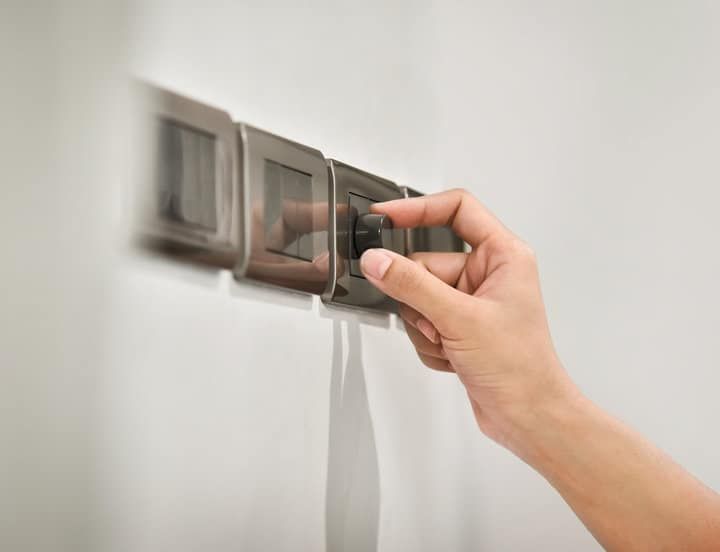
There are two common types of dimmer, and they fail in different ways when installed wrong.
Single-pole dimmers
A single-pole dimmer switch is designed to control a set of lights from one location. It has two main current-carrying wires — a line (the incoming hot from the breaker) and a load (out to the lights) — plus a ground for safety. Many modern dimmers, especially smart and LED-compatible models, also require a neutral wire to power their internal electronics.
Because there is only one set of terminals, it is rare for a single-pole dimmer to end up upside down because of wiring. When it does, it is usually because the device itself is designed or labeled that way.
3-way dimmers
What North America calls a 3-way dimmer and the UK and Europe call a 2-way dimmer is the same hardware: a single-pole double-throw (SPDT) switch designed to control one light from two locations. The names just reflect different counting conventions — the US name counts the switch's three terminals (one common plus two travelers); the UK name counts the two switch locations in the circuit.
Instead of a single line terminal and a single load terminal, a 3-way switch has three terminals: one common (usually a darker-colored screw, often labeled COM) and two travelers (usually brass-colored). The travelers don't connect to the load — they carry the switching signal between the two switches in the pair. The actual lights wire off the common terminal of the second (downstream) switch.
To wire a 3-way dimmer correctly:
- Connect the line (hot) wire from the wall to the common terminal on the dimmer.
- Run the two traveler wires from the dimmer to the two traveler terminals on the secondary switch.
- Connect the load (the lights) to the common terminal on the secondary switch.
The travelers and the line wire are often the same color, so label each conductor before disconnecting anything. Use a non-contact voltage tester with the breaker on to confirm which wire is the incoming hot — wire colors in switch loops can be misleading (NEC 200.7 actually requires a white conductor used as a hot in a switch loop to be re-marked black or red), and on a dimmer it matters which terminal each wire lands on.
What Causes a Dimmer to Be Upside Down: Switch or Wiring?
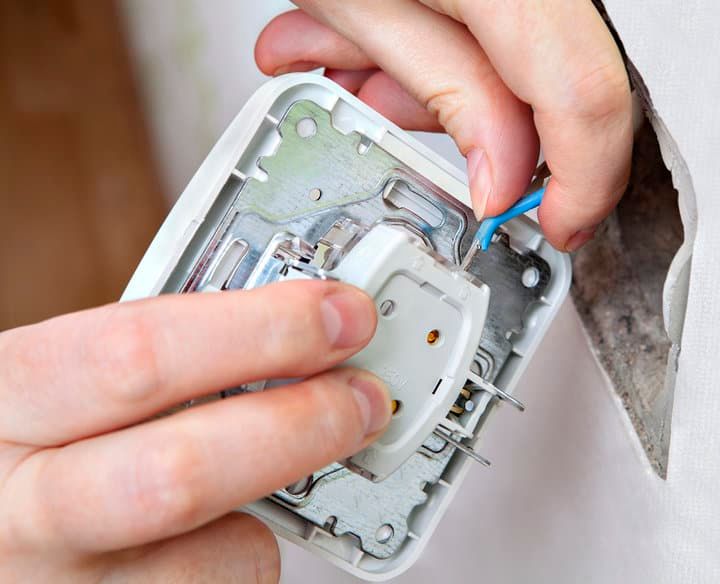
⚠️ A quick note on terminology: an upside-down switch isn't the same thing as "reversed polarity." In US electrical practice, reversed polarity means the hot and neutral conductors are swapped at a receptacle or fixture — a real shock hazard flagged by home inspectors with an outlet tester. What this article describes is either a device that's physically rotated 180° or a switch with the wires on the wrong terminals.
There are really only two reasons a dimmer ends up reading upside down: the device itself is in the wrong orientation, or the wires are on the wrong terminals.
On a basic mechanical toggle switch, swapping the line and load wires won't prevent it from working — the switch just opens and closes the circuit.
But that is not safe advice for dimmers‼️.
Most modern electronic and smart dimmers are polarity-sensitive: their internal circuitry expects line on one specific terminal and load on the other. Lutron, for example, explicitly states that several of their dimmers "will not work if the Hot (BLACK) and Load (RED) wires are reversed."
Wiring a dimmer backwards can cause it to fail to operate, damage the unit (sometimes audibly and immediately), void the manufacturer's warranty, and on some designs leave the load conductor energized when the switch is off. Always follow the LINE and LOAD labels printed on the dimmer.
For a single-pole dimmer to read "right-way-up," the toggle should be off when the top half is flush with the wall and the bottom half sticks out. NEC 404.7 actually requires this for vertically operated single-pole switches in the US, so an inverted single-pole dimmer is technically a code violation as well as a usability problem.
The dimmer slider should be at maximum brightness at the top and dim as it slides down — or, on a horizontal dimmer, brightest on the right. 3-way and 4-way switches are exempt from the "up is on" rule because either position can be on depending on the partner switch, but the slider direction should still match the dimmer's labeled orientation.
How To Fix an Upside-Down Dimmer Switch
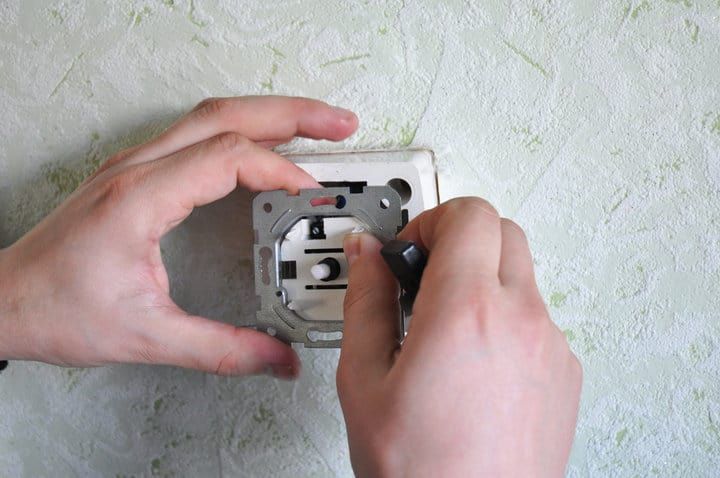
⚠️ Safety first: switch off the circuit breaker controlling the light before removing or rewiring a dimmer. Use a non-contact voltage tester to confirm power is off at the wires before touching them.
Work from the simplest fix to the more involved one.
1. Both the toggle and the slider are upside down
This is the easiest case: the whole device is rotated 180°. Unscrew the dimmer from the box, turn it the right way up, and screw it back in. No rewiring needed.
2. The toggle is upside down on a 3-way dimmer (slider correct)
This is the most common wiring fault. The line wire has been connected to one of the traveler terminals instead of the common. Identify the common terminal — usually a darker-colored screw, often labeled COM. If the line wire is on a brass traveler terminal, move it to the common, and shift the displaced wire onto the freed-up traveler terminal. Repeat the same check on the secondary switch in the pair if the problem persists.
3. The toggle is upside down on a single-pole dimmer (slider correct)
If the wiring on a single-pole dimmer is correct and the toggle still reads upside down, the device itself is the problem — usually a design choice or a labeling error from the manufacturer. There is no terminal swap that will fix it on a polarity-sensitive electronic dimmer; reversing line and load to "flip" the toggle can damage the unit. The options are to live with it or replace the dimmer with a different model.
When the 3-way switch is mislabeled
Occasionally a 3-way dimmer is mislabeled at the factory and the screw marked "common" is actually a traveler. If the wiring matches the labels but the toggle still reads inverted, label every conductor before you start, then try swapping the line wire onto the other candidate common terminal. Keep notes on what you have tested so you don't go in circles.
What About Neutral Wires and Smart Dimmers?
A traditional 2-wire dimmer needs only line and load to operate. Many newer dimmers — especially smart dimmers (Lutron Caseta, Leviton Decora Smart, and similar) and a lot of LED-compatible electronic dimmers — need a continuous low-current path through the device, which means they require a neutral wire in the switch box.
To check whether your box has a neutral, switch off the breaker and look for a bundle of white wires (or wires marked white) capped together at the back of the box and not connected to the existing switch. That bundle is the neutral. Older homes — especially those wired before the mid-1980s — often don't have a neutral run to the switch box at all; the box only contains the switch loop.
If your box doesn't have a neutral, look for a no-neutral-compatible smart dimmer. Lutron Caseta, for example, works without a neutral on many loads. Confirm compatibility against the dimmer's spec sheet and your bulb type before buying.
Bottom Line
An upside-down dimmer is almost always a nuisance rather than a hazard, and almost always a wiring fault rather than a faulty product. Flip the body if the whole device is rotated; move the line wire onto the common if it's a 3-way; or replace a mislabeled or quirky single-pole dimmer with a different model. And before you energize anything, double-check the LINE and LOAD labels on the dimmer — modern electronic dimmers are not forgiving about being wired backwards.
FAQ
Is an upside-down dimmer dangerous?
An upside-down dimmer that is otherwise wired correctly poses no electrical or fire hazard. It is a code issue under NEC 404.7 for vertically operated single-pole switches (which must have the up position as on) and a usability nuisance — especially in the dark — but it is not a shock or fire risk on its own. 3-way and 4-way switches are exempt from the up-is-on rule.
Can I just swap the line and load wires on a dimmer to flip the orientation?
No. Older mechanical toggle switches don't care which wire goes where, but modern dimmers — especially smart, neutral-required, and electronic low-voltage models — are polarity-sensitive. Reversing line and load can damage the unit immediately, void the manufacturer's warranty, and on some designs leave the load conductor energized when the switch is off. Always follow the LINE and LOAD labels printed on the dimmer.
Why is it called a 3-way switch in the US but a 2-way switch in the UK?
It is the same hardware — a single-pole double-throw (SPDT) switch — with different naming conventions. The US name counts the three terminals on the switch (one common plus two travelers); the UK name counts the two switch locations in the circuit. The wiring inside the wall is functionally identical.
How do I know if my dimmer needs a neutral wire?
Check the manufacturer's installation guide — it will say "neutral required" or "no neutral needed." Most current-generation smart dimmers and many LED-compatible dimmers need a neutral. If your switch box doesn't have one, look for a no-neutral-compatible model and confirm it works with your bulb type.
Is "reversed polarity" the same as an upside-down switch?
No. In US electrical practice, reversed polarity specifically means the hot and neutral conductors are swapped at a receptacle or fixture — a real shock hazard detected by home inspectors with an outlet tester. An upside-down switch is a separate problem: either the device is physically rotated 180° or its wires are on the wrong terminals.