
Can Animals Trigger A Motion Sensor Light?
That "pet immune up to 40 lbs" label on your PIR sensor has nothing to do with weight — the sensor can't measure it. It's tuned to ignore smaller IR signatures based on lens geometry and detection zone configuration.
 Eugen
EugenEugen Nikolajev
Creator of LED Lighting Info
Hi, I am Eugen. I was always one of those kids who had all sorts of weird lighting gadgets for every occasion.
Now, I want to share my knowledge and experience about lighting with you on LED Lighting Info.
Read my editorial standards
Key Takeaways
Standard PIR motion-sensor lights will trigger on most medium-to-large animals: dogs, deer, raccoons. Smaller creatures (mice, insects) usually don't, unless they're right at the lens. Pet-immune and dual-technology sensors reduce these false triggers, but none are perfect.
Motion-sensor lights are designed to trigger when a person approaches — but what about everything else that walks, crawls, or flies through the yard? Whether your light reacts to deer, cats, mice, or moths comes down to the sensor type, its sensitivity, and where it's mounted.
There's a little more to it than that, so let's take a look at:
- Whether all animals set off motion sensor lights
- How to prevent false detections
- How pet-friendly PIR sensors work
Can Animals Set Off Motion Sensor Lights?
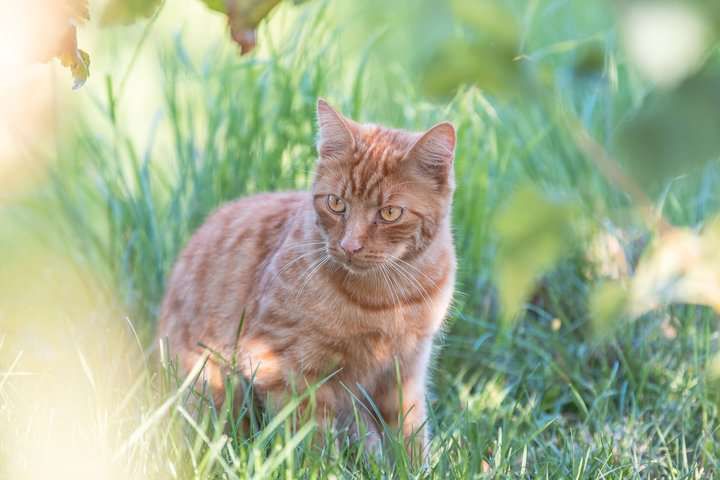
To explain whether animals can set off a motion sensor light, it helps to look at how the sensor actually works.
How a PIR Sensor Triggers
PIR sensors detect motion indirectly — they look for changes in infrared (heat) energy across their field of view, rather than tracking visible movement. That's why a breeze rustling leaves usually doesn't trigger them: moving air doesn't produce the IR signature change a warm body does.
PIR stands for passive infrared. The sensor doesn't emit anything itself — it passively monitors its detection zones, and any time a warm object moves between zones it registers as a change in IR and the light activates.
There are also active infrared (beam-break) sensors that send a beam from a transmitter to a separate receiver and trigger when the beam is interrupted. These are uncommon in residential motion-sensor lights, but widely used in driveway alerts, perimeter security, automatic doors, and garage door safety systems.
PIR is the dominant choice for residential lights because it's effective and cheap to manufacture.
Which Animals Trigger a Standard PIR?
A standard PIR sensor will trigger on anything that gives off enough infrared radiation to register against its background. Whether an animal sets one off depends on its size, surface temperature, and distance from the lens.
| Animal | Triggers Standard PIR? | Notes |
|---|---|---|
| Dog, deer, coyote | Yes | Almost always |
| Cat, raccoon, possum | Yes | Usually |
| Mice, rats | Sometimes | Depends on proximity and how many are in view |
| Insects, spiders | Rarely at distance | Will trigger if on or right at the lens |
Small invertebrates like bugs and spiders rarely trigger an outdoor PIR sensor at normal range — they're too small to produce the IR contrast needed at a distance. But if they crawl directly on or next to the lens, they can absolutely set the sensor off, since they obstruct or alter the infrared reaching the detector. Larger flying insects with active flight muscles (moths, locusts) generate enough thermal energy to trigger sensors at close range too.
How To Prevent False Detections Caused By Animals
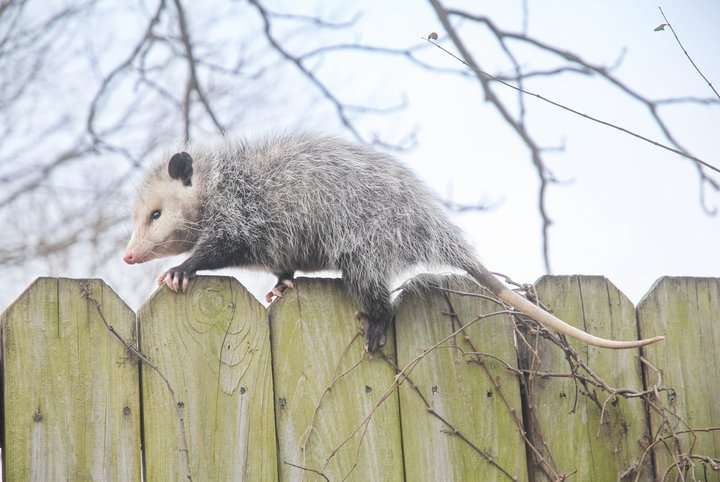
Some people are happy to have their motion sensor lights triggered by animals — pointing one at the trash cans is a reasonable raccoon deterrent, even if wildlife will often adapt over time. But if the goal is to ignore animals, work through the steps below in order.
- Mount the sensor at the right height and angle. Most residential PIR sensors work best at 6–10 feet (about 2–3 m), angled slightly downward so the detection cone covers the path you care about and small ground-level movement falls below the lower zone.
- Keep the lens away from insect and rodent pathways. Avoid mounting on beams, eaves, or surfaces that bugs, spiders, or rodents crawl directly across — anything on the lens itself will trigger the sensor regardless of body temperature.
- Adjust the sensitivity dial. If the unit has one, dial it down until pets and wildlife stop triggering it but humans still register. Expect some trial and error. Remember that the sensor reads the total IR change in its field of view — multiple animals at once may still trigger it.
- Upgrade to a pet-immune or dual-technology sensor. Pet-immune sensors are tuned to ignore smaller IR signatures. Dual-technology sensors require two detection methods to agree before activating, which screens out a lot of environmental false positives.
Microwave and Dual-Technology Sensors
Beyond PIR, you'll also find microwave (radar) sensors and dual-technology sensors that combine PIR with microwave. Dual-tech sensors require both technologies to detect motion before triggering, which significantly cuts false detections from wind, foliage, and small animals — at the cost of a higher price tag.
Microwave-only sensors are more sensitive than PIR but tend to over-trigger and can detect through thin walls, so they're better suited to commercial use than residential porch lights. They can also be defeated by objects that block other types of signal.
How Do Pet-Friendly PIR Sensors Work?
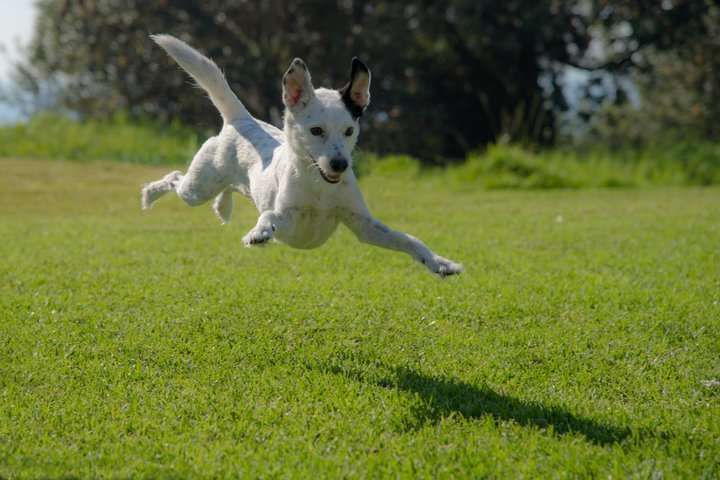
Pet-friendly PIR sensors split their field of view into multiple zones, typically with the lower zones (where pets move) configured to be less sensitive or excluded entirely, while upper zones (at standing-human height) trigger normally. Some designs require IR signatures to register in multiple zones simultaneously — a small pet usually can't fill enough zones at once, but a taller human will.
Mounting height is part of that geometry. These sensors are typically designed for installation at 6.6–7.2 ft (2–2.2 m). Mount too low and a pet can fill an upper zone; mount too high and a human's IR signature gets weak.
What "Pet Immune Up to 40 lbs" Actually Means
Some pet-friendly PIR sensors are calibrated to ignore the smaller infrared signature produced by pets. Manufacturers often advertise a weight rating like "pet immune up to 40 lbs," but the sensor isn't actually measuring weight — it's tuned via lens geometry, zone configuration, and sensitivity thresholds to disregard the IR signature of an animal up to that approximate size. Body surface area and surface temperature are what the sensor sees; weight is just a convenient stand-in.
Indoor Pets Defeat the Geometry
Indoor use changes the math. Cats and dogs that jump on furniture or counters can suddenly fill an upper detection zone, defeating the geometry pet-immune sensors rely on. For indoor installs with active climbers, a dual-tech sensor or careful placement (away from sofas, shelves, and cat trees) matters more than the "pet immune" label alone.
Even with these limits, pet immune motion sensor lights cut down on false detections in most outdoor scenarios. Two pets in the field at once, or a pet in front of a warmer-than-ambient surface, can still occasionally trigger them — no consumer-priced sensor is infallible.
Final Words
In my experience, no consumer motion sensor will perfectly distinguish humans from animals — to a heat-based detector, a large dog and a crouching person look uncomfortably similar. My rule of thumb: get a pet-immune sensor with adjustable sensitivity, mount it at 6–10 ft, and angle it to cover the path you care about rather than the open ground beyond. That handles the bulk of animal false-triggers, with a few occasional misses you can tune out over time.