
Do Yard Lights Keep Animals Away?
Those flashing red predator-eye lights only fool coyotes while the "predator" seems to be patrolling — move them every few days or a smart animal will simply stop believing them.
 Eugen
EugenEugen Nikolajev
Creator of LED Lighting Info
Hi, I am Eugen. I was always one of those kids who had all sorts of weird lighting gadgets for every occasion.
Now, I want to share my knowledge and experience about lighting with you on LED Lighting Info.
Read my editorial standards
Key Takeaways
Yard lights left on permanently won’t usually deter animals, but lights on a motion detector can spook animals like raccoons and deer. Predators such as coyotes will adjust to motion-detected lights, but predator lights that mimic eyes can be more effective.
If deer, raccoons, or coyotes are damaging your yard, you may be wondering whether your outdoor lights can help keep them out.
In this article I’ll explain whether yard lights are effective against:
- Raccoons
- Deer
- Coyotes
Then I’ll cover dedicated predator deterrent lights in more detail.
Do Yard Lights Deter Raccoons?
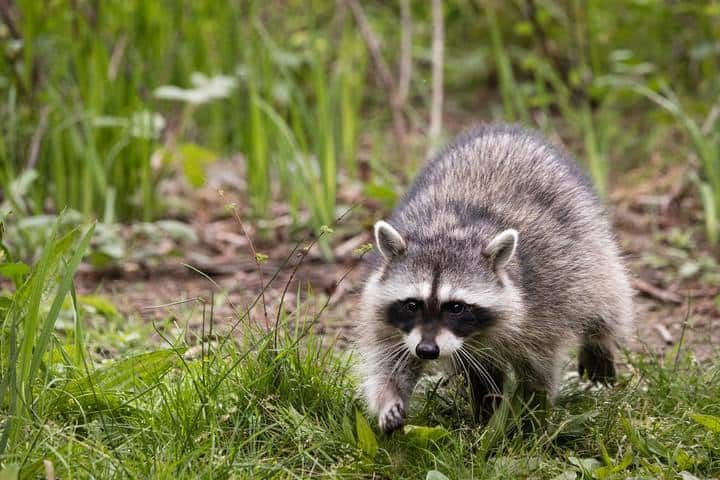
If you live in an area where raccoons are prevalent, you know how annoying they can be — and not just because they like to root through your trash.
Raccoons can become aggressive when cornered or food-conditioned, and they pose a real risk to pets. They’re also a leading rabies vector species in many regions, and their droppings can carry roundworm — so even when they’re not directly threatening, they’re worth keeping out of your yard.
Raccoons are nocturnal, meaning they prefer to forage in the dark. So do yard lights stop them from entering your garden?
To a degree, yes — raccoons don’t like bright lights. However, if the light stays on permanently, raccoons will quickly adjust to it. They’ll be less intimidated and, over time, will get comfortable invading your space and hunting for food.
This is made worse if other homes in your neighborhood also leave lights on at night, since the raccoons in your area learn to ignore lights faster.
Sudden changes in brightness still startle them, though, so a yard light on a motion detector is usually the more effective option. The light snaps on, the raccoon bolts, and if it keeps happening every time the animal returns, it will typically move on to an easier food source.
Can Backyard Lights Keep Deer Away?
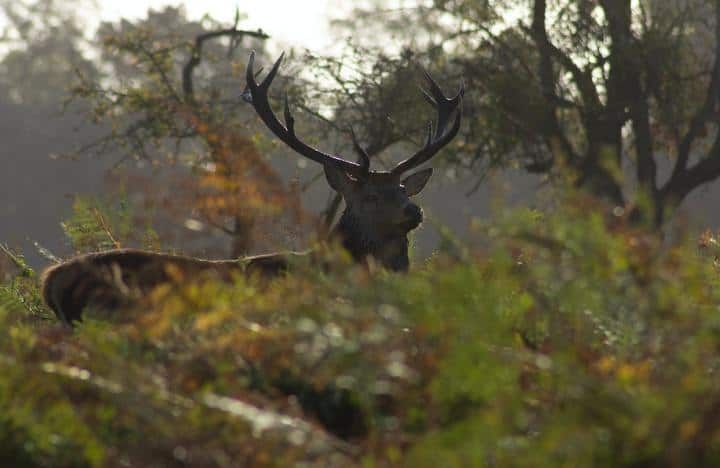
Deer look harmless — cute, herbivorous, not predators — so it’s reasonable to wonder why you’d want them out of the garden at all. Anyone who actually deals with them knows the picture is messier. Deer cause three real problems:
- They will FEAST on your garden, stripping plants and damaging branches and young trees.
- If you live near a busy road, deer drawn to your yard can end up in traffic, where they’re a major cause of accidents.
- Deer are a primary host for adult blacklegged ticks (the ticks that can carry Lyme disease). Those ticks can drop off in your garden, and if they’ve previously fed on an infected mouse, they can pass Lyme disease to you or your pets.
That’s three good reasons to stop deer from getting into your outdoor space.
Deer are easily spooked — they’re among the most nervous animals around (which is exactly why they’re such a traffic hazard; they panic and bolt the wrong way).
A yard light on a motion sensor is a solid way to deter them. It might not stop them completely, but it’s likely to scare them off, at least until they get used to the pattern. State wildlife agencies note that deer often habituate to motion-activated scare devices within about a week, so plan to combine lighting with other measures rather than relying on it forever.
Make sure your motion sensor coverage actually reaches the parts of your garden deer want to eat. Where raccoons tend to come close to the house chasing trash cans, deer will happily browse your furthest plants and stay well clear of any sensor near the back door.
Will Landscape Lights Deter Coyotes?
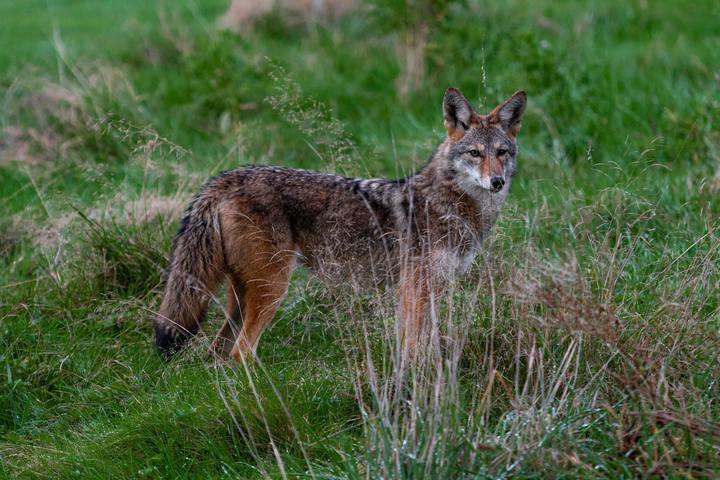
Coyotes are predators, and they’re also very clever animals.
In the wild, coyotes are normally wary of humans, but they can lose that caution when they grow used to people and easy food.
Habituated coyotes can become bold and occasionally aggressive — chasing pets, approaching people, and in rare cases attacking small children — so it’s worth keeping them wary of your property.
Coyotes don’t like bright lights, since extra visibility increases their own risk of being noticed by something larger. But they learn quickly. As soon as they realize the light coming on doesn’t actually have consequences, they’ll be perfectly happy returning.
Lights alone won’t do the job long-term, so the bigger lever is making your yard genuinely unappealing. Coyotes will hunt rodents and small animals and are drawn to pet food and fallen fruit, so:
- Keep pets indoors at night
- Remove fallen fruit from trees and plants
- Clean up outdoor pet food spills
- Secure trash can lids
Related: How To Keep Bugs Away From Outdoor Lights?
Do Predator Deterrent Lights Work?
Predator deterrent lights (Amazon) are designed to mimic the eyes of a large predator. They’re usually red, with two dots (or eye-shaped lights) per unit so that, in the dark, they read as the eyes of a watching animal.
Why red? Many of the animals these lights target — deer and coyotes among them — have limited red-wavelength color vision, so the LEDs don’t flag as obvious artificial lights. The slow flash pattern reads instead as eye-shine reflected back from a stationary predator.
The theory is that wild animals will see those flashing red dots, assume there’s a larger predator watching, and leave. They’re marketed mostly at people trying to keep coyotes or foxes away from chicken coops.
Do they work?
Reviews are generally positive against coyotes and foxes, less so against raccoons and possums — both of which tend to be relatively unimpressed by predator-eye lights. For raccoons and possums, motion-activated lights and good food/trash control will get you further.
A common theme in the long-term reviews: smarter animals will eventually figure out the “predator” never moves. To keep the illusion working, move the lights every few days so the supposed predator seems to be patrolling. The units are designed as temporary installations, so this isn’t much extra work.
It’s also worth running multiple units, since the LEDs are directional. If you’re protecting a chicken coop, don’t cover only one side — make sure every approach angle is watched. More “predators” means more pressure on whatever’s sniffing around your yard.
| Animal | Motion Sensor Lights | Predator Eye Lights | Notes |
|---|---|---|---|
| Raccoon | Effective short-term | Limited effect | Acclimates over time; pair with secure trash |
| Deer | Generally effective | Not typically marketed for deer | Easily spooked but can habituate within a week |
| Coyote | Short-term only | Reasonably effective | Move lights every few days |
| Fox | Limited data | Reasonably effective | Common around chicken coops |
| Possum | Limited effect | Limited effect | Focus on removing food and securing trash |
Also read: Do Landscape Lights Increase Home Value?
How Bright and Where Should the Lights Be?
For motion-activated lights to actually startle wildlife, brightness and placement matter as much as the trigger itself. A dim porch light snapping on barely registers; a sudden flood of light into a dark yard does.
Aim for at least 700 lumens per fixture — roughly the output of an old 60-watt incandescent bulb. Below that, the change doesn’t read as a threat to most animals; it just reads as ambient light.
Mount fixtures 8 to 10 feet high, angled down across the area you actually want to protect. That gives the beam a wide approach angle, keeps the sensor out of easy reach, and prevents animals from carving a routine path that avoids the trigger zone.
Final Words
Yard and landscape lights are a useful tool for keeping unwanted wildlife out of your property — especially when paired with motion detectors so a sudden burst of brightness delivers real shock value.
But some animals are smart enough to acclimatize, and once they do, lights stop carrying weight on their own.
When that happens, lights work best as one layer in a combined approach. Pairing motion-activated lights with deterrent sprays, ultrasonic noise emitters, or predator scents tends to outperform any single tool — wildlife management agencies routinely recommend stacking methods rather than relying on one.
For lasting control, work down the hierarchy in order: lights to startle, food-source removal to make your yard less appealing in the first place, and a properly secured perimeter fence as the final line of defense.