
Why Are My Pool Lights Flashing?
A Class A GFCI won't trip until 4–6 mA of leakage — meaning a water-infiltrated fixture can flicker for quite a while before the breaker decides to act.
 Eugen
EugenEugen Nikolajev
Creator of LED Lighting Info
Hi, I am Eugen. I was always one of those kids who had all sorts of weird lighting gadgets for every occasion.
Now, I want to share my knowledge and experience about lighting with you on LED Lighting Info.
Read my editorial standards
Key Takeaways
Pool lights can flicker because of faulty wiring (including a loose connection), a bulb that needs replacing, or a failing transformer. It can also be a sign of voltage drop, or the light may simply be glitching and need a reset.
Sometimes pool lights flash or flicker when they aren’t supposed to — and it’s usually a sign of a problem, not a hidden color show.
⚠️ Safety first: pool lights mix electricity and water. Always kill power at the breaker (not just the wall switch) before opening any fixture, and verify the circuit is dead with a non-contact voltage tester. In many US jurisdictions, pool electrical work must be performed or inspected by a licensed electrician — when in doubt, call one.
Why Does My LED Pool Light Flicker? Causes and Solutions

Here are the six leading causes. Three apply to any pool light; the other three are specific to low-voltage installations.
| Cause | Applies To | Fix Difficulty | Key Symptom |
|---|---|---|---|
| Faulty Wiring | All lights | Easy | Irregular flicker, occasional cut-out |
| Bulb Worn Out | All lights | Easy | Dimming plus flicker |
| Water in Fixture | All lights | Moderate | Flicker, possible GFCI trip |
| Transformer Failing | Low-voltage only | Moderate | Consistent underpower |
| Voltage Drop | Low-voltage only | Moderate | Flicker only under full load |
| Light Glitching | All lights | Easy | Resolved by a reset |
Faulty Wiring
A loose wire connection is one of the more obvious causes of pool light flicker.
When a connection is loose, the flicker is usually irregular, and the bulb may cut out entirely from time to time.
The loose connection is rarely at the fixture itself unless the fixture has been physically damaged. Look first at the junction box (the waterproof enclosure — usually in the pool wall or on the deck — where the light’s wiring meets the home circuit) or at the transformer if you’re running low-voltage lights.
The fix is straightforward once you locate the bad connection: re-seat the wires and make sure they’re firmly secure inside whatever connector is being used.
Bulb Wearing Out
When LED bulbs reach end of life, they typically just cut out — they don’t always announce themselves with flicker first. But it does happen.
If the bulb is flickering and I’ve noticed it dimming over time, it’s time to replace it — especially if the fixture is several years old.
Quality LED pool lights from major brands (Hayward ColorLogic, Pentair IntelliBrite) are typically rated for 30,000–50,000 hours. Budget fixtures may use lower-bin LEDs or cheaper drivers and fail in 5,000–10,000 hours.
Before swapping the bulb, always rule out the other causes below — otherwise it’s easy to install a brand-new fixture and watch it flicker just like the old one.
Water In The Fixture

If the fixture’s gasket has failed and water has seeped in, the resulting current leak can cause the bulb to flicker.
If the lights are mains voltage, sufficient leakage current should trip the GFCI — but Class A GFCIs are only required to trip at 4–6 mA of ground-fault current under UL 943, so small or intermittent water intrusion may not immediately trigger a trip. The light can flicker for a while before the breaker decides to act.
If the GFCI is faulty, or the lights are low voltage and the secondary side isn’t on a GFCI at all, flicker is even more likely to be what you see first.
Cut power, pull the fixture, drain the water and let it dry thoroughly. Then replace the gasket — that’s what failed in the first place.
A note of caution: water intrusion frequently damages the LED driver and corrodes the internal contacts. A dried-out fixture sometimes works again, but for sealed LED units the electronics often can’t be cleaned and reused safely. If the light still misbehaves after drying and re-gasketing, plan to replace the whole fixture rather than chasing intermittent faults.
Transformer Failing
Low-voltage lights run through a transformer, which steps mains voltage down to the low-voltage AC the fixtures are designed for.
Low-voltage pool lights are rated at 12V AC. Pool transformers commonly include 12V, 13V, and 14V output taps — the higher taps exist to compensate for voltage drop on long cable runs, not because the lights themselves run at 14V. The aim is roughly 12V at the fixture, not at the transformer.
A transformer designed for use with pool lights should last for years, but they’re not infallible. As they age, they can fail to deliver consistent voltage and the lights begin to flicker.
Use a multimeter on the secondary (low-voltage) side — see the Hayward troubleshooting steps below for the procedure.
If the transformer’s primary is reading anywhere in the normal residential range (about 114–126V — the ANSI C84.1 tolerance band around 120V nominal) but the secondary output is low, intermittent, or absent, the transformer is at fault. For the most reliable test, measure the secondary under load, not just open-circuit — a failing transformer can read close to nominal with no load and then collapse the moment the lights are connected.
A quick code note: under NEC 680.23, when a low-voltage (≤15V) underwater light is fed by a listed pool transformer, GFCI protection isn’t required on the 12V secondary side — though the 120V supply to the transformer typically is GFCI-protected. Local codes can vary, so it’s worth confirming with a licensed electrician for any new installation.
Voltage Drop
Think of voltage drop like water pressure falling the further it travels through a long, narrow pipe. Electrical wire works the same way: every foot of cable has resistance, and resistance eats voltage.
When I’m starting with only 12V to begin with, even a small drop matters. A long cable run, or too many lights chained onto one circuit, can leave the fixtures underpowered and flickering.
If individual lights work fine on their own but they all flicker once they’re wired together, the run is overloaded and voltage drop is the culprit.
You can swap in a thicker-gauge cable from transformer to junction box, but the cleaner fix is usually to split the lights across a second circuit.
Light Glitching
Sometimes the flicker is just the controller misbehaving — particularly with color-changing fixtures that step through different programs every time they’re switched on and off.
Whether it’s a true glitch or the lights have wandered into an actual flashing program, this is one of the easier problems to fix. A reset usually does it.
Reset procedures vary by manufacturer, so always check the manual first. A common approach is to leave the lights off for two minutes and then power them back on. Hayward ColorLogic uses a specific power-cycle sequence detailed in the Hayward section below.
What About Mains-Voltage Pool Lights?
Most modern pool lights are low-voltage, but if you’ve got an older 120V fixture, the troubleshooting changes.
On a healthy mains-voltage circuit, water intrusion or a failing fixture should typically trip the GFCI rather than show as steady flicker — but the 4–6 mA Class A trip threshold means small leaks can flicker for a while before they trip. If the GFCI is tripping repeatedly, treat that as a hard stop and bring in an electrician; you almost certainly have a fault that has gone past the bulb itself.
If a mains-voltage light flickers without tripping the GFCI, the most likely culprits are a loose connection in the junction box, the bulb itself, or a controller/switch fault on the panel. The transformer and voltage-drop sections above don’t apply.
Do Flickering Pool Lights Indicate Severe Circuit Problems?
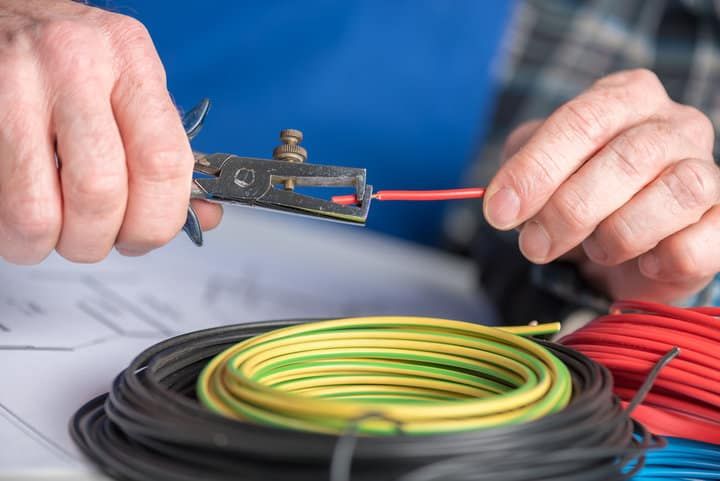
Flickering can occasionally point to a deeper circuit problem rather than the fixture or transformer.
If the lights are wired into a pool controller — something like iAquaLink or an OmniLogic panel — try the other devices on the same controller. If they all behave normally, the problem is isolated to the lighting circuit.
Next, move the lights onto a different switch on the panel and test again. If the flicker follows the lights, the issue is in the fixture or wiring; if it stays with the original switch, the panel is suspect.
If I’ve ruled out everything above and the flicker persists, it may be a deeper outdoor wiring or breaker fault — and that’s the point to bring in a licensed electrician rather than chasing it further on my own.
Hayward LED Pool Lights Flickering

Hayward manufactures the ColorLogic line, one of the more popular pool lights in the US market.
Hayward publishes an in-depth troubleshooting guide that walks through diagnosis. The flicker might be the light itself, or the switch on the OmniLogic panel they’re wired into.
Here are Hayward’s recommended steps, in order — only move on to the next step if the previous one didn’t resolve the issue:
- Power-cycle the lights: turn them off for two minutes, then back on, and cycle through the colors manually at the control panel. Pull the batteries out of the remote first so it can’t interfere.
- If they still flash, use a multimeter to check the secondary output at the junction box and transformer. Expect roughly 12V — or up to 14V if the installer chose a higher tap to compensate for a long cable run.
- If the secondary is low or absent, check the high-voltage (primary) side of the transformer. A reading anywhere in the normal 114–126V band around 120V nominal is fine — if the primary is healthy but the secondary isn’t, the transformer needs replacing.
- If the transformer is healthy, suspect voltage drop. Disconnect the lights and test them one at a time. If each works individually but they all flicker when connected together, split some of the lights onto a separate circuit.
- If they’re still flashing even when wired individually, try moving them onto a different switch on the Hayward control panel — the original switch may be faulty.
If the flicker survives all of that, the lights themselves are likely at end of life and need replacing.
When to Call a Professional
Most of the fixes above are within reach of a confident DIYer, but some scenarios are not worth the risk:
- The GFCI keeps tripping after I’ve ruled out the obvious — there’s a real ground fault somewhere in the system.
- I’m not sure how to safely de-energize the circuit before opening a fixture.
- The fault traces back to the breaker panel, junction box wiring, or the primary side of the transformer.
- Local code requires a licensed electrician for pool work — many US jurisdictions do.
Pool electrical faults are one of the few household electrical problems that can kill someone. If I’m unsure, the cost of an electrician is much lower than the cost of getting it wrong.
Final Thoughts
Flickering pool lights have a long list of possible causes — the hard part is narrowing down whether it’s the bulb, the wiring, the transformer, the controller, or something deeper. Once the cause is identified, most of the fixes are manageable, though replacing a fixture or transformer can sometimes be unavoidable.
If you want to dig deeper into the wiring side, my guide on whether pool lights need a transformer covers low-voltage setups in more detail.
FAQ
Why are my pool lights flashing when I didn’t turn on a color show?
Unintentional flashing is almost always a fault rather than a feature — typically a loose wire, a failing bulb, water in the fixture, a tired transformer, voltage drop, or a controller glitch. Run through the six causes above before assuming the fixture is dead.
Is it safe to open a pool light fixture myself?
Only if you’ve shut off power at the breaker (not just the wall switch) and verified the circuit is dead with a non-contact voltage tester. If you’re unsure about either step, hire a licensed electrician — many US jurisdictions require one for pool work anyway.
How long should LED pool lights actually last?
Quality fixtures from Hayward (ColorLogic) and Pentair (IntelliBrite) are rated for 30,000–50,000 hours. Cheaper imports may use lower-bin LEDs or weaker drivers and fail well short of that — sometimes in 5,000–10,000 hours.
Does my low-voltage pool light need a GFCI?
NEC 680.23 doesn’t require GFCI on the 12V secondary side when the fixture is fed by a listed pool transformer. The 120V primary supply to the transformer typically does need GFCI. Local codes can add stricter requirements, so confirm with a licensed electrician.
My multimeter reads 12V at the transformer but the lights still flicker — what now?
Test under load, not just open-circuit. A failing transformer can read close to nominal with nothing connected, then collapse the moment the lights pull current. If the secondary sags under load, replace the transformer.