
GFCI Protection
A safety device that instantly cuts power when it detects current leaking to ground — preventing electrocution. Required by code for outdoor, bathroom, kitchen, and pool/spa lighting circuits.
A GFCI monitors the current flowing out on the hot wire and returning on the neutral wire. If those two values differ by more than about 5 milliamps — meaning some current is "leaking" through an unintended path (like through a person) — the GFCI trips in less than 1/40th of a second, cutting power before the shock can cause injury.
US electrical code (NEC) requires GFCI protection for lighting circuits in wet or damp locations: bathrooms, kitchens (within 6 feet of a sink), garages, outdoors, unfinished basements, crawl spaces, and near pools and spas. This applies regardless of voltage — even low-voltage pool lights need GFCI protection on the transformer's primary side.
GFCI protection comes in two forms: GFCI outlets (the ones with Test/Reset buttons) that protect everything downstream, and GFCI breakers in the electrical panel that protect the entire circuit. For outdoor lighting, a GFCI breaker is often more practical since the fixtures may not have accessible outlets. If you're installing any outdoor or wet-area lighting, verify GFCI protection is in place before energizing the circuit.
Specifications
| Response time | < 1/40th of a second |
| Required for | Outdoor, bathroom, kitchen, pool, garage |
| Types | GFCI outlet or GFCI circuit breaker |
Related Terms
- IP Rating
Ingress Protection rating — a two-digit code indicating resistance to dust (first digit, 0-6) and water (second digit, 0-9). Higher numbers mean better protection.
- Low Voltage Lighting
Lighting systems that operate on 12V or 24V instead of mains voltage (120V/240V). Common in landscape lighting and LED strips — safer to install and requires a transformer.
Mentioned in

Does Outdoor Lighting Need GFCI?
The 2023 NEC quietly reversed course: standard hardwired outdoor fixtures no longer require GFCI protection — only plug-in receptacles do. That rollback came after the 2020 rules triggered widespread nuisance tripping complaints.
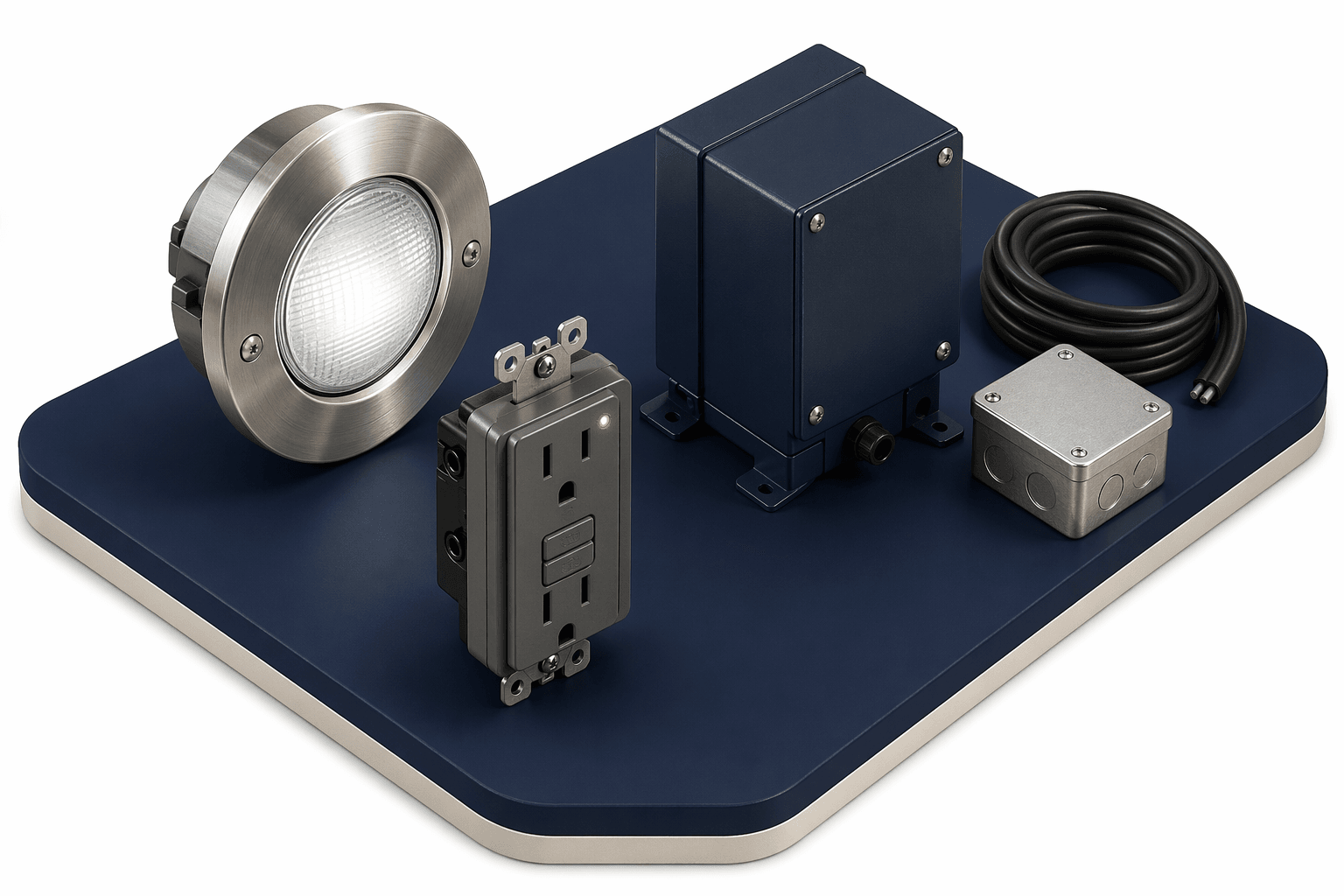
Do Low Voltage Pool Lights Have To Be GFCI Protected?
NEC 680.23(A)(8) only mandates GFCI protection for pool lights running above 15V AC — so most 12V LED fixtures are legally exempt. That exemption isn't a reason to skip it.

Why Are My Pool Lights Flashing?
A Class A GFCI won't trip until 4–6 mA of leakage — meaning a water-infiltrated fixture can flicker for quite a while before the breaker decides to act.

LED Pool Lights Troubleshooting Quiz: 7 Most Common Problems
A tripped GFCI on your pool circuit isn't a nuisance — it's 5 mA of leaking current telling you something is wrong. Swapping it for a standard breaker is both an NEC violation and an electrocution risk.
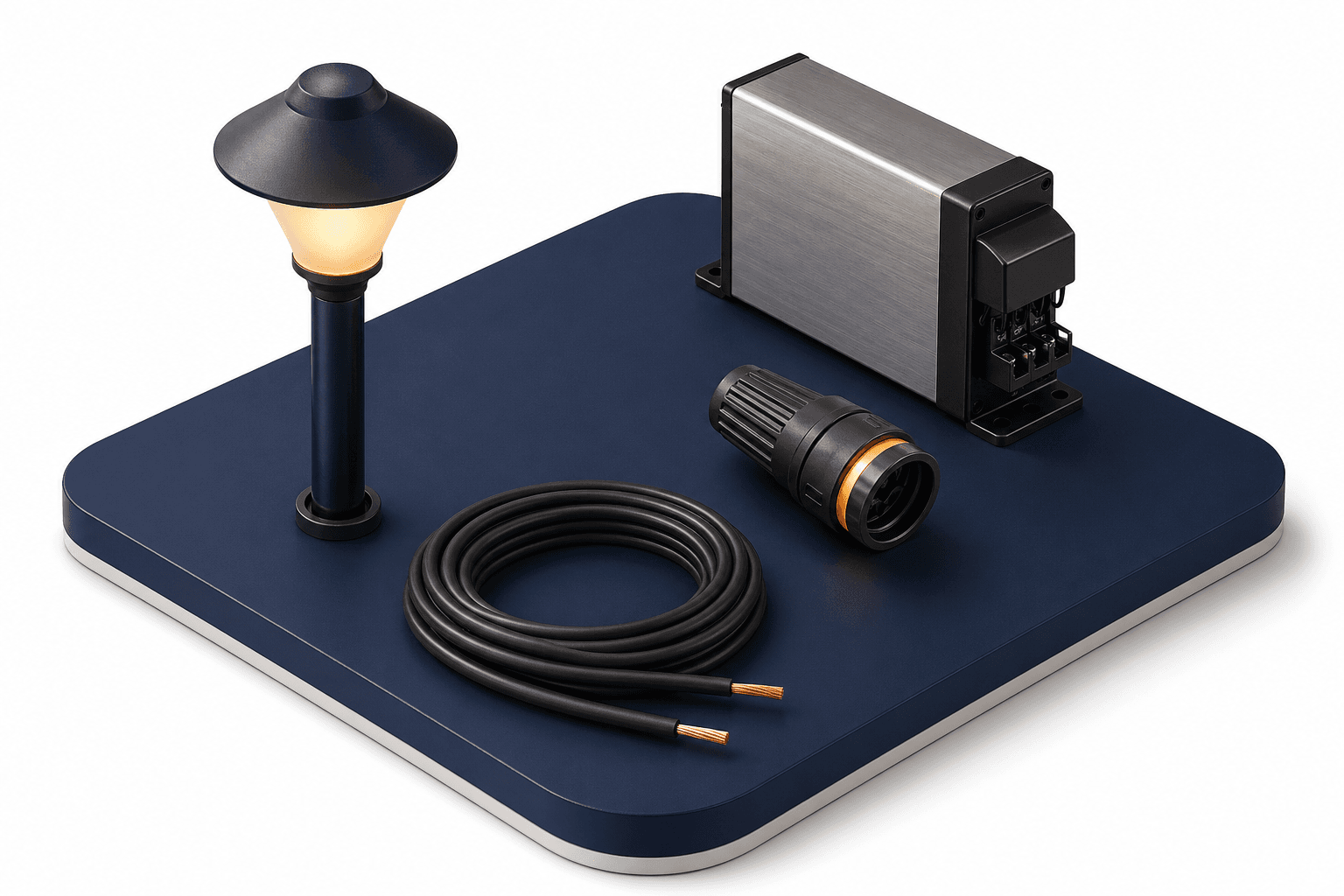
How To Repair Landscape Lighting Wire?
Before you grab a shovel, know that a broken buried wire is one of the less likely reasons your landscape lights have gone dark. The transformer, GFCI, and timer are far more common culprits — and none of them require any digging.