DRL (Daytime Running Light)
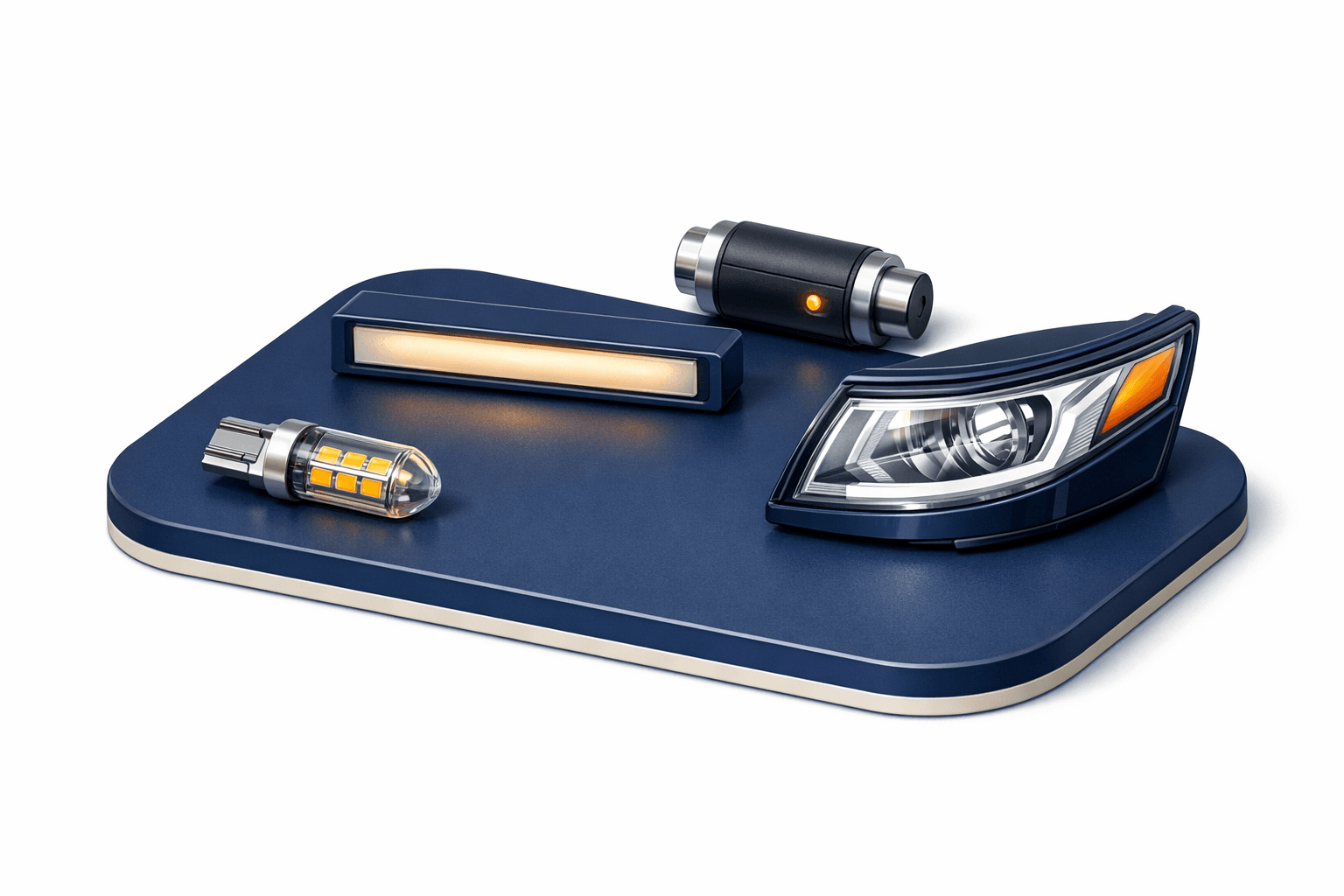
Always-on front lights that make vehicles more visible during the day. Usually low-intensity LED strips or dedicated bulbs that activate automatically with the engine.
Daytime Running Lights are low-intensity front lights that turn on automatically whenever the vehicle is running. Their purpose is visibility — not illuminating the road, but making your car more visible to other drivers, pedestrians, and cyclists in daylight conditions. Studies have shown DRLs reduce daytime collisions by 5-10%.
Modern DRLs are almost exclusively LED — thin light bars, strips, or halos integrated into the headlight assembly. They use very little power (5-15W compared to 55W for a halogen headlight) and last the lifetime of the vehicle. Some designs double as turn signals, switching from white to amber when indicating.
A common question is whether DRLs can substitute for headlights at night. They cannot — DRLs don't illuminate the road, may not activate the tail lights, and typically produce only 400-800 lumens compared to 1,500+ lumens from a proper headlight. In many vehicles, the dashboard doesn't display the headlight indicator when only DRLs are on, which leads people to drive at night without realizing their actual headlights are off.
Related Terms
- Dipped Beam / Low Beam
The standard headlight setting for everyday driving — angled downward and to the side to illuminate the road without blinding oncoming traffic.
- High Beam
The brightest headlight setting with a wider, further-reaching pattern. Used on unlit roads with no oncoming traffic — must be dipped when other vehicles approach.
- HID Lights (Xenon)
High Intensity Discharge lights that create light by arcing electricity through xenon gas. Brighter and whiter than halogen, but being replaced by LEDs in modern vehicles.