HID Lights (Xenon)
High Intensity Discharge lights that create light by arcing electricity through xenon gas. Brighter and whiter than halogen, but being replaced by LEDs in modern vehicles.
HID (High Intensity Discharge) headlights — commonly called xenon lights — produce light by passing an electrical arc through xenon gas inside a sealed quartz capsule. The arc excites metal halide salts in the gas, producing an intense blue-white light that's significantly brighter than halogen.
HID headlights were the premium option for two decades before LEDs took over. They produce 3,000-5,000 lumens at a color temperature of 4300K-6000K depending on the bulb type. The light quality is excellent for nighttime driving — better color rendering than halogen, wider beam pattern, and significantly greater range.
The downsides are what pushed manufacturers toward LED. HID bulbs need 10-30 seconds to reach full brightness (you can see them "warm up" from dim to bright), they require a ballast and igniter (adding weight and complexity), and their output gradually shifts color toward blue-pink as the bulb ages. LED headlights are instant-on, lighter, more efficient, and maintain consistent color throughout their life.
Specifications
| Output | ~3,000-5,000 lumens |
| Color | 4300K-6000K (blue-white) |
| Warm-up time | ~10-30 seconds to full brightness |
| Lifespan | ~2,000-3,000 hours |
Related Terms
- Projector Housing
A headlight type that uses a convex lens to focus and shape the light beam into a sharp, defined pattern. Handles LED and HID upgrades much better than reflector housings.
- Reflector Housing
A headlight type that uses a chrome-coated bowl to bounce light forward. Simpler and cheaper than projectors, but LED upgrades can cause scattered light and glare issues.
- DRL (Daytime Running Light)
Always-on front lights that make vehicles more visible during the day. Usually low-intensity LED strips or dedicated bulbs that activate automatically with the engine.
Mentioned in
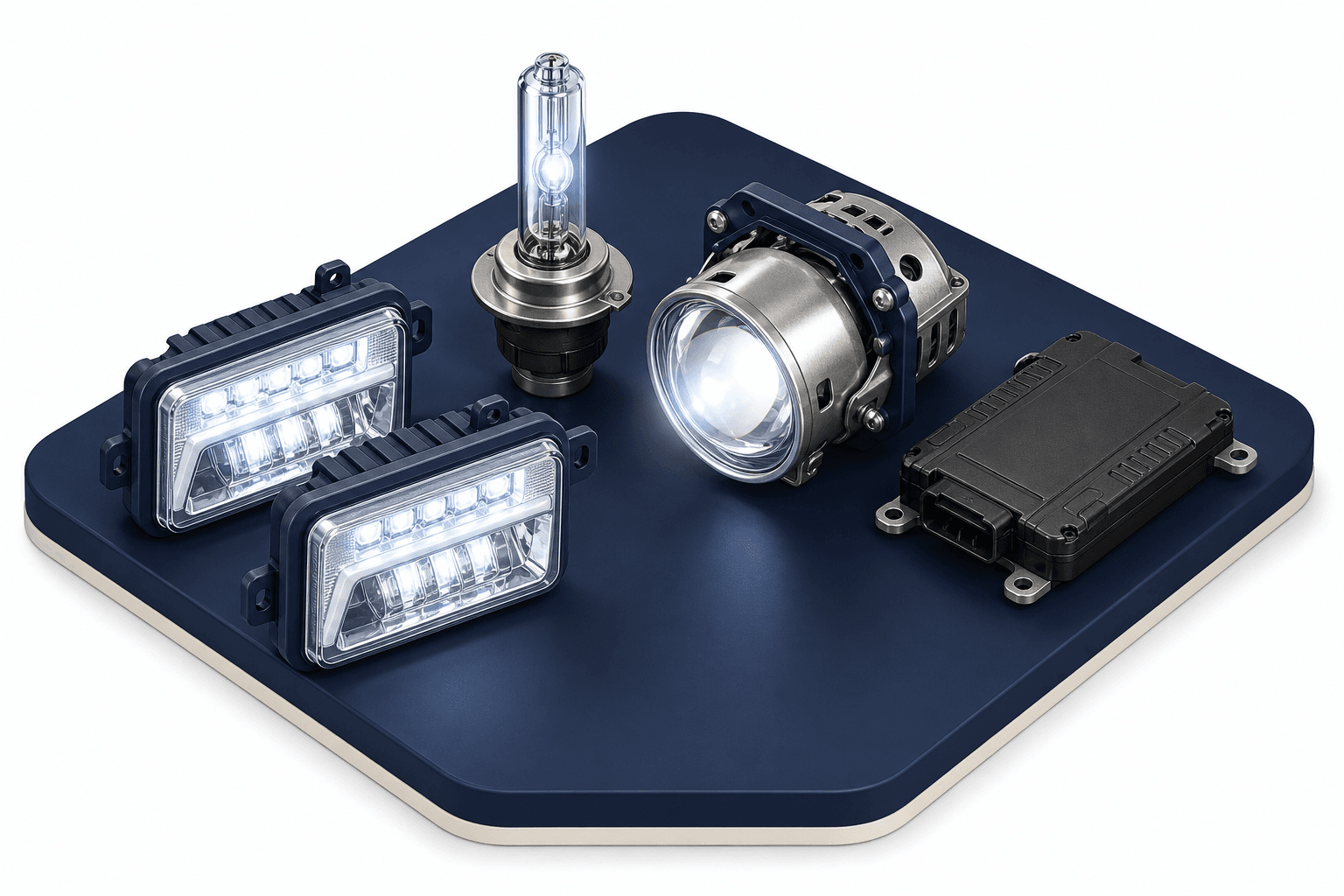
What Is The Difference Between HID And LED Headlights?
That "10,000-lumen" LED headlight box is selling you chip-level numbers — real in-housing output lands closer to 1,500–3,000 lumens, putting it roughly on par with a quality HID.
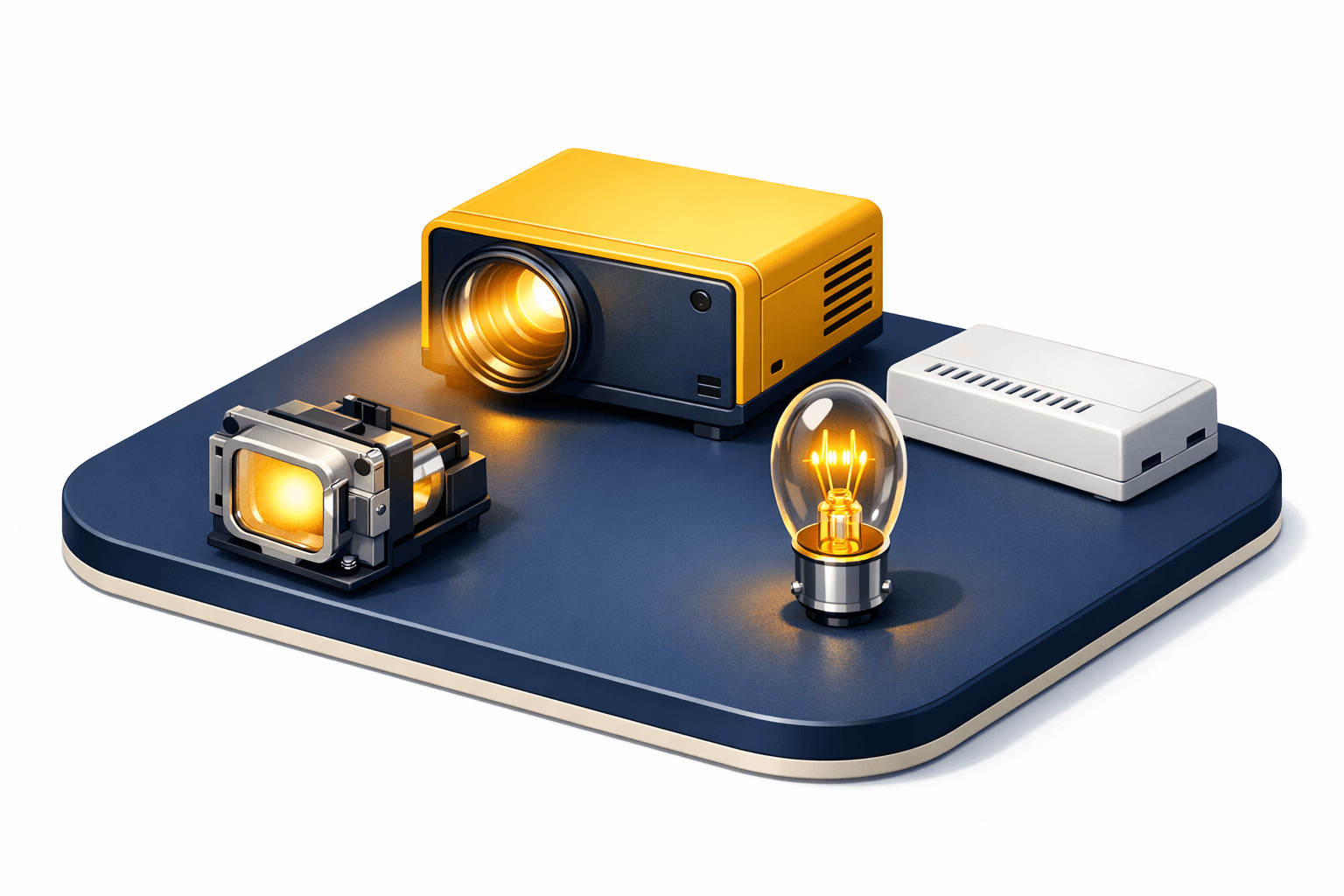
Can A Projector Lamp Be Replaced With LED?
HID projector lamps cost $300 or more to replace — and the LED you swap in may look brighter on the box than it performs on screen, because raw marketing lumens can run two to three times the equivalent ANSI figure.
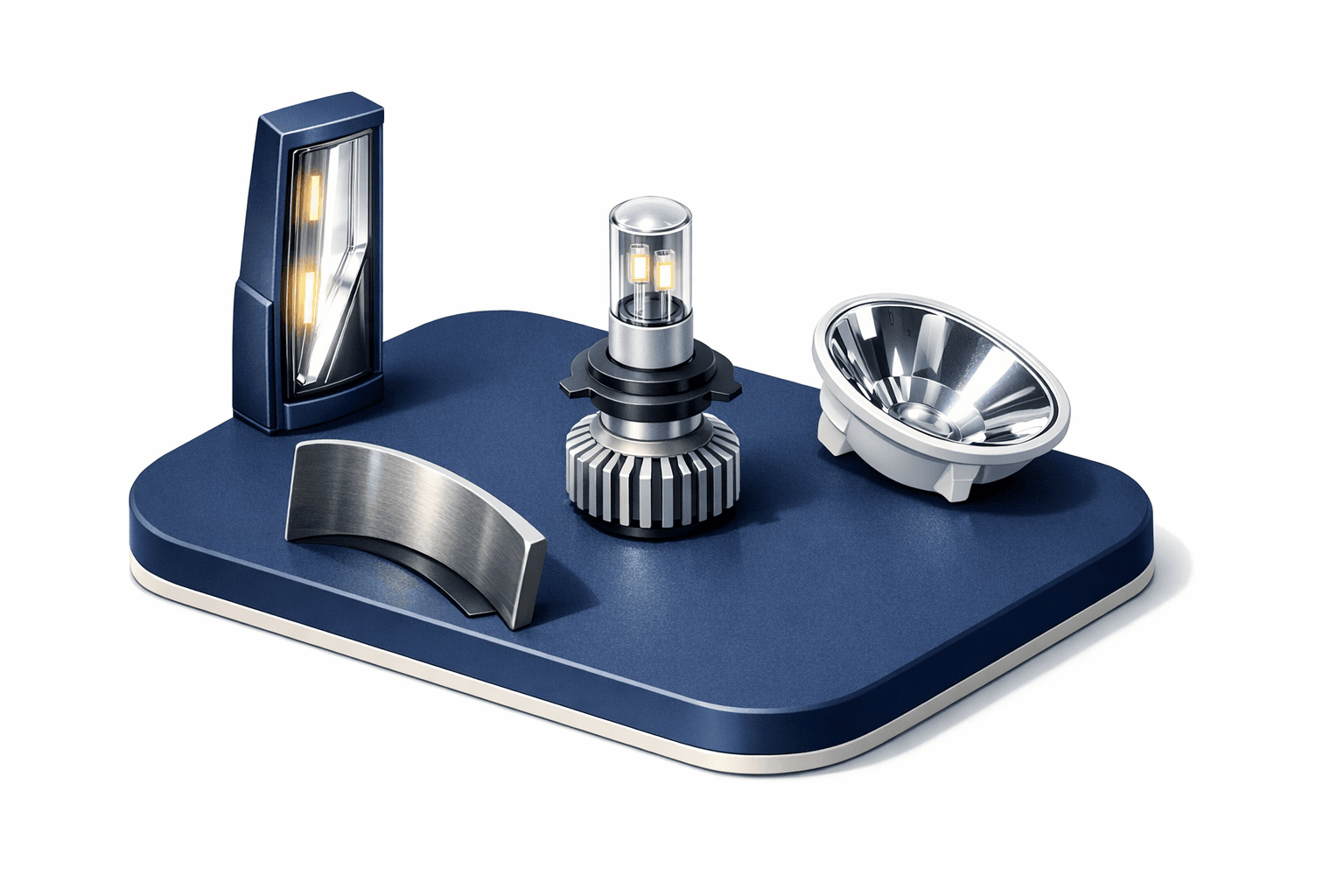
Do LED Headlights Need Beam Deflectors?
Take a UK car into France without beam deflectors and you're looking at an €90 on-the-spot fine — and that's true whether your headlights are halogen, xenon, or LED.