
Dipped Beam / Low Beam
The standard headlight setting for everyday driving — angled downward and to the side to illuminate the road without blinding oncoming traffic.
Dipped beam (called low beam in the US) is the default headlight setting for all normal driving conditions. The beam pattern is asymmetric — angled downward to illuminate the road surface and slightly to the right (in right-hand-traffic countries) to light up road signs and the shoulder without blinding oncoming drivers.
The sharp horizontal cutoff line at the top of the dipped beam pattern is what prevents glare. This cutoff is produced by a physical shield inside the headlight housing (in projector-type headlights) or by the precise shape of the reflector (in reflector-type headlights). When people upgrade to LED bulbs that don't position their chips correctly, this cutoff line becomes blurred or disappears, creating dangerous glare.
Dipped beam is legally required in most countries whenever driving between sunset and sunrise, in tunnels, during rain, fog, or snow, and whenever visibility is reduced. Some countries require dipped beam at all times. The consequences of driving without them — or with misaligned headlights — are both legal (fines) and practical (drastically reduced visibility at night).
Related Terms
- High Beam
The brightest headlight setting with a wider, further-reaching pattern. Used on unlit roads with no oncoming traffic — must be dipped when other vehicles approach.
- H7 Bulb
A single-filament halogen headlight bulb commonly used for low beam or high beam in European vehicles. One of the most popular bulbs for LED headlight upgrades.
- H1 Bulb
A compact single-filament halogen bulb used in headlights and fog lights. Smaller than H7 with a different connector — common in older European and Japanese vehicles.
- Projector Housing
A headlight type that uses a convex lens to focus and shape the light beam into a sharp, defined pattern. Handles LED and HID upgrades much better than reflector housings.
Mentioned in
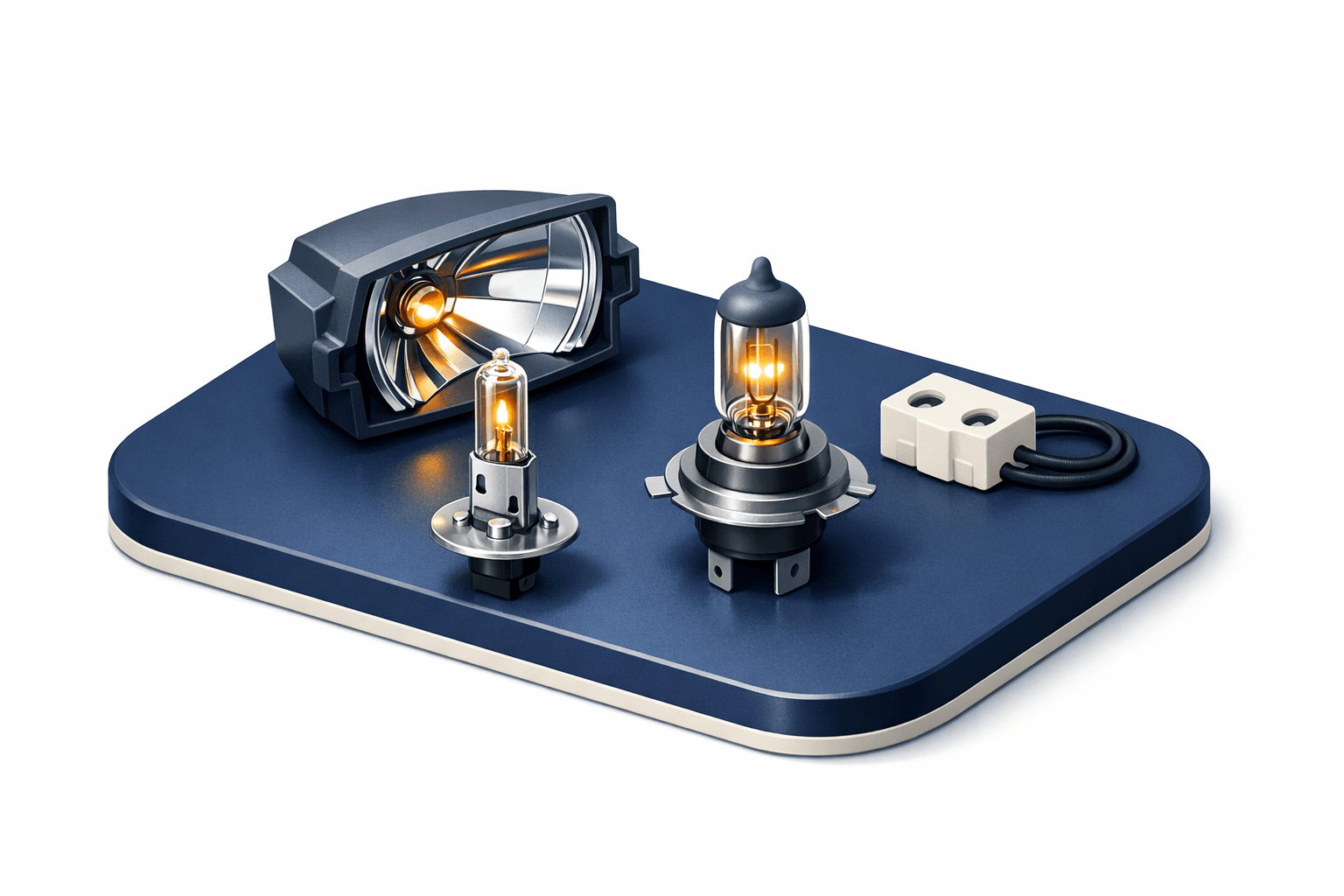
What’s The Difference Between H1 And H7 Bulbs? Comparison Table
Your H1 high beam and H7 low beam run on the same 12 V, 55 W — it's the filament position and reflector shield that keep one from blinding oncoming traffic, not a wattage difference.
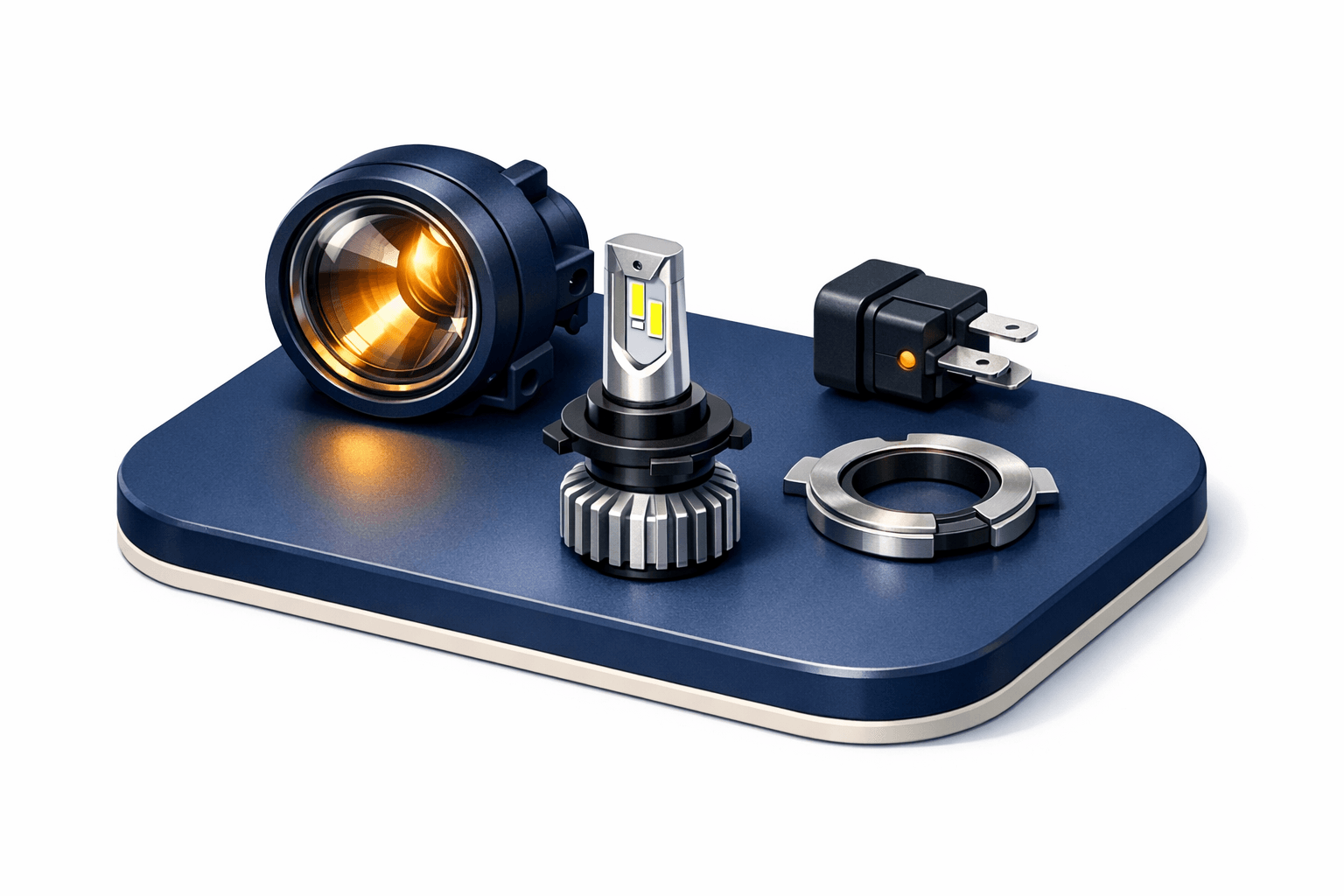
Can LED Headlights Be Installed Upside Down?
At 60 mph, being dazzled by oncoming headlights means traveling 440 feet effectively blind — and an upside-down LED low beam can cause exactly that glare without you ever touching the brights.
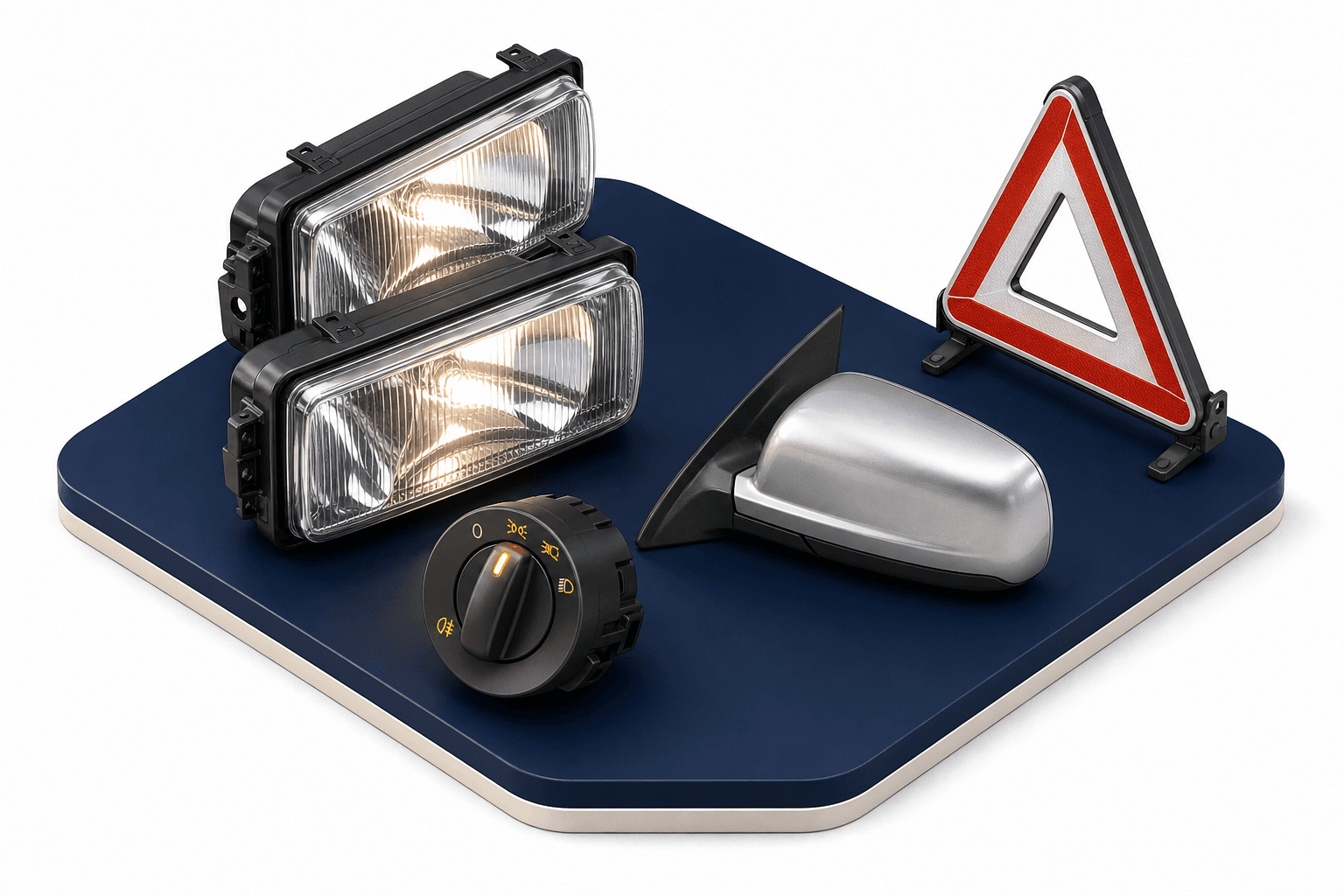
When Should I Use Dipped Headlights?
Several U.S. states require your headlights on whenever your wipers are running — and high beams must be dimmed for the car ahead of you, not just the one coming toward you.