
High Beam
The brightest headlight setting with a wider, further-reaching pattern. Used on unlit roads with no oncoming traffic — must be dipped when other vehicles approach.
High beam (also called full beam, main beam, or "brights") removes the cutoff shield or activates additional reflector surfaces to project light further and higher than dipped beam. The result is a symmetrical, long-range beam that illuminates the road 300-500 feet ahead — roughly double the range of dipped beam.
High beam is designed for one specific scenario: driving on unlit roads with no oncoming traffic, no vehicles ahead of you, and no pedestrians nearby. In every other situation, it creates dangerous glare. Most countries legally require you to switch to dipped beam within 150-500 meters of oncoming traffic.
Modern vehicles increasingly feature automatic high beam or adaptive driving beam (ADB) systems. These use a camera to detect oncoming headlights and taillights ahead, automatically switching between high and low beam. Some advanced LED matrix systems can selectively dim individual LED segments to maintain high-beam range while casting a shadow around detected vehicles — keeping the road lit without blinding anyone.
Related Terms
- Dipped Beam / Low Beam
The standard headlight setting for everyday driving — angled downward and to the side to illuminate the road without blinding oncoming traffic.
- H1 Bulb
A compact single-filament halogen bulb used in headlights and fog lights. Smaller than H7 with a different connector — common in older European and Japanese vehicles.
- Reflector Housing
A headlight type that uses a chrome-coated bowl to bounce light forward. Simpler and cheaper than projectors, but LED upgrades can cause scattered light and glare issues.
Mentioned in
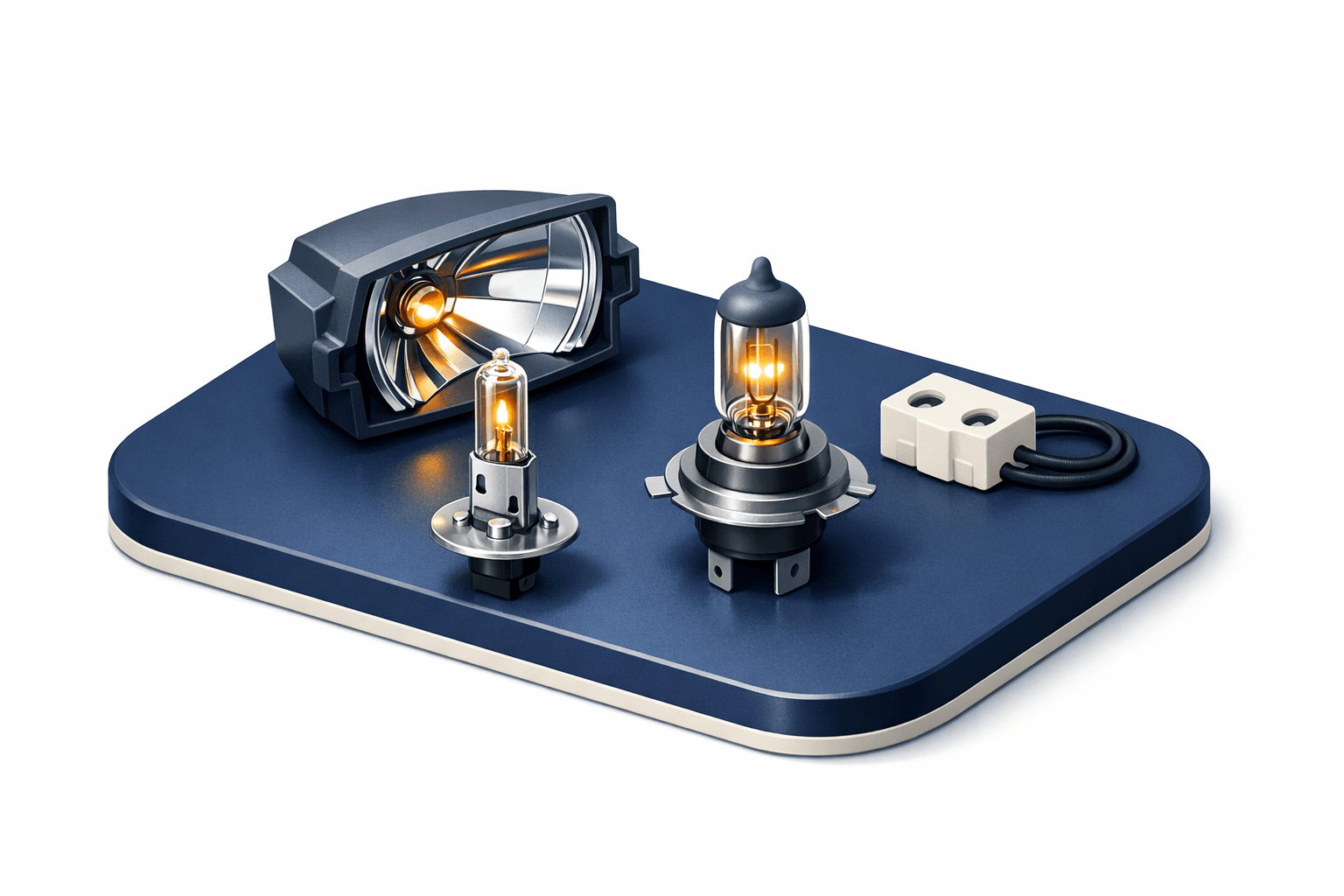
What’s The Difference Between H1 And H7 Bulbs? Comparison Table
Your H1 high beam and H7 low beam run on the same 12 V, 55 W — it's the filament position and reflector shield that keep one from blinding oncoming traffic, not a wattage difference.
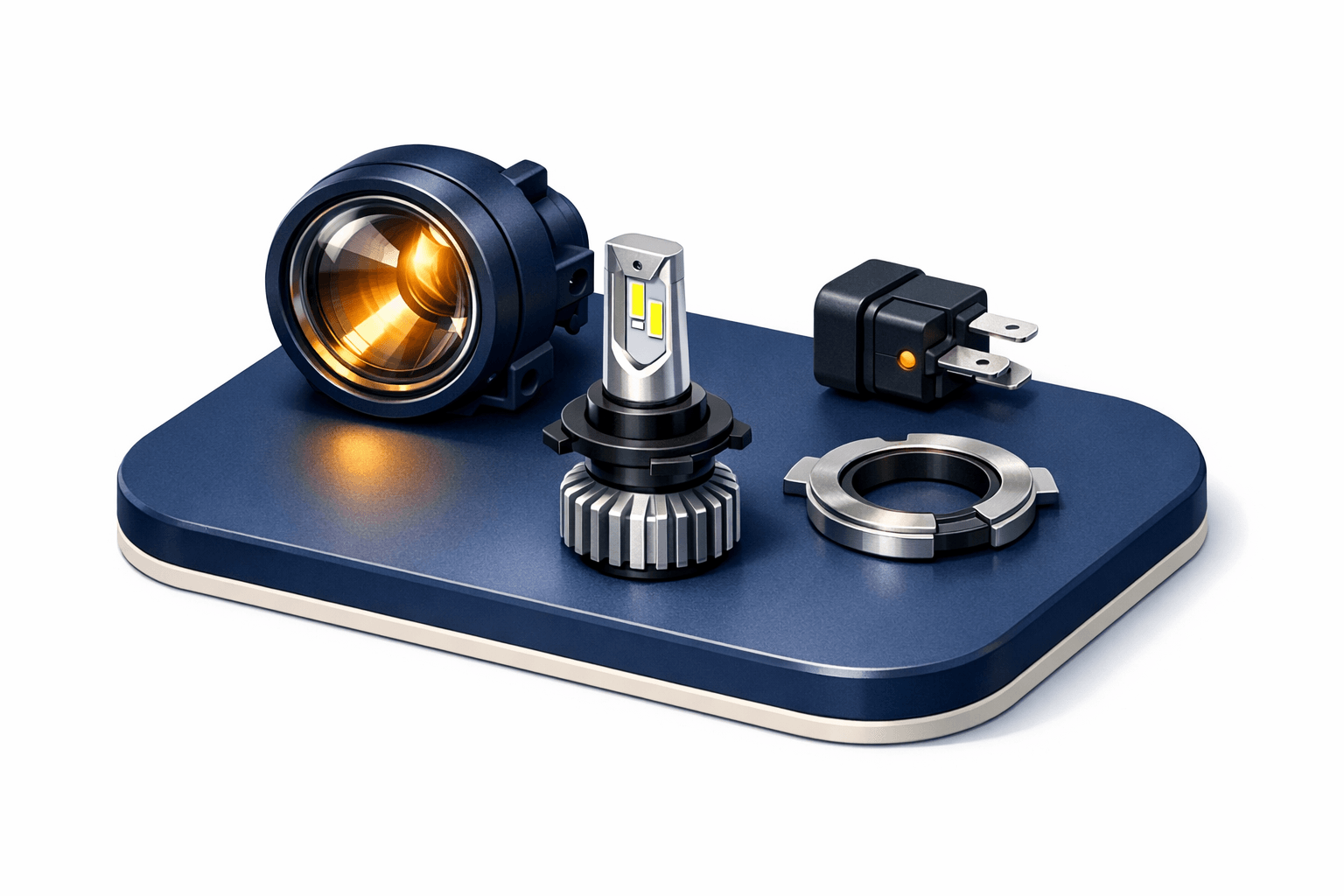
Can LED Headlights Be Installed Upside Down?
At 60 mph, being dazzled by oncoming headlights means traveling 440 feet effectively blind — and an upside-down LED low beam can cause exactly that glare without you ever touching the brights.