
Frosted Bulb
A bulb with a diffused white coating that softens light output, hides internal LED chips, and reduces glare.
Frosted bulbs have a white coating on the inside of the glass that scatters light in every direction, producing a soft, even glow. This diffusion hides the bright LED chips inside, eliminating the harsh point-source glare that can be uncomfortable when a bare bulb is visible.
Choose frosted when the bulb is exposed or visible in the fixture — like a table lamp with a translucent shade, an open pendant, or a bathroom vanity bar. The frosted coating doesn't significantly reduce total light output, but it does change the quality: shadows are softer, the light feels more gentle, and there are no visible hotspots.
The trade-off is aesthetic. Frosted bulbs don't have the sparkle and visual interest of clear filament bulbs. In a chandelier or decorative fixture where the bulb itself is part of the design, a frosted bulb can look flat and utilitarian.
Related Terms
- Clear Bulb
A bulb with transparent glass that shows the LED filament or chips inside. Produces sharper, more decorative light with visible sparkle.
- A19 Bulb
The standard household light bulb shape — a pear-shaped bulb 2.375 inches in diameter, used in most lamps and fixtures.
Mentioned in
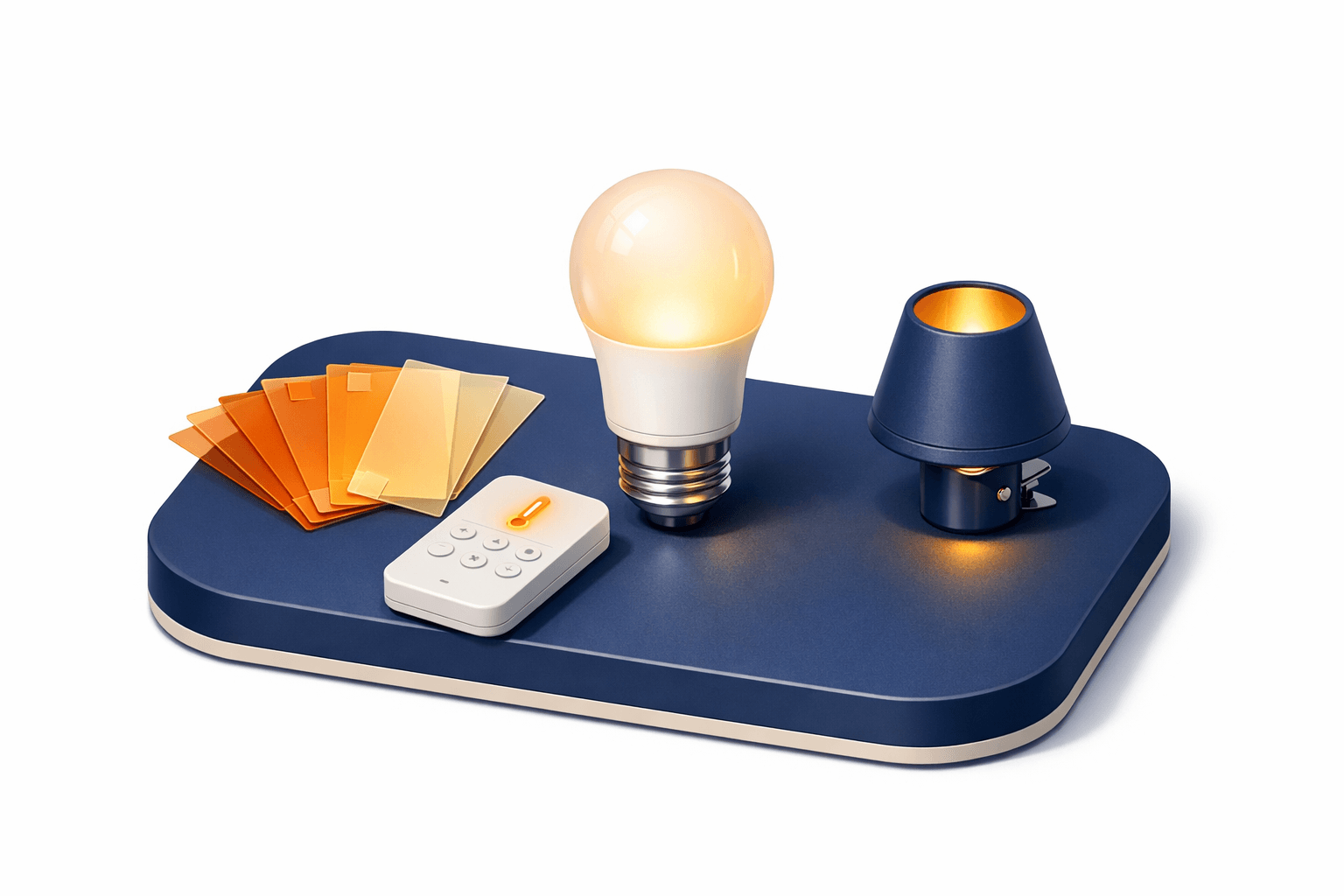
How To Make White LED Lights Look Warmer? 4 Filter Gels Tested
A full CTO gel on a 6000K bulb lands around 3000K–3200K — not the 2700K you'll often see quoted. Hitting true incandescent warmth usually means starting with a warmer bulb, not a stronger gel.
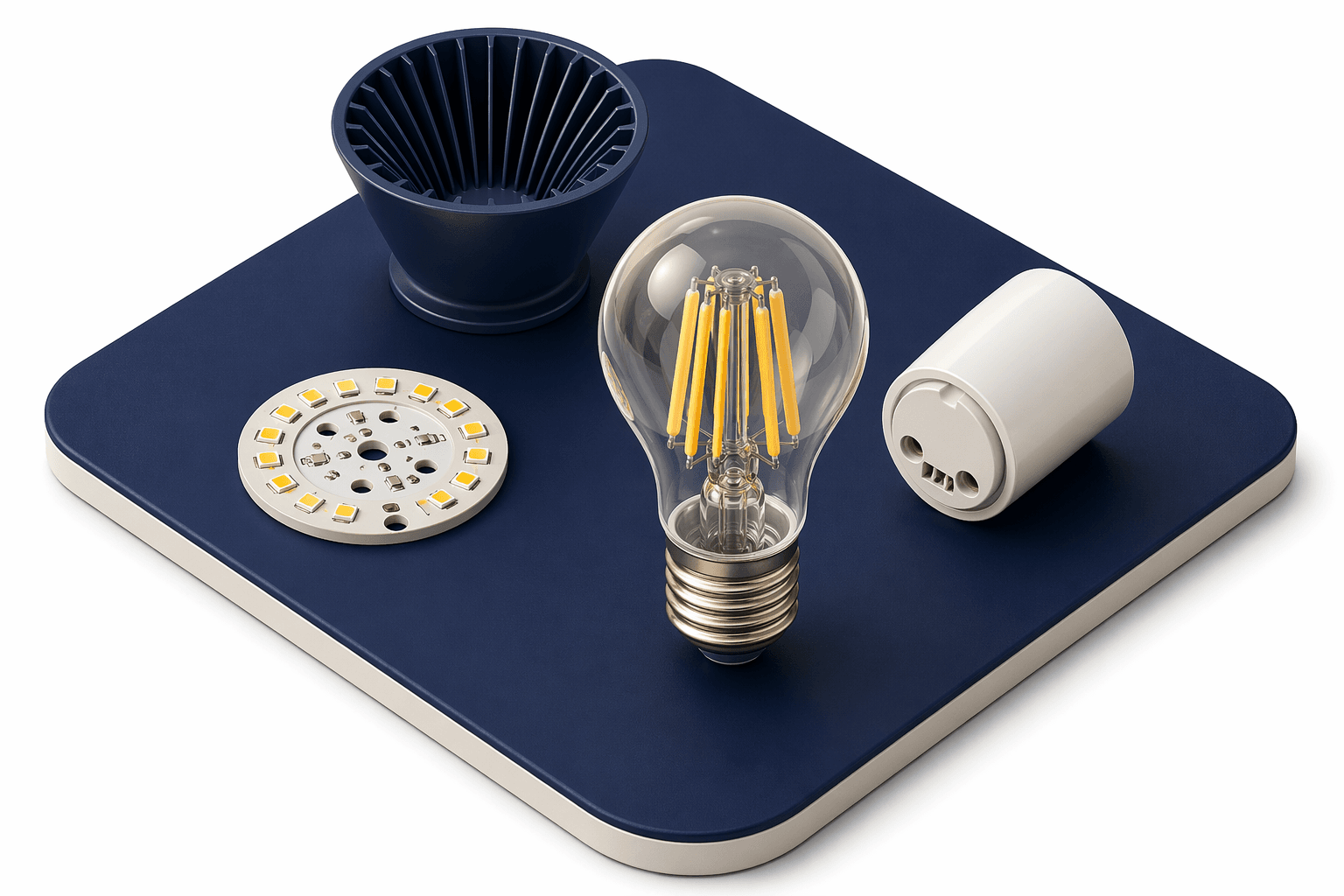
What Materials Make Up An LED Bulb?
White LED bulbs don't produce white light — a blue InGaN chip excites a yellow phosphor, and your eye does the mixing. That phosphor recipe, not the diode, determines the color temperature you see.
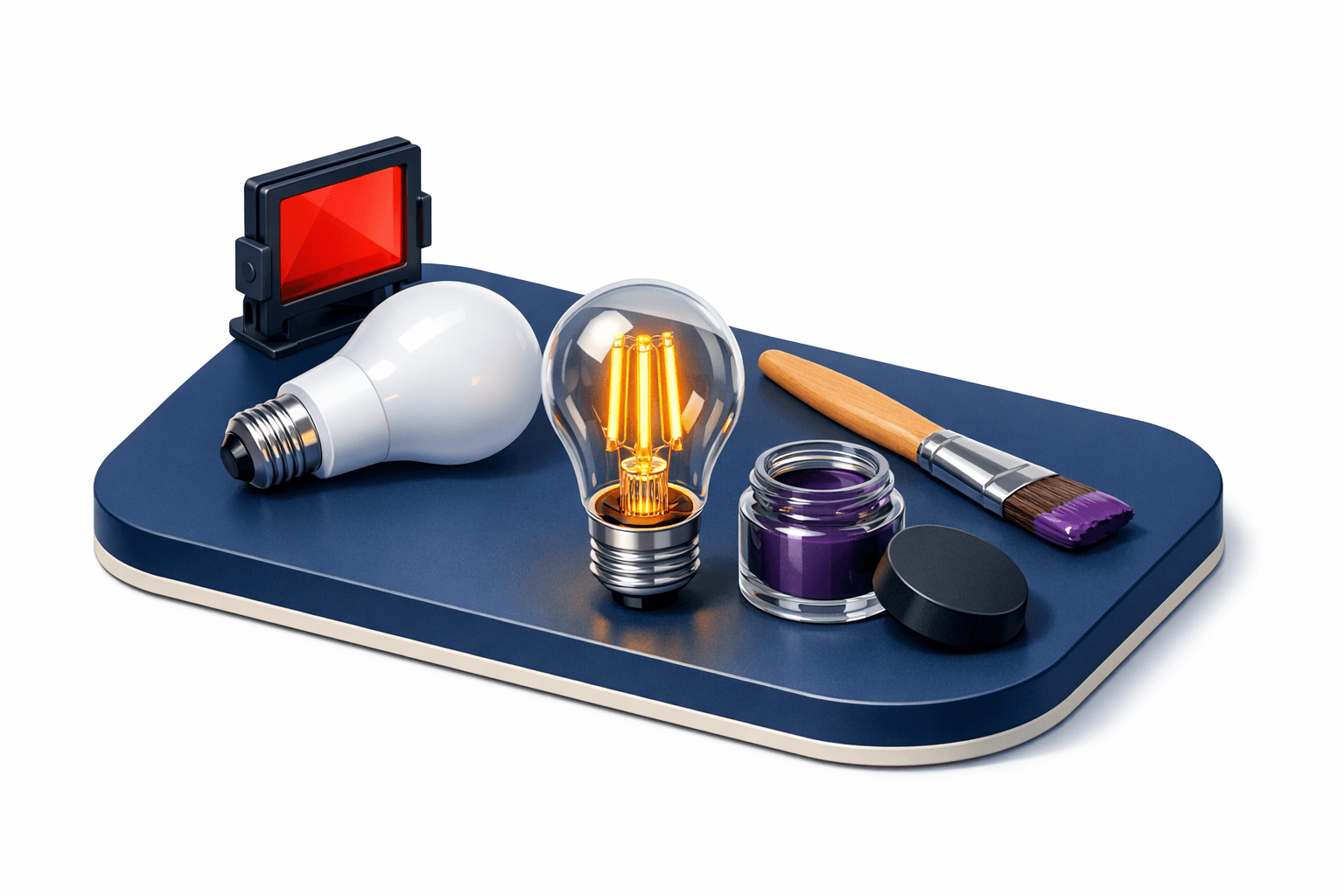
Can You Paint LED Light Bulbs?
A yellow filter on a cool-white LED doesn't just warm the tone — it absorbs blue wavelengths and cuts brightness too, so you may end up with dimmer light than you bargained for.