
How To Make White LED Lights Look Warmer? 4 Filter Gels Tested
A full CTO gel on a 6000K bulb lands around 3000K–3200K — not the 2700K you'll often see quoted. Hitting true incandescent warmth usually means starting with a warmer bulb, not a stronger gel.
 Eugen
EugenEugen Nikolajev
Creator of LED Lighting Info
Hi, I am Eugen. I was always one of those kids who had all sorts of weird lighting gadgets for every occasion.
Now, I want to share my knowledge and experience about lighting with you on LED Lighting Info.
Read my editorial standards
Key Takeaways
There are multiple ways to make a bulb look warmer, and filter gels are one of the cheapest. To use them:
- Choose the transparency of gel you want, depending on how warm you want the lights to be
- Cut the gel to size to fit your LED lights
- Apply them to the light – you may be able to remove a cover and insert the gels, otherwise use adhesive tape to fix them to the exterior of the light
You've finally made the switch from traditional tungsten light to energy-saving LED lighting, only to find out that your living room has a clinical vibe.
The chances are you've chosen a bulb with an extremely cool color temperature.
So, how do you change the color to something warmer without buying new bulbs again?
In this article we'll look at:
- Why you would want to make your LED lights look warmer
- The different ways to change the color of white LED lights
- The difference between brightness and color temperature
Why Would You Convert White Light To Warm?
Reasons that you might want to change your white light to a warm orange or yellow light include:
- Settling down for the night and preparing yourself for sleep
- Making the room look less clinical and feel more cozy
- Reducing eye strain
- Making the space feel warmer
Broadly, warm LED lights will make you feel more relaxed. You'll find it easier to unwind if you set your LED lighting to a warmer color.
And if you live somewhere cold, using warmer lights can fool your brain into feeling like the actual temperature is higher. Not by much – light isn't going to replace your heating system – but it can help you feel more comfortable.
It's also worth asking yourself whether you want warm lights permanently or if it's a temporary solution that you're looking for. If you see the benefits of both cool lights and warmer LED light, then it's best to get color-changing bulbs to suit every need.
Impact Of LED Lights On Sleep
There's a large and well-documented body of research on how different color temperatures affect the body's circadian rhythm (the Sleep Foundation's overview is a good starting point).
Blue wavelengths – which you get from cool white lights – are proven to suppress the production of melatonin, the hormone that regulates sleep/wake cycles.
High exposure to blue light in the evening can prevent you from relaxing. At the severe end of the spectrum, cool light may contribute to sleep deprivation.
While they may complement your minimalist home, it's clear that cool LEDs are not suitable in all contexts.
Warm LEDs have the opposite effect. Because yellow-toned light lacks the blue wavelengths that suppress melatonin, it lets your body's natural sleep signals kick in — gradually reducing alertness and helping you wind down in the evening.
Cool white LEDs are ideal for workspaces or areas where you want to feel alert and productive during the daytime – also known as task lighting.
How To Change White Light To Warm Light?
There are four realistic options: filter gels, painting the bulb (with caveats), replacing the bulb outright, or using a smart bulb. We'll cover each in turn, starting with the cheapest.
Use A Color Filter To Make LED Lights Warmer
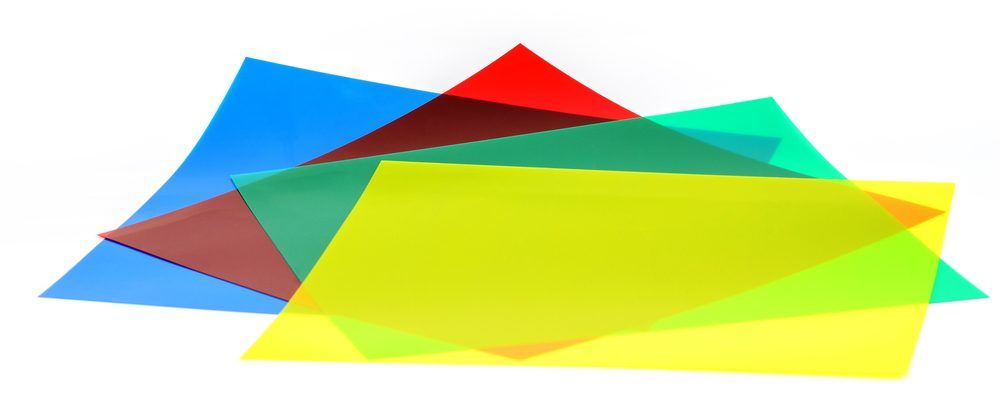
Color filters change the color of lights by filtering the light that passes through. Put the filter between the light-emitting diodes and your eyes, and you'll see a filtered, warmer color.
If you're specifically looking to convert your cool LED bulbs to warmer color temperatures, you need orange gels.
These are often called CTOs (color temperature orange). Depending on the strength, orange gels can neutralize a cool LED or completely transform it into a warm white.
Filter Gel Test
I ran a test with a set of filter gels over the same cool-white bulb — starting point was a 6000K LED, and I kept the fixture, distance, and camera settings identical across all four shots.
The four gel strengths I tested:
- 1/8 CTO
- 1/4 CTO
- 1/2 CTO
- 1 (or full) CTO
Each number represents the gel's transmission — 1/8 CTO lets through roughly 92% of the light, while a full CTO lets through around 47% (exact figures vary by manufacturer; Rosco's #3407 Full CTO is 47%, Lee's #204 is closer to 55%).
Here's the side-by-side from my test:
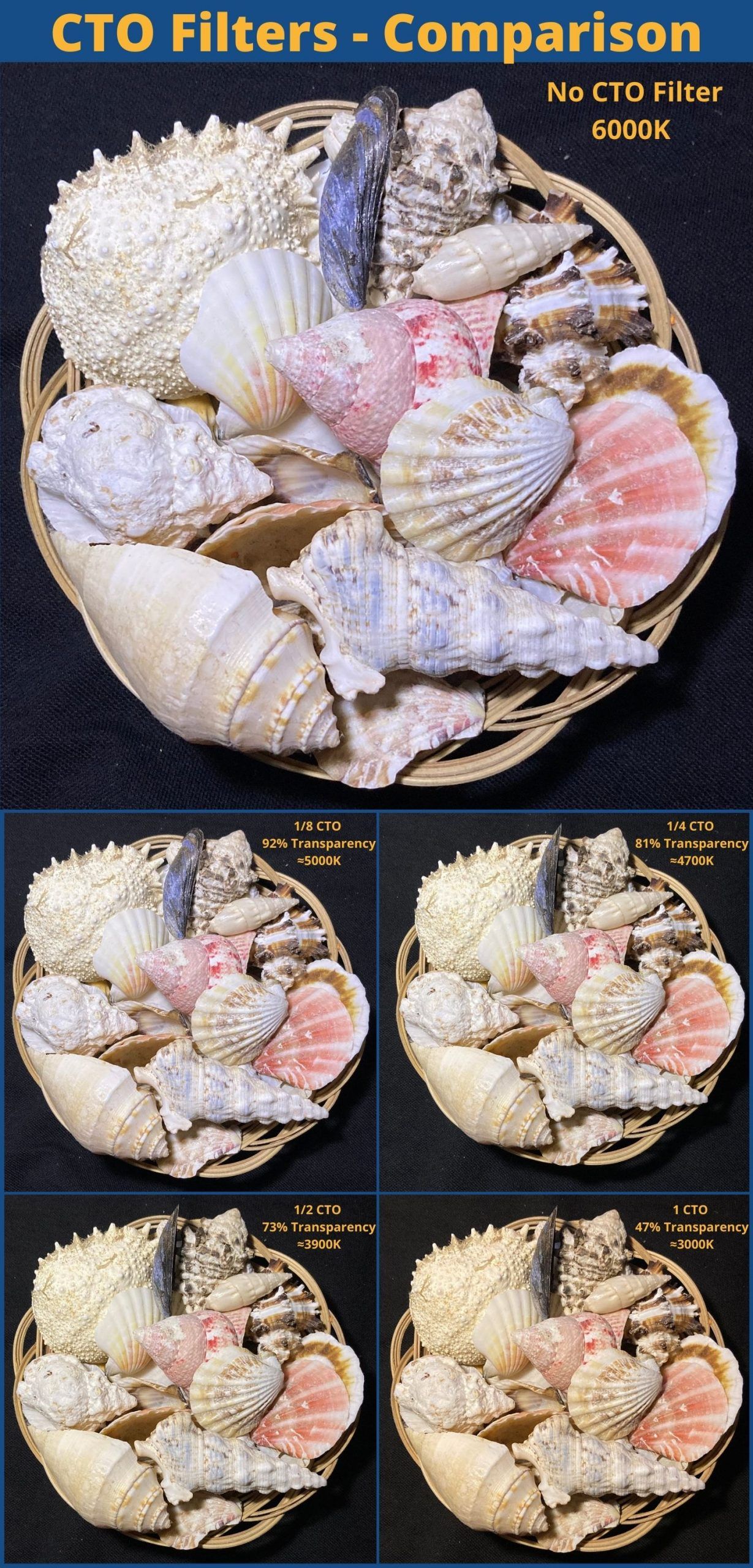
And here's what each gel does to a 6000K source, using Rosco's published mired shift values to convert the result into Kelvin:
| Gel Strength | Transmission | Starting CCT | Resulting CCT | Visual Result |
|---|---|---|---|---|
| 1/8 CTO | ~92% | 6000K | ~5350K | Barely warmer, still cool |
| 1/4 CTO | ~81% | 6000K | ~4800K | Neutral-warm |
| 1/2 CTO | ~73% | 6000K | ~4000K | Warm white |
| Full CTO | ~47–55% | 6000K | ~3000–3200K | Warm, near-incandescent |
A full CTO takes a 6000K source down to somewhere around 3000K–3200K — close to warm incandescent territory. Rosco #3407 lands near 3000K; Lee #204 lands closer to 3100K. The often-quoted "2700K" is a stretch for a single pass of full CTO from 6000K; you'd typically need a stronger orange (or a warmer starting bulb) to hit that.
At the other end, the 1/8 CTO barely moves the needle. By my eye it looked around 5000K — the math says closer to 5350K, which tracks with how subtle the shift is.
Visually: 1/8 and 1/4 gels took the edge off but the shade of white was still relatively cool. The 1/2 and full CTO were the most welcoming — very close to incandescent light.
Keep in mind I started with an extremely cool 6000K source. If your LED is already below 6000K, you'll likely get the warm result you want from 1/8 or 1/4 CTO rather than the full.
Heat And Safety: Where Not To Use Gels
Film gels are plastic, and they have temperature limits. Polyester gels typically start to warp or discolor above about 150°F (65°C). That's not a concern with most low-wattage LED bulbs in open fixtures, but it matters in a few situations:
- Enclosed fixtures with poor ventilation (heat has nowhere to go)
- IC-rated recessed cans and downlights where the gel could sit close to the bulb
- High-wattage lamps, or any fixture where the gel would touch the bulb directly
- Any setup where a halogen or incandescent might get swapped in later — those run much hotter than LEDs
Rule of thumb: leave air between the gel and the bulb, keep airflow around the fixture, and don't use gels inside sealed enclosures.
Here's the full comparison between cool white with no filter and warm white with a full CTO filter. Use the slider to see the difference.


Comparison, before using a filter and after applying full CTO
Gels are the easiest and cheapest way to warm up a cool LED, but they aren't the only option. Here are the other three.
DIY Paint An LED Bulb
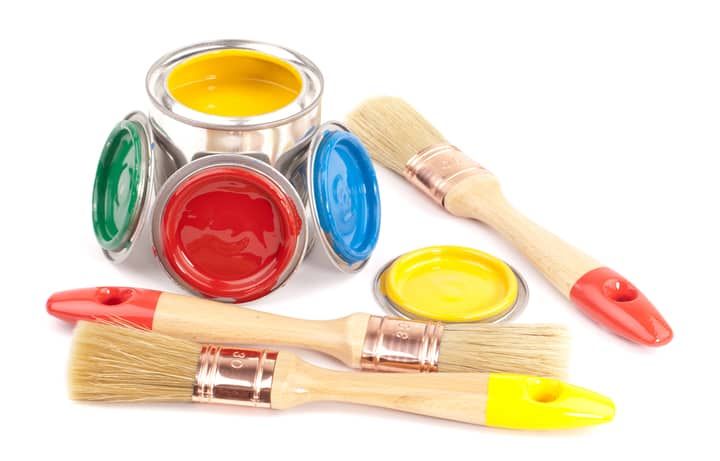
The cheapest "solution" for turning LED lights warmer is to color the outside of your cool-toned LEDs with yellow or orange paint. It will convert any white light that is emitted to a warm, ambient color — and you can wipe the paint off if you change your mind.
That said, painting LED bulbs carries real safety risks and voids the bulb's UL listing. LEDs run cooler than incandescents at the emitting surface, but the driver and chip base still produce meaningful heat. Paint acts as a thermal insulator — trapping that heat can damage the driver, cause arcing at the base contacts, or start a fire, particularly in enclosed fixtures. Most paints are also flammable on top of the electrical risk.
Beyond safety, painting a light bulb shortens the lifespan of the diode, and opaque paint can reduce brightness to the point where the bulb isn't really usable. Gels or smart bulbs are almost always the better call.
Buy New LEDs With Warm White Color Below 3,000K
Replacing a cool white bulb with a warm white LED is the simplest way to change LED lights to a warmer color if your budget isn't constrained. No DIY — just swap the bulb and you're done.
And don't worry about waste. There are tons of things you can do with lightly used LED bulbs — donate them to a friend or a charity, or move them to a room where cool light is actually useful. For more inspiration, check out my article: What To Do With Unused Light Bulbs?
Get A Color Temperature Changing Bulb
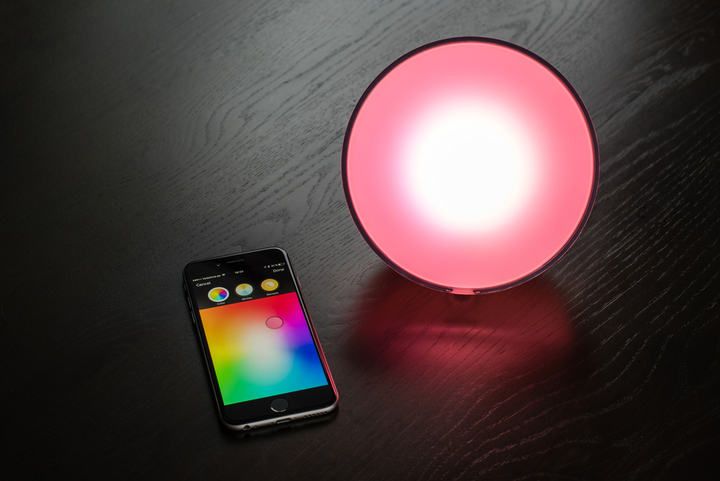
Get a smart LED bulb if you want lights that can vary between warm white and cool white (and, on color-capable models, other colors too).
More and more manufacturers produce smart LEDs with adjustable color temperature. One example is the Philips Hue (Amazon). The White Ambiance line runs from 2200K (warm candlelight) up to 6500K (cool daylight), so you can dial in pretty much any white you want from a single bulb.
The Hue is controlled from the Philips smartphone app, so you can change the bulb's color temperature without getting up off the sofa. It's great for using warm light to help you wind down at night and then switching to cooler white in the morning.
Most smart bulbs also work with Google Home and Alexa. So if you're mid-way through a makeup look and you realize your lighting isn't flattering, just ask Alexa to change it. That voice control is genuinely useful for people with mobility limitations — no DIY, no painting, no climbing to a hard-to-reach fixture.
Color-capable Hue bulbs advertise 16 million addressable color values. In practice, the actual color gamut doesn't fully cover sRGB (Philips uses its own Gamut B/C for most bulbs), but the range is more than wide enough to find the exact warm tone you want.
Color Temperature Vs. Brightness: Do Gels Affect Brightness?
Color temperature and brightness are not the same thing. Using filter gels or another method to change the color of your white LED won't necessarily reduce brightness, and you may still suffer from glare.
Color temperature is measured in degrees Kelvin (K). For practical lighting, the scale runs from about 1000K (candle flame) up to around 10,000K — though natural sources like a clear blue sky can exceed 15,000K. Brightness is measured in lumens. They're completely separate scales.
Don't assume that a warmer light source is also a duller one. You can get very bright warm LED lights.
A full CTO gel will knock brightness down noticeably (it only transmits about half the light), but the 1/8 and 1/4 strengths barely move the needle. Gels mostly change color, not output.
If you're more concerned about brightness, look into dimmable LEDs instead. Again, smart bulbs will solve the issue since they can change color and brightness, although they are more expensive.
One last thing gels won't change: color rendering index (CRI). A bulb can measure 2700K and still have poor CRI, meaning skin tones, food, and fabrics look muddy or off under it. Gels shift color temperature but don't improve CRI — if color accuracy matters (kitchens, bathrooms, vanities, art spaces), check the bulb's CRI rating (90+ is ideal) rather than relying on a gel to fix the look.
Final Words
Are cold-colored LEDs in your bedroom disrupting your sleep? Or are they just making your space feel less comfy?
You've now got four options: filter gels (cheapest and safest), replacement bulbs (easiest), smart bulbs (most flexible), and painting (not recommended).
Have you tried any of these? Do you think smart LEDs like the Philips Hue are the way forward?
Why not check out my blog post on identifying the color of LED lights if you want to know more.