What’s The Difference Between H1 And H7 Bulbs? Comparison Table
Your H1 high beam and H7 low beam run on the same 12 V, 55 W — it's the filament position and reflector shield that keep one from blinding oncoming traffic, not a wattage difference.
 Eugen
EugenEugen Nikolajev
Creator of LED Lighting Info
Hi, I am Eugen. I was always one of those kids who had all sorts of weird lighting gadgets for every occasion.
Now, I want to share my knowledge and experience about lighting with you on LED Lighting Info.
Read my editorial standards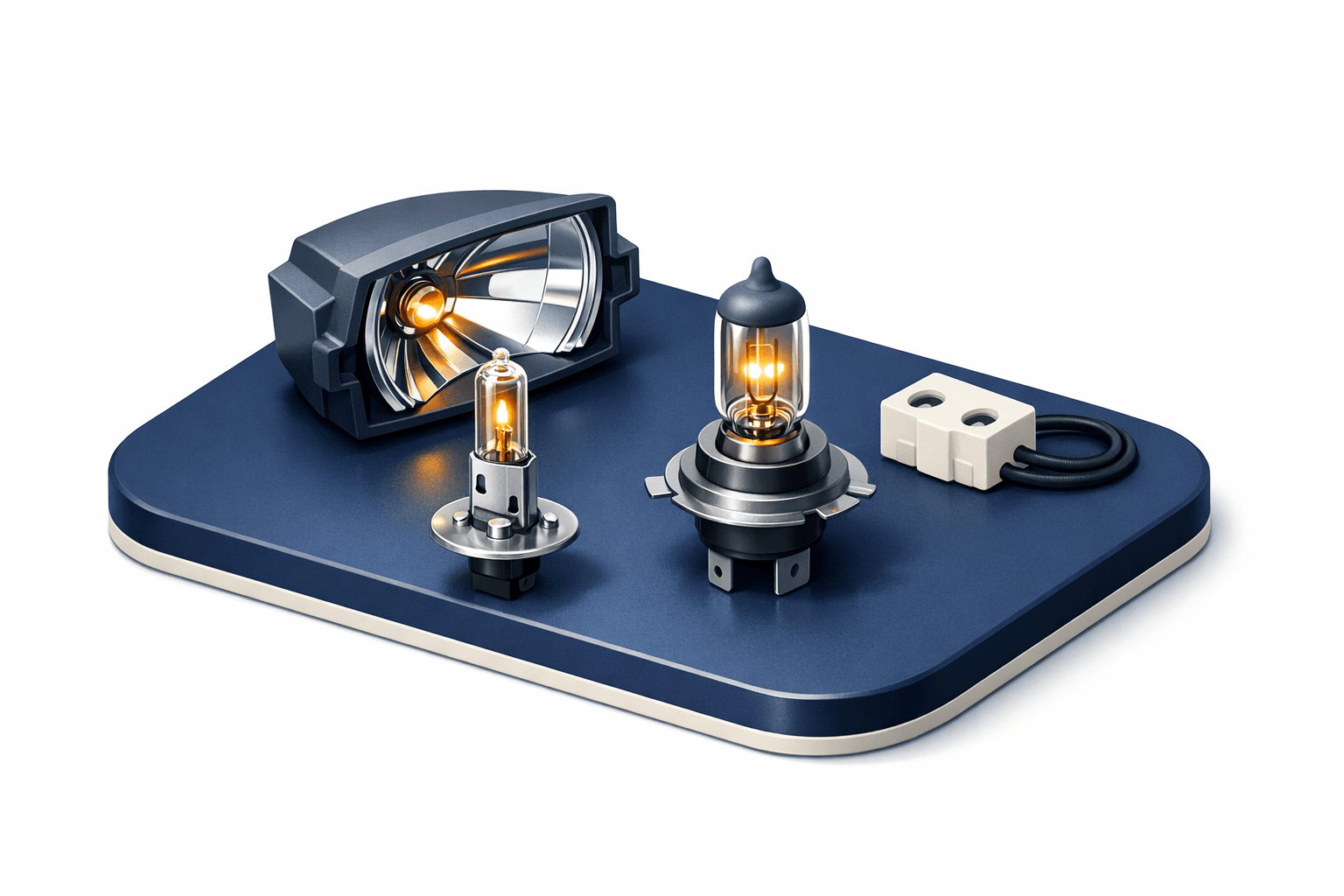
Key Takeaways
- H1 throws light further — it's the high beam.
- H7 is aimed lower so it doesn't dazzle oncoming drivers.
- Both are 12 V, 55 W single-beam halogens, but they use different sockets (P14.5s vs. PX26d) and can't be swapped.
- H1 bulbs typically last longer in service because they're used less often
H1 bulbs are high-beam headlights; H7 bulbs are low-beam headlights — and despite looking similar, they are not interchangeable.
Both bulb types are commonly found in the same vehicle — the H1 powers the high-beam reflector and the H7 powers the low-beam reflector. The driver toggles between the two circuits with the high-beam stalk; the bulbs themselves are never swapped..
H1 vs H7 Headlights: Comparison Table
The core difference is purpose: H1 bulbs sit in the high-beam reflector to illuminate open, unlit roads, while H7 bulbs sit in the low-beam reflector with a built-in cutoff so they don't blind oncoming traffic. Lumen values below are from ECE Regulation 37, the international standard most bulb makers rate against — US FMVSS 108 doesn't cap per-bulb output, it regulates the finished headlamp's beam pattern instead.
| Spec | H1 | H7 |
|---|---|---|
| Role | High beam | Low beam |
| Beam type | Single-beam (one filament) | Single-beam (one filament) |
| Socket / base | P14.5s | PX26d |
| Voltage | 12 V | 12 V |
| Wattage (halogen) | 55 W | 55 W |
| Rated output (ECE R37, 13.2 V) | 1,550 lm (±15%) | 1,500 lm (±10%) |
| Typical range on a straight road | ~350–500+ ft | ~150–250 ft |
| Best used for | Unlit rural roads, open highways | Daily driving, towns, traffic |
What Are H1 Bulbs Used For?
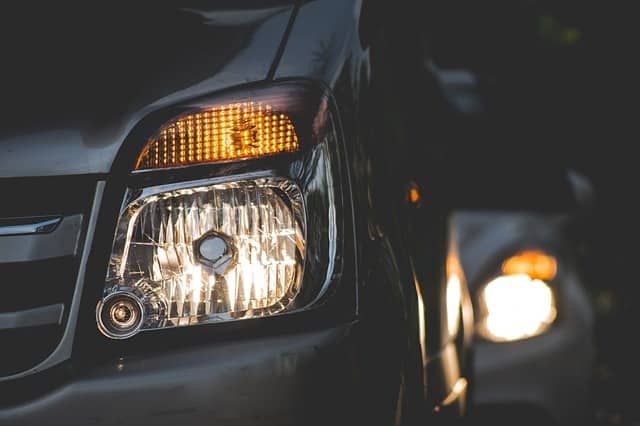
An H1 is a high-beam bulb. It produces a long, forward-throwing beam intended for unlit rural roads with no oncoming traffic. On IIHS headlight testing, a well-aimed high-beam system typically illuminates 350–500+ ft of road ahead, though the exact figure depends on the vehicle's headlamp design, not the bulb alone.
Because high beams easily dazzle other drivers, drop back to low beam (your H7s) any time a vehicle approaches or you catch up to one from behind.
Single-beam designs like H1 and H7 are common in vehicles where the manufacturer uses separate reflectors for high and low beam. Other vehicles use dual-beam bulbs such as H4, where a single bulb contains both filaments inside one housing — it's a design choice, not a generational one.
What Is an H7 Headlight Bulb?
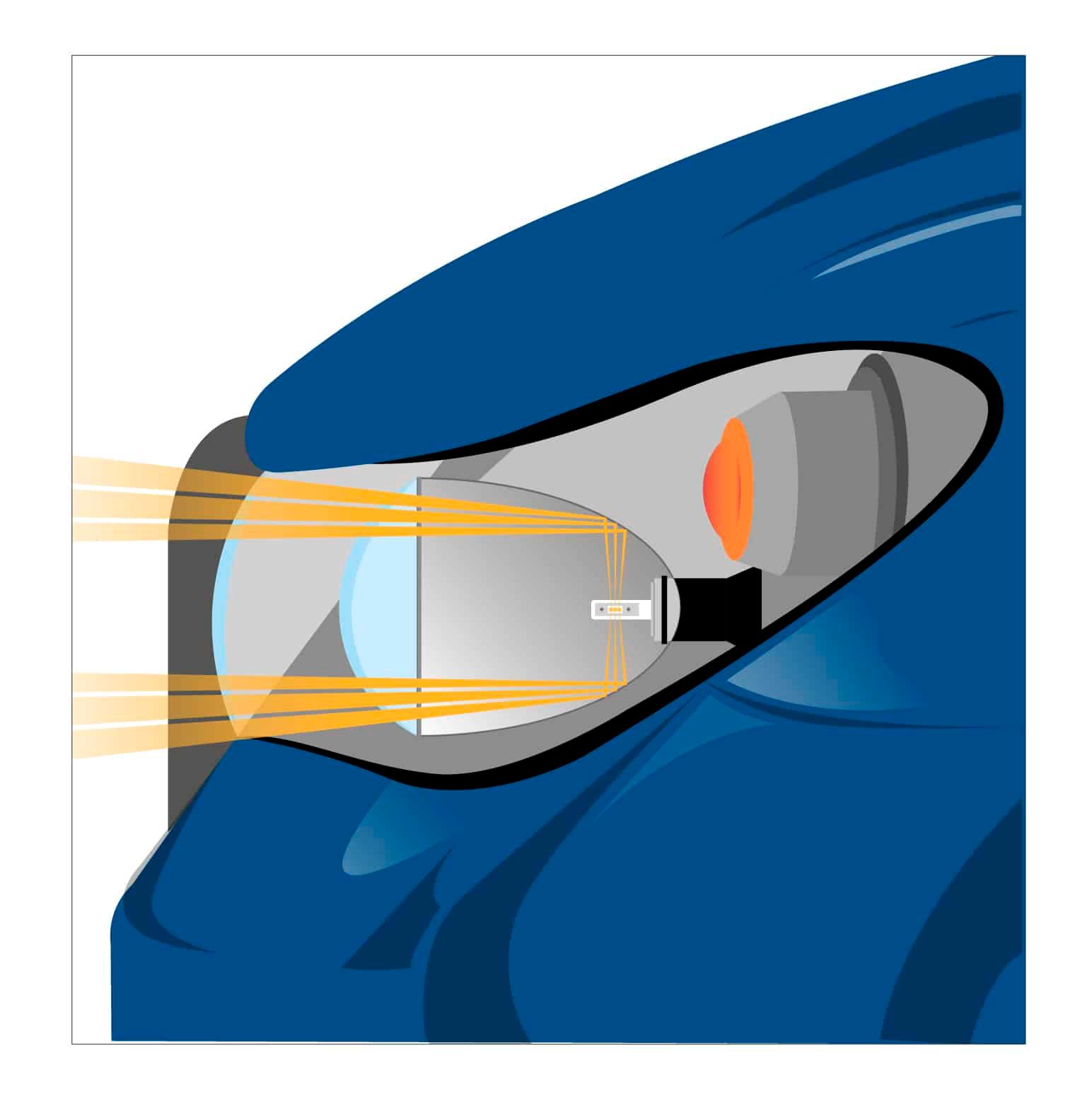
The H7 is your everyday low beam. It's the headlight you drive on almost all of the time — in town, in traffic, and anywhere you might meet oncoming cars.
The reason the H7 doesn't blind other drivers isn't a weaker bulb — a standard H7 is the same 12 V, 55 W as an H1. It's the orientation of the filament inside the low-beam reflector and the shield around it that create a sharp cutoff, sending light down onto the road rather than up into traffic. The same wattage produces less forward throw because much of the beam is deliberately aimed below the horizon.
If you're running high beams and see a car approaching, dip the high beams so only your H7 low beams are active. Switch back once they've passed.
Real-world low-beam range on IIHS testing tends to fall in the 150–250 ft band on a straight road, again depending on the vehicle.
Are H1 and H7 Lights Interchangeable?
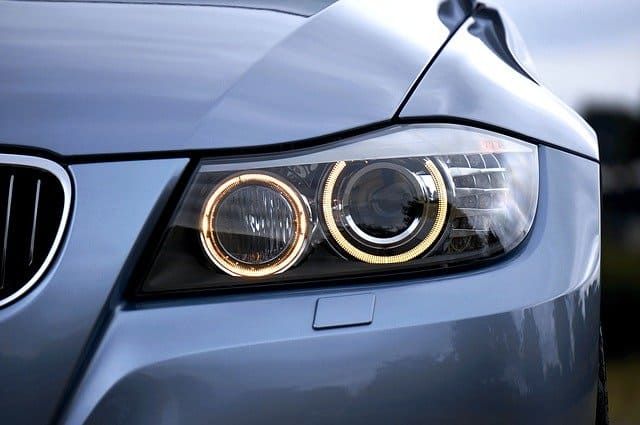
No. H1 and H7 are not interchangeable — you have to buy the exact type specified for your vehicle's high-beam or low-beam socket.
They share a lot of similarities: both are single-beam halogens with a single filament, and at a glance they look alike. But the bases are physically different and are not compatible.
- H1 — P14.5s base, with a single flat metal tab.
- H7 — PX26d base, with two flat tabs arranged on a wider flange.
Because the bases are so clearly different, it's almost impossible to fit one where the other belongs.
Bulb Classification
H1, H3, H4, H7, H11, HB3 and HB4 are generally grouped together as main headlamp and fog-lamp bulbs — the types used for headlights and fog lights. Each still has its own ECE category and socket under Regulation 37, so sharing a group doesn't make them interchangeable. Signalling bulbs (tail lights, turn signals, cornering lights) are covered by separate categories.
What Types of Bulbs Are Available for H1 and H7?
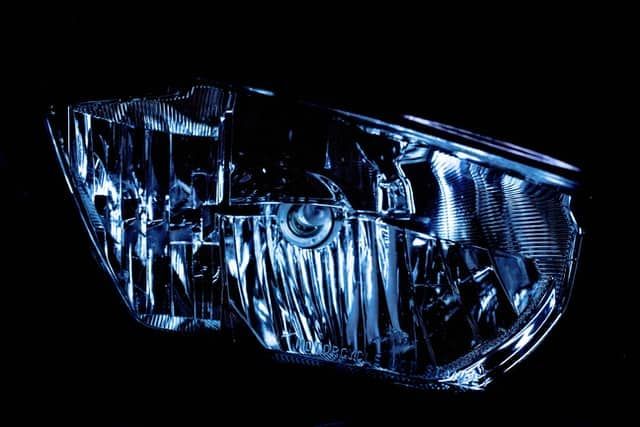
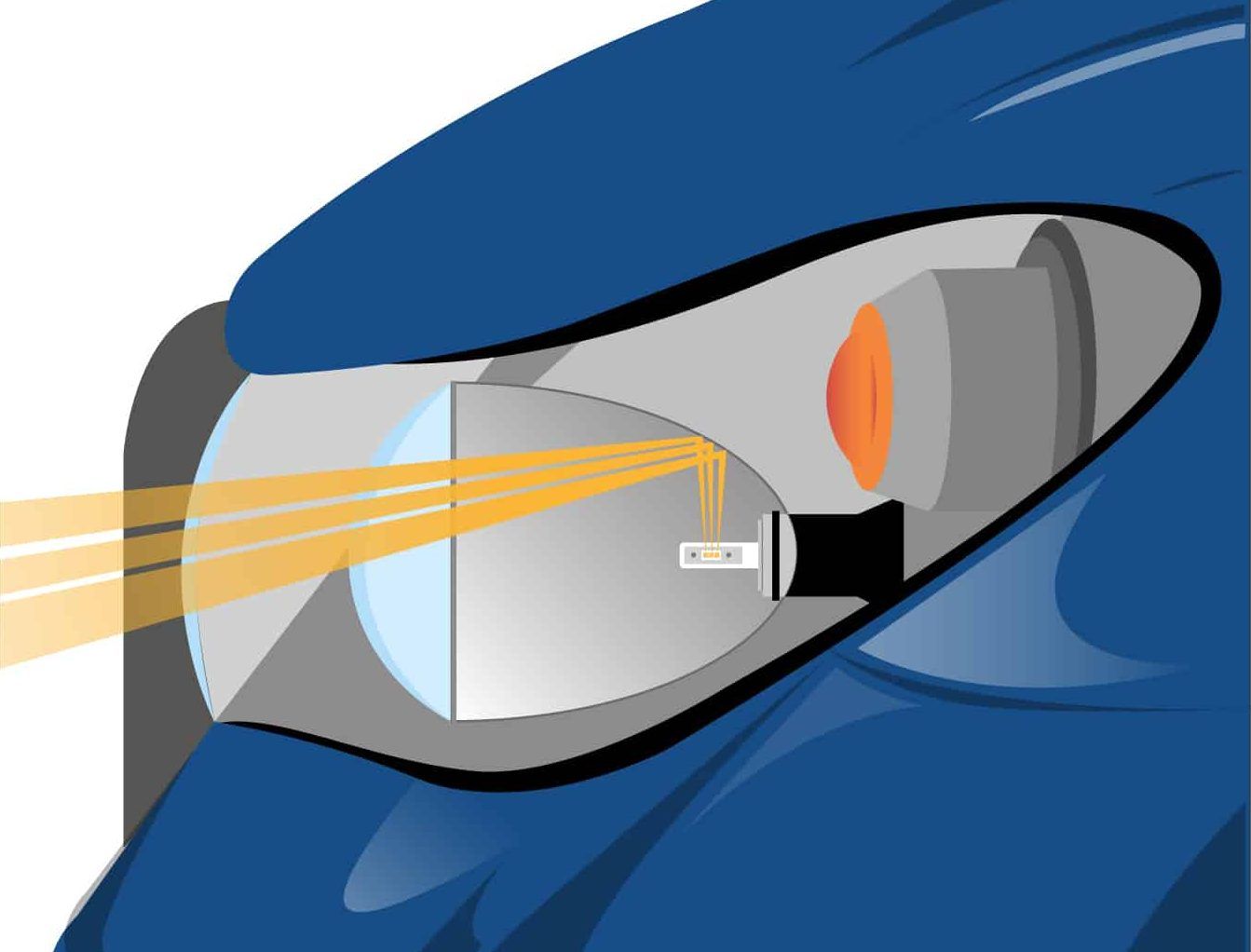
Both H1 and H7 sockets can be fitted with three main bulb technologies — halogen (the original), HID, or LED retrofits.
| Halogen | HID (Xenon) | LED | |
|---|---|---|---|
| Typical lifespan | 450–1,000 hours | 2,000–3,000 hours | 15,000–30,000 hours |
| Power draw per bulb | ~55 W | ~35 W (+ ballast) | ~15–25 W |
| Brightness | Baseline | Very bright, often too bright in stock housings | Bright, with better beam control in a matched LED housing |
| Upfront cost | Low | Medium | Higher |
| Retrofit legality | OEM standard | Often illegal as a drop-in in reflector housings | Legality depends on housing type and jurisdiction |
Halogen bulbs replaced the older sealed-beam incandescent lamps and became the first widespread replaceable-bulb technology in cars. They're inexpensive and easy to find, but the filament wears quickly — typical life is only a few hundred hours of use.
HID (High-Intensity Discharge, also called Xenon) bulbs are much brighter and run cooler, but a plain HID bulb dropped into a halogen reflector housing will scatter glare all over oncoming traffic. That's why unmatched HID retrofits are illegal in many US states.
LED H1 and H7 bulbs are the popular upgrade today. The main practical advantages are longevity and efficiency:
- Much longer life — 15,000–30,000 hours vs. a few hundred for halogen.
- Lower current draw (around 15–25 W per bulb vs. 55 W for halogen), which slightly eases the load on the alternator.
- Instant full brightness with no warm-up, unlike HID.
- Cooler running temperature at the bulb itself.
- Higher upfront cost than halogen or HID.
- In a reflector housing designed for halogen, an LED retrofit may produce a poor beam pattern and increased glare.
- Legality varies — LED replacements sold for "off-road use only" aren't DOT-compliant for public roads.
- Some CANbus-equipped vehicles need a separate decoder to avoid bulb-out warnings.
A quick note on the "LEDs save fuel" claim you'll often see: the power comes from your car's electrical system, which is charged by an engine-driven alternator. A smaller electrical load does translate to a very small fuel-economy benefit — on the order of fractions of a percent — not a meaningful saving. The real reasons to pick LED are lifespan and light quality, not fuel economy.
Before buying an LED headlight kit, check whether your headlamp is a projector or reflector housing — LEDs perform much better in projectors — and check local laws. Many states only consider an LED bulb street-legal if it's installed in a housing originally designed for LED.
H1 vs H7: Which Is Brighter?
H1 produces slightly more light than H7 at the bulb. Under ECE Regulation 37 — the international standard most manufacturers rate against — a 12 V halogen H1 has an objective luminous flux of about 1,550 lumens (±15%), versus 1,500 lumens (±10%) for H7. In the US, FMVSS 108 doesn't set a per-bulb lumen cap; it regulates the completed headlamp's beam pattern and intensity at defined test points.
The bigger on-road difference, though, is not the 50-lumen gap. It's that the H7 low beam is deliberately aimed lower to avoid blinding oncoming drivers, so its light lands on the road close to the car. The H1 high beam points straight down the road, so even with only marginally more output it appears dramatically brighter in the distance.
H1 vs H7 FAQ
FAQ
Can I use H7 bulbs for high beams?
No. High-beam reflectors designed for H1 use a P14.5s socket, while H7 bulbs have a PX26d base with two flat tabs. The bases are physically different and won't fit. You also couldn't aim the beam correctly even if they did fit.
Are H1 and H7 bulbs the same wattage?
Yes — a standard 12 V halogen H1 and a standard 12 V halogen H7 are both rated at 55 W. The difference between them is the socket and the role each plays in the headlamp (high beam vs. low beam), not the power draw.
How long do H1 and H7 bulbs last?
Halogen H1 and H7 bulbs typically last 450–1,000 hours of use. H1 bulbs often last longer in real-world terms because drivers use high beams less than low beams. HID equivalents last roughly 2,000–3,000 hours, and LED replacements usually quote 15,000–30,000 hours.
Is it legal to replace my H1 or H7 halogens with LEDs?
It depends on the housing and where you live. LED retrofits sold for on-road use in a projector housing designed for LED are generally fine. A plain LED drop-in installed in a reflector housing originally designed for halogen can fail inspection in many US states because the beam pattern no longer meets FMVSS 108. Check local law before buying.
Does my car use H1 or H7 — or both?
Many European and Asian vehicles with separate reflectors for high and low beam use H1 for high and H7 for low. Check the owner's manual or the existing bulb markings before buying.
Read next: whether LED headlights drain a car battery.