Watt Equivalent
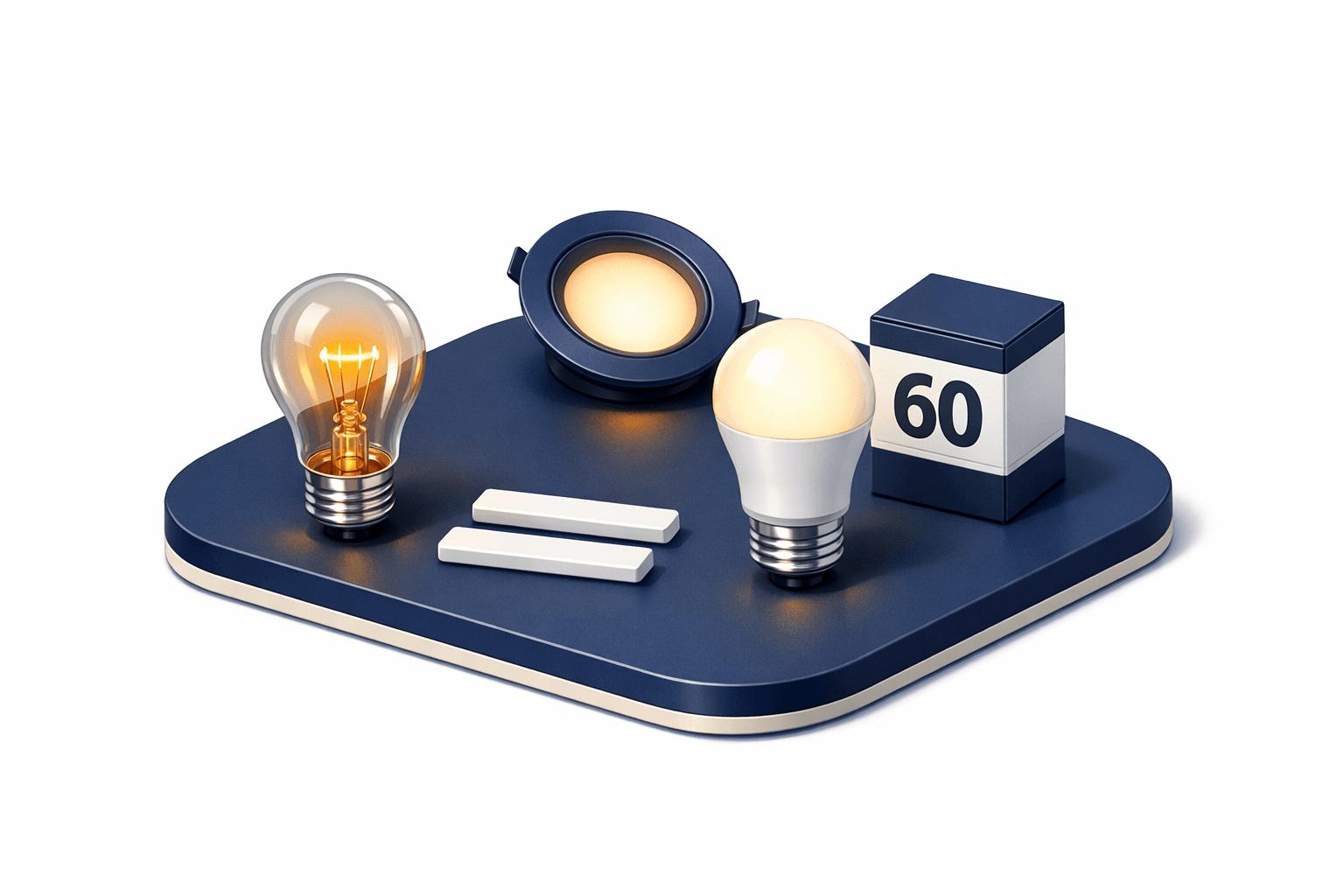
A labeling convention that compares an LED bulb's brightness to the incandescent bulb it replaces — e.g., a '60W equivalent' LED produces the same ~800 lumens as a 60W incandescent while using only 9W.
Watt equivalent is a bridge between the old way of buying bulbs (by wattage) and the new way (by lumens). When a box says "60W equivalent," it means the LED produces roughly the same amount of light as a 60W incandescent bulb — about 800 lumens — while drawing only 8-10W of power.
The label exists because decades of incandescent use trained consumers to associate watts with brightness. Asking someone to switch from thinking in watts to thinking in lumens overnight wasn't practical, so manufacturers added the equivalent as a translation layer. It's imperfect — actual lumen output varies by brand, and the equivalencies aren't standardized — but it's close enough to be useful.
The most common equivalencies are: 25W = ~250 lumens, 40W = ~450 lumens, 60W = ~800 lumens, 75W = ~1,100 lumens, 100W = ~1,600 lumens, and 150W = ~2,600 lumens. Over time, as LED efficacy improves, the actual wattage drawn keeps dropping — a "60W equivalent" LED that used 12W five years ago might only use 8W today, producing the same 800 lumens more efficiently.
Specifications
| 25W equivalent | ~250 lumens (3-4W LED) |
| 40W equivalent | ~450 lumens (5-6W LED) |
| 60W equivalent | ~800 lumens (8-10W LED) |
| 75W equivalent | ~1,100 lumens (11-13W LED) |
| 100W equivalent | ~1,600 lumens (14-18W LED) |
| 150W equivalent | ~2,600 lumens (20-25W LED) |
Related Terms
- Lumens
The unit measuring total visible light output. Unlike watts, lumens tell you how bright a bulb actually is.
- Wattage
A measure of electrical power consumption. For LEDs, lower wattage delivers the same brightness as higher-wattage incandescent bulbs.
- Efficacy
The efficiency of a light source measured in lumens per watt (lm/W). Higher efficacy means more light for less electricity.
Mentioned in
What Is The LED Watts Equivalent?
Wattage never measured brightness — it measured waste. The shortcut held only because incandescents are uniformly inefficient, which is why your 9W LED now needs a "60W equivalent" label to make sense.
Do LED Lights Produce Heat?
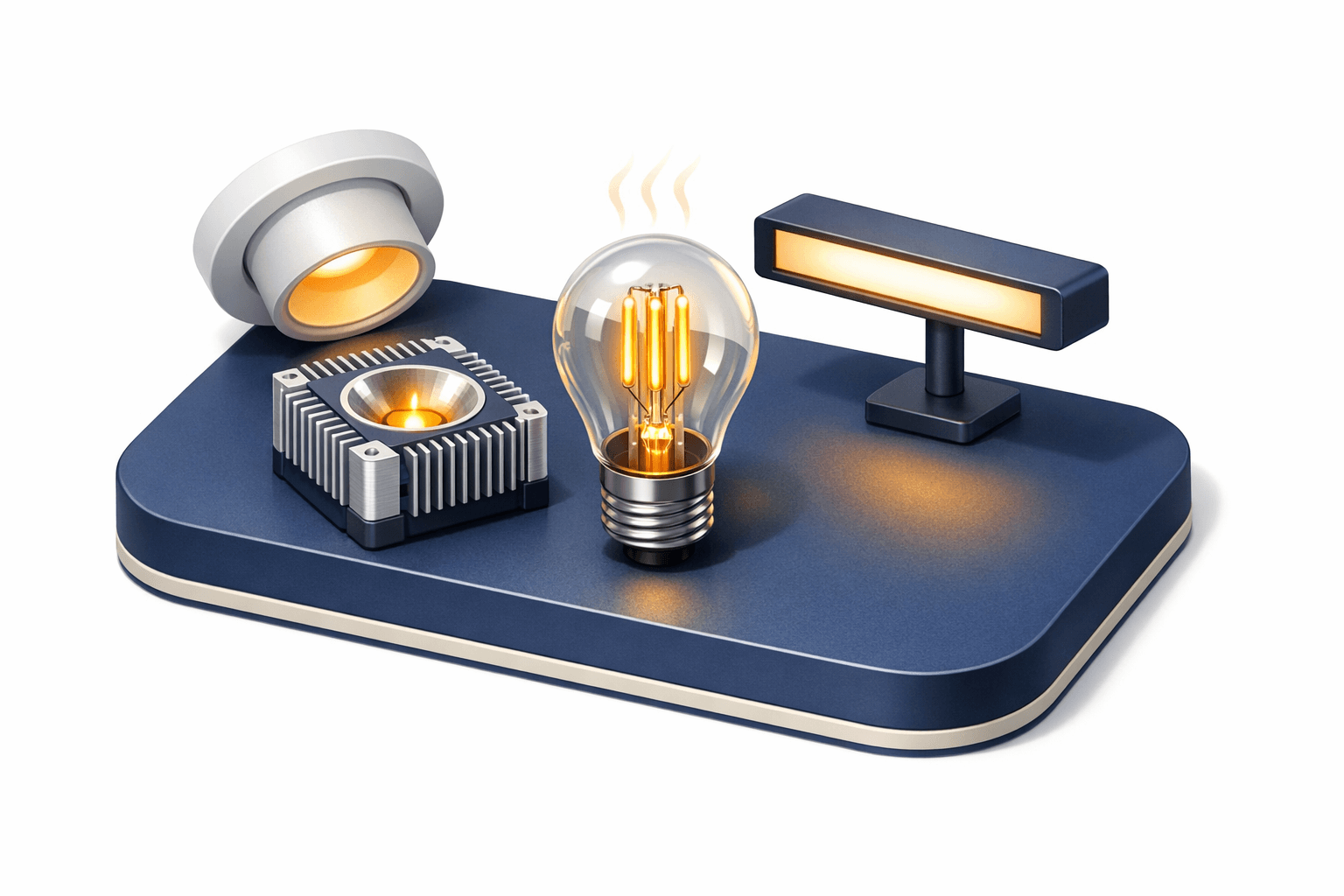
A 60W-equivalent LED draws only 9–10 watts and dissipates about 5–6 watts as heat — compared to 57 watts from the incandescent it replaces. Same brightness, a fraction of the warmth.