
Do LED Lights Produce Heat?
A 60W-equivalent LED draws only 9–10 watts and dissipates about 5–6 watts as heat — compared to 57 watts from the incandescent it replaces. Same brightness, a fraction of the warmth.
 Eugen
EugenEugen Nikolajev
Creator of LED Lighting Info
Hi, I am Eugen. I was always one of those kids who had all sorts of weird lighting gadgets for every occasion.
Now, I want to share my knowledge and experience about lighting with you on LED Lighting Info.
Read my editorial standards
Key Takeaways
LED light bulbs do produce heat. Roughly 60–70% of the electricity they draw is dissipated as heat, mostly through a metal heat sink at the base. That heat sink can reach 60–100°C (140–212°F) under load, while the outer casing usually stays much cooler at 40–70°C (104–158°F). It's still far less heat per lumen than incandescent, halogen, or fluorescent bulbs, which is why LEDs are the most efficient option you can buy.
LED bulbs run hot enough to burn you if you grab one by the base — yet they waste far less energy as heat than any bulb that came before them. The numbers behind that contradiction are worth understanding, because they shape which bulbs you should buy, where you can install them, and what to do when one runs hotter than expected.
How Much Heat Do LED Lights Produce?
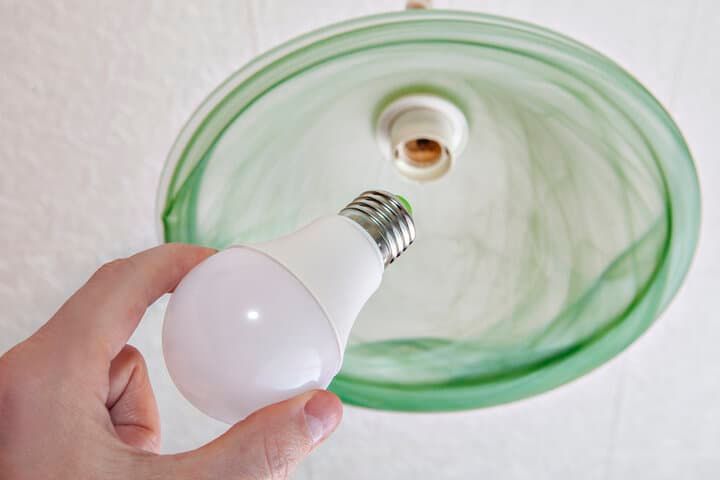
A typical consumer LED converts roughly 30–40% of its electrical input into visible light. The remaining 60–70% becomes heat, dissipated through the heat sink. For a 6-watt bulb, that's about 3.5–4 watts of heat — small in absolute terms, but enough to make the metal base uncomfortable to touch after the bulb has been on for a while.
Every bulb produces heat. But because LED bulbs consume far less energy to produce the same brightness, the absolute heat they release is a fraction of what older bulb types put out.
Which Part Of An LED Bulb Gets Hottest?
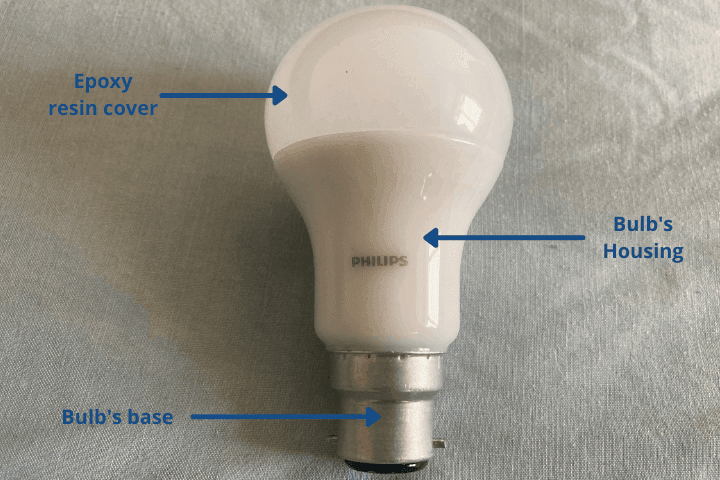
Three different temperatures matter when you look at an LED bulb:
- Junction temperature — the temperature inside the LED chip itself. This is what determines lifespan and is typically held below 110°C by the bulb's design.
- Heat sink temperature — the metal base (usually finned aluminum) that pulls heat away from the chip. Reaches 60–100°C under load.
- Casing temperature — the plastic or glass diffuser dome you can see. Usually stays at 40–70°C, well below the heat sink.
The hottest point you can touch is the heat sink at the base, where the fixture meets the bulb. LEDs deliberately route heat away from the diodes through that heat sink, so the diodes themselves stay below their failure threshold while the metal base does the dissipating.
You can usually handle the casing of a switched-on LED bulb without burning yourself. Unscrewing one by the base — even shortly after switching it off — is another matter. With incandescent and halogen bulbs, the situation reverses: the casing surrounds a glowing filament and gets dangerously hot, while the base stays manageable.
How LEDs Compare To Other Bulb Types
Here's how the major bulb types stack up by the share of input energy that ends up as heat, based on U.S. Department of Energy data.
| Type of Bulb | % of Energy as Heat | Typical Surface Temperature |
|---|---|---|
| LED | 60 – 70% | 60–100°C heat sink / 40–70°C casing |
| CFL (compact fluorescent) | ~80% | ~50–55°C surface |
| Linear fluorescent tube | ~70–75% | ~40–60°C surface |
| Halogen bulb | ~90% | ~250–300°C envelope |
| Incandescent bulb | ~90–95% | ~150–250°C envelope |
LEDs lose the smallest share of input energy as heat per lumen of output. Because LEDs also draw far fewer watts to deliver the same brightness as a CFL or incandescent, the total heat they release is dramatically lower.
Don't Confuse Heat With Color Temperature
A common source of confusion: "warm white" and "cool white" describe the visual color of the light, not the physical temperature of the bulb. A 2700K "warm white" LED gives a yellowish, candle-like glow; a 5000K "cool white" LED looks closer to daylight. Both bulbs run at the same physical temperature when drawing the same wattage. Color temperature is purely about appearance.
Enclosed Fixtures Need Rated Bulbs
LEDs are more sensitive to heat than older bulb types — they fail early when the heat sink can't shed heat fast enough. If you're installing a bulb inside a fully enclosed fixture (a sealed glass dome, a jar light, a recessed can with a glass cover), look for the phrase "enclosed fixture rated" or "suitable for enclosed fixtures" on the packaging. A standard LED dropped into a sealed enclosure will run hotter than designed and can lose half or more of its rated lifespan.
For recessed ceiling cans installed in insulated ceilings, you also want a bulb labeled IC-rated (insulation contact rated), which means the fixture and bulb are designed to sit safely against insulation.
Fluorescent bulbs (including CFLs) actually produce more heat per lumen than modern LEDs, and many people dislike the flickering effect they sometimes have.
LED vs. Incandescent Heat
Incandescent bulbs run dramatically hotter than LEDs and waste most of their input energy producing that heat instead of light. The numbers below show what a real apples-to-apples comparison looks like — a 60W incandescent and a 60W-equivalent LED, both producing roughly 800 lumens.
| 60W Incandescent | 60W-Equivalent LED (~9W) | |
|---|---|---|
| Power drawn | 60W | ~9W |
| Heat dissipated | ~57W | ~5–6W |
| Visible light output | ~3W (~800 lm) | ~3W (~800 lm) |
| Light efficiency | ~5% | ~30–35% |
| Hottest surface | 150–250°C (envelope) | 60–80°C (heat sink) |
Incandescent bulbs are hot because of how they make light: by heating a metal filament until it glows. The wire inside the glass envelope sits in a vacuum or inert gas to keep it from burning out, but most of the input energy still leaves as heat and infrared radiation rather than visible light.
Their main appeal is that they're cheap to manufacture, but they pay it back in short lifespans. A typical incandescent is rated for around 1,000 hours, while an Energy Star LED is rated for 15,000–25,000 hours. Premium LEDs rated at 50,000 hours can last up to 50× longer than an incandescent.
Does A 60W LED Bulb Produce The Same Heat As A 60W Incandescent?
No — and not by a small margin. Most LED bulbs sold as "60-watt" are actually 60-watt equivalent: they produce the same brightness as a 60W incandescent, but draw only about 9–10 watts.
At ~9 watts of input, an LED dissipates roughly 5–6 watts as heat. A real 60-watt incandescent dissipates about 57 watts as heat and converts only ~3 watts into visible light. The glass envelope of the incandescent reaches 150–250°C; the heat sink of the LED equivalent sits at 60–80°C. That's a fraction of the surface temperature, not "about half."
How To Reduce Heat From LED Lights
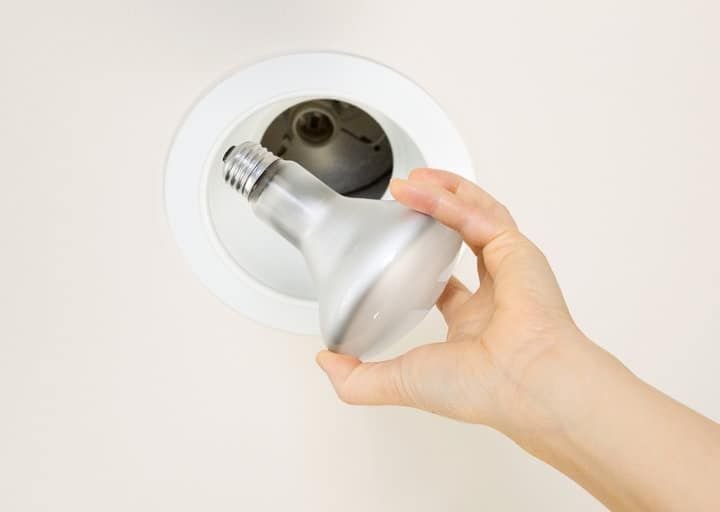
If your LED bulbs feel uncomfortably hot, or you're worried about reduced lifespan, four things are worth checking — in roughly the order they're likely to help.
- Improve airflow around the fixture — Air moving past the heat sink carries heat away faster than still air. A bulb running in a sealed, enclosed space reaches a higher steady-state temperature than the same bulb in a ventilated room.
- Match the bulb to the fixture — A bulb that's physically too large for its fixture restricts airflow. Use the size and shape recommended for the fixture, and look for "enclosed fixture rated" on the packaging if you're putting a bulb in a sealed dome.
- Drop to a lower wattage — A 4W LED produces noticeably less heat than a 10W LED. If you're getting more brightness than you need, switching to a lower-wattage equivalent reduces heat output proportionally.
- Use a compatible dimmer — Pairing an LED with an incompatible dimmer is one of the most common causes of overheating, buzzing, and premature failure. Confirm the dimmer is listed as compatible with LED bulbs. Most older triac dimmers were designed for incandescent loads and don't drive LEDs cleanly.
When Heat Becomes A Safety Issue
In the vast majority of cases, a hot LED is operating within its design tolerance and isn't a safety risk. But heat plus an underlying problem — faulty wiring, an overloaded circuit, or an incompatible dimmer — can cause LED bulbs to catch fire. Warning signs to watch for: the casing (not just the heat sink) is too hot to touch briefly, the bulb flickers unpredictably, you smell something burning, or the fixture itself is warm. If any of those show up, switch off the circuit at the breaker and have the wiring inspected before installing another bulb.
Do LED Lights Heat Up A Room?
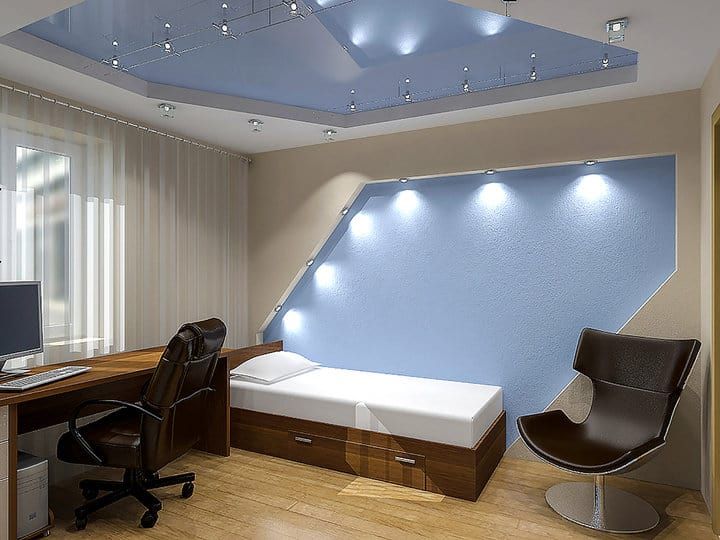
Not in any room you'd actually live in. A single LED bulb dissipates only a few watts of heat — too little to noticeably warm the air in a normally sized, ventilated room. The heat sink itself can hit 100°C, but its surface area is small and the total energy involved is small.
The exceptions are tightly enclosed spaces with no airflow: a sealed grow tent, a closed display case, or a small closet packed with high-wattage fixtures. There the heat has nowhere to go and can build up. In a normal living space, you won't notice it.
Bottom Line: When LED Heat Actually Matters
LEDs do produce heat. The heat sink at the base can get hot enough to burn you, and the bulb behind it converts roughly two-thirds of its electrical input into heat rather than light. But because LEDs draw so little electricity to begin with, the absolute amount of heat they release is a small fraction of what an incandescent or halogen would produce for the same brightness.
For most homeowners, LED heat only matters in two situations: when the wrong bulb goes into an enclosed fixture (which shortens the bulb's life), and when an incompatible dimmer pushes the bulb to overheat. Pick a bulb rated for the fixture, pair it with a compatible dimmer, and the heat won't be something you need to think about.