
How To Light A Living Room With No Overhead Lighting?
The National Electrical Code doesn't require a ceiling fixture in your living room — just a switched outlet for a lamp. That loophole is why 21 million apartment households have no overhead light.
 Eugen
EugenEugen Nikolajev
Creator of LED Lighting Info
Hi, I am Eugen. I was always one of those kids who had all sorts of weird lighting gadgets for every occasion.
Now, I want to share my knowledge and experience about lighting with you on LED Lighting Info.
Read my editorial standards
Key Takeaways
Light the room using a mix of floor lamps, table lamps, and wall lights, paying attention to the furniture you want to highlight and the direction of sunlight through the windows. Use tall wall lights or floor lamps for high ceilings, and mirrors to bounce natural and artificial light into the darker corners.
In the US, more than 45 million households are renters (as of 2024), and nearly half — around 47% — live in apartment buildings with five or more units.
That works out to roughly 21 million apartment-dwelling households, and many of those apartments don't have any overhead lighting at all.
The reason is structural, not lazy construction. The National Electrical Code doesn't actually require a ceiling fixture in living rooms, bedrooms, or dining rooms — only at least one wall-switch-controlled lighting outlet, which can be a switched wall receptacle that you plug a lamp into. Skip the ceiling, give the tenant a switched outlet, and you're code-compliant.
Good lighting still matters. If you've ended up in an apartment with bare walls, a few outlets, and no fixture overhead, here's how to light it properly.
Below, I cover:
- Why many apartments don't have ceiling lights
- How to maximize the light a room already has
- What to plan for before buying anything
- How to light a living room effectively without overhead fixtures
- Common mistakes to avoid
Why Do Apartments Not Have a Ceiling Light?
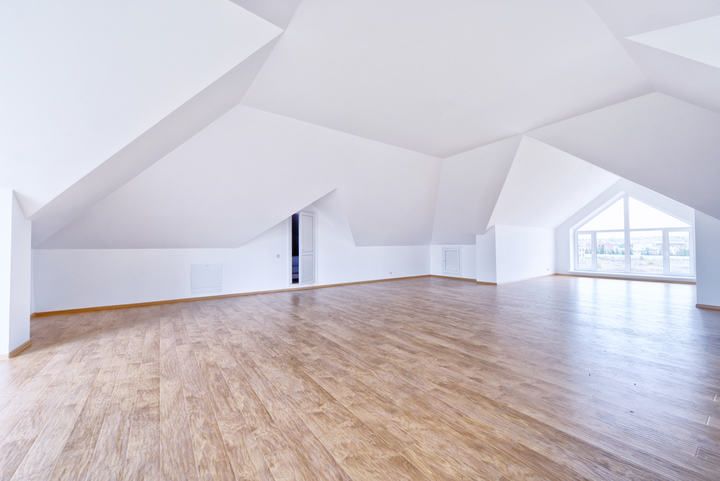
Two things usually explain a missing ceiling fixture.
First, the National Electrical Code doesn't require one. NEC 210.70(A)(1) requires at least one wall-switch-controlled lighting outlet in every habitable room, but in living rooms, bedrooms, and dining rooms, a switched wall receptacle is allowed in place of a hardwired fixture. Plug a lamp into that switched outlet and the room meets code.
NEC 210.70 requires a switched lighting outlet in habitable rooms — not necessarily a hardwired ceiling fixture. A switched wall receptacle counts.
Second, in older buildings without attic or joist access above finished ceilings, running new wiring to the middle of a room is genuinely difficult — not just expensive. New construction skips the fixture to cut costs; older buildings often skip it because retrofitting it would mean tearing into the ceiling.
Bathrooms and kitchens still typically have ceiling fixtures because the NEC requires a hardwired, switch-controlled light in those rooms — the switched-receptacle alternative isn't allowed there.
How to Light Up a Room Without Electric Lighting
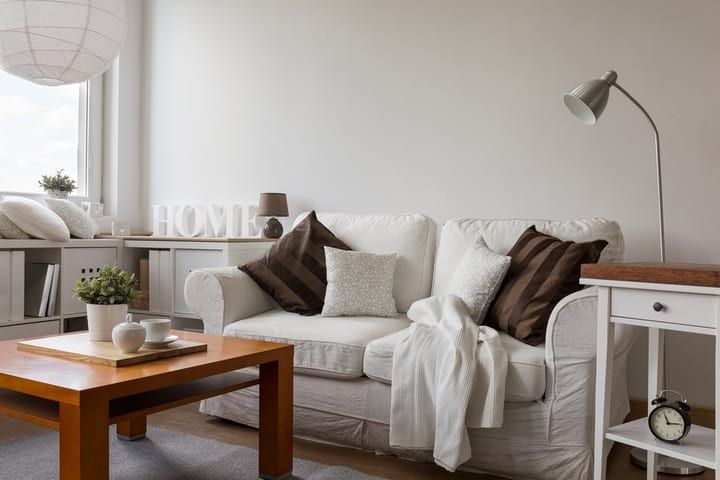
Before adding any lamps, look at how to get more from the light the room already has. These non-electrical tactics won't cover everything — you still need lamps for the evening — but they help you see where the dark spots really are.
- Decorate in lighter colors (if your lease allows it). Lighter walls reflect more light and bounce it around the room instead of absorbing it.
- Use mirrors to redirect natural light. Look at the direction your windows face and position mirrors opposite them or in dark corners to push daylight deeper into the room.
- Keep furniture minimal. More furniture means more shadow. A decluttered room reads brighter than a busy one, even with the same lighting.
- Consider battery-powered candles. Most leases ban real candles as a fire risk. Battery candles don't put out much light but add a warm glow that helps fill in dim corners.
Things To Keep In Mind Before You Start
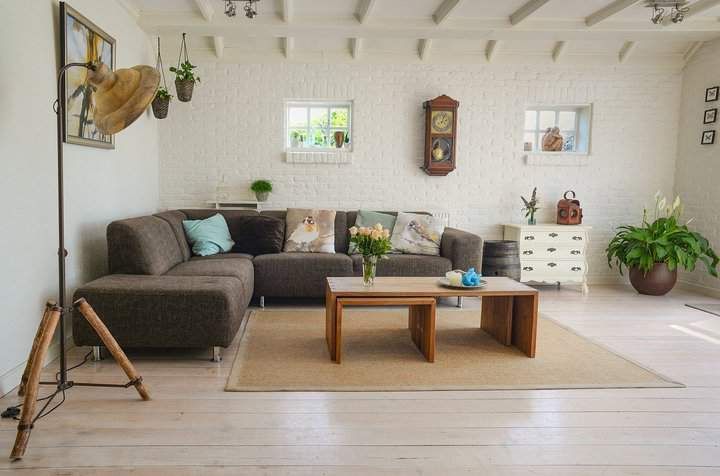
A few factors determine how your lighting will actually feel in the room. Work through these before you buy anything:
| Consideration | What to think about |
|---|---|
| Room size and ceiling height | Larger rooms need more total lumens. Tall ceilings call for wall lights mounted high or floor lamps that throw light upward to fill the space. |
| Light position | Wall-mounted, freestanding floor, or table-top — each creates a different ambient feel. Mix at least two for layered light. |
| Color temperature | Warm white (2700K–3000K) feels cozy and relaxing. Cool white (4000K–5000K) reads brighter and more clinical. For a living room, warm wins for most evenings. |
| Focal points | Decide what you want to highlight — TV, artwork, reading chair — and aim lights toward those features. Lit details give a room visual structure. |
| Fixture materials | Glass and metal suit modern interiors. Wooden fixtures feel warmer and work in family or cozy spaces. Match materials to the rest of the room. |
Lighting Up a Living Room
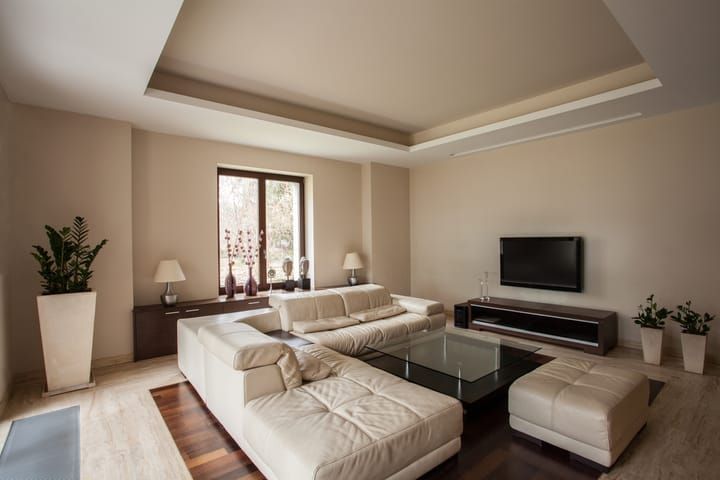
A living room typically needs 1,500–3,000 lumens of total light — roughly 10–20 lumens per square foot — spread across several sources rather than pumped out of one fixture. One bright lamp creates harsh shadows; three or four softer ones layer the room evenly. Plan for at least three light sources at different heights: floor, table, and wall.
Wall lights
Wall lights are ideal for recesses and dark corners. They illuminate the lower half of the room without washing the ceiling, which keeps things from feeling like an office. A directional wall light with an integrated shade lets you point the beam at the specific features you want to highlight.
The lamp below is a good plug-in pick for renters — it screws into the wall with just two small fixings, which you can patch with filler when your lease ends. No rewiring, no electrician.
- 💡WONDERFUL FEATURES AND SIZES: Made of high-quality iron, simply and classically rotatable swing...
- 💡EASY INSTALL: All accessories and installation guide are in the package, no additional hardware...
Last update on 2026-04-02 / Affiliate links / Images from Amazon Product Advertising API
Floor lamps
Tall floor lamps work well in corners to draw attention to one side of the room and add vertical light in spaces with high ceilings. Look for one that doubles up on function — the model below integrates open shelving and USB charging ports into the lamp base, which is useful if your living room is short on side tables. Its included bulb is a 9-watt, 805-lumen LED, equivalent to a 60W incandescent and rated as Energy Star efficient.
- Real Solid Wood Floor Lamp: Shelf floor lamp is made of solid wood and it is stable. The non...
- 3 Color Temperature LED Bulb Included: Our shelf floor lamp includes a 9 watt, 805 lumen power...
Last update on 2026-04-02 / Affiliate links / Images from Amazon Product Advertising API
Table lamps
If you want the lighting low and focused on furniture rather than the whole room, table lamps create a cozier feel. Two-bulb table lamps are particularly versatile — this one lets you run the shaded bulb on its own, the open bulb on its own, or both together for full output.
Plug-in pendant lights
Plug-in pendants are the most renter-friendly way to get the look of a real overhead fixture. They plug into a wall outlet and hang from a small ceiling hook — a patchable hole the size of a screwdriver tip — with the cord run along the ceiling via adhesive cord clips. From below, the effect is nearly indistinguishable from a hardwired pendant. Pair with a wall switch outlet or a smart plug so you can turn it off without unplugging.
Bulb choice
For the bulb itself, the easiest pick is a tunable white smart bulb — for example, a Philips Hue White Ambiance bulb (Amazon). It lets you shift between warm white (2700K) for relaxed evenings and cool white (5000K) for daytime tasks, and it dims smoothly without needing a separate dimmer switch. Full-color RGB is only worth it if you want color effects for movies or mood lighting.
If you'd rather not mess with separate lamps and bulbs, standalone smart lights (Amazon) are self-contained — fully dimmable, RGB-capable, and useful for up-lighting a focal point like a TV wall or houseplant.
Power strip safety
Because every light in this kind of setup runs off a wall outlet, you'll likely end up using power strips. A few rules: use surge-protected strips rather than basic ones, don't daisy-chain strips into each other, and avoid running multiple high-draw devices (heater, kettle, hair dryer) through the same strip as your lamps. Overloaded circuits and chained strips are a genuine fire risk and one of the most common causes of apartment fires.
Common Mistakes to Avoid
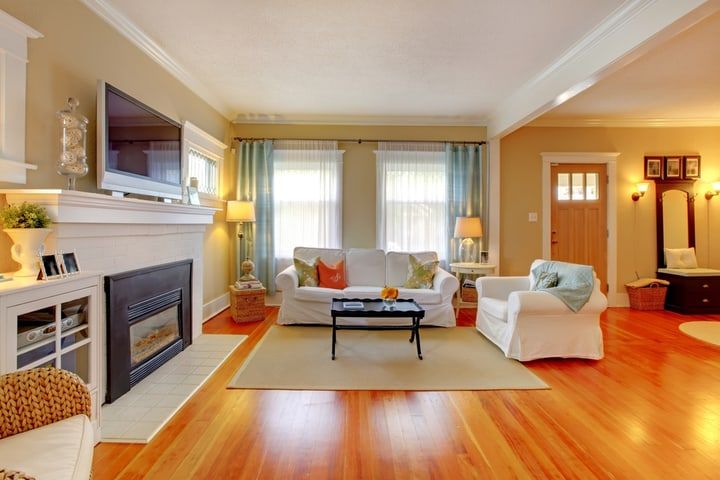
Don't rewire the apartment
Adding hardwired fixtures or running new circuits will break the terms of most leases, and your deposit will almost certainly be forfeit. Even if you hire qualified electricians and plasterers, you'd still be at fault unless you strip the wiring out and patch the ceiling before you leave. If you genuinely want ceiling lighting, negotiate with the owner — ideally before you sign the lease.
Don't damage paintwork or plaster
Even non-electrical options like strip lights or wall fittings can chew through your deposit if the adhesive lifts paint or the screws crack plaster. Test adhesive products on an inconspicuous spot first, and prefer removable command-strip-style mounts over anything that needs heavy fixings.
Don't go for the brightest bulb you can find
When it comes to bulb brightness, more isn't better. In a confined apartment space, the brightest available bulb often looks harsh and casts unflattering shadows in the rest of the room. A dimmable lamp or smart bulb is the safer pick — dial it up or down to fit the time of day and what you're doing.
Consider your neighbors
Apartment buildings sit close together, so even on a high floor you might have a neighbor opposite. Most light-pollution laws apply to outdoor lighting only, but a lamp aimed straight out of a window into someone's living space is still a fast way to attract complaints. Use shades, or keep your brighter sources away from windows.
Final Words
When most people picture a well-lit room, they default to a ceiling fixture. But losing the overhead light is genuinely an upgrade in disguise — it forces you to layer light from multiple heights and angles, which is what designers do in rooms with great atmosphere anyway.
There's no single "best" setup. Every apartment, every room, and every personal taste shifts the answer. But you'll almost always want a combination of the options above — a wall light or two, a floor lamp, a table lamp, the right color-temperature bulbs — rather than betting everything on one source.