
Can You Put A Socket On A Lighting Circuit?
A 13A socket on a 6A UK lighting circuit won't complain about a phone charger — but plug in a kettle and you're asking a circuit rated for roughly 1,380W to do a much heavier job.
 Eugen
EugenEugen Nikolajev
Creator of LED Lighting Info
Hi, I am Eugen. I was always one of those kids who had all sorts of weird lighting gadgets for every occasion.
Now, I want to share my knowledge and experience about lighting with you on LED Lighting Info.
Read my editorial standards
Key Takeaways
Technically, you can wire a socket onto a lighting circuit, but it is not recommended. The lighting circuit’s breaker and cable are sized for low-draw fixtures, so plugging in anything more than a phone charger or a small lamp risks overloading the circuit. If you do it, wire the socket in parallel off the permanent live — otherwise the light switch will also control the socket.
You’ve got a light in the closet under the stairs, but no nearby socket — and running new cable back to the ring main feels like a major job. Can you just tap into the lighting circuit close by instead?
The problem is real: lighting and socket circuits are sized and protected differently, and tapping one into the other is a common DIY shortcut that sometimes works and sometimes doesn’t.
In this article we cover:
- Whether a 13A socket can safely share a lighting circuit
- Series vs. parallel wiring — and why parallel is the only sensible choice
- The three main risks: breaker overload, RCD/GFCI protection, and wire gauge
- What you can safely plug into a tapped socket
- Whether you need a permit or a qualified electrician
Can Lights And 13A Sockets Be On The Same Circuit?
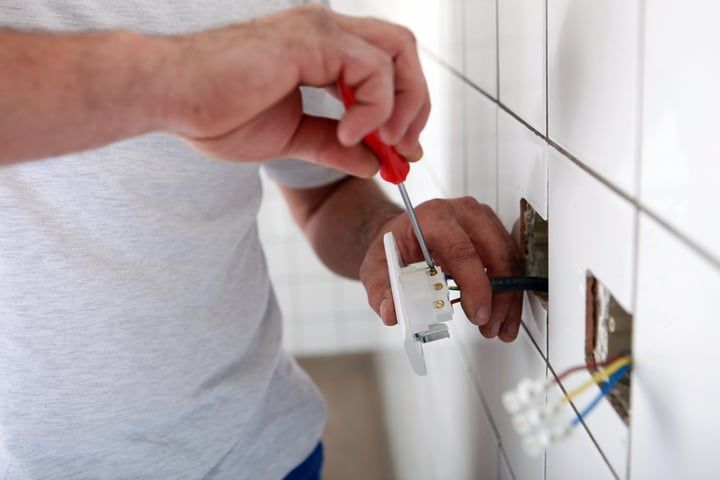
Installing a 13A socket onto a lighting circuit can be done safely if it’s wired correctly. The risk is what you plug into it — because lighting circuits are protected and sized for the light fittings they feed, not for general-purpose appliances.
Breaker Ratings
Lighting circuits use a smaller breaker than socket circuits. In the UK and Europe, that’s normally a 6A Type B MCB in a modern consumer unit (older installations with rewireable fuses used 5A). Some larger lighting circuits use a 10A MCB.
In North America, residential lighting circuits are typically 15A on 14 AWG cable. A dedicated 20A lighting circuit is uncommon in homes — 20A is usually reserved for kitchens, bathrooms, laundry, and other small-appliance branches.
Bear in mind that amperage alone isn’t a fair UK vs. US comparison: a 6A circuit at 230V delivers roughly 1,380W, while a 15A circuit at 120V delivers about 1,800W. In power terms, they’re in the same ballpark.
A 13A socket on a 6A UK lighting circuit will happily pass current for a phone charger or an LED lamp. Plug in something that draws its full rating — a kettle, a heater, a vacuum — and the breaker trips or, in the worst case, the cable heats up before the breaker responds. The same goes for a 20A appliance on a 15A North American lighting circuit.
Grounding Protection (RCD / GFCI)
Socket circuits in most modern homes have residual-current protection. In North America these are called Ground Fault Circuit Interrupters (GFCIs), and in the UK and Europe they’re called Residual Current Devices (RCDs). They cut the power if current leaks to ground — the kind of fault that would otherwise electrocute you.
Since their introduction in 1973, GFCIs have been credited with an estimated 81% drop in electrocutions and a 95% drop in consumer-product electrocutions, according to ESFI and the CPSC.
Requirements today are broader than just “near water”:
- UK (BS 7671, 18th Edition): RCD protection is required for all domestic socket-outlets rated up to 32A, and for most domestic lighting circuits.
- US (NEC 210.8 and 210.12): GFCI protection is required in bathrooms, kitchens, laundry rooms, garages, outdoors, and other damp locations; AFCI protection is required on most residential lighting circuits.
If your lighting circuit isn’t already protected, adding a socket to it and plugging in a faulty appliance could leave you exposed to a shock that would have tripped a protected circuit.
Should I Wire A Socket In Series Or Parallel?
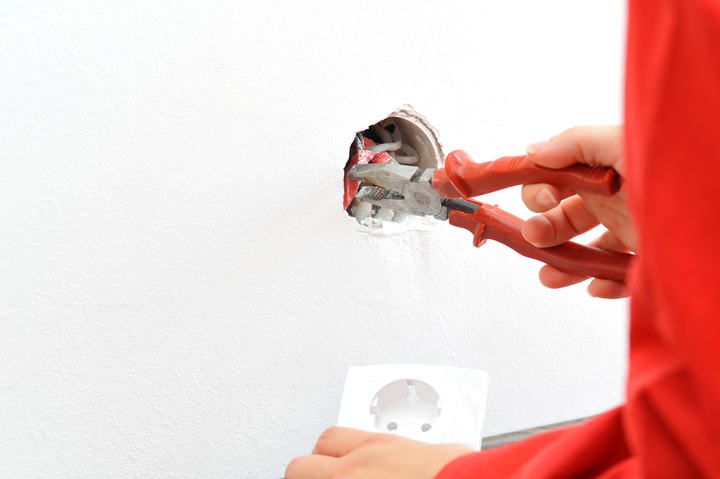
If the lighting circuit really is your only option, you still need to decide how to connect: in series with the light, or in parallel off the permanent live.
Wire it in parallel. There are two real reasons this matters — and neither of them is about “distributing current,” which is a common misconception.
- Full supply voltage at the socket. Devices wired in parallel each receive the full mains voltage (120V or 230V) rather than a divided share.
- Independent operation. The socket works whether the light is on or off, because it’s fed from the permanent live ahead of the switch drop — not through the switch.
Overload protection comes from the breaker, regardless of topology. Wiring in parallel doesn’t make the circuit safer against overload — that’s the breaker’s job. What it does is make the socket usable and give each device a clean, full voltage supply.
If you wire the socket in series instead — effectively into the switch loop — the light switch will control the socket too. Turn the light off, and the socket goes dead. For a phone on charge overnight, that’s a problem.
Main Watchouts When Wiring Socket With Lights
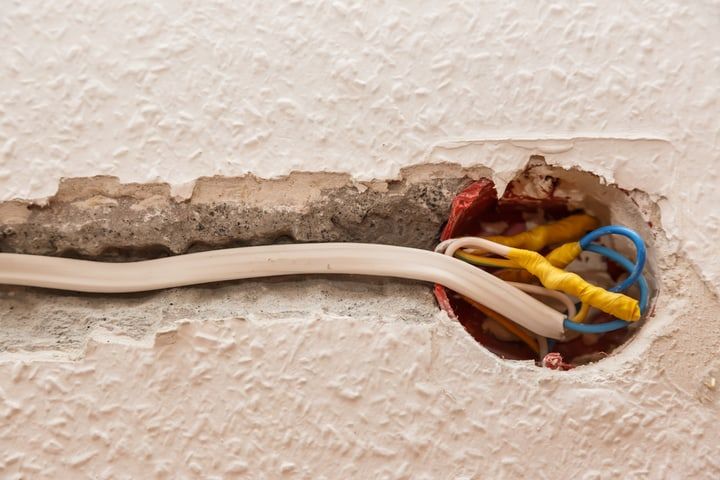
Three things will make or break this job if you decide to wire a socket into a lighting circuit.
- The light switch. Tap the socket off the permanent live, not the switch loop, so it stays on when the light is off. (Covered in detail above.)
- RCD / GFCI protection. Avoid installing a socket on an unprotected circuit. To check individual breakers, look for a test button labelled “push here to test,” “T,” or “Test.” If your consumer unit has a master RCD or RCBOs covering all circuits, you may already have protection at the board — check with a qualified electrician if you’re unsure.
- Wire gauge. Lighting circuits use thinner cable than socket circuits. Plugging a high-draw appliance into a socket on a lighting circuit risks overheating the cable even if the breaker doesn’t trip immediately.
Lighting vs. Socket Wire Gauge
Here’s how the typical cable sizes compare:
| Region | Typical Lighting Cable | Typical Socket Cable | Max Current (Cable) |
|---|---|---|---|
| North America | 14 AWG NM-B | 12 AWG NM-B (on 20A circuits) | 15A / 20A |
| UK / Europe | 1 mm² Twin & Earth | 1.5 mm² or 2.5 mm² Twin & Earth | ~11–15.5A / 16.5–20A |
A couple of nuances behind the table:
- In North America, 14 AWG is rated to 15A per NEC 240.4(D), and 12 AWG to 20A. 14 AWG is perfectly legal on outlet circuits too — the real limit is the breaker, not the room.
- In the UK, 1 mm² twin-and-earth’s current rating depends on how it’s run (BS 7671 Table 4D5): roughly 15.5A clipped direct, around 13A enclosed in ceiling conduit, and as low as ~11A when buried in thermal insulation. 1.5 mm² handles about 16.5–20A.
- A 20A socket must never sit on a circuit wired in 14 AWG — the breaker protecting the cable has to match the cable, not the outlet.
What Can You Safely Plug Into A Tapped Socket?
Once you’ve sorted the wiring, the practical question is what to actually use the socket for. The total load on a UK 6A lighting circuit at 230V is about 1,380W shared across every light already on that circuit. On a North American 15A circuit at 120V, it’s roughly 1,440–1,800W.
Treat a tapped socket as light-duty only:
- Fine: phone and laptop chargers, LED desk and table lamps, small routers, smart-home hubs, a low-draw clock.
- Never: kettles, space heaters, hair dryers, irons, toasters, vacuum cleaners, microwaves. Any one of these will overload a 6A UK circuit on its own.
Do I Need A Permit Or Qualified Electrician?
In the UK, most work that adds a new socket falls under Part P of the Building Regulations. Any new circuit, and any work in a special location such as a bathroom or kitchen, either has to be notified to Building Control or carried out by a Part P registered electrician who will self-certify the work.
In the US, local building codes usually require a permit for new branch circuits and sometimes for significant modifications to existing ones. Rules vary by jurisdiction, so check with your local building department before starting — DIY electrical work in finished spaces is increasingly restricted, and work that isn’t permitted can affect home insurance and resale.
Diagram Of Wiring Lights And Outlets On The Same Circuit
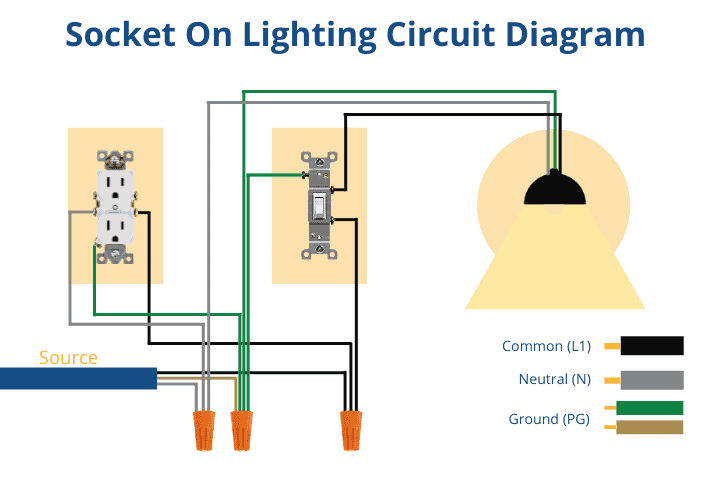
The diagram above shows a North-American-style connection where the new socket is always hot — not controlled by the light switch. The key is splicing the source hot before the switch leg, so the socket sees the permanent live:
- Run a new 2-wire cable (with ground) from the fixture box to the new outlet location.
- Splice the source hot (the incoming black) so it feeds both the switch loop and the new black wire going to the outlet.
- Splice the neutral (white) with a pigtail to the fixture neutral and to the new white wire at the outlet.
- Bond the new ground wire to the existing grounds in the ceiling box.
In a UK installation the colours differ (brown for live, blue for neutral, green/yellow for earth) but the principle is the same: the outlet is fed from the permanent live, not through the switch.
Final Words
Going back to that socket under the stairs: yes, you can tap it off the lighting circuit — but only if the breaker, wire gauge, and RCD/GFCI protection are all up to the job, and only if you limit what you plug in to low-draw devices. When practical, running a spur from the nearest socket circuit is the safer long-term choice and the one most likely to pass inspection.
Have you had problems adding new sockets to your home? Maybe you’ve added a socket to your lighting circuit – how did that go?