
Are Broken LED Light Bulbs Dangerous?
CFLs needed mercury vapor to work — LEDs don't, and that single difference makes a broken LED about as hazardous as broken glassware. The real cleanup concern is the shards, not what's inside.
 Eugen
EugenEugen Nikolajev
Creator of LED Lighting Info
Hi, I am Eugen. I was always one of those kids who had all sorts of weird lighting gadgets for every occasion.
Now, I want to share my knowledge and experience about lighting with you on LED Lighting Info.
Read my editorial standards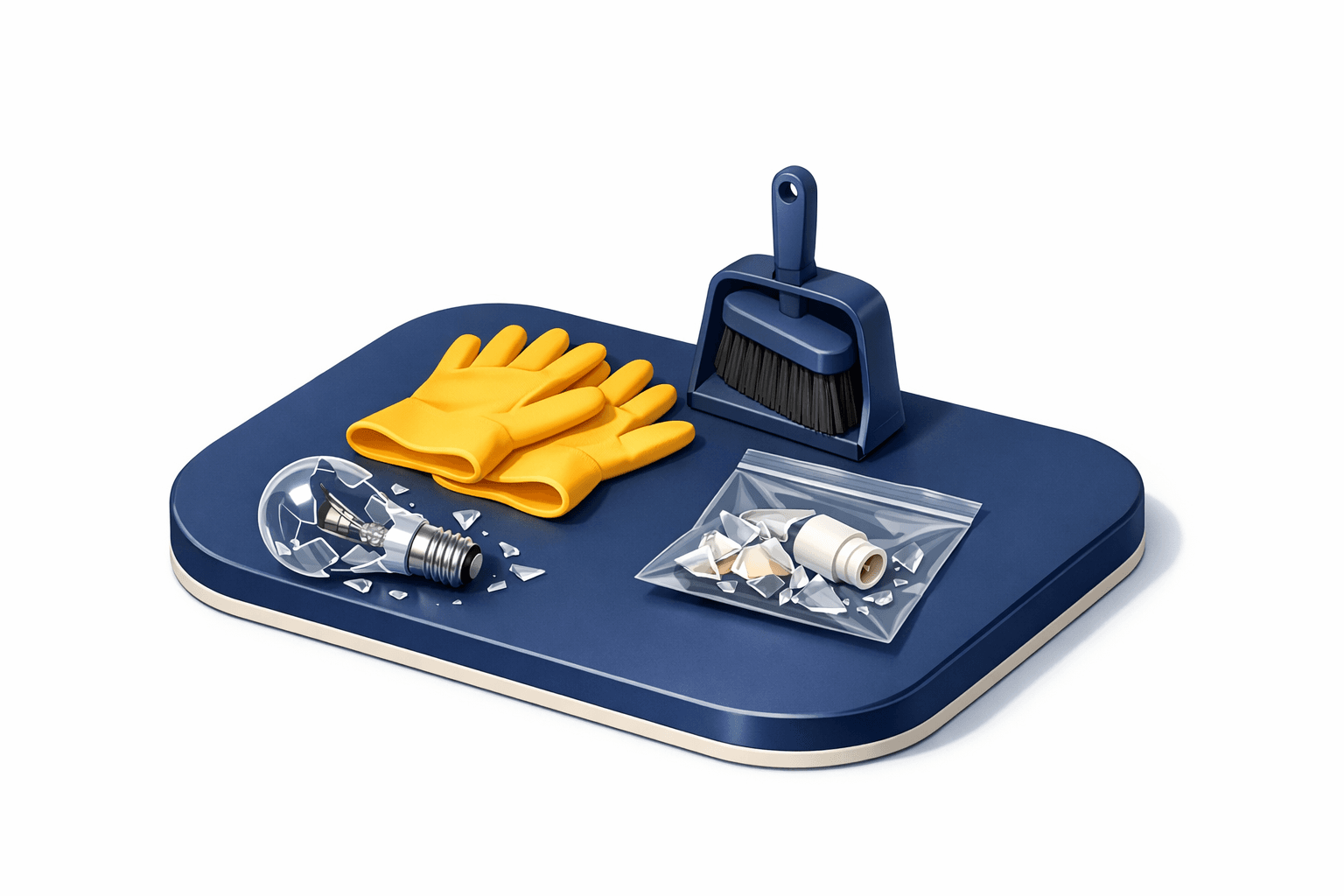
Key Takeaways
Broken LED bulbs aren't dangerous in any meaningful sense. They contain trace amounts of metals like arsenic and lead, but the concentrations are too small to cause harm from a single bulb. The main risk is broken glass. The exception is a bulb with a cracked base — replace it to prevent moisture damage to the wiring.
Older bulbs came with real hazards when they shattered. CFLs released mercury vapor, incandescents could send filament fragments across a room, and both produced sharp glass.
LEDs are different. They contain no mercury, they're often built from shatterproof plastic, and even when the glass envelope breaks, the toxic content of a single bulb is too small to pose a meaningful exposure risk.
That doesn't mean cleanup is irrelevant. Glass shards still cut, exposed wiring around a cracked base still needs attention, and a bulb that breaks while powered carries a small shock risk. Here's what's actually inside an LED, what to do if one breaks, and how the cleanup differs from a broken CFL.
What Are The Dangers Of A Broken LED Light Bulb?
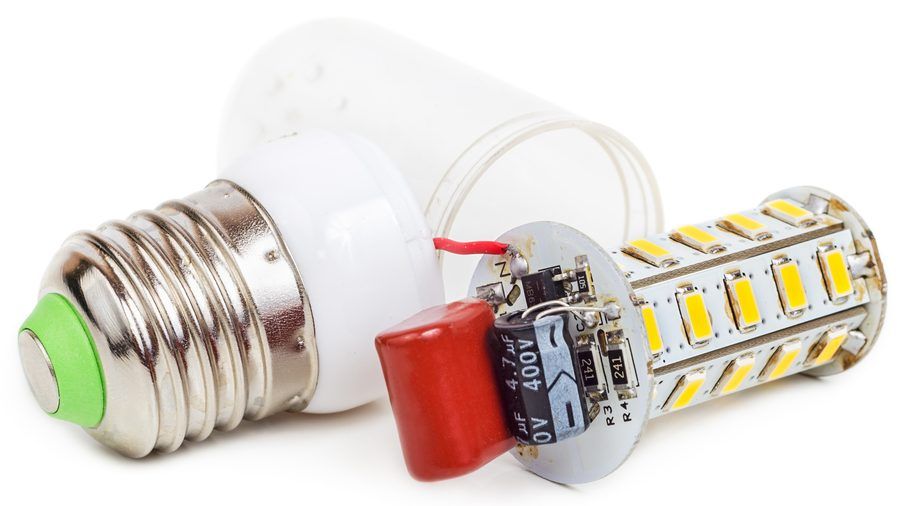
The only real danger from a broken LED bulb is glass shards. There aren't enough toxic substances inside an LED to cause harm in a household setting, and many modern LEDs use shatterproof plastic or epoxy resin instead of glass.
Unlike conventional bulbs, an LED isn't filled with gas. The bulb-shaped envelope is mostly aesthetic — it diffuses the light and houses the driver electronics.
That envelope, when made of glass, is fragile and can shatter into thousands of tiny, razor-sharp pieces on impact. The fragments are translucent and easy to miss — until you step on them barefoot.
If the bulb cracks but doesn't shatter, and the diode itself isn't damaged, it will usually keep working. Plastic and epoxy bulbs won't shatter, but a crack can leave a sharp edge — handle them carefully when removing them from the fixture.
LED Light Bulb Base Cracked, But Still Works
Replace any LED bulb with a cracked base. It may still light up, but the crack lets moisture into the wiring, which is where shorts and arcing inside the fixture become a real risk.
Cracked bases are uncommon — LED bases are usually robust — but over-tightening the bulb in the socket is one common cause. One more thing worth flagging: if the bulb breaks while still powered, the exposed driver board can deliver a minor shock or burn. Switch the fixture off at the wall before touching anything.
Broken Bulbs in Enclosed or Recessed Fixtures
Bulbs in recessed cans or enclosed ceiling fixtures are a different scenario. Shards can fall into the housing where you can't see them, and the heat-trapping design of these fixtures means the broken bulb may have been running hotter than usual.
Switch off the breaker before reaching into the fixture. Wear safety glasses — overhead glass tends to fall the moment you touch it. A magnetic pickup tool, or a vacuum with a hose attachment, helps recover shards that have settled out of reach. Once the housing is clear, inspect the socket for trapped fragments before installing the replacement.
Are LED Lights Radioactive?
LEDs are not radioactive. Some emit a small amount of ultraviolet light, but UV from a household LED is non-ionizing radiation — fundamentally different from the ionizing radiation given off by radioactive materials, which comes from unstable atomic nuclei.
For scale: household LEDs typically emit less than 1% UV in their output, far less than direct sunlight. Specialty LEDs designed for tanning or sterilization do produce UV at levels that can cause harm if misused, but those aren't the bulbs in your kitchen.
Do LED Bulbs Contain Mercury?
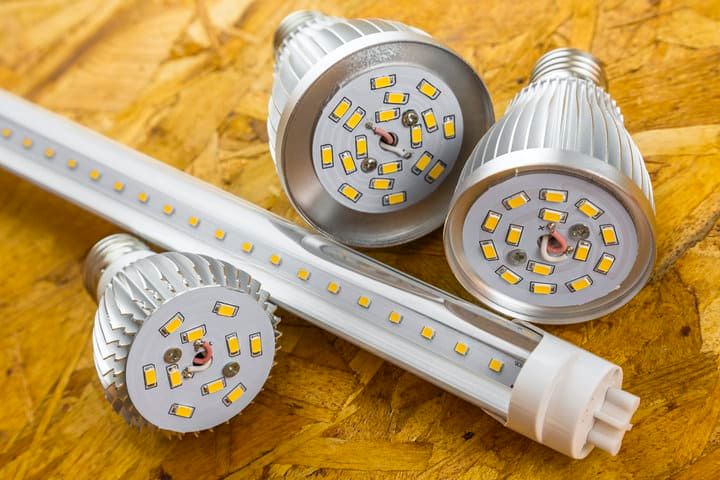
LEDs do not contain mercury. They generate light using a semiconductor — no mercury vapor required — which is one reason LEDs are considered the most environmentally friendly mainstream lighting option.
What's so bad about mercury? Exposure is harmful, especially for children and developing fetuses. Per WHO mercury exposure guidelines, low-level exposure can cause fatigue, cognitive impairment, and difficulty concentrating; long-term exposure can lead to neuromuscular issues including tremors, muscle weakness, and atrophy.
In a CFL, an electric current passes through a gas-filled tube and excites mercury vapor inside, which emits ultraviolet light. That UV strikes a phosphor coating on the inside of the glass tube, and the phosphor fluoresces — the visible light you see. (No tungsten coils involved; those are filaments in incandescent bulbs.)
According to the EPA, a typical CFL contains about 4 mg of mercury, and Energy Star–qualified bulbs are capped at 5 mg. Some manufacturers have brought this down to as little as 1 mg per bulb. It's a small amount in absolute terms, but enough to be a concern when a bulb shatters in an enclosed space.
Once the bulb breaks, mercury vapor escapes into the air. The EPA recommends airing out the room for 5–10 minutes and keeping HVAC systems off for several hours. On carpets and other porous surfaces, residual mercury can continue to outgas for days or even weeks if not thoroughly cleaned, which is why prompt cleanup matters.
That's why CFL and fluorescent bulbs require careful disposal. The EPA's guidance: seal the broken pieces (and the cleanup materials) in a glass jar with a metal lid, or in a sealable plastic bag, and take them to a hazardous-waste collection facility or a retailer that accepts CFLs. Don't put them in regular household trash, and don't vacuum — vacuuming can disperse mercury vapor into the air.
Do LED Lights Have Toxic Chemicals?
The short answer: yes, but in quantities too small to threaten anyone cleaning up a broken bulb. The amount of any single toxic element in one LED is small enough that a household breakage is not a meaningful exposure event.
A 2011 study by researchers at UC Irvine and UC Davis (Lam et al., published in Environmental Science & Technology) found that LEDs can contain trace amounts of hazardous metals — including arsenic, lead, and nickel, alongside copper. Of these, arsenic and lead are the principal toxicity concerns; nickel is a common allergen, particularly in white LEDs.
In larger doses, exposure to these materials is genuinely harmful. Arsenic is associated with elevated cancer risk, diabetes, and skin lesions. Lead is a well-documented neurotoxin, especially dangerous to children. The amounts in a single LED bulb, however, are tiny — too small to cause harm from a one-off breakage in your home.
Concentrations vary by LED color. The 2011 study found that low-intensity red LEDs were the worst offenders, containing up to eight times the lead permitted under California law. White LEDs contained the least lead but the highest nickel.
There's a wrinkle worth knowing: the same study concluded that many LEDs would actually exceed California's Title 22 hazardous-waste thresholds, even though they generally fall below U.S. EPA federal limits. That matters at the disposal end — for landfill regulations and aggregate environmental load — not for the person dealing with one broken bulb on a kitchen floor.
These metals are also harmful to ecosystems. Copper persists in the environment and can bioaccumulate, contributing to copper toxicity in microorganisms and marine wildlife. Lead and arsenic behave similarly. That's a good argument for recycling LED bulbs whenever possible, rather than tossing them in the trash.
What Should You Do With a Broken LED Bulb?

If your LED bulb breaks, follow these steps in order:
- Switch off the fixture at the wall switch and, ideally, at the breaker. A bulb that breaks while energized exposes the driver board, which carries a small shock and burn risk.
- Move children and pets to another room so they can't step on shards or pick up fragments.
- Put on gloves, safety glasses, and a dust mask. Eye protection matters most for overhead fixtures, where shards drop the moment you start cleaning.
- Open the windows and turn off any HVAC or air conditioning. LED dust isn't toxic in any meaningful sense, but ventilation is a sensible habit — and essential if it turns out the bulb was actually a CFL.
- Sweep up the larger shards with a stiff piece of cardboard. A broom works too — clean the head thoroughly afterwards.
- Lift smaller fragments with sticky tape (duct tape or packing tape works well). A vacuum is fine for the final pass, but avoid running it over big pieces, which can damage the hose or canister.
- Seal the debris in a container — a sealable bag or a glass jar with a lid — before disposing of it.
That's the cautious version. LEDs aren't toxic in the way CFLs are, so the broken pieces don't need hazardous-waste disposal. If your municipality offers electronics or LED recycling, that's the better option environmentally; otherwise, regular household trash is acceptable.
Final Thoughts
Of the three common bulb types — incandescent, CFL, LED — broken LEDs are by far the lowest-hassle to deal with. There's no mercury vapor to ventilate, no special disposal channel needed, and the toxic-metal content of a single bulb is too small to matter for the person doing the cleanup. Glass shards are the real concern, and a quick gloves-tape-and-bag routine handles them.
What still matters: treat LED bulbs as recyclable e-waste rather than landfill, and replace any bulb with a cracked base before moisture causes a wiring issue. Beyond that, the EU RoHS directive has already pushed manufacturers to reduce hazardous substances in LED components, and per-bulb concentrations have continued to fall year over year. Modern LEDs are about as safe as household lighting gets.
If you're wondering whether LED bulbs can explode, that's the next read.