
Can LED Bulbs Explode? 2 Main Causes
Capacitors inside an LED driver can stay charged for seconds after switch-off — and that's the least surprising thing about how LED bulbs actually fail.
 Eugen
EugenEugen Nikolajev
Creator of LED Lighting Info
Hi, I am Eugen. I was always one of those kids who had all sorts of weird lighting gadgets for every occasion.
Now, I want to share my knowledge and experience about lighting with you on LED Lighting Info.
Read my editorial standards
Key Takeaways
It is extremely rare for LED bulbs to explode, but it can happen. Thermal and electrical stress caused by voltage surges, faulty driver components, and poor heat management can all make a bulb fail dramatically.
LED light bulbs, when properly cared for, can last for many years. But just like any other electrical device, they aren't completely invulnerable.
While LEDs typically degrade gradually, certain stress conditions can cause sudden failure — and in rare cases, an actual explosion. So can LED bulbs really explode if the conditions are wrong?
Here's what I'll cover:
- Reasons why an LED bulb explodes
- What to do with exploded bulbs
- Whether smoking LED lights are a fire hazard
Why Did My LED Light Bulb Explode In The Socket?
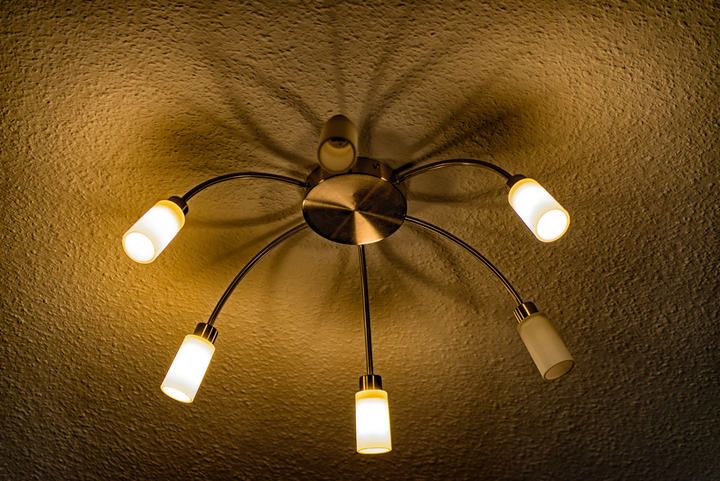
LED bulbs explode for one of two reasons: electrical stress or thermal stress. Here's how the two compare at a glance, then a closer look at each.
| Cause | Trigger Event | Warning Signs | Prevention |
|---|---|---|---|
| Electrical stress | Voltage surge on the mains (lightning, grid switching, large appliances cycling), failing driver, loose wiring arcing | Repeat bulb failures in the same fixture; flickering before failure; a sharp pop and bright flash | Whole-home or plug-in surge protector; tighten loose connections; use quality bulbs with reliable drivers |
| Thermal stress | Non-enclosed-rated bulb in a sealed fixture; exceeding the fixture's max wattage; blocked airflow around the bulb | Discolored or browning bulb base; the fixture or bulb runs hot to the touch; premature dimming | Use bulbs labeled 'enclosed fixture rated' where the fixture is sealed; stay under the printed wattage limit; keep airflow clear |
Electrical Stress Explosion
Electrical stress happens when the bulb receives a voltage spike that overwhelms its internal electronics.
Each individual LED chip inside a bulb has a forward voltage of roughly 2–4V, but a household LED bulb is wired into a 120V circuit. To bridge that gap, the bulb contains an internal driver — a small switching power supply with a rectifier and filter capacitors — that converts 120V AC mains down to the low-voltage DC the LEDs actually need. The capacitors inside that driver are highly stressed components and a common point of failure.
When a voltage surge slips past the driver's protection, the LED chips can be hit with current well above their rated limit. Even brief surges — lasting only milliseconds — can be enough to destroy them. This is called Electrical Overstress (EOS), and it's especially common in cheap bulbs whose drivers cut corners on filtering and protection.
Common causes of EOS surges include:
- A voltage spike on the mains supply (lightning, a tripped breaker elsewhere on the circuit, or large appliances cycling)
- An LED driver failing to regulate voltage properly
- A loose connection arcing inside the fixture or socket
- Exceeding the fixture's maximum wattage rating (printed inside the socket cup or on the fixture label)
If you keep losing bulbs in the same fixture, a plug-in or whole-home surge protector is one of the cheapest fixes. It's also worth having an electrician check for loose neutrals or open grounds — both can cause persistent overvoltage that quietly chews through bulbs.
Thermal Stress Explosion
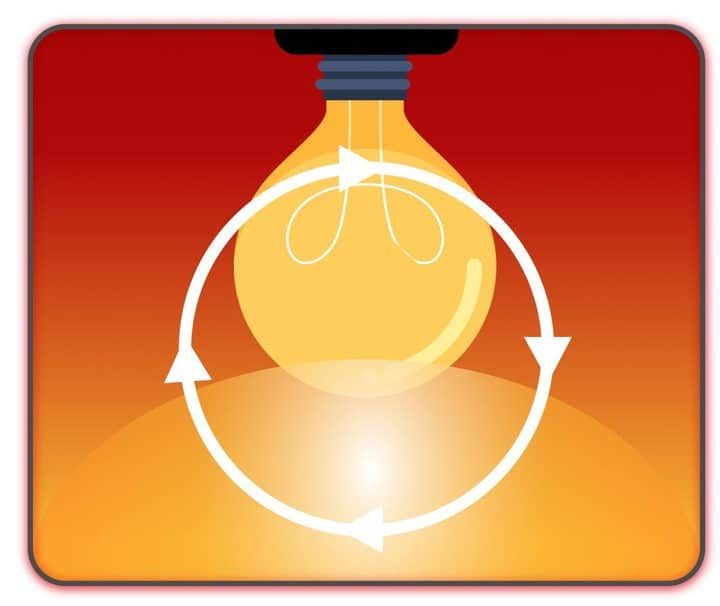
Heat is the other killer. LED chips don't radiate heat the way an incandescent filament does, but the driver electronics inside the base do, and that heat needs somewhere to go.
When an LED bulb runs hotter than it was designed for — because it's overdriven, sitting in a poorly ventilated fixture, or trapped under a sealed dome — the driver capacitors and solder joints degrade quickly. Eventually a shorted component or expanding internal pressure can crack the envelope or pop the driver.
The single most common cause of premature LED failure in homes is putting a non-enclosed-rated bulb in a recessed can, a jelly-jar fixture, or a fully enclosed globe. The trapped heat slowly cooks the driver. If your fixture is sealed, look for a bulb explicitly labeled "enclosed fixture rated" — most standard LED bulbs aren't.
Overloading is the other common culprit. Every fixture has a maximum wattage rating printed inside the socket cup or on the fixture label. Exceed it and the wiring and bulb base can run hot enough to char insulation before anything visibly fails. With LEDs the actual watts drawn are low, but stacking high-output bulbs in undersized fixtures still creates the same heat pocket.
LED Light Bulb Exploded When It Was Off
An LED bulb exploding while the switch is off points to a more serious electrical problem. It usually means current is still reaching the bulb — through a miswired switch (cutting the neutral instead of the hot), a backfeed from another circuit, or a failing driver that's still drawing leakage current.
Cutting power stops further damage but doesn't undo what's already happened. And note that capacitors inside the bulb's driver can stay charged for several seconds after switch-off, so don't immediately handle a bare-base bulb.
If a bulb explodes when it's supposed to be off, treat it as a wiring issue and bring in an electrician — don't just swap in a new bulb and hope for the best.
Is An Exploded LED Light Bulb Dangerous?
An exploded LED bulb generally isn't dangerous once the explosion is over. The circuit breaks, current stops flowing, and the case typically cracks rather than shattering into shards.
LED bulbs are also far easier to clean up than fluorescents (which contain mercury vapor). However, LEDs do contain trace amounts of heavy metals like lead, arsenic, and nickel in their circuit boards and semiconductor compounds — not enough to be dangerous to handle for a moment, but enough that they should be recycled rather than thrown in the regular trash.
What To Do When An LED Light Bulb Explodes

If a bulb has just popped, work through these steps before installing a replacement:
- Turn off the circuit at the breaker — not just the wall switch — so no current can reach the socket.
- Let the fixture cool. The bulb base and any nearby plastic can stay hot for a minute or two.
- Remove the bulb carefully. Many LED bulbs use a plastic or silicone-coated envelope that's more shatter-resistant than older glass bulbs, but plenty of standard A19s — especially decorative and filament-style — still use plain glass that can shatter. Wear gloves if the bulb is cracked.
- Inspect the socket and wiring for burn marks, melted plastic, or charring. Any of those means the fixture itself needs replacing or an electrician's attention before you put a new bulb in.
- Identify and fix the root cause — wrong wattage, wrong fixture type (enclosed vs. open), a recurring surge, or a wiring fault — before installing a replacement. Otherwise the new bulb will go the same way.
- Recycle the old bulb. LEDs aren't accepted by most curbside programs. Home Depot, IKEA, and Lowe's run free in-store take-back programs, or you can use the Earth911 directory to find a local drop-off.
For more on handling damaged bulbs, see my guide on whether broken LEDs are safe, or my guide on how to dispose of an LED bulb.
LED Light Bulb Popped And Smoked: Is It A Fire Hazard?
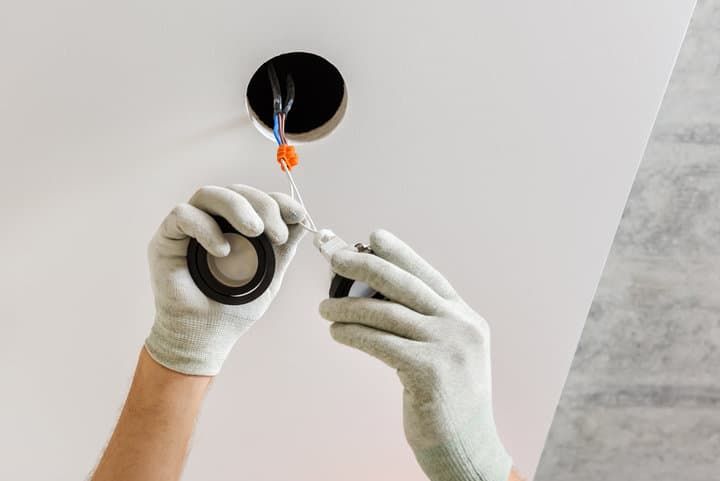
If the bulb burned out and gave off a puff of smoke without obvious shattering, it's usually less alarming than it looks — but still worth a careful look. Replace the bulb either way.
The smoke is almost always residual: a failed component inside the bulb's driver — most commonly the electrolytic capacitor or a switching regulator — has burned out and released a small amount of vaporized electrolyte and circuit-board material. Once that component is gone, current usually can't pass through anymore, so the bulb won't keep heating up.
This is not the same advice as for incandescent or halogen bulbs. Those run hot enough to start fires; if one of those smokes, cut power immediately and remove it once it's safe to handle.
With LEDs, cheap bulbs are the main worry. A manufacturing defect — bad solder, an underrated capacitor, a poorly designed driver — can produce smoke that does indicate a real fire risk. If the bulb keeps smoking after the pop, or you see browning on the surrounding fixture, kill the breaker and call an electrician.
Can LED Strip Lights Explode?
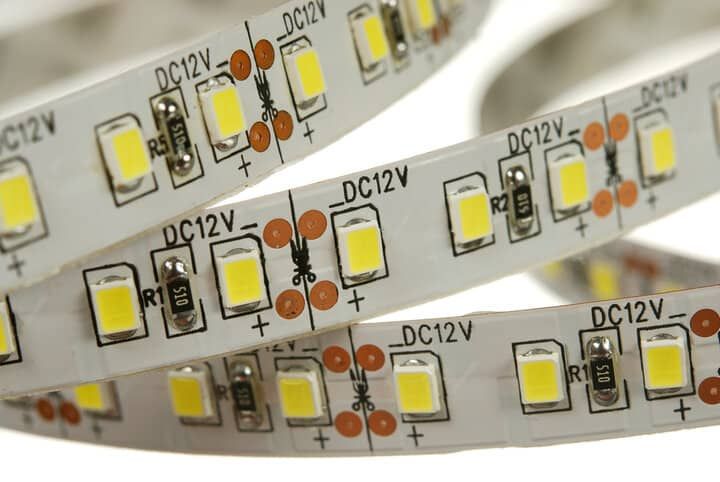
LED strips themselves are very unlikely to explode. A strip is just a flexible PCB with surface-mount LEDs and current-limiting resistors — no high-voltage components, no large electrolytic capacitors that can rupture. If something pops, smokes, or catches fire in a strip-light setup, the source is almost always the external power supply or its plug.
To keep that supply healthy, choose one rated for at least 20% more wattage than the strip actually draws, and don't overload a single brick on long runs — inject power at multiple points along the strip instead. If you smell anything burning, suspect the supply first.
Final Words
LED bulbs can explode, but it's rare — and the two underlying causes, electrical and thermal stress, are largely preventable. Keep bulbs within the fixture's wattage rating, match the bulb to the fixture (open vs. enclosed), and consider a surge protector if your area has frequent grid disturbances.
If a bulb does pop, the cleanup is usually simple: cut power at the breaker, let it cool, glove up if there's a crack, and recycle the old bulb. The bigger question is always why it failed — fix that before installing a replacement, or the next bulb will go the same way.