What Is The LED Light Technology?
The LED chip itself causes only about 10% of bulb failures — driver circuitry is responsible for roughly 60%. That's why your 'dead' LED bulb often has a perfectly good diode inside.
 Eugen
EugenEugen Nikolajev
Creator of LED Lighting Info
Hi, I am Eugen. I was always one of those kids who had all sorts of weird lighting gadgets for every occasion.
Now, I want to share my knowledge and experience about lighting with you on LED Lighting Info.
Read my editorial standards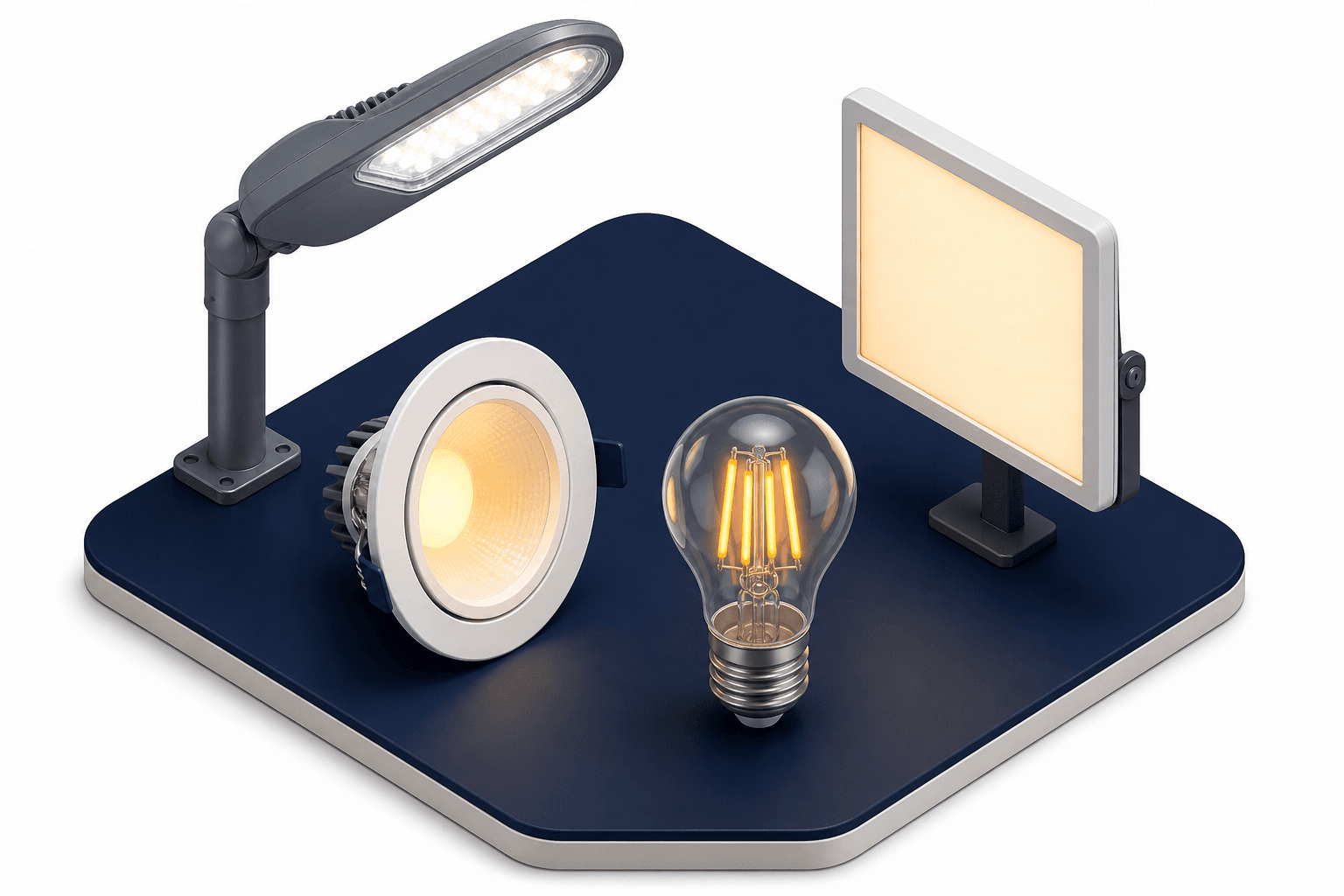
LEDs have transformed modern lighting. In this guide, I'll walk you through exactly how they work, why they're so efficient, the common bulb types and fittings you'll find at home, and how to read the key specs — CRI, color temperature, and lumens — before your next purchase.
Compared to a traditional 100W incandescent, a 15W LED of equivalent brightness uses roughly one-seventh the energy — a saving of around 85% that adds up fast across a whole house. Versus CFLs and halogens, the gap is smaller (typically 10–30%), but LEDs still come out ahead on lifespan, durability, and switching tolerance.
LED Simply Explained: How Does It Work?
LED stands for Light Emitting Diode. A diode is a one-way electrical valve that allows current to flow only in one direction — and that's the direction in which light is emitted.
The tiny chip that actually emits the light is called a die. A 1×2 inch semiconductor wafer can yield thousands of individual dies, each one becoming a single LED chip after cutting.
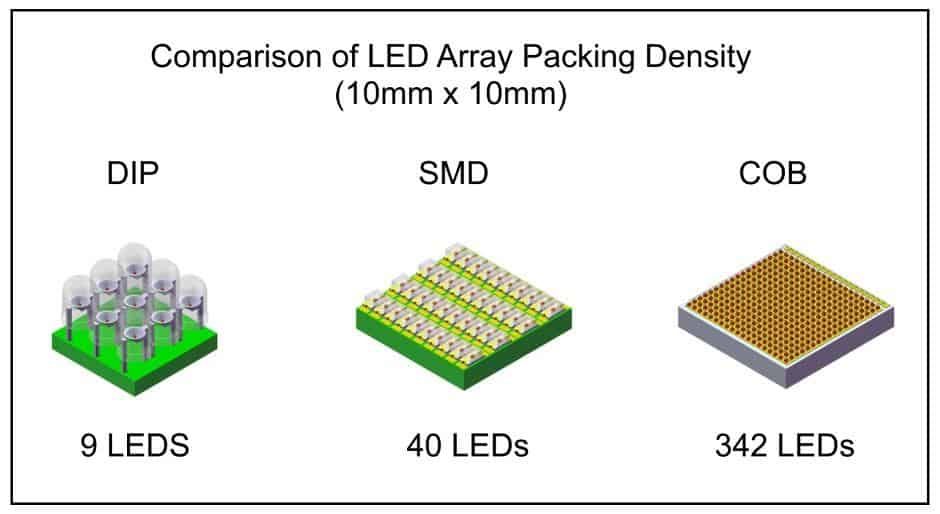
How those dies are packaged determines the LED format. A DIP LED typically holds a single die. An SMD (surface-mount device) package usually contains 2–4 dies. A COB (chip-on-board) array can pack anywhere from around 9 to several hundred dies depending on the wattage and design — which is why COB modules produce such intense, uniform light.
The die is where the magic happens. It consists of a paper-thin semiconductor that allows electrons to flow from negative to positive at the p–n junction. When an electron drops from an excited to a grounded state, it releases a photon — and the semiconductor material determines the wavelength of that photon, which translates directly into the color of light you see.
What Are The Materials Used To Make LEDs?
Red and amber LEDs use the aluminum indium gallium phosphide (AlInGaP) material system. Blue, green, and cyan LEDs use the indium gallium nitride (InGaN) system.
The die is loaded onto metal leads for electrical contact, and a fine gold wire bonds the leads together. A silicone lens shapes the beam to direct the light output in one direction. The whole assembly is sealed in an epoxy or silicone encapsulant that protects the die. In white LEDs, a phosphor coating within the encapsulant converts the blue light from the chip into the warm or cool white you actually see.
A standard LED bulb's outer body is usually plastic — lighter, cheaper, and harder to break. Designer LED bulbs use glass to show off filament-style decorative chips or to handle higher operating temperatures. Aluminum heatsinks manage thermal load, and the whole bulb is mounted to an insulated base that stays cool to the touch.
LED Applications in Daily Life

Beyond the obvious household uses — kitchen task lights, bedroom mood lighting, color-changing accent strips — LEDs now power a huge range of everyday applications, often invisibly:
- Traffic lights — cities replaced incandescent traffic signals with LEDs for sharper color, longer life, and a fraction of the energy.
- TVs, monitors, and phone screens — LED backlights enable razor-thin panels and longer battery life on portable devices.
- Advertising signage and billboards — LEDs deliver bright, daylight-visible output indoors and outdoors.
- Retail and gallery lighting — LEDs emit very little UV, which protects painted surfaces, fabrics, and artwork from fading under prolonged exposure.
- Street and urban lighting — directional beams cut light pollution, reduce power draw, and last far longer than the sodium-vapor lamps they replace.
- Automotive headlights — LED headlight modules are bright, highly directional, and individually dimmable, enabling adaptive beam patterns.
LED Light Power Consumption
Energy use is measured in kilowatt-hours (kWh) — power draw (in kilowatts) multiplied by hours of use. Run a 15W LED bulb 9 hours a day for 30 days and you get 0.015 kW × 9 × 30 = 4.05 kWh per month.
For context, a ceiling fan over the same window uses around 15 kWh, and a freezer about 80 kWh — so a single LED is a tiny fraction of a typical household's electric load.
Now compare it to its incandescent equivalent. A 100W incandescent bulb (~1,600 lumens) burns 27 kWh per month — roughly seven times the LED. At 14 cents per kWh, the incandescent costs about $3.78 per month while the LED costs about 57 cents.
The U.S. Department of Energy estimates the average American home has around 67 light bulbs (about 85 in single-family homes). At 9 hours of daily use, running 67 incandescents would cost roughly $253 a month, while the equivalent LEDs would cost about $38 — savings of around $215 every month, before you account for longer bulb life.
For a custom estimate based on your own bulb count and electricity rate, try the yearly savings calculator.
How Long Do LED Lights Last?

Most household LED bulbs are rated for 15,000–25,000 hours. Premium bulbs and many LED strips reach 40,000–50,000 hours. Budget bulbs at the bottom of the market sometimes claim long life but realistically run closer to 10,000–15,000 hours, especially in enclosed fixtures.
Incandescents have always had a built-in weak point: the filament. It runs at hundreds of degrees, vibrates with every switch-on, and eventually fractures. LEDs are neither held back by filaments nor by mercury vapor as in CFLs — they are a solid-state lighting application with no moving parts.
Heat is still the main enemy. LEDs do produce heat, just at the heatsink rather than in the light itself. Surface temperatures of typical household LEDs run around 40–70°C (105–160°F) on the heatsink — far cooler than incandescents, but enclosed fixtures or higher-wattage bulbs can push that considerably higher, which shortens lifespan.
An LED bulb is more than just the diode. It also contains a driver circuit, capacitors, the bulb casing, and (in fixtures) the wiring and housing around the luminaire. Each of those components has its own failure rate.
The U.S. Department of Energy's Lifetime and Reliability Factsheet finds that LED chips themselves account for only about 10% of failures — driver circuitry and power supply cause roughly 60%. Once driver reliability catches up to the LED chip itself, lifespan figures will climb further.
Also read: The Definitive Guide To LED Strip Lighting
LED Fixture Types Explained
LEDs don't just come as strip lights or standard E26 bulbs. The fixture format — the physical form of the light fitting — determines beam shape, mounting, and whether the bulb is replaceable. Here's how the common types compare:
| Fixture Type | Beam Angle | Best Use | Replaceable Bulb? |
|---|---|---|---|
| Spotlight | Narrow (<30°) | Accent and mood lighting | Yes |
| Downlight | Medium (30–60°) | General room lighting | Yes / No |
| Floodlight | Wide (>60°) | Large areas, security, outdoor | Yes |
| Integrated LED | Varies | Designer panels, sconces, fixtures | No |
| Smart bulb | Varies | Programmable, voice-controlled lighting | Yes |
Spotlights and downlights are both ceiling-recessed, but spotlights throw a tight, focused beam for accenting artwork or features, while downlights wash a wider area for general room lighting. Floodlights produce the broadest beam and are sized for whole-driveway or whole-garage coverage.
Integrated LED fixtures bake the LED array directly into the fixture — sleek and long-lived, but the bulb can't be swapped when it fails. Smart LED bulbs add a Wi-Fi or Zigbee microchip so they respond to your phone or voice assistant, change color, or dim on a schedule.
Types of LED Fittings at Home
Note: "fixture type" describes the physical form of the light fitting, while "fitting type" (or base type) refers to the socket that the bulb screws or pins into. Below are the most common bases you'll encounter when buying LED bulbs for the home.
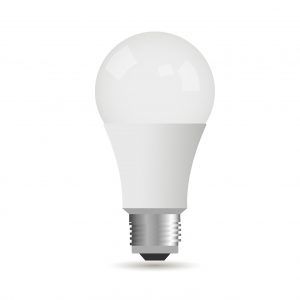
E27 (Edison Screw, 27mm)
- Regional standard: Europe, Asia, most of the world
- Typical voltage: 220–240V (driver-dependent — the base itself has no voltage rating)
- Typical output: 250–2,000+ lumens (2W decorative candles to 20W high-brightness; a 60W-equivalent lands near 8–10W / 800 lumens)
- Best for: General-purpose household lamps, floor lamps, pendants
E26 (Edison Screw, 26mm)
- Regional standard: North America
- Typical voltage: 120V circuits (driver-dependent)
- Compatibility: Physically interchangeable with E27 if the bulb is universally rated, but match the voltage to your circuit
- Best for: The same household applications as E27, just on 120V mains
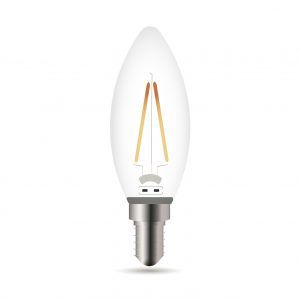
E14 (Candelabra Screw, 14mm)
- Form factor: Slim screw base; usually paired with flame, globe, or candelabra-shaped bulbs
- Typical output: Low — designed for soft, warm decorative light
- Best for: Chandeliers, decorative table lamps, accent fixtures
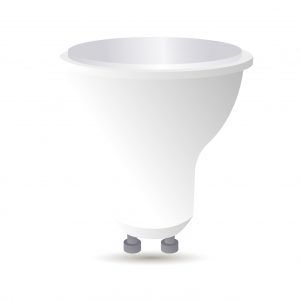
GU10 (Twist-Lock, 10mm Pin Spacing)
- Form factor: Low-profile bulb with two prongs that quarter-turn into the socket
- Typical wattage: 3–8W (high-output versions reach 10W+)
- Voltage: Mains-rated — plugs directly into 120V or 220–240V circuits
- Best for: Spotlights for artwork, retail display, kitchen and shop track lighting
Also read: How To Remove G9 Light Bulb Stuck In Socket?
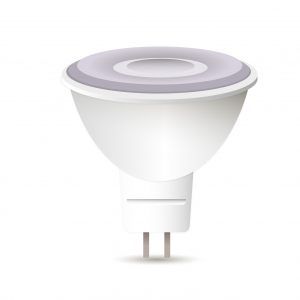
GU5.3 (Bi-Pin, 5.3mm Pin Spacing)
- Form factor: Smaller than GU10; push-fit pin base
- Voltage: 12V — requires a transformer or LED driver; does not plug directly into mains
- Best for: Retrofit MR16 spotlight fittings, display lighting
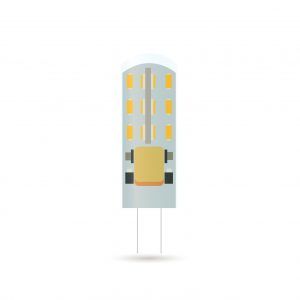
G4 (Bi-Pin, 4mm Pin Spacing)
- Form factor: Capsule-sized push-fit base — one of the smallest common LED bases
- Typical wattage: ~3W (designed to replace small halogen capsules)
- Voltage: 12V only — requires a transformer
- Best for: Cabinet lights, small table lamps, decorative chandeliers
Dimming Compatibility with LED Lights
Older TRIAC dimmers were designed for incandescent loads. They reduce light output by chopping the AC waveform, which works fine for a resistive filament but confuses an LED driver. The result: buzzing or humming from the switch or bulb, visible flicker, a narrow dimming range, or refusal to dim below a certain point.
Two checks avoid almost all of this:
- Look for the "dimmable" label on the bulb. Non-dimmable LEDs on a dimmer circuit will flicker, hum, or fail prematurely.
- Use an LED-rated dimmer. Manufacturers publish compatibility lists pairing specific dimmer models with specific bulb models — checking the list before you buy saves a lot of guesswork.
An incompatible dimmer wired to a newer LED fixture often produces audible humming as the driver switches at irregular intervals — a sign of electromagnetic interference (EMI). Even a properly matched dimmer and dimmable LED may produce faint mechanical hum, but it shouldn't be audible from a few feet away.
Measuring LED Efficiency: Watts and Lumens
Brightness is measured in lumens. Power draw is measured in watts. Efficiency — how much light you get per unit of energy — is lumens per watt (lm/W).
Higher lm/W means more light for less electricity. Modern household LEDs produce roughly 80–110 lm/W, while an old 60W incandescent managed only about 14 lm/W. That's why a 60W incandescent (~800 lumens) can be replaced by an 8–10W LED of equivalent brightness.
Use this table to translate incandescent wattage to LED wattage for the same brightness:
| Incandescent | Equivalent LED | Approximate Lumens |
|---|---|---|
| 40W | 4–5W | ~450 |
| 60W | 8–10W | ~800 |
| 75W | 11–13W | ~1,100 |
| 100W | 14–17W | ~1,600 |
| 150W | 25–28W | ~2,600 |
When shopping, ignore the wattage on the front of the box and read the lumen rating — it's the real measure of how bright the bulb will look in your room.
What Is CRI and Why Does It Matter?
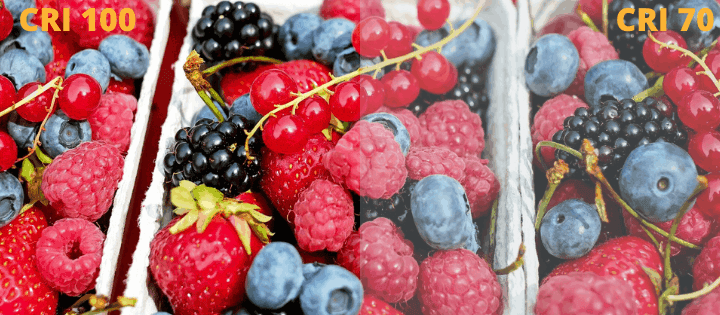
Color Rendering Index (CRI) is a 0–100 score of how accurately a light source reveals the true color of objects, with daylight set as the 100 reference. A low CRI makes colors look muddy or washed out; a high CRI makes them look natural and saturated.
Rules of thumb when buying:
- CRI ≥ 80 — fine for general home lighting (living rooms, hallways, bedrooms).
- CRI ≥ 90 — recommended for retail, art studios, photography, makeup, and medical or dental work where accurate color matters.
- CRI < 70 — avoid; rooms will look tinted or unnatural and skin tones suffer.
Color Temperature Explained
The correlated color temperature (CCT) of a white LED is the perceived warmth or coolness of its light, measured in Kelvin (K). The Kelvin scale runs from warm yellows at the low end to cool blues at the high end:
- 2,200–2,700K — Warm white. Cozy, candle-like; best for bedrooms, lounges, dining rooms.
- 3,000K — Soft white. Slightly cooler than warm white; common in living rooms and hallways.
- 3,500–4,500K — Neutral / cool white. Good for kitchens, bathrooms, workshops, and garages where task visibility matters.
- 5,000–6,500K — Daylight. Crisp and blue-tinted; best for offices, retail, security lighting, and detail work.
Color temperature does not control brightness — a 2,700K bulb can be just as bright (in lumens) as a 6,500K bulb. Choose CCT for atmosphere, then choose lumens for output.
Safety Certifications to Look For
Cheap, uncertified LEDs are where most safety and reliability problems show up. When buying, check the box or product page for these marks:
- UL or ETL — North American safety listing for electrical fire and shock hazards.
- ENERGY STAR — independently verified for efficiency, output, color quality, and lifespan claims.
- CE — required compliance mark for products sold in the European Economic Area.
- RoHS — confirms restricted use of hazardous substances like lead and mercury.
LED Light Hazards
LEDs are among the safest lighting technologies available, but they aren't risk-free. There is one well-documented physiological effect and a couple of practical electrical concerns worth knowing.
The confirmed effect is blue light exposure. LEDs used in computer monitors, phone screens, TVs, and tablets emit a notable amount of short-wavelength blue light. Late-evening exposure suppresses melatonin production, which can disrupt sleep onset and quality. Warm-white bulbs (≤3,000K) and screen night-shift modes mitigate this.
Misused or poorly built LEDs can rarely cause fires through overheating — most often when festive string lights or LED strips are bunched tightly around flammable material like a dry Christmas tree, or when the driver fails catastrophically.
Electrical hazards usually come from mismatched specs: installing a higher-wattage LED than the fixture is rated for, or wiring a 12V bulb directly to a 120V or 240V mains line. Match voltage, match wattage, and use certified products.
FAQ
Are LED lights good for reading?
Yes — choose a warm-to-neutral white LED (around 3,000–4,000K) with a CRI of at least 80 and a comfortable brightness for the space. Avoid cool-white LEDs (5,000K+) for evening reading, since their stronger blue-light component can suppress melatonin and disturb sleep, especially for children and teenagers exposed for long stretches.
Do LED lights really last 50,000 hours?
Theoretically yes, but real-world figures are usually lower. Premium LEDs tested under controlled conditions can hit 50,000 hours, but home and office environments rarely match those conditions — heat buildup, voltage fluctuation, and frequent switching all shorten lifespan. Most household LED bulbs are rated 15,000–25,000 hours in practice, and when they do fail it's usually the driver circuitry that goes, not the LED chip. Even at the conservative end, that's still many times longer than incandescents or CFLs.
Is it safe to leave LED lights on 24/7?
With quality, certified products it is generally safe. Good LEDs include aluminum heatsinks that keep the chip and driver within their operating range even under continuous use. Before you leave any bulb on indefinitely, test it for an extended period while you're around and check that it doesn't run unusually hot. Note that running lights you don't need still wastes energy and contributes to outdoor light pollution, so it's not necessarily wise — just not unsafe.
Do LED bulbs work in incandescent fixtures?
Usually yes, with three caveats. First, the fixture should not be fully enclosed — heat buildup shortens LED life — unless you're using an LED specifically rated for enclosed fixtures. Second, if the fixture is on a dimmer, the bulb must be marked dimmable, otherwise it will flicker or buzz. Third, check the physical fit: LEDs are sometimes a touch larger than the incandescents they replace, and the base type must match the socket.
Final Words
LEDs aren't just brighter or longer-lasting versions of older bulbs — they're a fundamentally different technology, with their own spec sheet and their own quirks. Once you can read a label for lumens, CRI, color temperature, base type, and dimmability, you're equipped to pick the right bulb for any room or fixture in your home.
The upfront cost is higher than a pack of incandescents, but the math nearly always tips in your favor — across a typical household, the energy savings alone pay for the bulbs many times over their lifespan, with lower carbon emissions as a bonus.
Related articles
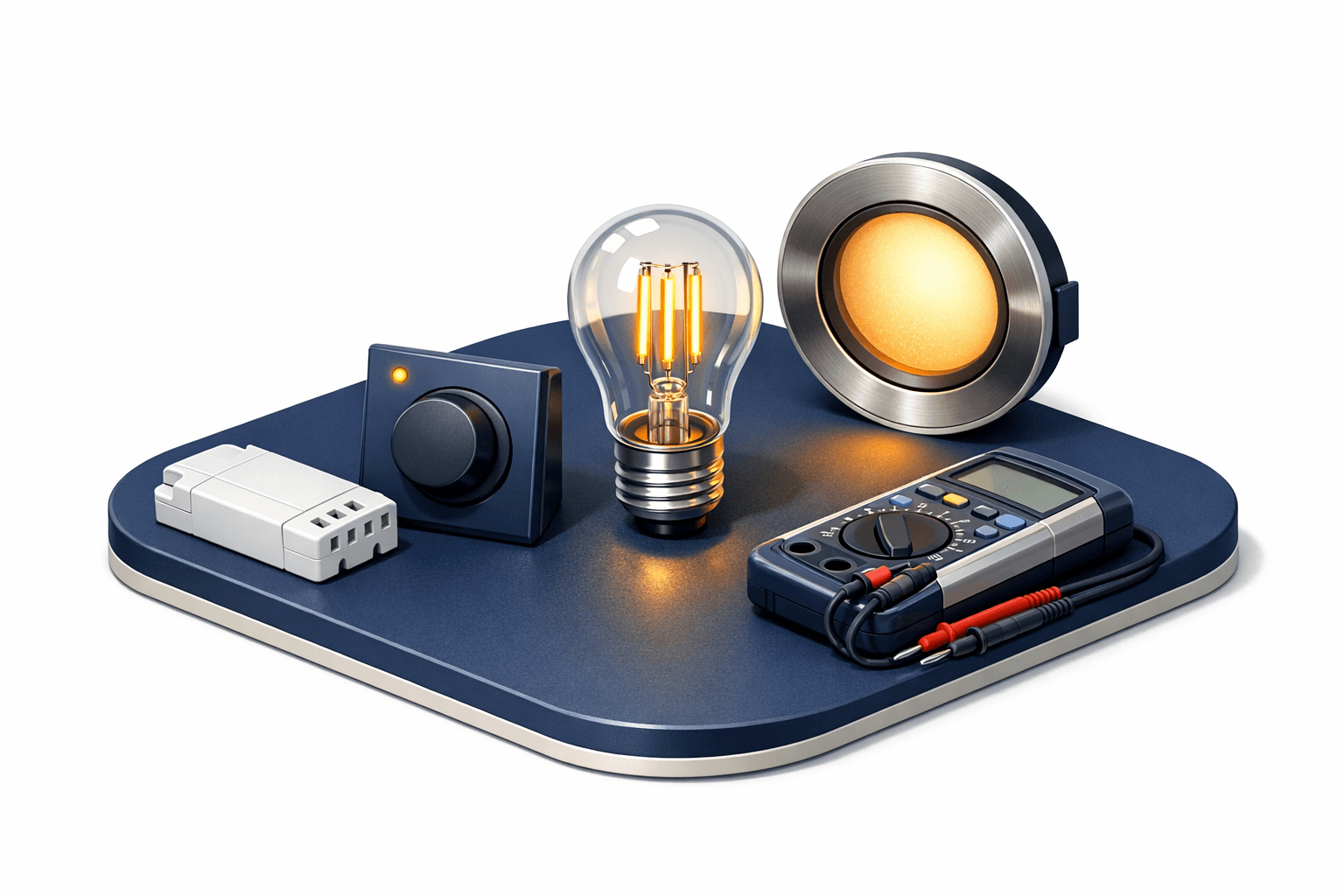
LED Light Flickering: Why do LED Lights Flicker? Diagnostic Quiz + Fix Guide
That LED flickering after you've switched it off isn't a fault in the bulb — it's leakage current quietly charging the capacitor until the LED fires, discharges, and does it all again.
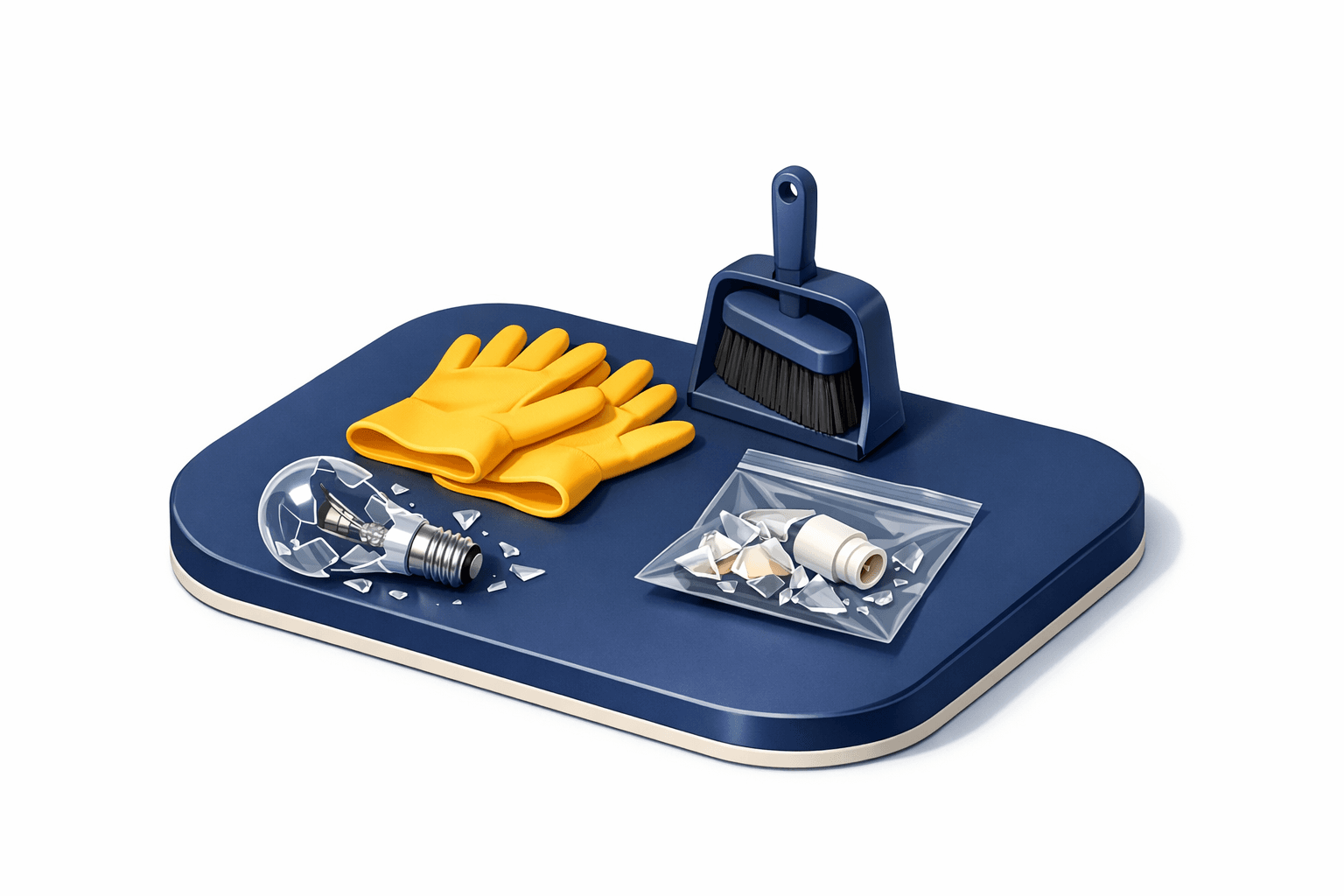
Are Broken LED Light Bulbs Dangerous?
CFLs needed mercury vapor to work — LEDs don't, and that single difference makes a broken LED about as hazardous as broken glassware. The real cleanup concern is the shards, not what's inside.