Can I Use LED Bulb In Wax Warmers?
LEDs actually run hot — they just send that heat out the base, away from the wax dish. That's the exact opposite of what a warmer needs.
 Eugen
EugenEugen Nikolajev
Creator of LED Lighting Info
Hi, I am Eugen. I was always one of those kids who had all sorts of weird lighting gadgets for every occasion.
Now, I want to share my knowledge and experience about lighting with you on LED Lighting Info.
Read my editorial standards
Key Takeaways
LED bulbs aren't suitable for bulb-style wax warmers. They don't radiate enough heat downward onto the wax dish to melt the wax. Wax warmers are designed around incandescent (or halogen) bulbs, which throw most of their energy out as infrared heat — exactly what an LED is engineered to avoid.
Wax warmers rely on a specific bulb's heat output to melt scented wax safely — and using the wrong bulb type can leave the wax stone-cold or, at the other extreme, create a fire hazard. So can a modern, energy-efficient LED bulb do the job?
In this article, I'll explain:
- Why LED bulbs can't melt wax (and the physics most articles get wrong)
- Which bulb types and bases actually work in a wax warmer
- How to pick the right wattage — and what to do if your warmer has no rating label
- When the article doesn't apply: plate-style and built-in LED warmers
Why LED Bulbs Aren't Suitable For Wax Warmers
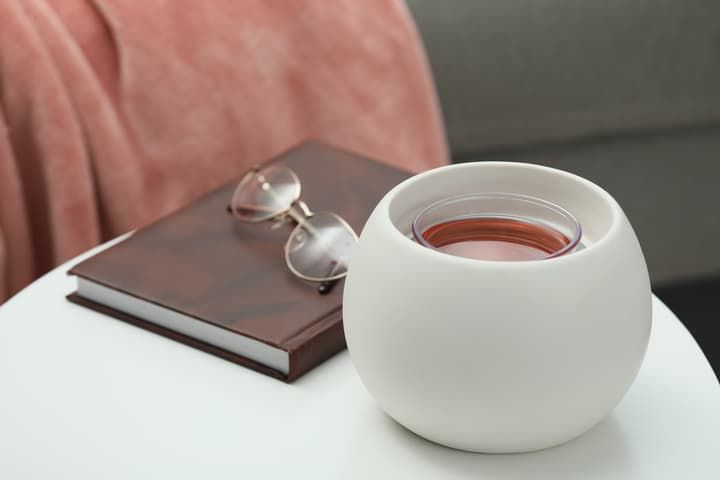
It's tempting to assume LEDs simply "run cool" while incandescents "run hot." That's not quite right, and the difference matters here.
LEDs actually convert a large share of their input energy to heat too — roughly 65–80% of the wattage at the wall ends up as heat, not light. The critical difference is where that heat goes. Incandescent and halogen bulbs radiate most of their heat as infrared light out of the bulb — straight onto whatever sits above (the wax dish). LEDs do the opposite: they conduct heat away from the emitter through a metal heatsink at the base of the bulb, so almost no heat reaches the dish above.
On top of that, a 6W LED is replacing a 35W incandescent in terms of light output, not heat output. It draws roughly a sixth of the power, so the absolute amount of heat available is far smaller — and the little it does produce is being shunted out the wrong end of the bulb. The wax dish ends up barely warm.
An LED capable of melting wax through brute force would need to be so powerful that it'd be unsafe inside a small enclosed warmer.
Which Bulbs Are Best For Wax Warmers
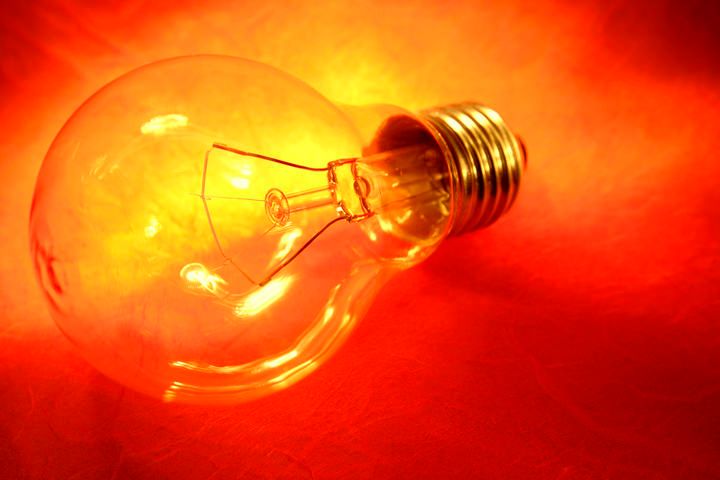
Stick with incandescent or halogen — both throw infrared heat forward, which is exactly what the wax dish needs. Here's how the four common bulb types compare:
| Bulb Type | Typical Wattage | Heat Radiated to Wax | Suitable for Wax Warmer? |
|---|---|---|---|
| Incandescent | 25–40W | High (infrared) | Yes |
| Halogen | 25–35W | High (infrared) | Yes |
| LED | 6–8W | Very low (heat goes out the base) | No |
| CFL | 8–15W | Low and diffuse | No |
A note on the efficiency claim you'll see repeated online: halogens are sometimes called "more efficient" than standard incandescents, and that's true — but only in terms of light per watt. A halogen produces roughly 20 lumens/watt vs. 15 for a standard incandescent. Total energy consumption and total heat output per watt are essentially the same. So switching from a 25W incandescent to a 25W halogen won't save energy or change the heat reaching the dish in any meaningful way.
Equally important — and often missed — is the bulb's base size. Most plug-in wax warmers use an E12 candelabra base, not the standard E26 household size. Buying a 25W incandescent in the wrong base is the most common mistake I see — check the existing bulb (or the warmer's manual) before ordering.
Bulb shape matters too. Wax warmers usually take small G-series globe bulbs (like G16.5) or C7 torpedo bulbs that fit inside the cavity beneath the dish. A bulb that's the right wattage and base but the wrong shape may not physically fit.
What Wattage Bulb Is Required?
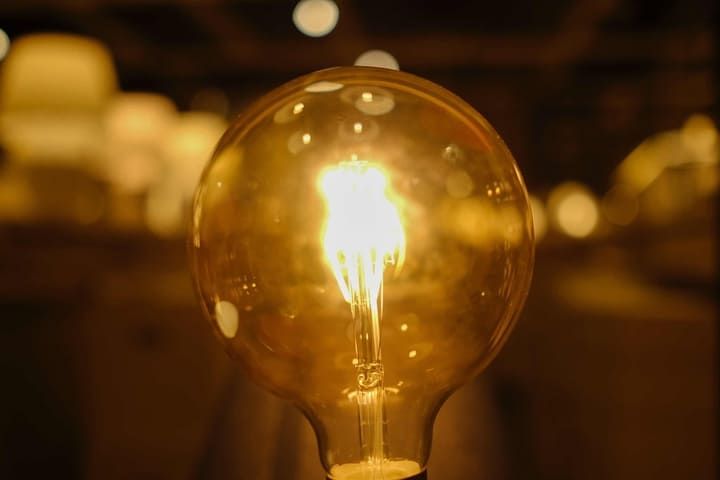
Match the wattage your warmer is rated for — don't try to substitute one bulb type for another at a different wattage. Here's the procedure:
- Find the wattage rating printed on the warmer (usually on the underside or on a label inside the bulb cavity).
- Buy a bulb of that exact wattage. If the rating is 25W, use 25W; if it's 35W, use 35W.
- Pick incandescent or halogen — both work. A 25W halogen produces roughly the same heat as a 25W incandescent, so don't downgrade wattage when switching bulb type.
- Confirm the base (usually E12) and shape match what currently fits in the warmer.
- Never exceed the rated wattage. Over-wattage bulbs can scorch the wax, damage the warmer's housing, and pose a fire risk.
If Your Warmer Has No Rating Label
Many cheap or unbranded warmers ship without documentation. As a safe default, use a 25W incandescent or halogen for small tealight-sized warmers and 40W for larger dish-style warmers — and never go higher without confirmation from the manufacturer.
How Hot Do Wax Warmer Bulbs Get?
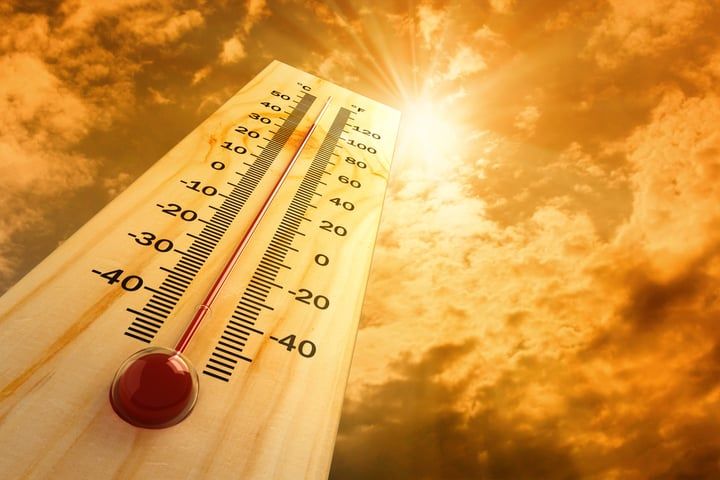
Different waxes melt at different temperatures, which is why most warmer manufacturers recommend matching their wax with their hardware. Typical figures:
- Soft scented wax melts: ~110–130°F (43–54°C) melt point
- Soy wax: ~113–127°F (45–53°C)
- Paraffin: ~99–145°F (37–63°C), depending on grade
- Scentsy's recommended dish temperature: ~126°F (52°C)
A 25W incandescent in a typical warmer reaches roughly 130°F at the dish — slightly above the wax melt point, so the wax pools without scorching. (Most full-size Scentsy warmers are rated for 25W bulbs, not 35W.)
Is It Safe To Touch?
As a rough burn-risk guide, surfaces around 140°F (60°C) can be touched briefly — about five seconds — without an irreversible burn, per ASTM C1055. Longer contact will still burn skin, and consumer-product safety standards (like IEC 60335) often use stricter thresholds depending on material and contact duration. Don't treat 140°F as a blanket "safe" rating — a first-degree burn is still a painful injury.
The practical takeaway: a wax warmer dish will be hot enough to hurt if a child or pet grabs it for any length of time, but it isn't the inferno of an open flame. Place warmers out of easy reach and leave them on a heat-tolerant surface.
Don't Touch The Bulb (Especially Halogens)
Avoid handling the glass envelope of a halogen bulb with bare fingers. Halogen quartz envelopes run extremely hot, and the sodium and oils in skin chemically attack the quartz at those temperatures, creating weak spots that can cause the bulb to shatter in service. Use a cloth or the bulb's packaging when installing one — and wipe it down with rubbing alcohol if you do touch it.
Standard incandescent envelopes use soda-lime glass and run cooler, so fingerprints aren't a real shatter risk — but it's still good practice to keep them clean.
What About Plate-Style And Built-In LED Warmers?
Everything above applies to bulb-based wax warmers — the kind with a replaceable bulb beneath the dish. There are two other common designs that work differently:
- Plate-style warmers use a built-in resistive heating element under the dish, with no bulb at all. Bulb wattage and base type are irrelevant — there's nothing to swap.
- LED-illuminated warmers pair a heating plate with a separate decorative LED for ambient glow. The LED only lights the warmer — it doesn't melt the wax. The heating element does.
If your warmer has no visible bulb cavity or socket, it's almost certainly one of these designs and this article doesn't apply — refer to the manufacturer's manual instead.
Final Words
LEDs are excellent when light is what you need — they last longer and waste a lot less electricity than incandescent or halogen bulbs. But a wax warmer doesn't really need light. It needs heat radiated downward onto the dish, and that's exactly the property LEDs are engineered to suppress. For a bulb-based warmer, stick with the original incandescent or its halogen equivalent at the rated wattage and the right base size.
FAQ
Can I use an LED bulb in a wax warmer to melt the wax?
No. LEDs conduct most of their heat away through a heatsink at the base of the bulb rather than radiating it forward as infrared, so very little heat reaches the wax dish above. Even a high-wattage LED won't reliably melt wax in a standard bulb-style warmer.
Can I use a halogen bulb instead of incandescent?
Yes — at the same wattage. A 25W halogen produces roughly the same heat as a 25W incandescent (halogens are more efficient in lumens per watt, not in heat), so don't downgrade the wattage when swapping bulb types.
What base size do wax warmer bulbs use?
Most plug-in wax warmers use an E12 candelabra base, not the standard E26 household size. Check the existing bulb or the warmer's manual before buying a replacement.
What if my wax warmer doesn't have a wattage label?
Default to 25W incandescent or halogen for small tealight-sized warmers and 40W for larger dish-style warmers. Never exceed those without confirmation from the manufacturer — over-wattage bulbs can scorch wax and damage the housing.
My warmer doesn't have a bulb at all — what is it?
It's a plate-style warmer with a built-in resistive heating element, sometimes paired with a decorative LED for ambient glow. The LED doesn't melt the wax — the plate does. Bulb-related advice doesn't apply; follow the manufacturer's manual.