What Is Light Output Ratio?
A 1,500-lumen bulb sitting in a fixture with 60% LOR delivers closer to 900 lumens into the room — not a wiring fault, just light the housing never lets out.
 Eugen
EugenEugen Nikolajev
Creator of LED Lighting Info
Hi, I am Eugen. I was always one of those kids who had all sorts of weird lighting gadgets for every occasion.
Now, I want to share my knowledge and experience about lighting with you on LED Lighting Info.
Read my editorial standards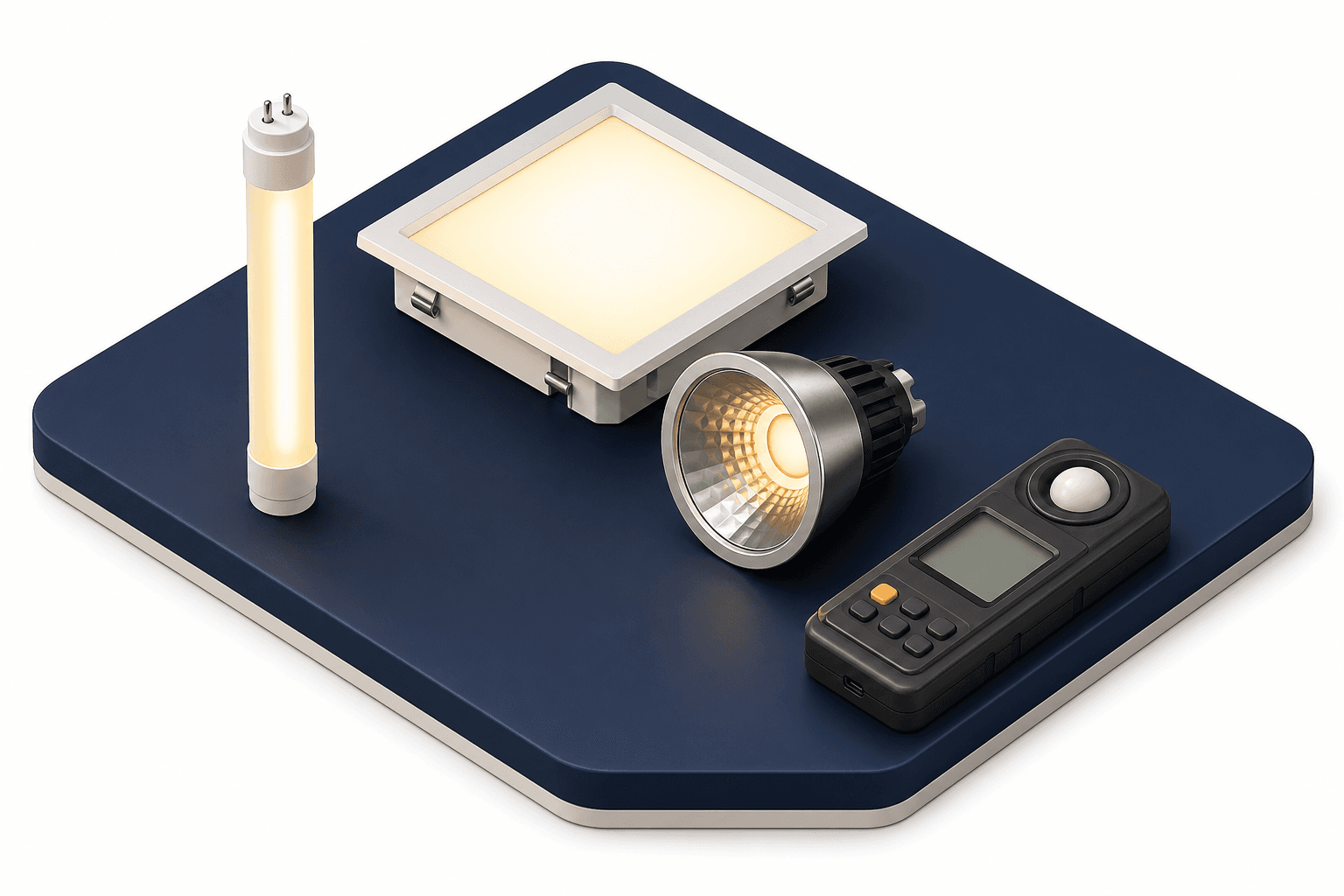
Key Takeaways
Light output ratio (LOR) measures how much of a lamp's light actually leaves the fixture around it. It is expressed as a percentage, divide the luminous flux out of the luminaire by the luminous flux of the bare lamp, then multiply by 100.
A fixture with an LOR of 80% delivers 80% of its bulb's rated lumens; the rest is absorbed by reflectors, diffusers, and housings.
What Is Light Output Ratio?
Light Output Ratio, or LOR, is the ratio of the luminous flux a luminaire emits to the luminous flux its lamps would produce on their own. It is defined under EN 13032-2 (the German national adoption is DIN EN 13032-2), the European standard for measuring and presenting photometric data of lamps and luminaires.
For example, if a bulb is rated at 1,000 lumens and sits in a fixture with an LOR of 80%, the fixture delivers about 800 lumens into the room. The other 200 lumens are absorbed by reflectors, diffusers, or trapped inside the housing.
LOR vs Luminous Efficacy
Some consumer guides treat LOR and luminous efficacy as interchangeable. They are not. The two metrics measure different things in different units:
| Metric | What it measures | Unit |
|---|---|---|
| LOR | Optical efficiency of a fixture (light escaping the luminaire vs. light produced by the lamp) | Dimensionless percentage |
| Luminous Efficacy | How efficiently a light source converts electrical power into visible light | Lumens per watt (lm/W) |
Both can appear on the same product spec sheet, but they answer different questions. A lamp can have excellent luminous efficacy and still end up in a fixture with poor LOR — the bulb is efficient, but the housing throws away half its light.
ULOR and DLOR
LOR is often broken into two sub-metrics: ULOR (Upward Light Output Ratio — light emitted above the horizontal plane of the luminaire) and DLOR (Downward Light Output Ratio — light below it). For recessed downlights and task lighting, prioritize a high DLOR. For street and outdoor fixtures, a low ULOR also matters: it limits light pollution and helps with dark-sky compliance.
What Does LOR Tell You?
LOR tells you how economical a fixture is — how much of the lamp's light it delivers and how much it traps inside.
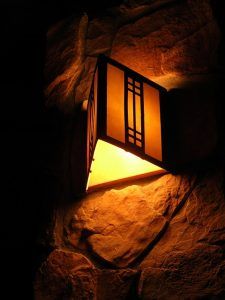
A bare bulb radiates light in nearly every direction except down through its base. That output is its rated lumens, the figure printed on the box. Drop it into a fixture with reflectors, diffusers, lenses, or a deep housing, and some of that light gets absorbed before it reaches the room.
Industry references typically cite an LOR of 80–90% as a good range for quality downlights, with 70–90% considered acceptable across luminaire types more broadly. Designers use the LOR figure to pick fixtures and fittings that look right without giving back the efficiency of the lamp inside.
Be wary of any manufacturer quoting an LOR of 100%. In practice, conventional luminaires almost never reach it — some light is always lost to reflectors, diffusers, or housings. There is one technical exception: under EN 13032-2, LED luminaires whose source cannot be physically separated from the fixture (integrated, non-replaceable LEDs) are defined as having an LOR of 1, because lamp and luminaire are measured as a single unit. That is a measurement convention, not a real-world claim of zero loss.
Why Is LOR An Important Measure?
A lighting setup is only as efficient as its weakest link. Bulbs sitting in a low-LOR fixture lose a meaningful chunk of their rated brightness before any light reaches the room.
Suppose research suggested 1,500 lumens for a living room. The obvious move is to buy bulbs rated at 1,500 lumens and call it done. But if the recessed fixtures have an LOR of 60%, you are getting closer to 900 lumens delivered — and the room ends up dimmer than expected, with no obvious cause.
Knowing the fixture's LOR lets you size the bulbs correctly: pick higher-output lamps to compensate, choose a more efficient fixture, or both. The brightness of your bulbs on the spec sheet is only the starting point — what the room actually receives depends on the housing around them.
How to Calculate Light Output Ratio
The formula is straightforward:
LOR (%) = (Luminaire Lumen Output ÷ Bare Lamp Lumen Output) × 100
If the spec sheet doesn't list LOR, or you suspect a manufacturer's figure, the basic process is:
- Look up the rated lumens of the bare lamp (printed on the bulb packaging or spec sheet).
- Measure the actual light output of the assembled fixture.
- Divide fixture lumens by bare-lamp lumens.
- Multiply by 100 to express the result as a percentage.
Step 2 is where it gets tricky for DIY measurement. A lux meter measures illuminance — lux at a single point on a surface — not total lumens. A rough estimate is possible by taking lux readings across a defined grid and integrating them with the room geometry, but that is an approximation.
Accurate luminaire output measurement requires a photometric lab: an integrating sphere or a goniophotometer, following standards such as IES LM-79 (for LED products) or EN 13032-1. That is how manufacturers and certifying bodies actually report LOR.
LOR for Outdoor and Commercial Fixtures
For exterior and commercial lighting, LOR connects directly to dark-sky compliance and BUG ratings (Backlight, Uplight, Glare — published by the IES). High ULOR is a red flag for outdoor fixtures: it means light is spilling skyward as wasted energy and light pollution. If you are specifying parking-lot, street, or facade lighting in an area with dark-sky ordinances, LOR and ULOR are both worth checking against the local rules.
Where to Find LOR — and What to Do If It Isn't Listed
LOR usually appears in the photometric data section of a fixture's spec sheet, alongside polar diagrams, candela tables, and total luminaire lumens. Look for "LOR," "Light Output Ratio," "Luminaire Efficiency," or in some catalogs, "Fixture Efficiency."
If LOR isn't listed:
- Ask the manufacturer for the photometric report — an .ies or .ldt file usually contains it.
- Look up an independent photometric test through trade catalogs or specifier databases.
- As a rule of thumb: recessed downlights with diffusers tend to land in the 70–80% range, open pendants and bare-trim fixtures often clear 85–90%, and heavily louvered or decorative fixtures can fall well below 60%.
Final Words
LOR is the bridge between the lumens printed on a bulb box and the light that actually reaches the room. Check it before you pair high-lumen bulbs with deep, diffused fixtures — and treat any 100% claim with suspicion. For most homes, sticking to fixtures in the 80–90% range gets you most of the benefit without chasing edge cases.
FAQ
What is a good LOR for a residential downlight?
Industry references put quality downlights in the 80–90% range. 70% is acceptable; below 60% is poor and worth replacing if energy efficiency matters to you.
Why do some LED fixtures show an LOR of 100%?
For LED luminaires with integrated, non-replaceable light sources, EN 13032-2 defines the lamp output as the luminaire output — so LOR is formally 1. It is a measurement convention because the lamp and fixture cannot be tested separately, not a real claim of zero loss.
Is LOR the same as luminous efficacy?
No. LOR is a dimensionless percentage describing how much of a lamp's light escapes the fixture around it. Luminous efficacy is measured in lumens per watt and describes how efficiently a source converts electricity into visible light. Both can appear on the same spec sheet.
Can I measure LOR myself with a lux meter?
Only roughly. A lux meter measures illuminance at a single point, not total luminaire lumens. Accurate measurement needs an integrating sphere or goniophotometer in a photometric lab, following standards like IES LM-79 or EN 13032-1.
What is the difference between ULOR and DLOR?
ULOR is the share of light emitted above the horizontal plane of the luminaire; DLOR is the share emitted below it. For downlights, prioritize high DLOR. For outdoor lighting, low ULOR matters for dark-sky compliance.