
Do Pool Lights Attract Bugs?
Insects spiral into pool lights because they mistake them for the moon — a hardwired navigation glitch called transverse orientation. Switching to warm-white LEDs in the 2700K–3000K range cuts that draw dramatically, since most flying insects can't even see those wavelengths.
 Eugen
EugenEugen Nikolajev
Creator of LED Lighting Info
Hi, I am Eugen. I was always one of those kids who had all sorts of weird lighting gadgets for every occasion.
Now, I want to share my knowledge and experience about lighting with you on LED Lighting Info.
Read my editorial standards
Key Takeaways
Some pool lights do attract certain insects and cause them to drown. Lights that emit UV energy (such as standard CFLs, halogens, and mercury-vapor or metal-halide fixtures) draw the most bugs, while warm-white LEDs emit almost no UV and attract far fewer. The bulb's spectrum matters more than its age or wattage.
Skim a pool in the morning and you'll often find a layer of drowned insects on the surface. The natural suspect is the lighting — but is it actually the lights pulling bugs in, or are they ending up in the water for some other reason?
Below, I cover why this happens, what to change about your lights, and what else you can do around the pool to keep insect traffic down.
Do Pool Lights Cause Insects To Drown In A Pool?
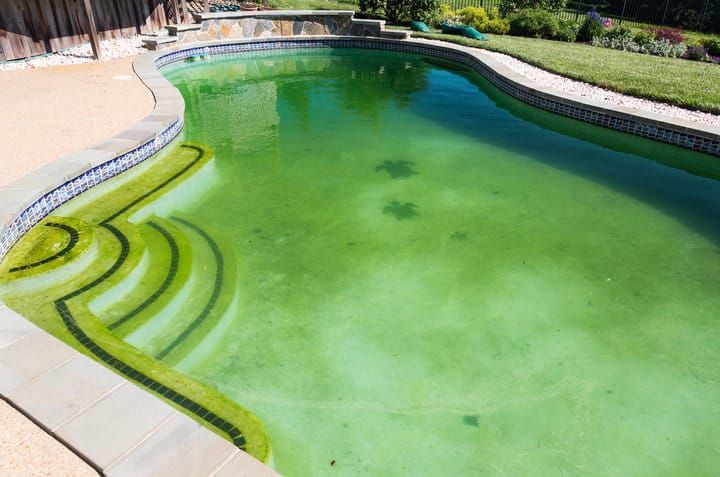
In short — yes. Pool lights can pull insects into the water, where many of them drown.
Flying insects use the moon as a compass, keeping it at a fixed angle to fly in a straight line. Entomologists call this transverse orientation. A bright artificial light close by breaks that geometry, and instead of holding a straight course, the insect ends up spiraling toward the bulb.
Once they reach the water surface, most insects can't escape — they lack either the strength or the orientation to find their way back out. They drown, then float.
Ponds rarely have the same problem because they're full of predators. The insects that hit the water there become food for fish and other pond wildlife. A chlorinated pool has no such cleanup crew, so the bugs just accumulate.
Heat is another factor for some lights, but most modern pool lights are LEDs, which produce very little heat to begin with — and the surrounding water absorbs whatever they do emit. Heat-driven attraction isn't really a concern for a properly installed underwater fixture.
Why Bug Vision Makes Some Lights Worse Than Others
Insects don't see the same range of colors humans do. Their vision peaks in the ultraviolet, blue, and green parts of the spectrum (roughly 350–530 nm), while yellow, orange, and red wavelengths are largely invisible to them. That's why warm-toned lights attract far fewer bugs than cool, blue-white ones — and why anything with measurable UV output (older CFLs, halogens, mercury-vapor lamps) is the worst offender.
Here's how the common bulb types compare:
| Light Type | UV Output | Bug Attraction | Notes |
|---|---|---|---|
| Incandescent | Low–medium | Medium | Warm tone, but generates significant heat |
| CFL (standard) | Medium–high | High | Being phased out in the EU and US markets |
| CFL (yellow / bug-light) | Low | Low | Limited availability as CFLs disappear |
| LED (cool white, 5000K+) | Very low | Medium | Blue-white tone still attracts some insects |
| LED (warm white, 2700–3000K) | Very low | Low | Best everyday choice for outdoor use |
| LED (amber / yellow bug-spec) | Very low | Very low | Strongest effect; ideal for pool perimeters |
How To Make Pool Lights Less Attractive To Bugs
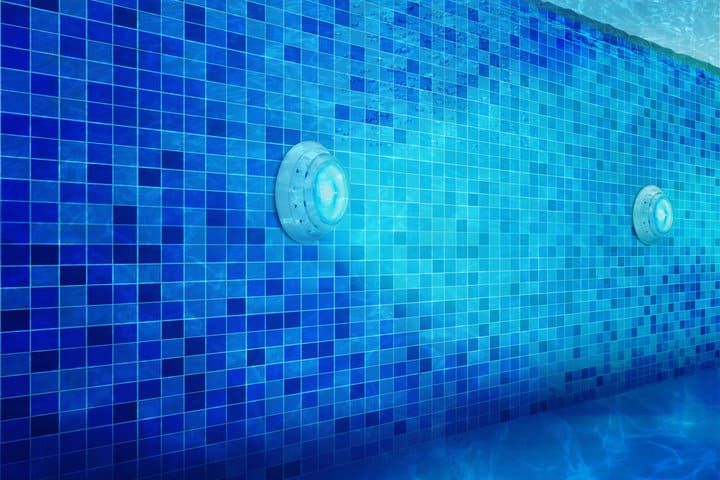
There are a handful of changes that meaningfully reduce how many insects your pool lights pull in. Work through them in roughly this order:
- Place submerged lights correctly. Submerged lights should always sit closest to where you'll be sitting, facing away from you, so the beam spreads across the pool rather than dazzling you. Note that pool light installation in the US is governed by NEC Article 680, which sets minimum depth (lens at least 18 inches below water level), wiring, bonding, and GFCI requirements — almost always a job for a licensed electrician, not a placement decision you make freely.
- Switch to warm-white LEDs. Warm-white LEDs in the 2700K–3000K range are the best everyday choice — they emit almost no blue or UV, which is what most flying insects respond to. Dedicated amber or yellow "bug-light" LEDs go even further. Avoid standard CFLs: they emit UV that bugs find attractive, and they're being phased out anyway (the EU banned single-capped CFLs in February 2023 and double-capped in August 2023, and US efficiency rules are pushing the same direction).
- Choose a longer-wavelength color. If you have a smart or color-changing pool light (Pentair, Hayward, and similar systems offer this), set it to amber, yellow, or red for evening use. Those wavelengths are the hardest for insects to see. Cool-white or blue "party" modes are the worst for bug attraction.
- Use light covers. Quarter-crescent or half-crescent covers cap the upward spill from a submerged fixture. They were originally designed to cut surface reflections, but they also reduce how much light escapes into the air to attract insects. The trade-off is reduced visibility around the pool edge, so pair them with overhead landscape lighting for safety.
- Limit how long the lights stay on. Insect activity peaks in the first few hours after dusk, then climbs again before dawn. Put your pool lights on a timer or motion sensor so they're only running when you're actually using the pool. Fewer lit hours means fewer drowned bugs, full stop.
- Add overhead light away from the water. A warm-white wall sconce or string light over the seating area pulls some attention away from the pool surface itself. Recessed fixtures are best — the more shielded the bulb, the less light leaks out to attract bugs.
How To Keep Bugs Away From Your Pool
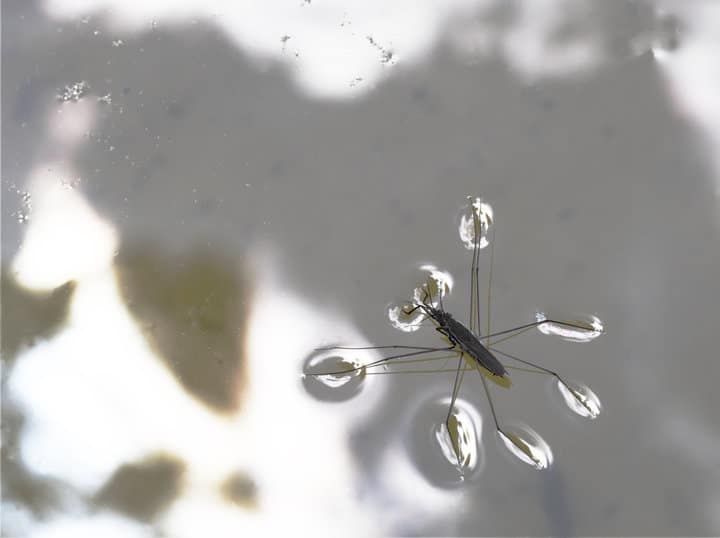
Beyond the lights themselves, there's plenty you can do around the pool to discourage insects from settling in.
Plant deterrents
Several common plants give off scents that insects — gnats and mosquitoes especially — find unpleasant. Mint, garlic, basil, and rosemary are reliable picks, and they double as a useful kitchen herb garden as long as they're not getting splashed with chlorinated water. Lavender and citronella grass are stronger options if your priority is purely repellent power. Plant a ring of them along the pool perimeter, just outside the splash zone.
Repellents and traps
Peppermint oil is a useful repellent — dab a few drops on cotton pads or in a small dish around the seating area.
Vinegar works the opposite way. It actually attracts gnats and fruit flies, so it's only useful as a trap. Pour a little apple cider vinegar into a jar with a drop of dish soap (the soap breaks the surface tension so the insects sink), cover with plastic wrap, and poke a few small holes in the top. Bugs fly in and can't get out.
Bug zappers — placement matters
A bug zapper can take care of a lot of flying insects, but it has to be placed thoughtfully. Hang it at least 15–20 feet from the pool edge, ideally on the opposite side of the yard from where you sit. Two reasons: the zapper itself becomes the brightest light around (you want the bugs flying toward it, not toward you), and dead insects fall straight down — a zapper hung over or beside the pool will rain bug carcasses into the water and undo the work the lights are doing. Mount it 6–7 feet up, away from any splash zone, and let it pull traffic away from the pool.
Final Thoughts
If I had to narrow this down to the highest-impact changes, three stand out: swap any UV-emitting bulbs for warm-white LEDs in the 2700K–3000K range (or amber if your fixture supports it), put the lights on a timer so they're not running all night, and place a bug zapper well away from the pool — not over it. Add citronella or lavender around the seating area and you've covered most of what actually moves the needle.
You won't get to zero — pools are still a draw for any flying insect that ends up in the area — but the morning skim should be a lot lighter.