
LED Pool Lights Troubleshooting Quiz: 7 Most Common Problems
A tripped GFCI on your pool circuit isn't a nuisance — it's 5 mA of leaking current telling you something is wrong. Swapping it for a standard breaker is both an NEC violation and an electrocution risk.
 Eugen
EugenEugen Nikolajev
Creator of LED Lighting Info
Hi, I am Eugen. I was always one of those kids who had all sorts of weird lighting gadgets for every occasion.
Now, I want to share my knowledge and experience about lighting with you on LED Lighting Info.
Read my editorial standards
Key Takeaways
Common LED pool light issues include leaking, tripped GFCI breakers, transformer faults, and loose wiring connections. Lights can also flash, run dim, or fall out of sync and may need a reset. Use the troubleshooting quiz to narrow down the problem exactly
LED Pool Light Diagnostic
Answer a few questions about how your pool light is failing and get the most likely cause, whether it's a DIY fix, and where to read more.
11 questions — takes about a minute
Answers are anonymous and may be used to improve content.
Here's what this guide covers:
- The seven most common LED pool light failures
- How to safely troubleshoot your pool lights
- How to reset your lights
⚠️ Safety first. Pool wiring is governed by NEC Article 680 and requires GFCI protection plus correct bonding and grounding. Before any inspection, shut off the breaker, lock it out, and verify the circuit is dead with a non-contact tester. Never enter the pool with energized lights if a leak is suspected. Never splice an underwater cable — replace it. Voltage testing inside a panel and any line-voltage repair should be done by a licensed electrician, not a homeowner.
What Are The Most Common LED Pool Light Failures?
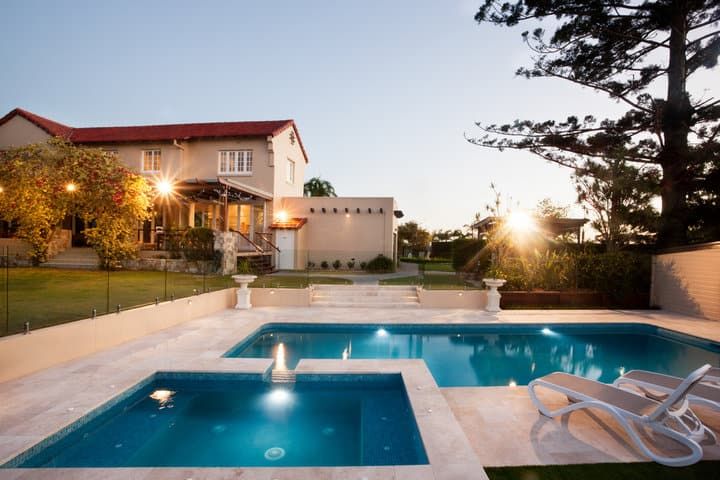
Before troubleshooting anything, identify whether your fixture is a low-voltage 12 V system (powered through a transformer) or a 120 V line-voltage fixture (wired directly to the home circuit with no transformer). Both Hayward and Pentair sell each type — the nameplate inside the niche or the installation manual will tell you which. The transformer-related steps below apply only to 12 V systems.
1. Leaking Lights
Pool lights are sealed against the water they sit in, but the gasket can only last so long — pool chemistry slowly degrades it. Once water gets inside, it can trip the GFCI, cause flashing, or leave the light dead. It is also a real shock risk in a pool full of swimmers.
To fix it, shut off the breaker first. Remove the fixture from the niche (one face screw on most Hayward and Pentair models), pull the cord up to deck level, then drain and dry the assembly. Replace the gasket — the waterproof seal — and reinstall, watching for any new leaks once power is restored.
If the cord shows damaged insulation or any exposed conductor, do not splice it — replace the entire fixture. NEC Article 680 does not allow underwater splices, and a homemade repair will fail again next season.
2. Tripped GFCI Breakers
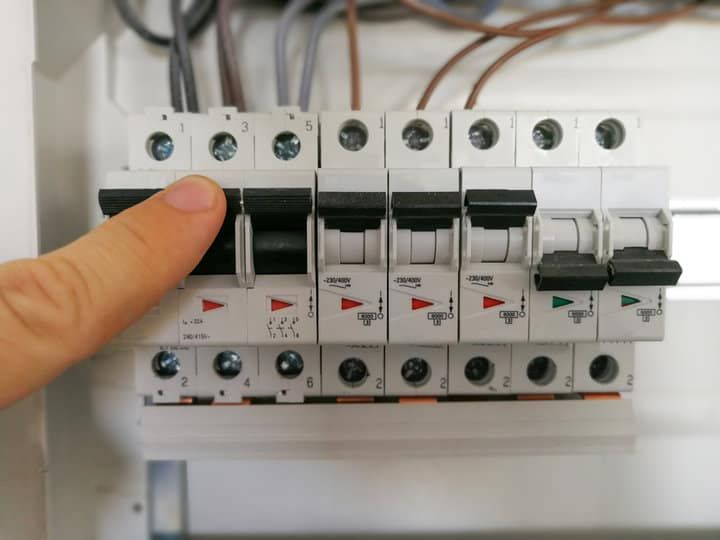
Pool light circuits must be GFCI-protected under NEC Article 680. A GFCI breaker trips when it detects roughly 5 mA of current leaking to ground — that is the device doing its job, signaling a ground fault somewhere in the circuit or fixture. A standard breaker, by contrast, trips on overcurrent (too much amperage), not on a small mA difference. A tripped GFCI almost always means something is wrong, not that the breaker itself is bad.
Common causes of a GFCI trip on a pool circuit:
- Water has gotten into the fixture and is leaking current through the pool water to ground
- An underwater cable is damaged or pinched
- A connection in the niche or junction box has gone wet
- The GFCI itself has failed (rare)
To diagnose, press the Test button on the GFCI to confirm it trips, then reset it. Disconnect the light at the junction box or transformer and reset the breaker. If it holds with the light disconnected, the fault is in the fixture or its cable. If it still trips with the light disconnected, the fault is upstream — call a licensed electrician.
Never replace a GFCI breaker with a standard one to stop nuisance tripping. That is both an NEC violation and an electrocution risk.
3. Transformer Problems
On 12 V systems, the transformer steps the 120 V house voltage down to the 12–14 V the fixtures need. Multi-tap transformers commonly offer 12 V, 13 V, and 14 V outputs to compensate for voltage drop on long cable runs.
A failing transformer can leave the lights dead, dim, or flickering. Test for 120 V at the input and 12–14 V at the output (see the troubleshooting table below). If you measure proper voltage in but no voltage out, the transformer is finished — they are not field-repairable, so replacement is the fix.
4. Bad Bulb
If a single fixture stays dark while the rest work, the LED itself has likely failed. Quality LED pool lights are rated for 30,000 to 50,000 hours (per the U.S. Department of Energy and manufacturer specs from Hayward and Pentair), but cheaper fixtures can give out far sooner.
LED pool fixtures are not user-serviceable at the diode level — replacement is the fix. On most niche-mounted fixtures the entire lamp assembly comes out by removing one face screw and pulling the cord up to deck level.
5. Color Sync and Color Reset Problems

Multi-color LED pool lights can fall out of sync — when switched on, they may not all show the same color — or get stuck on one color and refuse to change. Both behaviors usually trace to firmware state rather than a hardware fault.
A manufacturer reset (procedure below) clears most of these. The exception is when a single bulb will not change color, dims mid-cycle, or shuts off when changing colors — that points to a failed bulb that needs replacement, not a reset.
6. Lights Flashing
If your pool lights are flashing or flickering, the usual suspects are loose wiring, voltage drop, water in the fixture, or a failing transformer.
Start by visually inspecting the junction box and transformer for loose wires or corrosion. To rule out voltage drop, disconnect all the lights and bring them back online one at a time — if each works fine alone but they flicker once several are powered together, voltage drop is the most likely cause.
If the lights work individually but fail on a shared circuit, splitting them across two circuits is usually the cleanest fix.
7. Dim Lights and Voltage Drop
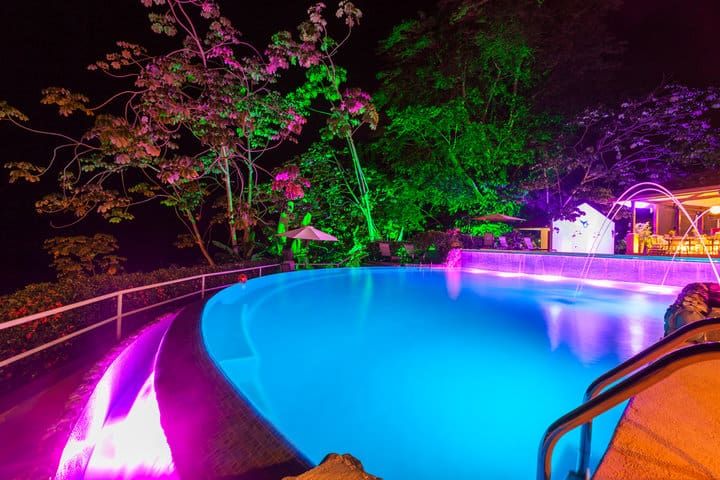
If your lights run dimmer than they should — or only dim when several are switched on — voltage drop is the likely culprit. Long cable runs and undersized wire both reduce the voltage that actually reaches the fixture.
Aim to keep voltage drop under 5%, so a 12 V fixture should see at least about 10.5 V at the lamp. For runs longer than roughly 100 ft from the transformer, step up to 12 AWG or heavier wire. Many transformers also offer 13 V or 14 V multi-taps that compensate for drop on long runs without rewiring.
How To Troubleshoot LED Pool Lights
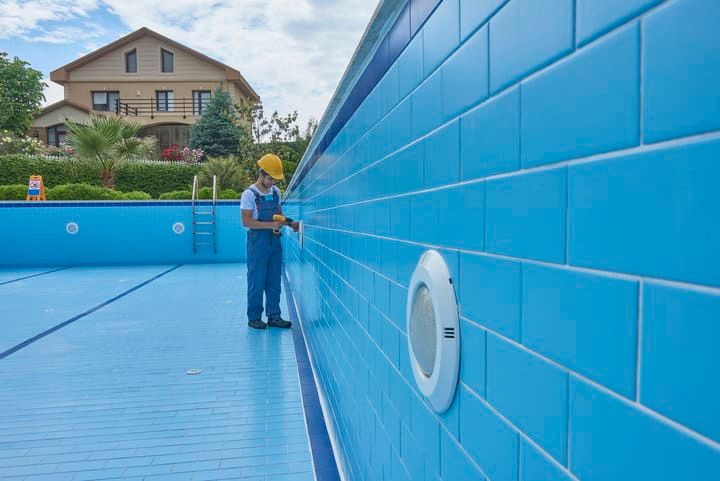
Some failures show themselves visually — water inside a fixture, corrosion at a connection, a melted lug at the transformer. Start every diagnosis with a careful look at the deck-side junction box (the sealed enclosure where the underwater cable from the niche meets the supply wiring) and at the transformer.
For everything else, you will need a multimeter. Cut power at the breaker before opening any enclosure, and verify the circuit is dead with a non-contact tester before touching any conductor. The table below summarizes the key checks:
| What to Test | Expected Reading | If It Fails |
|---|---|---|
| Voltage into transformer | ~120 V | Wiring or breaker fault — call an electrician |
| Voltage out of transformer | 12–14 V | Replace the transformer |
| GFCI Test/Reset button | Trips on Test, holds on Reset | Replace the GFCI; persistent trip indicates a ground fault in the circuit |
| Continuity at the junction box | Continuity present | Faulty light or cable |
If the readings point to wiring problems at the breaker or panel — or to anything that requires opening live service equipment — stop and call a licensed electrician. Service-equipment work needs the training and PPE for safe energized inspection, and pool circuits in particular fall under stricter NEC rules than ordinary lighting.
How Do I Reset My LED Pool Light?
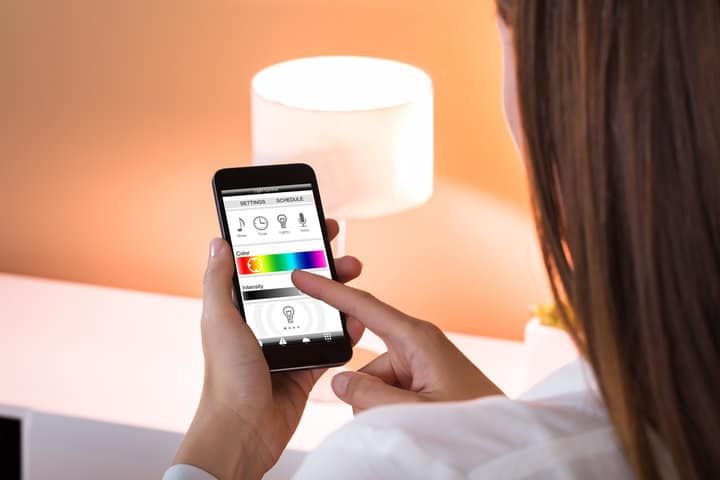
Resetting your LED pool lights varies by manufacturer — always check your model's manual first.
For Hayward lights the procedure is strict and timing-sensitive. Misorder a step or miss the window and you start over:
- Remove the batteries from the remote so it cannot interfere.
- At the control panel, manually turn the lights OFF for 2 minutes, then back on.
- With the lights on, turn them OFF for exactly 11–13 seconds, then back on.
- Repeat step 3 two more times to identify the current color mode.
- Repeat once more to reset the color mode.
- Turn the lights OFF for 2 minutes to save the setting.
Other manufacturers use different sequences, so check the instructions for your specific lights.
Resetting lights can solve many issues, including out-of-sync colors and flashing.
For sync issues or color that won't change, a reset is usually a permanent fix. For flashing, a reset is often only temporary — if the flicker returns, dig into the transformer or look for loose wiring.
Final Words
In my experience, most pool light problems are localized to a worn gasket, a wet connection, or a single failed fixture — all things you can spot and address yourself with the breaker off and a methodical approach. Save the electrician call for upstream faults: persistent GFCI trips with the light disconnected, panel-side wiring problems, or any sign of damage to the bonding network.
Always check your manufacturer's manual for model-specific guidance — Hayward, for instance, publishes a troubleshooting guide for its UCL line. And if you keep running into premature burn-out specifically, that is its own diagnostic path worth a separate look.