
Why Do LED Pool Lights Burn Out?
A burnt-out LED pool light usually isn't a dead LED — it's a failed driver or struggling transformer that kills the fixture first. Fix the underlying fault and a replacement should run 15–25 years.
 Eugen
EugenEugen Nikolajev
Creator of LED Lighting Info
Hi, I am Eugen. I was always one of those kids who had all sorts of weird lighting gadgets for every occasion.
Now, I want to share my knowledge and experience about lighting with you on LED Lighting Info.
Read my editorial standards
Key Takeaways
LED pool lights typically last 15 years or more, so age alone is rarely the cause of recent failures. The more likely culprits are bad wire contacts causing arcing, a faulty transformer, a failed LED driver, or — for fixtures that have been run uncovered — heat damage from operating out of water.
LED pool lights are built to last well over a decade — so if yours keep blowing out, something is wrong.
Below, I'll walk through the common causes, how long pool LEDs should actually last, and how to swap a failed fixture without draining the pool.
- Reasons LED pool lights blow out
- How long LED pool lights should last
- Whether you need to drain the pool to change them
Why Does My LED Pool Light Keep Blowing Out?
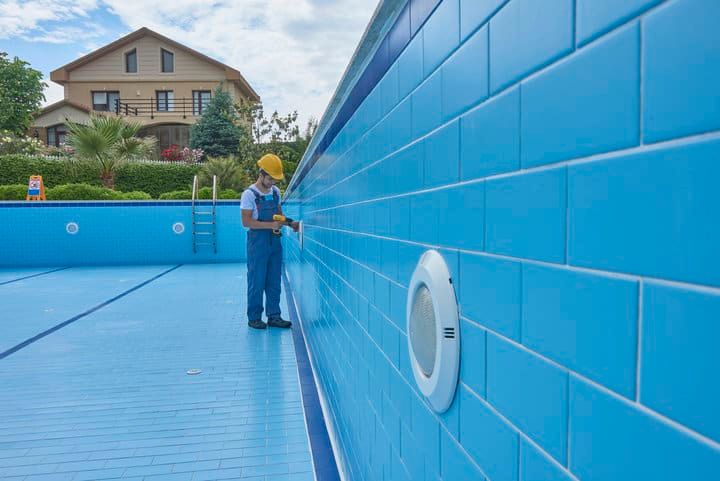
Before troubleshooting, make sure the fixture itself is a quality unit. If you ordered a cheap import, check that it's UL-listed (or ETL-listed) for use in swimming pools — that's the certification mark confirming it meets U.S. safety standards for wet locations. You don't want an uncertified electrical device sitting in water.
Assuming the light is from a reputable brand, a burnt-out LED almost always points to one of the following. There are also broader troubleshooting steps worth checking, but these five causes cover the vast majority of failures.
- Poor wire contacts and arcing — if the fixture isn't wired securely, the contacts can sit slightly apart and electricity arcs across the gap. That spikes the current and kills the LEDs quickly. This usually shows up as a single fixture failing repeatedly after replacement.
- Faulty or mismatched transformer — if every light on the circuit blows, the transformer is the prime suspect. Its job is to step the voltage down from the mains to the low voltage (typically 12V) used by many pool lights. A failing transformer can deliver too high a voltage and burn out fixtures one after another. Note that some modern LED pool lights run on 120V directly and don't use a transformer at all — check your fixture's specs before troubleshooting.
- LED driver failure — the integrated driver inside the fixture often fails before the LEDs themselves, especially in temperature-stressed environments. If the LEDs flicker, dim, or won't turn on while the rest of the circuit is healthy, the driver is the likely culprit. This typically means replacing the entire fixture rather than the transformer.
- GFCI tripping or fault — NEC Article 680 mandates GFCI protection for pool lighting circuits. A faulty or repeatedly tripping GFCI can make a perfectly good fixture appear to be "blown out." Before replacing anything, reset the GFCI and check whether it holds. If it trips again immediately, there's a ground fault somewhere in the circuit that needs investigating.
- Operating out of water — LED pool lights rely on the surrounding water as a heat sink. Run one out of the water for even a short time and it can overheat and fail. If your pool level has dropped and the fixture is sitting exposed, top up the water and keep the lights off until they're fully submerged.
- End of service life — modern LED pool lights are rated for 30,000–50,000 hours, which translates to 15–25+ years of typical evening use. If your fixtures are pushing that age, age alone may be the answer.
Safety note: transformer replacement, GFCI faults, and any wiring inspection near water should be handled by a licensed electrician. The combination of mains voltage and a wet location is unforgiving, and pool circuits are subject to specific NEC requirements that aren't worth guessing at.
How Long Do LED Lights Last In A Pool?

The typical LED pool light is rated around 30,000 hours, with many modern fixtures pushing 50,000 hours or more. At five hours of nightly use that's 6,000 to 10,000 days — roughly 16 to 27 years of service. The upfront cost is higher than older halogen or incandescent pool fixtures, but the lifespan and energy savings make it back several times over.
Bear in mind that LED pool lights have existed since the mid-to-late 2000s — Pentair launched its first LED IntelliBrite fixture in 2007. If you've moved into a home with a pool and the previous owner was an early adopter, those fixtures could now be approaching the end of their rated life, and a straightforward burn-out from age is plausible.
Can Pool Lights Be Changed Without Draining The Water?
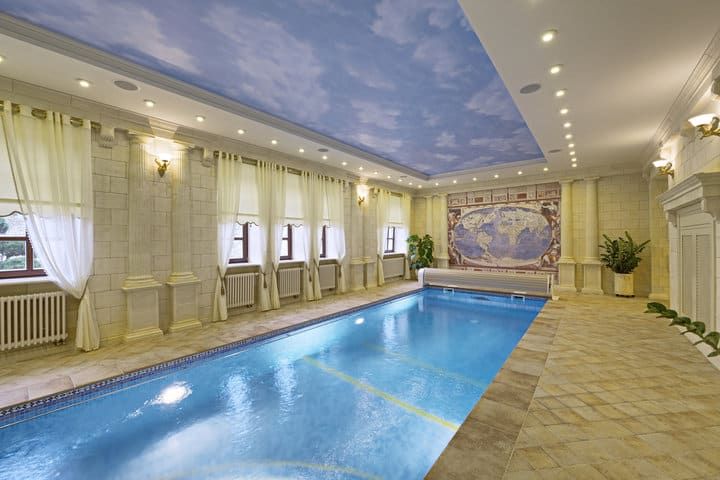
Replacing a blown-out fixture should be a priority — pool lights are a real safety feature for spotting the edge of the water at night. The good news: you don't need to drain the pool, and you don't need to work underwater either. Pool fixtures are designed so the light can be brought up out of the water and serviced poolside, and the National Electrical Code actually requires it.
Key NEC Rules for Pool Lights
- Minimum depth (NEC 680.23(A)(5)): the top of the luminaire lens must be installed at least 18 inches below the normal water level. A 4-inch shallower depth is allowed only for fixtures specifically listed for that purpose.
- Service cord length: the cord behind the fixture must be long enough that the light can be lifted out of the niche and onto the pool deck without disconnecting it, so repairs can be carried out above water.
- GFCI protection: all pool lighting circuits must be protected by a ground-fault circuit interrupter (NEC Article 680).
To swap the fixture, switch off power at the breaker, remove the screw holding the light in its niche, and lift the fixture out onto the deck using the slack cord. Disconnect the old light from the wiring, connect the replacement, and seat it back into the niche. Only restore power once the fixture is fully reinstalled and submerged.
The wiring itself is straightforward, but you can only confirm the connection is correct once the light is back in the water — that's a quirk of the job. If you're not comfortable working with mains-adjacent wiring near a pool, hand the swap to a licensed electrician.
Final Thoughts
LED pool lights don't last forever, but with a 15-to-25-year service life they shouldn't be failing on you every season either. In my experience, repeat burn-outs almost always trace back to bad contacts, a struggling transformer, or a failed driver — not the LEDs themselves. Sort out the underlying fault and the replacement fixture will run for many years before you need to think about it again.