
How Do UV Pond Lights Work?
That UV pond light marketed for water clarity might be doing absolutely nothing — only UV-C near 254 nm damages algae DNA; UV-A and UV-B won't clear green water at all.
 Eugen
EugenEugen Nikolajev
Creator of LED Lighting Info
Hi, I am Eugen. I was always one of those kids who had all sorts of weird lighting gadgets for every occasion.
Now, I want to share my knowledge and experience about lighting with you on LED Lighting Info.
Read my editorial standards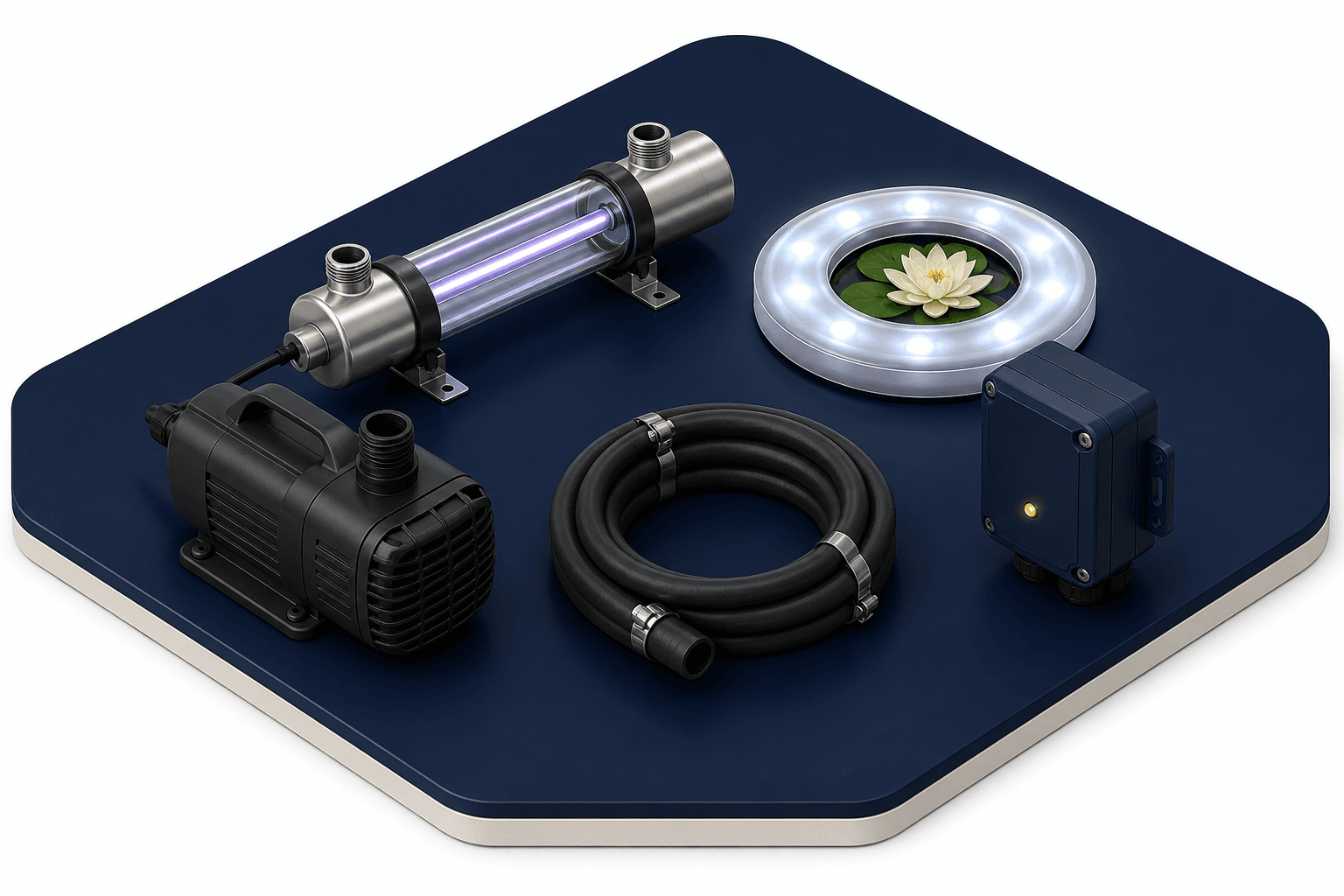
Key Takeaways
UV pond lights damage the DNA of single-cell algae that cause water to turn green and murky, so your filter can remove the clumped cells. They are not a filter themselves and do not kill string algae, but they pair well with a mechanical/biological filter.
If your pond has turned green and you can no longer see your fish, the culprit is almost certainly single-cell algae suspended in the water column. A UV pond clarifier is the most reliable tool for dealing with it.
To explain whether it's worth buying a UV pond light, let's take a look at:
- The purpose of UV pond lights
- How long they take to clear a pond
- How long UV pond lights last
- Whether UV light is good for Koi ponds
What Is The Purpose Of UV Pond Light?
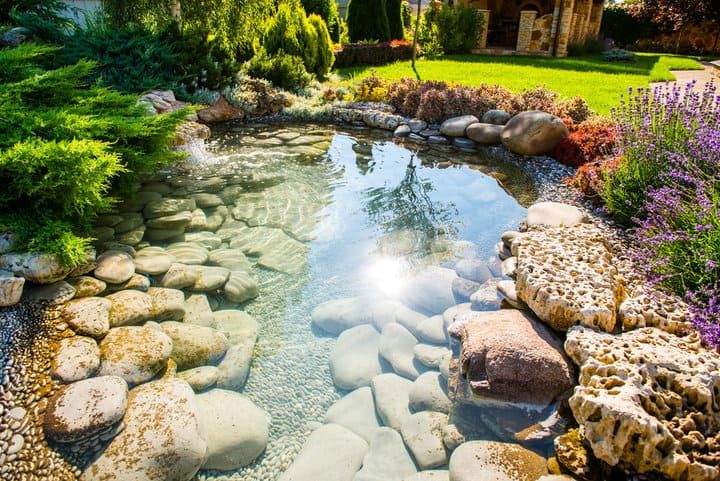
A UV pond clarifier emits UV-C light at around 254 nm. When pond water passes through the unit, this UV-C damages the DNA and RNA of single-cell algae, preventing them from reproducing. The damaged cells then clump together and get trapped by your pond's mechanical filter downstream — that's what actually clears the water.
Because UV pond lights only treat water as it passes by, the pond water has to be moving. A pump pushes water through the UV chamber, and a filter catches the clumped algae afterward. UV alone, with no filter, won't clear a pond.
UV-C vs UV-A and UV-B
Not all UV lights clarify water. UV-C at around 254 nm is the germicidal wavelength that damages algae and microorganisms. UV-A and UV-B lights — sometimes sold as decorative pond lights or insect attractors — do not clarify water. Before buying, check the spec sheet for "UV-C" or a wavelength near 254 nm; if it isn't there, the unit won't clear your pond.
Is It A Filter?
A UV clarifier on its own isn't a filter — it doesn't physically remove anything from the water. Many products sold as "UV pond filters" are combination units that pair a UV clarifier with a separate mechanical and biological filter section. Those are legitimate combo systems; just be aware that the UV part is the clarifier and the filter section is what actually traps the clumped algae.
Why UV Doesn't Help With String Algae
UV clarifiers don't touch string algae (also called blanketweed). It clings to rocks, plants, and pond walls and never passes through the UV chamber, so the light can't reach it. For string algae, the right tools are manual removal, barley straw extract, or a targeted algaecide — not a UV unit.
One more thing worth flagging: don't confuse clear water with clean water. A clear pond looks like good quality water, but acidity, ammonia, nitrite, and oxygen levels matter much more for fish health, and a UV clarifier doesn't address any of them.
How Long Does It Take For A UV Light To Clear A Pond?
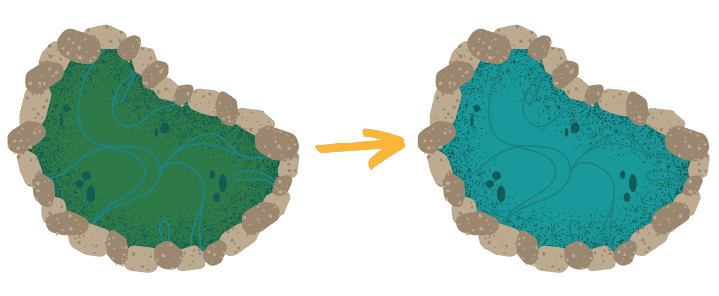
Three things determine how quickly a UV clarifier clears your pond:
- Correct wattage for your pond volume.
- Continuous water circulation through the UV chamber at the right flow rate.
- Pond size — larger ponds take longer to clear.
With the right wattage and a properly sized pump, you'll usually see a noticeable difference in 3–5 days. Larger ponds may take up to two weeks.
Sizing The UV Wattage
For algae clarification, plan on roughly 8–10 watts of UV per 1,000 gallons (about 1 watt per 200 liters). A 3,000-gallon (≈11,400-liter) pond typically needs a 24–30 watt UV clarifier. Make sure to also pick the right light for your pond size — older buying guides quoting much lower wattages will leave most ponds under-sized and ineffective.
Flow Rate Matters As Much As Wattage
Aim for the entire pond volume to pass through the UV clarifier roughly once every 1–2 hours — about half the pond's volume per hour. Too slow and untreated water sits in the pond; too fast and the water doesn't get enough UV exposure to damage the algae. Check the clarifier's recommended flow range and match your pump to it.
How Do I Know If My Pond Light Is Working?
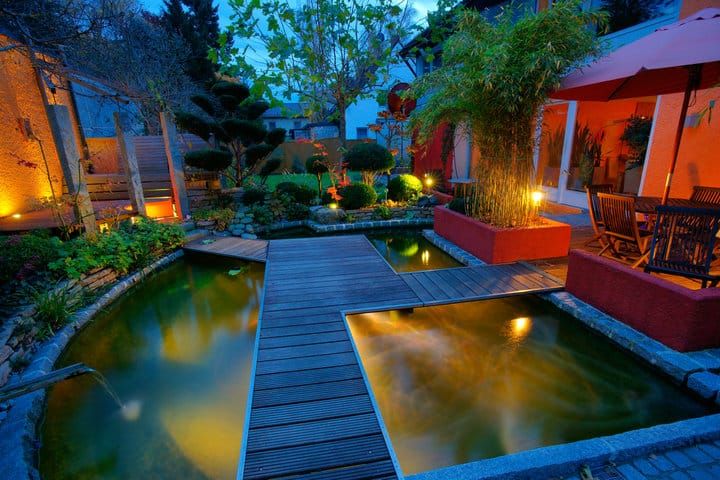
Most home pond UV clarifiers are inline units — they sit outside the pond, with water pumped through them — and have a small viewing window so you can confirm the lamp is lit without looking directly at the bulb. Looking straight at an exposed UV-C lamp can damage your eyes, which is why some submersible models include a safety interlock that switches the lamp off automatically when the unit is lifted out of the water.
If you can't see any glow through the viewing window, the bulb has likely failed, or there may be an issue with the ballast or wiring. Keep in mind that UV-C output drops well before the lamp burns out — a bulb that still visibly glows isn't necessarily still effective.
Does UV Light Kill Beneficial Bacteria In Pond?
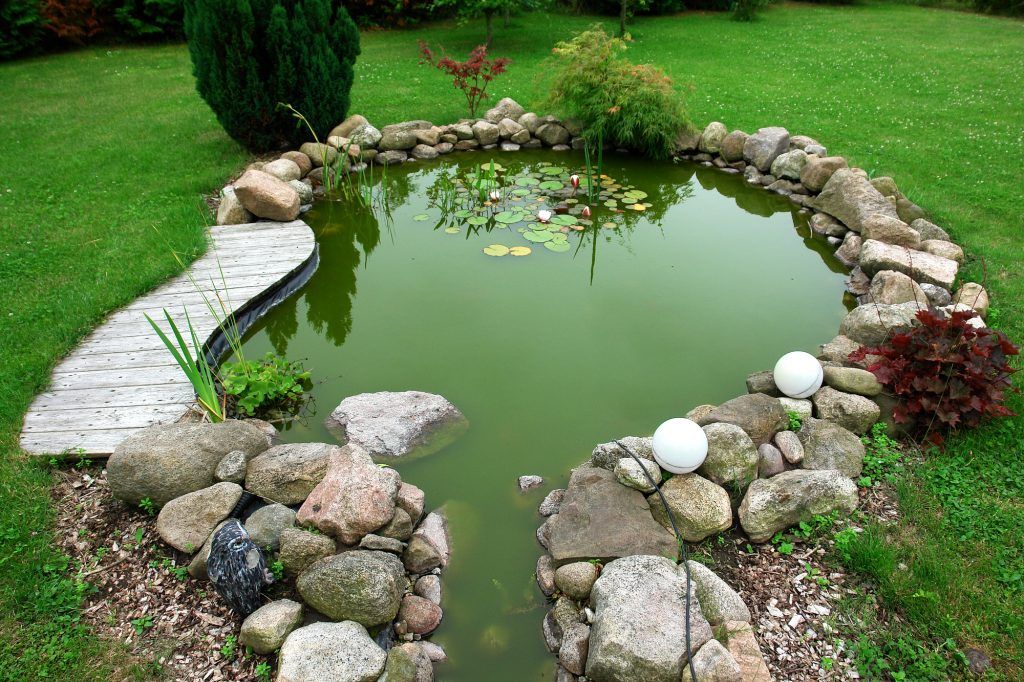
The practical answer: install a biological filter (sand or biomedia) downstream of the UV unit, and add rocks or gravel to the pond bottom. The UV chamber kills any free-floating bacteria that pass through it, but bacteria established on filter media and rock surfaces are unaffected — and that's where the vast majority of beneficial bacteria actually live.
You'll see mixed opinions online about whether UV clarifiers harm beneficial bacteria. UV manufacturers downplay the concern; companies selling "bacteria balancers" warn against UV. Both have something to sell. The reality is that UV pond lights kill any free-floating bacteria — good or bad — that pass through the chamber, but the bacteria that matter for water quality are attached to surfaces and don't get exposed in the first place.
How Long Do Pond UV Lights Last?
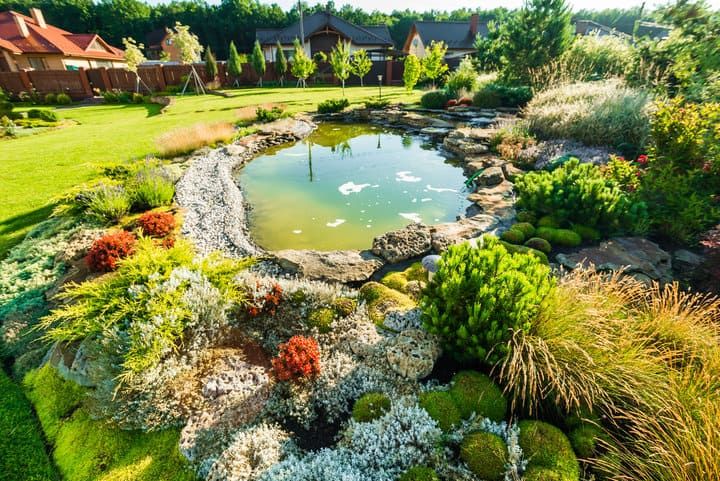
The typical effective lifespan of a UV pond bulb is around 8,000–9,000 hours — roughly 12 months of continuous use. A few premium amalgam bulbs are rated to 10,000 hours, but that's the exception, not the rule. The bulb may keep visibly glowing well past its rated life, but UV-C output drops sharply as the lamp ages, so it stops being effective long before it burns out.
Running the UV light 24 hours per day adds up to 8,760 hours in a year, which is why bulbs are typically replaced every 12 months — sometimes stretched to 18 months on premium units. Mark the install date on the housing so you don't lose track.
Can I Leave The UV Light Always On?
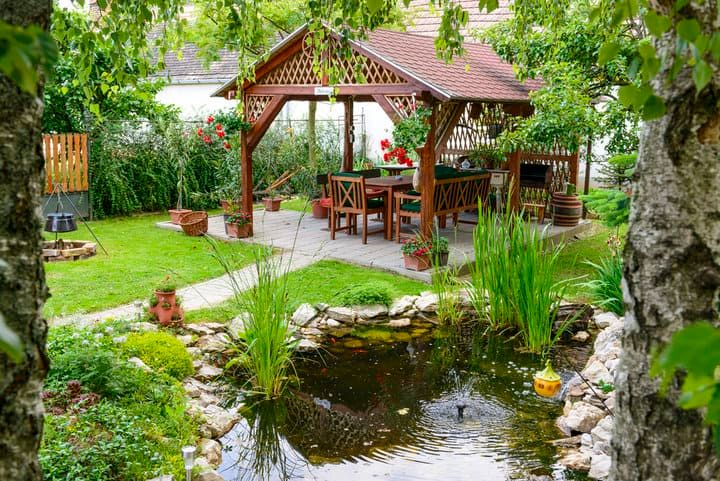
Yes — and it's the standard recommendation during algae season. Some pond owners switch the unit off and remove the bulb over winter, since cold water doesn't encourage algae growth and freezing temperatures can crack the quartz sleeve.
Frequent on/off cycling can shorten the bulb's effective life, similar to other fluorescent tubes, so a timer isn't recommended. UV pond lights don't harm fish, so leaving the unit running continuously is fine.
There are two scenarios where you should switch the UV off:
- When dosing a bacteria balancer — leave the UV off for at least two days so the product has time to establish.
- When your fish are on medication that specifies no UV exposure — leave the UV off for the full treatment course.
Is UV Light Beneficial For Koi Ponds?
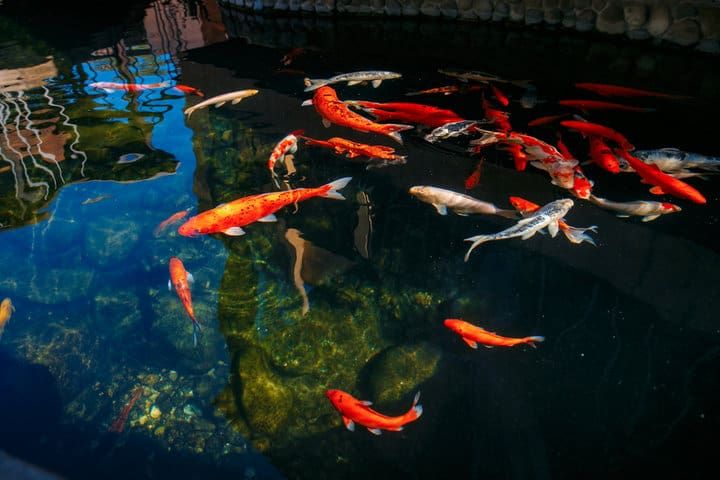
UV light is beneficial for Koi ponds, but no more so than for other types of ponds. Koi are sensitive fish, but acidity, ammonia, temperature, and oxygen levels matter far more to their health than algae clarity.
Single-cell algae doesn't directly affect those parameters, and UV pond lights won't harm Koi, provided you also run mechanical and biological filtration that supports beneficial bacteria. Since Koi are expensive fish that owners want to see, a clear pond is a major quality-of-life upgrade.
One caution: the more visible your Koi are to you, the more visible they are to herons, raccoons, and other predators. Provide hiding spots — caves, overhangs, or deeper zones — so your fish can take cover when needed.
Final Words
UV pond clarifiers aren't cheap to buy or run, but they're the single most effective tool for keeping pond water clear of single-cell algae and preventing it from turning green and murky.
My rule of thumb on when UV is the right tool:
- Use UV when your problem is green, cloudy water from suspended single-cell algae.
- Skip UV for string algae or blanketweed — manual removal, barley straw, or a targeted algaecide is the answer.
- Always pair UV with a mechanical filter downstream — UV damages the algae but doesn't remove anything from the water.
- Size for roughly 8–10 watts per 1,000 gallons (1 W per 200 L) and a 1–2 hour turnover rate; under-sized units won't keep up.
- Plan to replace the bulb every 12 months, even if it still visibly glows.
If you inherit a pond when buying a home, check whether the UV unit is working and when the bulb was last changed — a glowing bulb past its lifespan is no longer doing the job.