
How Many Amps Do LED Headlights Draw?
That '55W equivalent' label on your LED bulb isn't the wattage you size a fuse to — the actual draw is often closer to 25W. Confusing equivalence ratings with real consumption is the kind of mistake that quietly overloads circuits.
 Eugen
EugenEugen Nikolajev
Creator of LED Lighting Info
Hi, I am Eugen. I was always one of those kids who had all sorts of weird lighting gadgets for every occasion.
Now, I want to share my knowledge and experience about lighting with you on LED Lighting Info.
Read my editorial standards
Key Takeaways
LED headlights typically draw 2–2.5 amps per bulb on low beam (20–30W) and 2.5–4 amps on high beam (30–45W). You can estimate amp draw by dividing the bulb's wattage by the system voltage — nominally 12 volts in cars and motorcycles.
Knowing the actual current matters when you're replacing a blown fuse, swapping halogens for LEDs, or — common on motorcycles — fitting a pair of LEDs where a single halogen used to live.
LED vs Halogen Headlights Amp Draw
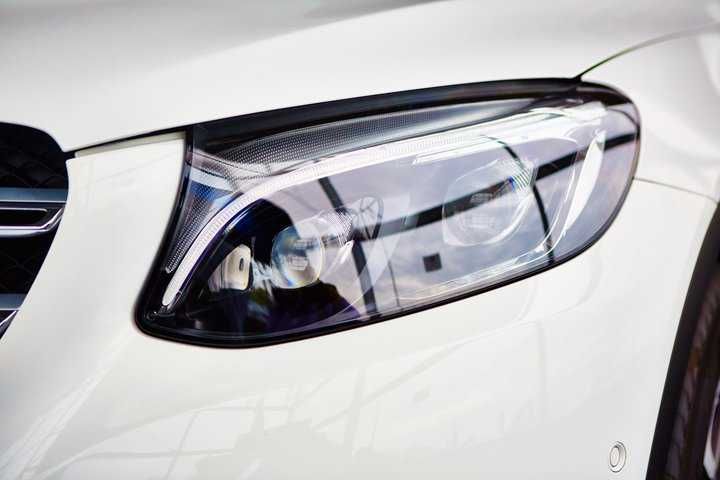
LED headlights are now standard fitment on the vast majority of new vehicles sold in North America and Europe — global LED penetration in passenger cars passed 72% in 2023. But wattages still vary widely between OEM models and aftermarket kits, so there's no single answer for "how many amps does an LED headlight draw."
A typical 25W LED bulb draws about 2.08A, so a pair pulls roughly 4.17A. By comparison, the 55W halogens they often replace draw closer to 9.17A as a pair — more than double the load on the headlight circuit, and the main reason an LED swap rarely stresses the existing wiring.
How Do I Convert Watts to Amps?
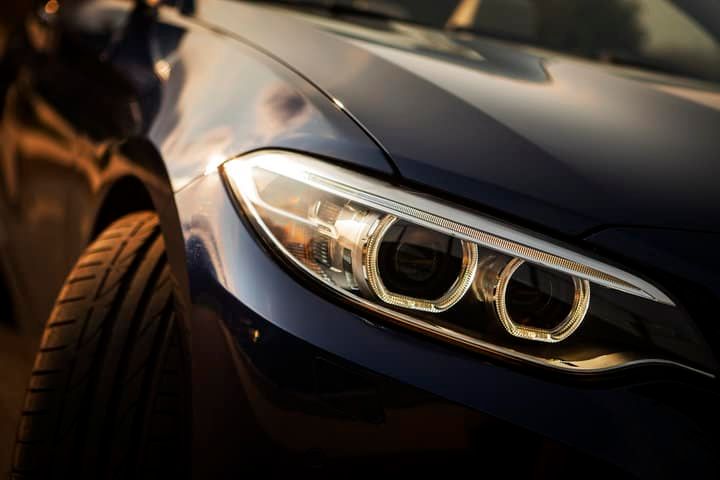
The math is straightforward: divide the device's wattage by the voltage of the power source.
Motorcycle and car batteries are nominally 12V, though with the engine running and the alternator charging, the actual bus voltage sits between 13.5V and 14.4V. Using 12V as the divisor gives a slightly higher — and therefore safer — amp figure for fuse sizing.
Examples:
- 30W LED bulb — 30 ÷ 12 = 2.50A
- 50W LED bulb — 50 ÷ 12 = 4.17A
- 60W LED bulb — 60 ÷ 12 = 5.00A
The same equation works for any DC device — just use the correct system voltage.
Watch out for "equivalent" wattage
Many aftermarket LED bulbs are marketed with an equivalent wattage — for example, "replaces a 55W halogen." That figure is not the bulb's actual power draw; it's the halogen output the LED claims to match. Real consumption is usually listed separately as "actual wattage" or "power draw" and is typically 20–45W per bulb. Always size fuses against the actual wattage, not the equivalent rating.
What Amperage Can an LED Headlight Handle?
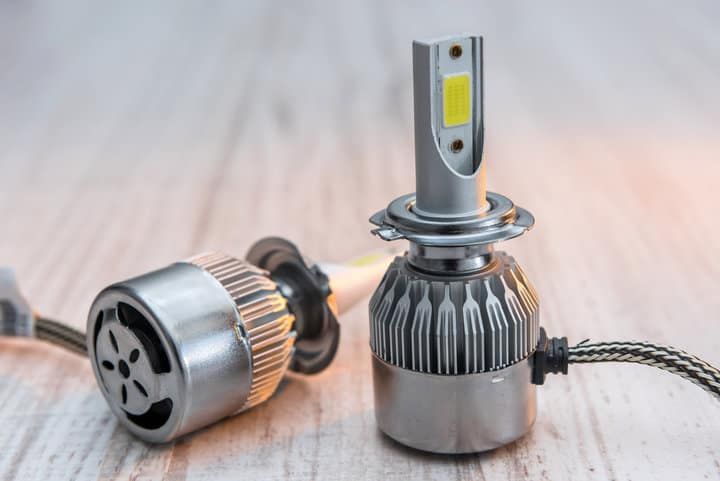
Most LED headlight assemblies include a built-in driver that regulates current to the LEDs precisely, regardless of small swings in input voltage. The fuse in the circuit isn't there to control normal operation — it's there to interrupt the circuit if a fault, like a short or pinched wire, causes excessive current, protecting the wiring harness from overheating.
Choose a fuse rated below the bulb's normal draw and it will blow as soon as you turn the lights on, leaving you in the dark. A fuse rated well above the harness's ampacity is the bigger hazard: during a short circuit, an oversized fuse may not blow fast enough to prevent the wires from overheating before the element melts — a real fire risk.
Most LED manufacturers don't publish a "maximum amperage" for the bulb because the integrated driver handles that internally. The practical approach is: calculate steady-state amp draw, multiply by 1.25 (a 25% headroom that mirrors ABYC and standard 12V/24V wiring guidance), then pick the next standard fuse size at or above the result.
| System | Total Wattage | Amp Draw (12V) | +25% Headroom | Recommended Fuse |
|---|---|---|---|---|
| 2× 25W LED (low beam) | 50W | 4.17A | 5.21A | 7.5A |
| 2× 30W LED (low beam) | 60W | 5.00A | 6.25A | 7.5A |
| 200W LED kit (high beam) | 200W | 16.67A | 20.83A | 25A |
For high-wattage kits like the 200W example, fuse choice isn't the only concern. The wiring harness itself must be rated to carry that current continuously — factory headlight harnesses are sized for the original halogens, so a 200W high-beam kit usually needs an upgraded relay-and-dedicated-wiring loom rather than just a bulb swap. And in many jurisdictions, ultra-high-wattage LEDs are sold for off-road use only — verify local road-legality before installation. Responsibility for legal road use lies with the motorist, regardless of who sells the kit.
CANBUS and "Bulb Out" Warnings
A common surprise during a halogen-to-LED swap: the dashboard throws a "bulb failure" warning, the new LEDs flicker, or they refuse to come on at all. This isn't a defect — it's the body control module noticing that the new bulb draws far less current than the halogen it expects.
There are three common fixes:
- A CANBUS-decoder LED bulb that internally simulates the higher halogen current draw.
- A load resistor (typically 50W, 6Ω) wired in parallel with each LED. Effective, but it generates significant heat and partly cancels out the energy savings.
- A dedicated CANBUS adapter or harness designed for your specific vehicle.
Motorcycles rarely run into this — most don't have a body control module monitoring headlight current — but check your service manual before assuming. Many motorcycle headlight circuits use a 7.5A or 10A fuse for a single 35–55W halogen, leaving plenty of headroom for a dual-LED conversion at typical wattages.
Putting It All Together
To size a fuse for an LED headlight: divide the actual (not equivalent) wattage by 12, multiply by 1.25 for headroom, and pick the next standard fuse size above the result. A typical 50–60W LED low-beam pair sits comfortably on a 7.5A fuse; a 200W high-output kit needs around 25A — and almost certainly upgraded wiring as well.
Before and after any swap, verify the existing fuse rating against the new load, confirm the harness is sized for the current it will carry, and watch for CANBUS warnings on the first drive. Don't downsize a fuse below the harness's ampacity just because the new bulbs draw less — fuses protect wires, not bulbs, and a smaller load doesn't require a smaller fuse.