
Do LED Headlights Need Beam Deflectors?
Take a UK car into France without beam deflectors and you're looking at an €90 on-the-spot fine — and that's true whether your headlights are halogen, xenon, or LED.
 Eugen
EugenEugen Nikolajev
Creator of LED Lighting Info
Hi, I am Eugen. I was always one of those kids who had all sorts of weird lighting gadgets for every occasion.
Now, I want to share my knowledge and experience about lighting with you on LED Lighting Info.
Read my editorial standards
Key Takeaways
Most LED headlights still need beam deflectors when you drive on the opposite side. A small but growing number of cars exempt you — either through a switchable “travel mode” or a matrix/adaptive LED system that masks the dazzle in software. Always check the owner’s manual; if it doesn’t say you’re exempt, fit deflectors.
If you’re taking a left-hand-drive car into a country that drives on the right (or vice versa), you almost certainly need beam deflectors — and that applies to LED headlights too.
The legal duty isn’t about your bulb technology. It’s about your beam pattern, which is shaped to suit one side of the road and dazzles oncoming drivers when you cross to the other.
In this guide, I’ll cover:
- How beam deflectors actually work
- Whether LED, halogen, xenon and adaptive headlights need them
- How and where to apply them
- Which countries require them and what happens if you don’t fit them
How Beam Deflectors Work
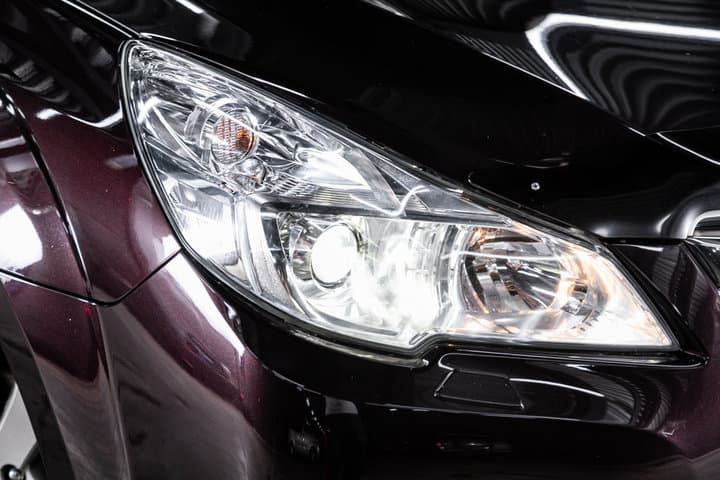
Both of your headlights point straight ahead. The asymmetry isn’t in the aim of the bulbs — it’s in the shape of the beam they project.
In countries that drive on the right, low-beam headlamps produce a pattern that’s flat on the left-hand side — so light doesn’t spill into the eyes of oncoming drivers — and steps up on the right to illuminate the kerb, road signs and pedestrians. The shaping happens inside the headlamp, using reflectors, projector lens shields or LED optics. In countries that drive on the left, the pattern is mirrored.
This asymmetric cut-off is mandated by UN ECE Regulation 112, the international rule that governs almost every modern car headlight outside the United States. It applies regardless of bulb type — halogen, HID/xenon and LED all produce the same shape.
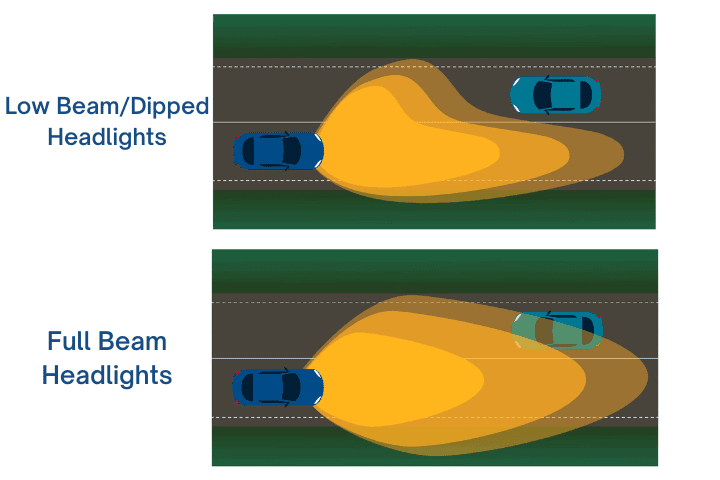
Cross the border into a country that drives on the opposite side and that helpful kerb-side upslope now points straight at oncoming drivers’ eyes. That’s the problem deflectors solve.
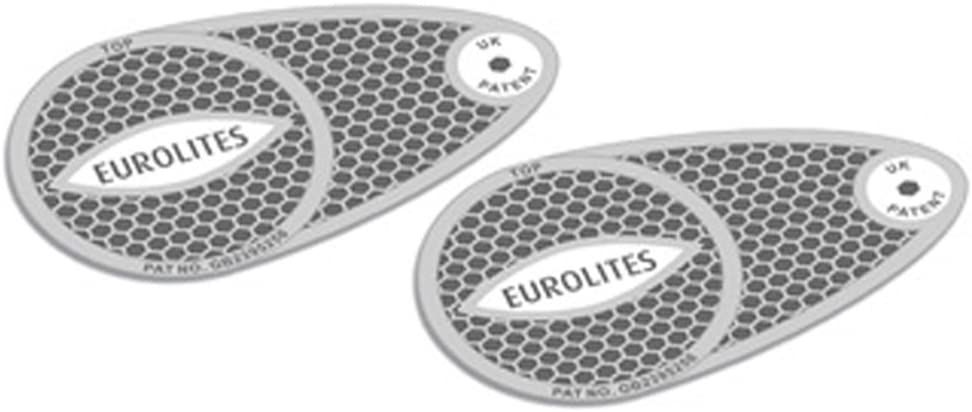
A beam deflector is an adhesive prismatic sticker that you place on the headlamp lens. It refracts (redirects) the offending part of the beam, masking the upslope so it no longer dazzles oncoming drivers — while preserving illumination on your side of the road. It’s a different mechanism from switching to high beams, which removes the cut-off entirely. Deflectors keep the cut-off — they just shift where it points.
Do LED Headlights Require Beam Deflection?
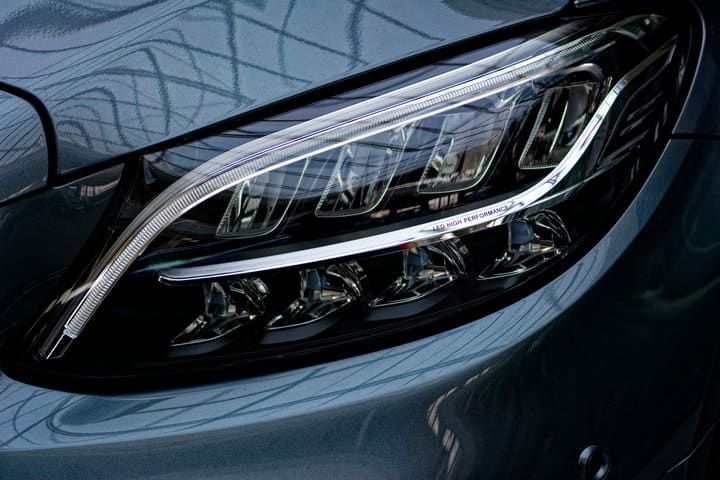
Yes, in most cases. There’s a lot of misinformation suggesting modern LED headlights produce a flat, symmetric beam — they don’t. ECE R112 hasn’t been rewritten for LED, and an LED projector still throws the same asymmetric pattern as a halogen one.
What has changed is that some recent vehicles offer a switchable “travel” or “tourist” mode (a menu setting that flips the asymmetry electronically) or use matrix/adaptive LED systems that mask the dazzle digitally. Those cars don’t need a stick-on deflector. Most others — including the majority of modern LED-equipped cars — still do.
Use this checklist to work out where your car sits:
| Your headlight situation | Need deflectors? |
|---|---|
| Halogen, HID/xenon or standard LED headlights | Yes — fit deflectors |
| Built-in LHD/RHD switch on the car | No — flip the switch |
| Manufacturer “travel” or “tourist” mode in the menu | No — enable the mode |
| Matrix or adaptive LED with software masking | Depends on the model — check the owner’s manual |
| Manual is silent on the topic | Yes — fit deflectors as the default |
Whatever the bulb technology, a halogen, HID/xenon or LED headlamp built for one side of the road will dazzle oncoming traffic on the other unless you reshape the beam. Halogen headlights aren’t exempt — if anything, the asymmetric cut-off can be more pronounced on older halogen reflectors than on a modern LED projector.
The “switch headlamp position” feature is also worth distinguishing from the headlamp-height adjuster on your dash, which only changes vertical aim. The travel switch is a separate control (sometimes a physical lever on the back of the headlamp unit, sometimes a menu option) that reconfigures the beam shape itself.
Adaptive and matrix LED headlights
Adaptive headlights come in two broad families. Curve-adaptive headlights swivel the bulb assembly as you steer through a corner — the underlying beam pattern is unchanged, so the same deflector rules apply.
Adaptive Driving Beams (ADB), often called matrix or pixel LED, use cameras and individually controlled LEDs to mask out the parts of the high beam that would dazzle other road users. Today these systems are dominated by LED tech, but the concept isn’t LED-exclusive — earlier glare-free high-beam systems used bi-xenon HID projectors with mechanical shutters (Audi, BMW and Mercedes all offered them), and bi-xenon AFS systems like Porsche’s PDLS still swivel and adjust beam range.
Whether an adaptive system needs deflectors depends entirely on the manufacturer. Some include a switchable travel mode that reshapes the beam in software — on those cars, no deflector is required, and you should also disable adaptive high-beam to avoid blinding oncoming drivers. Others still mandate physical deflectors. Check the owner’s manual; if it doesn’t spell out an exemption, fit them.
How To Apply Beam Deflectors
A deflector kit usually contains two clear, prismatic stickers and a paper template showing where they go. The template is specific to your car’s headlamp shape, so buy a kit listed for your make, model and year — a generic kit on the wrong lens shape will leave a dazzle line.
- Clean the lens with degreaser or alcohol wipes. Adhesion fails on a greasy or wet surface.
- Hold the template against the headlamp following the included diagram. The fitted location depends on direction of travel — a UK car driving in mainland Europe gets the deflector on the part of the lens that throws the kerb-side upslope, masking it down to a flat cut-off.
- Peel the backing and apply the sticker, working out air bubbles from the centre to the edges with a soft cloth.
- Repeat for the other headlamp. Both get a deflector, even though only one side of each beam is dazzling.
Most kits are good for a single trip and lose adhesion after a few hot/cold cycles or a wash. Buy fresh ones for each crossing rather than reusing peeled stickers — a partially lifted deflector may still leave a dazzle line.
Where You’ll Need Beam Deflectors
You only need deflectors when crossing from a country that drives on one side of the road into one that drives on the other. About a third of the world’s countries drive on the left.
| Drives on the left | Drives on the right |
|---|---|
| UK, Ireland, Cyprus, Malta | Mainland Europe (France, Germany, Spain, Italy, Portugal, the Netherlands…) |
| Australia, New Zealand, most of Oceania (Fiji, PNG, Samoa, Tonga) | USA, Canada, Mexico |
| Southern and East Africa (South Africa, Namibia, Botswana, Zimbabwe, Kenya, Tanzania, Uganda) | North and West Africa, most of South America |
| Japan, India, Pakistan, Thailand, Indonesia, Malaysia, Singapore | China, Russia, Saudi Arabia, most of mainland Asia |
| Former British Caribbean (Jamaica, Barbados, Bahamas, Trinidad & Tobago, Cayman Islands) | Cuba, Dominican Republic, Haiti, Puerto Rico, Aruba |
The most common scenarios are UK or Irish drivers crossing into mainland Europe, and visitors from mainland Europe driving in the UK or Ireland. Travelling within the same side — say, UK to Ireland or Spain to Germany — doesn’t require deflectors.
If you import a car through an official manufacturer channel, the headlights are normally adapted to your country before delivery. Independent imports are where you’re most likely to need a permanent fix rather than stick-on deflectors.
Legal requirements and penalties
France and Spain are the strictest enforcers. Both expect you to fit deflectors as soon as you bring a non-domestic car onto their roads, and France additionally requires you to carry a deflector kit in the vehicle. If you’re stopped, expect an on-the-spot fine — €90 in France.
Beyond the fine, your insurer can push back on a claim if you cause an accident by dazzling another driver, on the grounds that the car wasn’t road-legal at the time. It’s an unlikely but plausible exposure that the cost of a kit isn’t worth running.
Beam deflector kits typically cost £5–£15 from a motorist’s shop or online. Pick one up before you sail or board the train.
The Bottom Line
If you’re crossing into a country that drives on the opposite side, fit beam deflectors. The exceptions are narrow: a built-in LHD/RHD switch on the headlamp unit, a manufacturer-provided travel mode, or a matrix LED system the manual specifically says doesn’t need them. Halogen, xenon and standard LED all default to “yes”.
Bookmark the relevant page of your owner’s manual before you travel. If your car is exempt, having the manufacturer’s wording ready makes any roadside conversation a short one.