
Do Light Bulbs Work Without The Glass?
Strip the cover off an LED bulb and it will still light up — the diode needs no vacuum, no special gas, nothing. The glass (or epoxy) is there for looks, safety, and shaping the light.
 Eugen
EugenEugen Nikolajev
Creator of LED Lighting Info
Hi, I am Eugen. I was always one of those kids who had all sorts of weird lighting gadgets for every occasion.
Now, I want to share my knowledge and experience about lighting with you on LED Lighting Info.
Read my editorial standards
Key Takeaways
Incandescent and CFL bulbs cannot function without their glass casing. In incandescent bulbs, the glass keeps oxygen away from the tungsten filament; in CFLs, it seals in the gas mixture that produces the light. LED bulbs don’t strictly need a cover to work, but it directs the light, protects the electronics, and contains the pieces if the bulb fails.
Most people have never thought about what would happen if you pulled the glass off a light bulb. The answer depends entirely on which type of bulb you have — and for some, the glass is doing far more than keeping the components tidy.
Can Incandescent Bulbs Function Without The Glass?
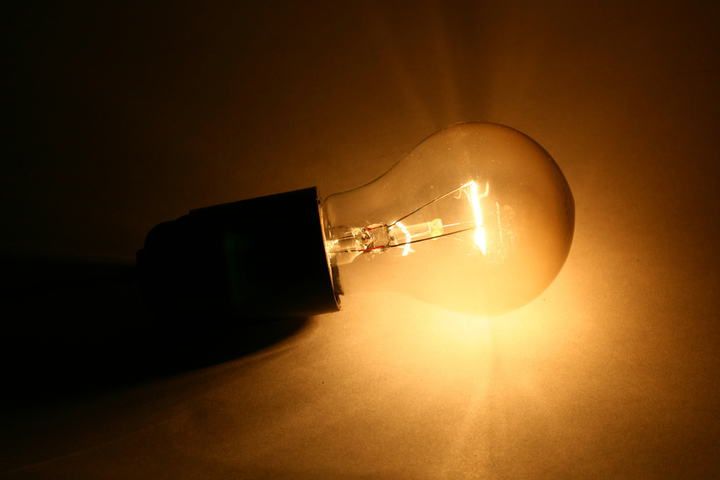
The glass casing is vital to an incandescent bulb. If the glass breaks, the bulb will technically keep working — for a few seconds at most. After that, it will burn out and need replacing.
It would also be dangerous due to the exposed high temperatures.
Incandescent bulbs contain a tungsten filament — a delicate piece of coiled metal. When current passes through it, the filament heats to around 2500°C (4500°F), and that white-hot temperature is what produces visible light.
It is not efficient — most of the energy ends up as heat rather than light — but it is effective until the filament eventually fails.
Glass is used rather than plastic because it can withstand those temperatures without melting. It is also optically transparent, can be sealed gas-tight, doesn’t outgas at temperature, and is cheap to manufacture into precise shapes — a combination ceramic and other heat-resistant materials can’t match for the price. Halogen bulbs, a sub-category of incandescent that runs even hotter, use quartz glass for the same reason.
What Role Does A Vacuum Play In Filament Bulbs?
There is more to the glass casing than just withstanding heat. It also seals the filament away from the air.
Exposed to oxygen at operating temperature, tungsten oxidizes almost instantly and the filament burns out. Even inside a sealed bulb, tungsten slowly evaporates from the filament — a separate, much slower process, and the main reason most bulbs are filled with an inert gas instead of left under a hard vacuum.
Vacuum construction is typically used below about 25 watts — decorative lamps, night lights, and similar low-power bulbs. Above that, the bulb is filled with an inert gas, most commonly argon (often blended with a little nitrogen), with krypton or xenon used in higher-end lamps. The gas suppresses tungsten evaporation enough to allow higher operating temperatures and longer filament life.
Halogen bulbs use the same inert fill plus a small amount of a halogen gas — usually bromine in modern lamps. The halogen redeposits evaporated tungsten back onto the filament (the “halogen cycle”), which is why halogens can run brighter and last longer than standard incandescents.
Any crack in the glass lets oxygen reach the filament and ends the bulb’s life. If you spot even a hairline crack in an incandescent bulb that is still working, switch it off and replace it.
Can LED Bulbs Be Used Without Glass Or Epoxy Cover?
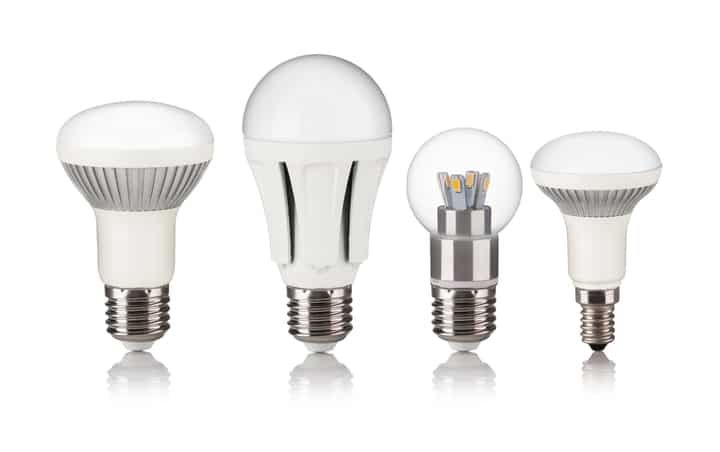
LEDs work very differently from incandescents. Instead of a filament, they use a semiconductor diode. When current flows through the diode, electrons recombine across its p-n junction and release the energy as photons — that is the light you see.
The diode isn’t reactive and doesn’t need any special gas or vacuum to keep working. It can be exposed to air without issue.
In theory, an LED bulb will continue to work without its outer cover. So why do they have one?
First, not all LED bulbs use glass — many use an epoxy resin, which is durable and doesn’t shatter. Because LEDs run cool compared to incandescents, the cover doesn’t need to withstand high temperatures, so cheaper or tougher materials are an option. The cover serves three purposes:
- Familiar appearance — most people want a bulb that looks like a bulb, not exposed components.
- Safety — if something does go wrong, an epoxy or glass cover keeps electrical components contained instead of scattering them. Epoxy LED bulbs are essentially shatterproof.
- Light shaping — frosted or opaque covers diffuse the LED’s directional output for even room lighting.
On disposal, LED bulbs are much safer than CFLs when broken because they don’t contain mercury. They do, however, contain trace amounts of lead, arsenic, nickel, and copper in the driver electronics, so the EPA encourages treating them as electronic waste rather than tossing them in regular trash. Several states (notably California) require recycling, and many municipal e-waste programs and retailers — Home Depot, Lowe’s, and IKEA among them — accept LED bulbs for recycling.
Can CFL Bulbs Work If Damaged?
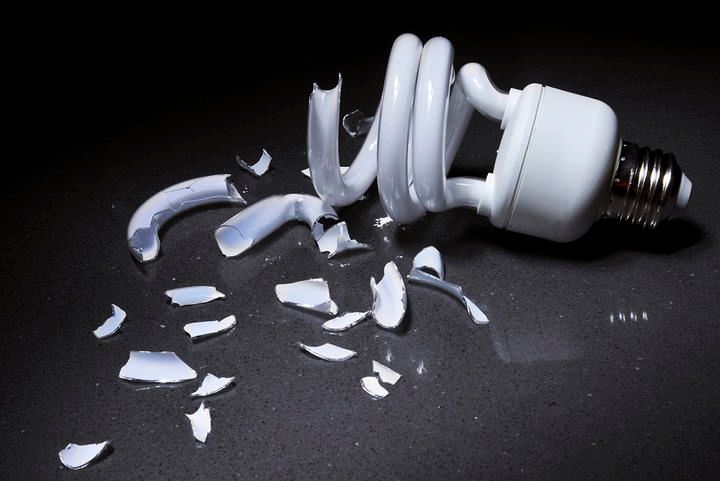
CFLs work differently from both incandescents and LEDs. They are sealed gas-discharge lamps, and they depend entirely on the glass envelope to function.
How A CFL Produces Light
- Electric current passes through the tube, which contains an inert buffer gas (typically argon) and a small amount of mercury vapor — usually 3–5 milligrams in a modern CFL.
- The current excites the mercury atoms, which emit ultraviolet light at around 254 nm.
- The UV strikes a phosphor coating on the inside of the glass tube.
- The phosphor absorbs the UV energy and re-emits it as the visible white light you see.
Any crack in the glass renders a CFL useless. The gas mixture leaks out, the discharge can’t sustain itself, and the bulb stops producing light.
If A CFL Breaks
A few milligrams of mercury sounds tiny, but it can still be harmful if mishandled. The EPA’s recommended cleanup is straightforward:
- Open a window and leave the room for 5–10 minutes to let the mercury vapor disperse.
- Switch off central air or HVAC so vapor isn’t circulated through the rest of the house.
- Wear gloves and pick up the larger pieces with stiff paper or cardboard.
- Do not vacuum — it spreads mercury dust through the air and contaminates the vacuum. Use sticky tape to lift fine fragments instead.
- Seal the debris in a sealable container or zip-top bag before disposing of it.
Many areas don’t allow you to throw fluorescent lights in regular garbage; you may need to take them to a recycling center or hardware-store drop-off. Check your local environmental agency, or see the EPA’s CFL guidance for full details.
Also read: Do LED Bulbs Have Filaments?
Quick Reference
Whichever bulb you have, replace it as soon as you spot a break or crack — for incandescents and CFLs the bulb stops working anyway, and for LEDs it’s a sharp-edge hazard waiting to get worse.
| Bulb type | Needs glass? | Risk if broken | Disposal |
|---|---|---|---|
| Incandescent | Yes — air destroys the filament | Hot glass and sharp shards; bulb fails immediately | Regular household trash (no hazardous materials) |
| Halogen | Yes — quartz glass to handle higher pressure and temperature | Very hot glass and sharp shards | Regular household trash |
| CFL | Yes — contains the mercury and argon mixture | Mercury vapor release (3–5 mg per bulb); ventilate, do not vacuum | Recycle as universal/hazardous waste; many hardware stores accept them |
| LED | No, but a cover protects the components and shapes the light | Sharp shards if glass; epoxy versions are essentially shatterproof | Treat as e-waste; Home Depot, Lowe’s, and IKEA accept LED bulbs for recycling |