
Is It Safe To Leave A Light Bulb Socket Empty?
An empty bulb socket is live at 120V the moment the switch is on — and unlike a wall outlet, nothing stands between those contacts and a curious finger.
 Eugen
EugenEugen Nikolajev
Creator of LED Lighting Info
Hi, I am Eugen. I was always one of those kids who had all sorts of weird lighting gadgets for every occasion.
Now, I want to share my knowledge and experience about lighting with you on LED Lighting Info.
Read my editorial standards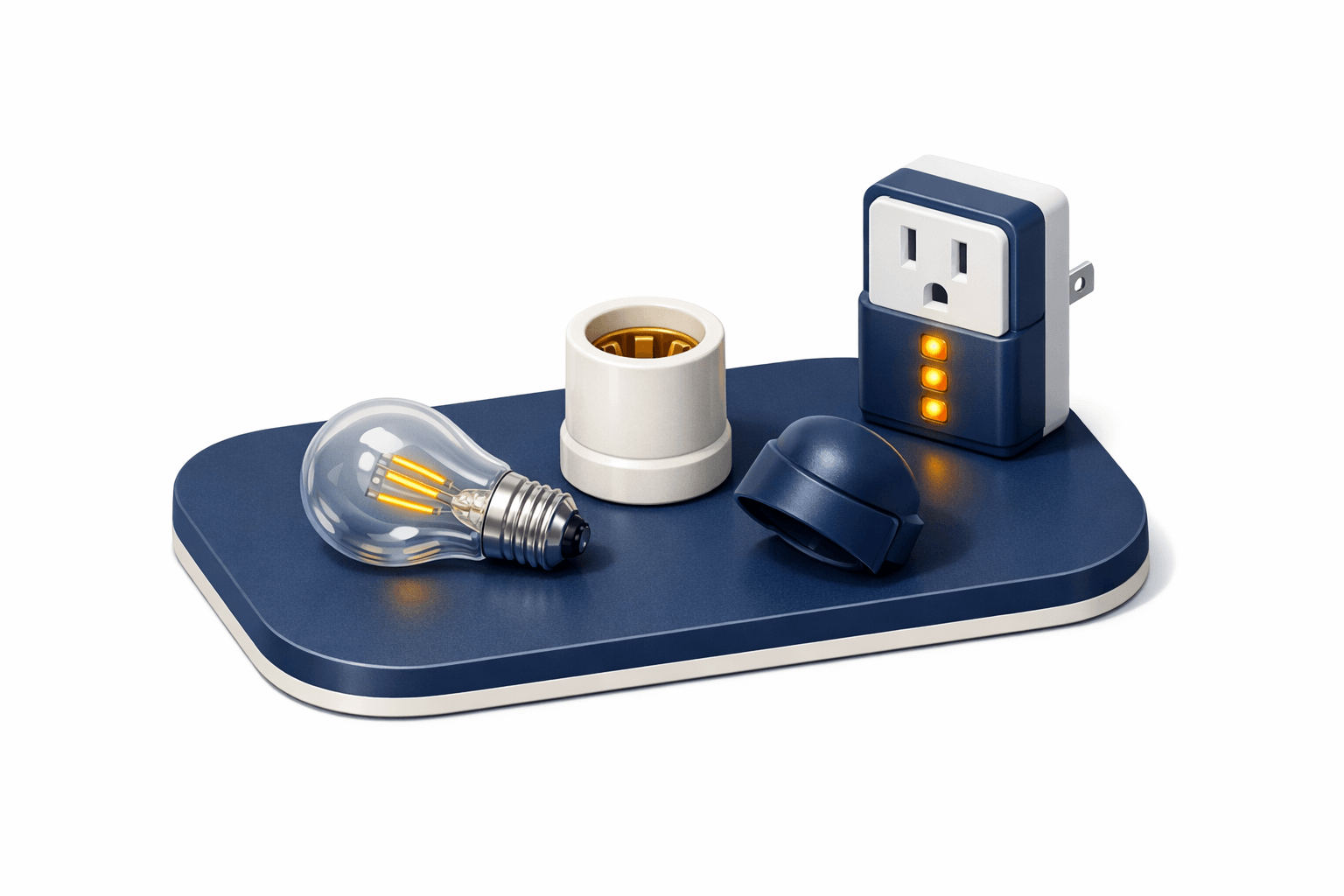
Key Takeaways
No — you should not leave a light bulb socket empty. An exposed socket carries live 120V (US) or 230–240V (UK/EU) at its contacts, creating a real shock hazard and, in rare cases, a fire risk from arcing. The simplest fix is to flip the wall switch or circuit breaker off, then cap the socket with a dead bulb, a plastic socket cap, or — as a last resort — electrical tape until you can replace it.
Every bulb eventually dies. In the US, a standard incandescent lasts about 1,000 hours, while typical household LEDs run 15,000 to 25,000 hours (commercial-grade LEDs can push 50,000). When one burns out and you can't replace it immediately, the question is simple: can you just leave the socket empty until you get around to it?
The short answer is no — and here's why it matters more than most people realize.
Why An Empty Light Bulb Socket Is Dangerous
An empty socket is an open point in your home's wiring. If the wall switch (or the circuit) is on, the contacts inside the socket are energized — and unlike a wall outlet, they're not recessed behind shutters or a protective plate.
The main risks:
- Electrocution from direct contact — a curious child's finger, a pet's paw, or an adult fumbling for a bedside lamp can touch the live contacts.
- Arcing from conductive debris — a paperclip, pen tip, or any small metal object bridging the two contacts can draw an arc and ignite nearby flammable material.
- Moisture-driven faults — in bathrooms, kitchens, porches, and other damp locations, water or humidity in an exposed socket can create a short or ground fault.
How much voltage is actually at those contacts? In the US, residential bulb sockets carry 120 volts; in the UK, Europe, and Australia, it's 230–240V. Both are well above the 50V OSHA/IEC hazard threshold, and either can deliver a shock serious enough to cause burns, injury, or death depending on current path, duration, and skin resistance.
Should You Leave Or Remove A Dead Bulb?
Leave it in. A dead bulb with intact glass is one of the simplest and safest ways to cover an empty socket — it blocks access to the live contacts without any extra hardware.
A burnt-out bulb also doesn't draw any measurable electricity. In an incandescent, the tungsten filament has physically broken, so the circuit through the bulb is open and no current flows. (Incandescents were always inefficient — roughly 90% of the energy they consumed was released as heat, and only about 10% as visible light. That's a big part of why LEDs have replaced them.)
Only remove the bulb if the glass is cracked or broken, since shards in the socket are a separate hazard.
Is It Safe To Turn The Switch On Without A Bulb In The Socket?
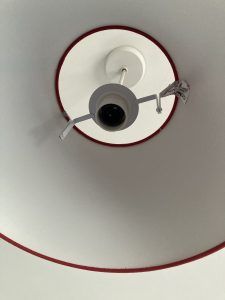
Flipping the switch on doesn't use any meaningful electricity on its own — the switch just closes the circuit. But once closed, it delivers full line voltage to the empty socket's contacts, and that's exactly what makes an exposed socket dangerous.
A ceiling fixture well out of reach is low risk as long as nothing conductive gets into the socket. A table lamp or bedside lamp is a different story — anyone can reach those, and a hand brushing the open shell is all it takes for a 120V (or 240V) shock.
Standard wall receptacles have their contact points recessed inside a plastic housing, and modern tamper-resistant outlets add shutters on top of that. Bulb sockets have neither protection — another reason to treat an empty socket as live until the breaker or switch is off.
Related: Is It Safe To Leave A Light Bulb Partially Unscrewed?
How To Fill An Empty Socket Safely
Before you do anything else, kill power to the socket. In order of preference:
1. Turn Off Power At The Switch Or Breaker
When to use it: Always — this is step zero for every other option on this list.
How to do it: Flip the wall switch off. If the switch could be flipped back on accidentally (shared switches, kids at home, a three-way circuit you're not sure about), trip the circuit breaker for that room instead.
It's free and instant, and it neutralizes the hazard entirely until you can cap or refill the socket.
2. Leave The Dead Bulb In Place
When to use it: The bulb burned out normally and the glass is intact.
How to do it: Just leave it screwed in. A dead bulb draws no electricity and the glass blocks access to the contacts. This is the easiest option, and it avoids ever having an exposed socket in the first place — handy if your LED bulbs keep burning out and replacements are slow to arrive.
3. Use A Socket Cap (Filler)
When to use it: The glass is broken, or you've removed the bulb and don't plan to replace it soon.
How to do it: Non-metallic socket fillers (Amazon) are inexpensive plastic caps that screw in like a bulb. They fully insulate the contacts, look cleaner than tape, and are the right long-term cover for a socket you're intentionally leaving empty.
4. Electrical Tape (Short-Term Only)
When to use it: Emergency stopgap when you don't have a bulb or cap on hand.
How to do it: Turn off the breaker first, then wrap electrical tape over the socket opening so nothing can reach the contacts. Treat this as a temporary measure only — replace with a proper bulb or socket cap as soon as possible, since tape can loosen, dry out, or fall off over time.
5. Bulb-To-Outlet Adapter (Special Cases)
When to use it: You want to repurpose an accessible empty socket (like a lamp) as a low-draw outlet.
How to do it: A bulb-to-outlet adapter (Amazon) screws into the socket and gives you a standard two-prong plug. Only use these for low-wattage devices like phone chargers or small LEDs — lamp sockets and fixture wiring aren't rated for the continuous load of appliances, space heaters, or anything high-draw.
Special Cases: Wet Locations, GFCI, And Rentals
Bathroom vanities, kitchen fixtures, porch lights, and any outdoor lighting deserve extra care. Moisture dramatically increases shock risk on an exposed socket — don't leave these empty even overnight. Replace or cap them immediately, and keep the switch off in the meantime.
If the fixture is on a GFCI-protected circuit (required by US code in bathrooms, kitchens, garages, and most outdoor locations), the GFCI will trip the moment it detects a ground fault. That's an important safety net, but it's not a license to ignore an open socket — a GFCI protects against current leaking to ground, not against someone completing the circuit directly between the two socket contacts.
If you rent, replacing bulbs is almost always your responsibility; capping or modifying a fixture usually isn't. If a socket is damaged, flickering, or scorched, turn off the breaker and report it to your landlord rather than trying to fix it yourself.
| Scenario | Risk Level | What To Do |
|---|---|---|
| Intact dead bulb left in socket | Low | Leave it until you can replace |
| Empty socket, switch off | Low | Install a socket cap or new bulb soon |
| Empty socket, switch on, out of reach | Medium | Flip switch off; cap the socket |
| Empty socket within reach of people or pets | High | Kill power at breaker; cap immediately |
| Empty socket in bathroom, kitchen, or outdoors | High | Kill power; replace or cap right away |
| Broken bulb stuck in socket | High | Kill power; remove safely, then cap |
FAQ
Does an empty light bulb socket use electricity?
No. If the switch is on, voltage is present at the contacts, but no current flows unless something closes the circuit — so an empty socket doesn't add to your electricity bill. It is, however, a live shock hazard, which is why it should be covered.
How much voltage is in a regular bulb socket?
In the US, a standard residential bulb socket carries 120V AC. In the UK, Europe, Australia, and most of the rest of the world, it's 230–240V. Both are well above the 50V threshold that OSHA and the IEC consider hazardous to humans.
Is it OK to leave a burnt-out bulb in the socket?
Yes, as long as the glass is not cracked or broken. A burnt-out bulb has an open filament (or failed LED driver), draws no current, and physically covers the socket contacts — making it one of the safest options while you wait to replace it.
Can I just put tape over an empty socket?
Only as a short-term emergency fix. Turn the breaker off first, wrap electrical tape securely across the opening, and swap in a proper socket cap or new bulb as soon as you can. Tape can dry out, loosen, or fall off, so it's not a long-term solution.
Are bulb-to-outlet adapters safe to use?
They're fine for low-wattage loads like phone chargers or small LED lamps. Avoid using them for space heaters, appliances, or anything high-draw — lamp fixtures and their wiring aren't designed for continuous receptacle-style loads and can overheat.