Can You Sleep With LED Strip Lights On? (3 Negative Effects)
That purple LED glow feels calming, but your sleep clock peaks in sensitivity at 480 nm — squarely in the blue range that purple strips secretly contain.
 Eugen
EugenEugen Nikolajev
Creator of LED Lighting Info
Hi, I am Eugen. I was always one of those kids who had all sorts of weird lighting gadgets for every occasion.
Now, I want to share my knowledge and experience about lighting with you on LED Lighting Info.
Read my editorial standards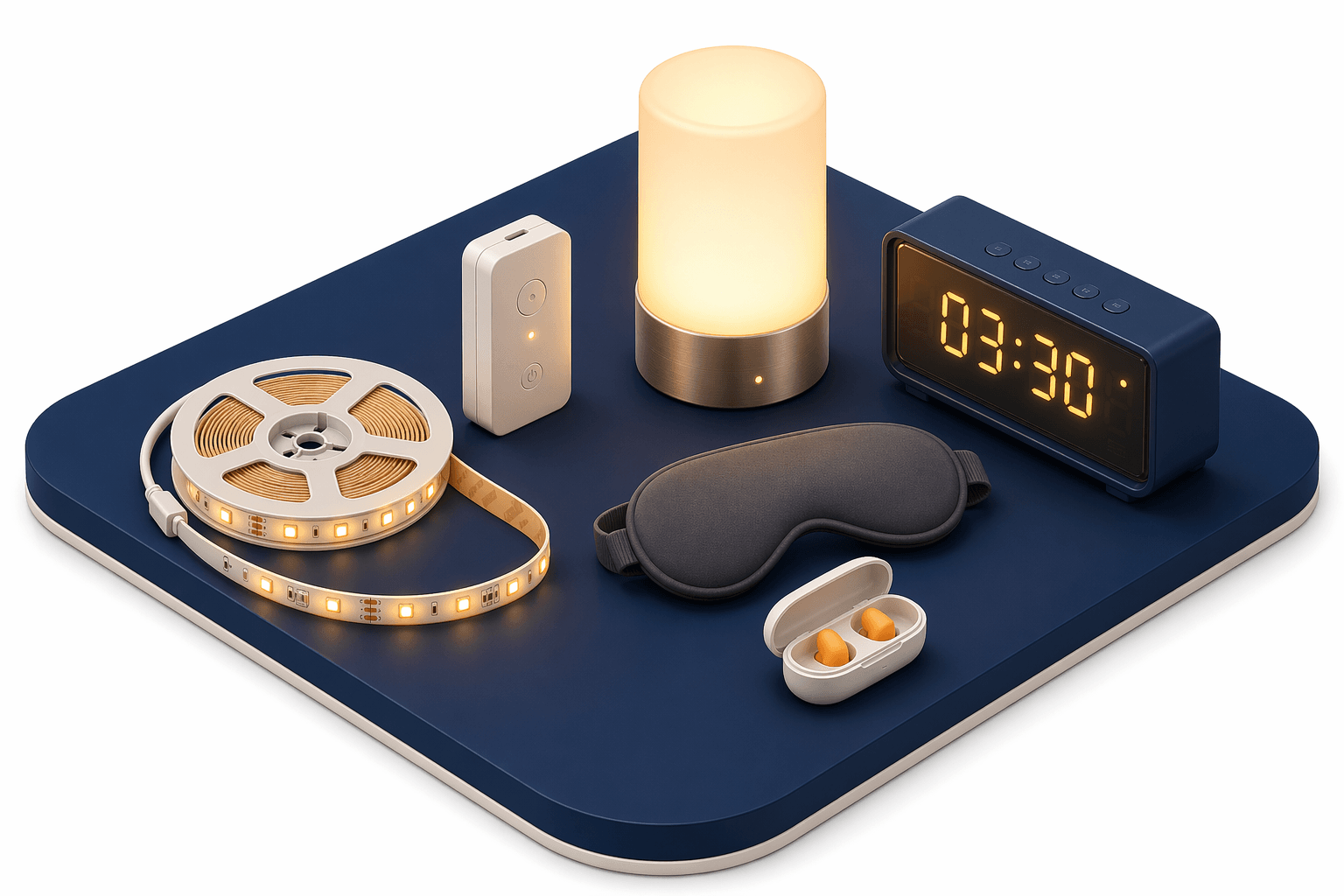
Key Takeaways
It's better to sleep with LED strip lights switched off. If you have to leave them on, use red or warm amber — they're closest to natural sunset light and disrupt melatonin the least. Avoid blue and purple settings after sundown, since blue wavelengths around 460–480 nm trigger the strongest melatonin suppression.
Different colors of light affect your body in different ways throughout the day — some helpful, some disruptive. With insomnia rates climbing and bedrooms full of screens and LEDs, what glows around you at night matters more than most people realize.
In this article, I'll cover:
- How leaving LED strip lights on impacts your sleep
- Ways to reduce that impact
- The best colors to use if the lights have to stay on at night
3 Ways Sleeping With LED Strip Lights On Affects Sleep Quality

There are three main ways LED strip lights can wreck a night's sleep when they're left on:
- Reduced melatonin production from the pineal gland
- Increased alertness before you fall asleep
- Increased alertness any time you wake up during the night
Melatonin Levels
The biggest concern is melatonin, the hormone that governs your body's internal clock — your circadian rhythm.
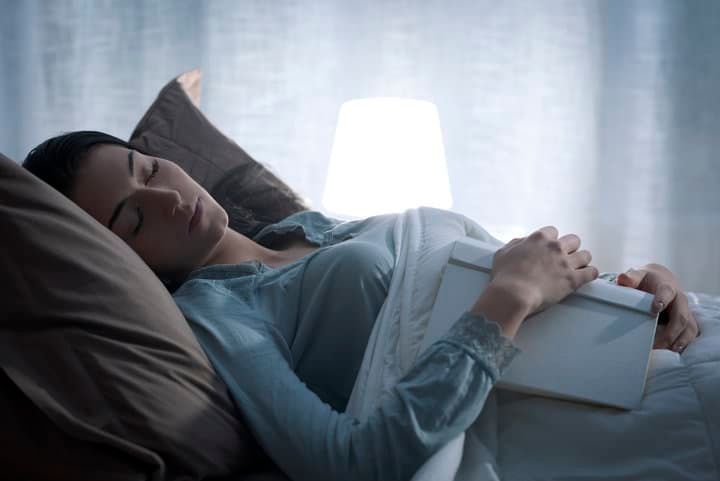
Your pineal gland reacts to the natural light cycle and releases melatonin to make you drowsy. More light at night means less melatonin, so you may still fall asleep, but the sleep won't be as deep as it should be.
Alertness Before Sleep
With the lights on, your eyes are still feeding visual information into your brain, which keeps it processing instead of winding down. The result is harder onset of sleep — you lie there alert when you should be drifting off.
Alertness When Waking Up
You're also more alert any time you wake up. Your brain switches on faster, so you go from half-asleep to fully awake in seconds. That sounds useful in the morning, but most people stir a few times a night — and being wide awake at 3 a.m. makes it much harder to fall back asleep.
This isn't unique to LED strips. Incandescent bulbs, fluorescents, and any other LED fixture do the same thing. Phones and tablets do it too — leave devices alone for at least an hour before bed if you want a solid night's sleep.
What Lack of Sleep Costs You
Sleep is foundational, so chronic disruption stacks up into long-term problems:
Depression and anxiety: People with insomnia are roughly 10 times as likely to have clinical depression and 17 times as likely to have clinical anxiety.
Weight gain: A Harvard study found people who slept 5 hours or less had a 45% higher risk of becoming obese.
Accidents: Chronic poor sleep is linked to more car accidents, and the slowed reaction times of sleep-deprived drivers are comparable to those of drunk drivers.
How to Reduce the Impact of LED Strip Lights on Sleep
If anxiety or another condition means you have to sleep with a light on, the simplest fix is to make sure the light shuts itself off. A smart LED strip on a schedule, a plug-in timer, or a small night light with a motion sensor all work well.
If the strip has to stay on while you fall asleep, choose a warm color temperature — and dim it as low as is practical. The combination of warm hue and low brightness is far less disruptive than a bright cool-white setting.
What Are the Best LED Strip Light Colors for Sleep?
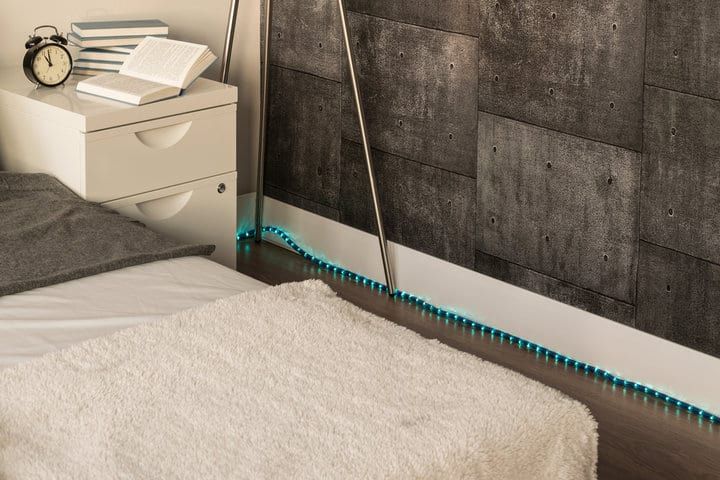
If the strip is staying on, use warm colors — red is ideal, with orange and amber close behind. Any bright light still cuts into restful sleep, but warmer wavelengths are far gentler on your circadian system. Here's how the major colors stack up, worst to best.
Is Blue a Good LED Color to Sleep With?
Blue is the worst color for sleep. The intrinsically photosensitive retinal ganglion cells in your retina — the ones that signal your circadian clock — peak in sensitivity around 480 nm, smack in the middle of the blue range. That's why blue light, whether from an LED strip, a screen, or a cool-white bulb, suppresses melatonin more strongly than any other color in the visible spectrum.
So a cool blue strip might look like calming ambiance, but biologically it's telling your body it's still daytime.
Sleeping With Purple LED Lights
Purple sits at the short-wavelength end of the visible spectrum, just before ultraviolet. A lot of articles call it the worst color for sleep because of that proximity to UV — including, in fairness, an earlier study — but the actual peak of melatonin disruption is at 460–480 nm, which is blue.
Purple is still a bad choice, though, because LED strips don't generate true violet directly. The purple setting is almost always a mix of red and blue diodes — and that blue component does the same circadian damage as a pure blue strip. Avoid purple after sundown for the same reason.
Is Green Light Good for Sleeping?
Green light still affects melatonin, but the impact is milder than blue. In Harvard lab studies, blue light shifted the circadian rhythm roughly twice as much as green light of comparable brightness — about 3 hours of shift versus 1.5 hours. Not great, but a meaningful step down from blue or purple.
Is Sleeping With Red LED Lights Bad?
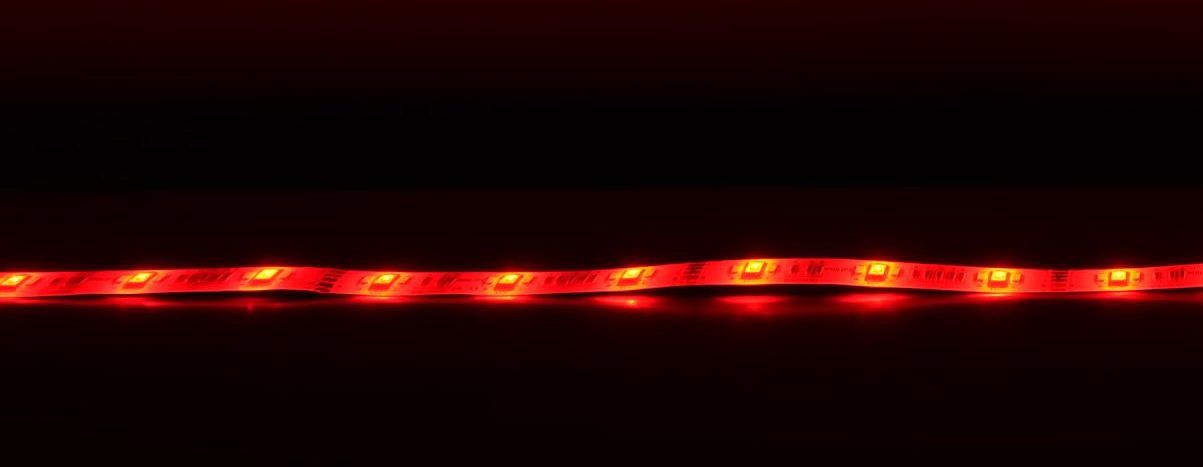
If a light has to stay on, red is the best choice. It sits at the long-wavelength end of the visible spectrum, closest to natural sunset light, and barely registers with the melanopsin cells that control your sleep clock. Many people find a low red glow actively relaxing as they wind down.
There's some research to back this up. A study on elite female basketball players found that 30 minutes of red light before bed improved sleep quality, melatonin levels, and next-day endurance compared to a control group.
That said, leaving any strip on all night is wasted electricity. A timer or a smart strip that fades to off shortly after bedtime gets the relaxation benefit without the all-night draw.
Final Words
Light at night is one of the most controllable inputs to your sleep quality. Blue and purple wavelengths tell your brain it's still daytime; red and warm amber stay out of the way. The short version:
- Sleep is deepest in total darkness — if you can switch the strips off, do.
- If you need a light, use red or warm amber, and dim it as low as possible.
- Avoid blue and purple settings after sundown — they trigger the strongest melatonin suppression.
- Use a timer or smart strip so the light shuts off automatically once you're asleep.
- Treat phones and tablets the same way — screen blue light hits the same melatonin-suppressing pathway.
And it's not just sleep you should think about. If you grow anything indoors, see how an LED strip light affects plants and whether switching lights on and off shortens their lifespan.
FAQ
What color LED light is best for sleep?
Red is the best color for sleep. Its long wavelength barely activates the melanopsin cells in your retina that suppress melatonin, so it has the smallest impact on your circadian rhythm. Warm amber and orange are close seconds. Avoid blue, purple, and cool white at night.
Are LED strip lights worse for sleep than regular lamps?
Not inherently. The disruption depends on the color (wavelength) and brightness, not the fixture type. A bright cool-white LED strip and a bright cool-white bulb suppress melatonin in roughly the same way. A dim red LED strip is one of the gentler options because you can dial the color and brightness down precisely.
How long before bed should I turn off LED lights?
Aim to dim or shut off bright cool-toned lights at least 1–2 hours before bed. That window gives melatonin time to rise naturally. If you need light during that period, switch to warm amber or red and keep it as dim as is practical.
Can I leave red LED strip lights on all night?
Red light is the least disruptive color, but any continuous light source still affects sleep slightly — and you're paying for electricity all night. A better setup is to fall asleep to a low red glow on a 30–60 minute timer, then sleep in darkness.
Why does blue light affect sleep so much?
The cells in your retina that signal your circadian clock — called intrinsically photosensitive retinal ganglion cells — peak in sensitivity at around 480 nm, which falls in the blue range. Blue light hits that peak directly, so it suppresses melatonin more strongly than any other visible color.