
Are LED Strip Lights Bad For Your Eyes?
Blue light gets all the blame, but flicker, glare, and raw brightness are what actually leave most people with sore eyes after an evening with LED strips on.
 Eugen
EugenEugen Nikolajev
Creator of LED Lighting Info
Hi, I am Eugen. I was always one of those kids who had all sorts of weird lighting gadgets for every occasion.
Now, I want to share my knowledge and experience about lighting with you on LED Lighting Info.
Read my editorial standards
Key Takeaways
LED strip lights do emit some blue light, especially cool-white and pure-blue settings, and that can suppress melatonin and disrupt sleep when used late in the evening. But major ophthalmology bodies have not found that blue light from typical home lighting damages the eyes — symptoms like strain and headaches are more often caused by flicker, glare, low color quality, or simply staring at screens for hours.
You’ve heard screen time is bad for your eyes. But what about the LED strip lights glowing behind your TV or above your bed all evening — are they doing the same thing?
It’s a question I get a lot, and the answer is more nuanced than the wellness blogs make it sound. Blue light is part of the story, but for most people the bigger culprits are flicker, glare, and brightness — all of which you can fix without throwing the strip away.
Below, I’ll walk through what blue light actually is, which strip-light colors are gentlest on your eyes, and the practical changes — dimming, diffusion, picking a high-CRI strip — that make the biggest difference.
Do LED Strip Lights Emit Blue Light?

Yes — most white LEDs work by combining a blue LED chip (around 450 nm) with a phosphor coating that converts some of that blue into yellow and red wavelengths. The result is white light, but with a characteristic blue peak that incandescent bulbs don’t have.
Light travels in different wavelengths, and the shorter the wavelength, the more energy it carries. Blue light sits at the high-energy end of the visible spectrum, with wavelengths roughly between 400 and 500 nanometers (the 380–400 nm range below it is technically violet/near-UV).
Blue light isn’t purely a villain. In daytime doses it has real benefits:
- Promotes alertness and helps you feel more awake
- Boosts mood
- Supports memory and concentration
The reason blue light gets attention is that the eye’s cornea and lens don’t filter it as effectively as they filter ultraviolet light, so blue wavelengths reach the retina largely intact. Long, late-evening exposure has been linked to:
- Eye strain and discomfort during prolonged exposure
- Blurred vision and dry, irritated eyes
- Occasional headaches
- Suppressed melatonin and disrupted sleep, with the strongest effect around 460–480 nm
It’s worth being honest about the limits of this evidence. The American Academy of Ophthalmology has stated there is no scientific evidence that blue light from typical digital devices and home lighting causes eye damage — the strain symptoms most people report are usually down to screen overuse, low blink rates, and focus fatigue. The melatonin and sleep effects, on the other hand, are well established.
Awareness of blue light has grown alongside the rise of smartphones and widespread LED adoption, and screens — held inches from your face for hours — are a far bigger blue-light source than a strip light tucked behind a shelf. But because LED strips can run for hours in the evening, they’re still worth thinking about.
How Different Strip-Light Colors Affect Your Eyes
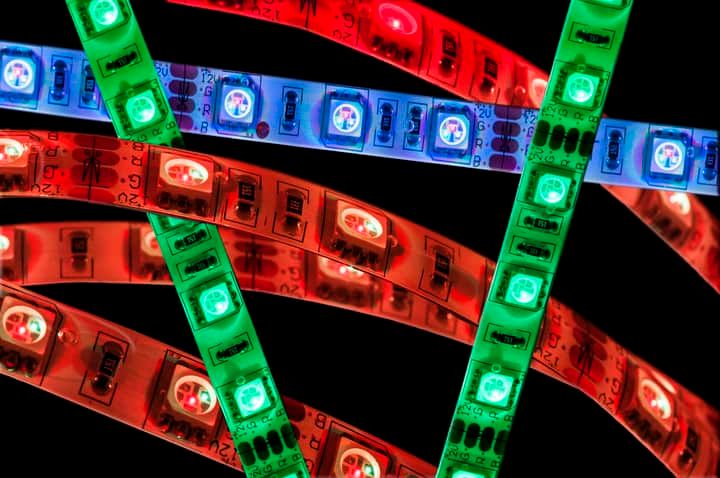
The color you set determines how much blue energy your strip is putting out — and it really does matter. Before getting into specifics, it helps to understand how LED lights work.
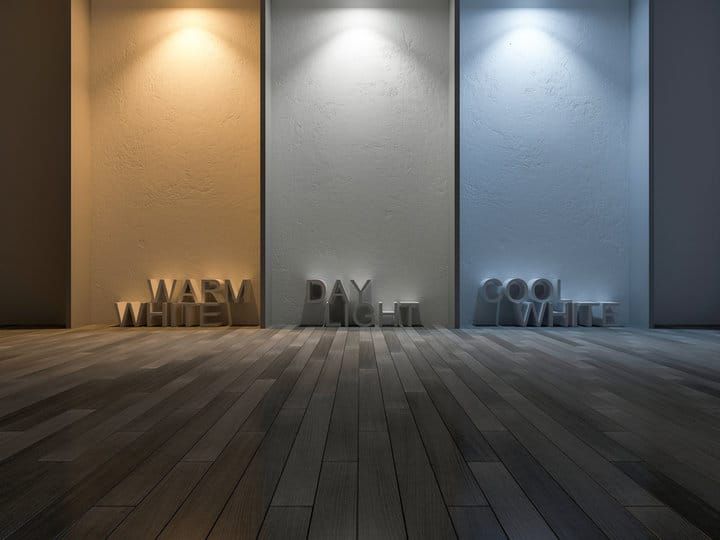
All white LEDs start with a blue chip, but cool-white strips (5000K and above) let more of that blue through, while warm-white strips (2700K–3000K) use a thicker, redder phosphor that converts more of the blue into longer yellow and red wavelengths. Warm white isn’t just blue light disguised with red — it genuinely emits less blue. That’s also why warm-white LEDs are slightly less efficient than cool-white ones at the same wattage: more of the blue energy is being absorbed and re-emitted at lower energies.
RGB strips work differently — they mix output from separate red, green, and blue diodes, so warmer-looking blends rely more on the red diode and less on the blue. Setting an RGB strip to a deep amber or red effectively turns the blue diode off.
Here’s how the common color choices stack up across the things you actually care about:
| Color | Blue Light Level | Alertness Effect | Sleep Impact | Eye Strain Risk |
|---|---|---|---|---|
| Cool White (5000K+) | High | High | Disruptive | Higher |
| Warm White (2700K–3000K) | Low–Medium | Moderate | Minimal | Low |
| Pure Blue | Very High | High | Very disruptive | High |
| Purple / Violet | Medium–High | Moderate | Disruptive | Medium |
| Green | Low | Moderate | Low | Low |
| Yellow / Amber | Low | Low | Low | Low |
| Red / Orange | Very Low | Low | Sleep-friendly | Low (but harder to focus on) |
A few notes on the table:
- Pure blue and cool white are the worst for evening use because their wavelengths most strongly suppress melatonin via melanopsin-containing cells in the retina.
- Red and amber are the most sleep-friendly, because they barely suppress melatonin at all. They won’t actively put you to sleep — they just stop interfering with the natural wind-down.
- Green and yellow sit in the middle of the visible spectrum and are the gentlest for general evening use.
- Very deep red strips can make small text and detail hard to focus on, so they’re a wind-down color, not a working one.
Beyond Blue Light: Flicker, CRI, and Glare
If your strip lights leave you with sore eyes or a headache, blue light is often not the real culprit. Three other factors quietly do most of the damage.
Flicker
Cheap LED strips and mismatched dimmers can produce visible or near-invisible flicker — your conscious eye doesn’t register it, but your brain still works to process it. The result is eye strain, headaches, and that weird tired feeling after a long evening with the lights on. Buy strips from a reputable brand, use the driver and dimmer the manufacturer recommends, and if a strip flickers visibly when dimmed, replace either the dimmer or the strip — don’t live with it.
CRI (Color Rendering Index)
CRI measures how accurately a light source renders colors compared to natural daylight, on a scale of 0 to 100. Low-CRI strips (often 70 or below on budget products) make your eyes work harder to interpret what they’re seeing, which is a quiet, cumulative source of fatigue. For living spaces, look for strips rated CRI 90 or higher — they cost a bit more but feel noticeably more comfortable.
Glare and Direct View
Bare LED diodes are tiny, very bright point sources. Looking directly at an exposed strip — even a warm-white one — causes more strain than the same strip diffused through a cover or reflected off a wall. Tuck strips into aluminum channels with frosted diffusers, mount them facing a wall or ceiling for indirect light, and keep them out of your direct line of sight when you’re sitting on the sofa or in bed.
Practical Steps to Reduce Eye Strain
Most of the discomfort people blame on LED strips comes down to a handful of easy fixes:
- Choose warm white (2700K–3000K) for living areas and bedrooms; reserve cool white for kitchens, workshops, or daytime task lighting.
- Pick high-CRI strips (90+) — accurate color rendering reduces visual fatigue.
- Diffuse the light. Use aluminum channels with frosted covers, or mount strips so they bounce light off a wall instead of pointing into your eyes.
- Dim them after sunset. Brightness matters as much as color — a dim cool-white strip is gentler than a blazing warm-white one.
- Avoid flickering products and incompatible dimmers.
- If you spend long hours in front of screens, blue-light blocking glasses are an option some people find helpful — though changing the lighting itself usually has a bigger effect.
An Evening Wind-Down Routine
If you only do one thing, do this:
- About two hours before bed, switch the strips to warm white, amber, or red.
- Dim them to 30–50% — eye-pleasing, and easier on melatonin.
- Turn the strips off completely at least 30 minutes before sleep.
What Is the Safest LED Lighting Color?
For all-purpose comfort, the easiest colors on your eyes are the ones in the middle of the visible spectrum: green and yellow. They put out very little blue light without going so far toward red that detail and contrast suffer.
Among whites, choose warm white (2700K–3000K) over cool white whenever the strip is going to be on for long stretches in the evening. Cool white is great for daytime focus and task lighting, but it’s the equivalent of sitting under a bright midday sky — fine in short bursts, fatiguing for hours.
Deep orange and red strips are excellent for the last hour or two before bed, but they’re not ideal as your only light source — the lower contrast can make reading and detailed tasks harder. My rule of thumb: warm white as the everyday default, amber/red for evening wind-down, cool white reserved for working or studying during the day.
Final Words
LED strip lights aren’t the eye-health threat they’re sometimes made out to be. They do emit more blue light than incandescent bulbs, and that blue content can affect sleep when you run them late and bright. But for the average household, the bigger contributors to sore eyes are flicker, glare, low CRI, and simply leaving the lights too bright at night — all things you can fix without giving up the strip.
If I had to summarize the whole article in three steps: switch to warm white or amber after sunset, dim the strips down for evening use, and turn them off at least 30 minutes before sleep. Pick a high-CRI, flicker-free strip and tuck it behind a diffuser, and the rest mostly takes care of itself.
FAQ
Are LED strip lights worse for your eyes than regular LED bulbs?
Not inherently. The diodes themselves are similar — what matters is how they’re used. Strip lights tend to be installed in long, exposed runs that you can see directly, which causes more glare than a diffused bulb in a fixture. Hide the strip behind a diffuser, channel, or ledge and it’s no worse than any other LED.
Can LED strip lights cause headaches?
They can, but the cause is usually flicker (especially on cheap strips or mismatched dimmers), excessive brightness, or direct glare — not blue light specifically. If a strip gives you a headache, try replacing the dimmer, switching to a warmer color, dimming it down, or hiding the diodes behind a diffuser before assuming the strip itself is faulty.
What color LED strip is best for sleep?
Red, deep orange, or amber. These wavelengths barely suppress melatonin, so they don’t interfere with the body’s natural wind-down. They won’t actively make you sleepy, but they’re the most sleep-neutral choice for the hour or two before bed.
Is it bad to sleep with LED strip lights on?
Sleeping in any light isn’t ideal — even relatively dim light can affect sleep quality and circadian rhythm. If you want a nightlight, use a dim red or amber strip rather than white or blue. Better still, turn the strips off completely once you’re in bed.
Do warm white LED strips really emit less blue light?
Yes. Warm white LEDs use a thicker, redder phosphor coating that converts more of the underlying blue chip’s output into longer yellow and red wavelengths. The total blue emission is genuinely lower than from a cool-white strip at the same brightness — it isn’t just optical disguise.
What CRI should I look for in a strip light?
CRI 90 or higher for any space where you spend time reading, relaxing, or looking at people’s faces. Lower CRI is fine for purely decorative accent lighting, but strips below CRI 80 tend to feel slightly draining over long sessions because your eyes work harder to interpret colors accurately.